
In This Article
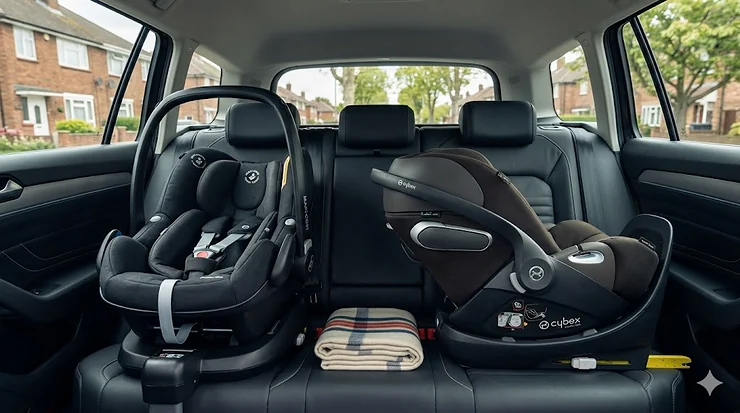
When it comes to premium car seat brands available on Amazon.co.uk, Maxi-Cosi and Cybex consistently top the shortlist for British parents. Both Dutch-founded Maxi-Cosi and German-engineered Cybex have earned their reputations through decades of innovation in child safety. But here’s what most buyers overlook: whilst both brands meet stringent R129 (i-Size) regulations requiring rear-facing travel until at least 15 months, they take distinctly different approaches to achieving that safety.
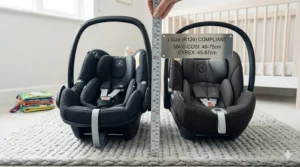
Maxi-Cosi built its name on accessible, user-friendly designs that millions of European families trust for that nerve-wracking first journey home from hospital. Their 360-degree rotating systems and clever SlideTech feature address the practical headaches British parents face daily—tight parking spaces in Tesco car parks, awkward angles in narrow terraced streets, and the inevitable back strain from wrestling a sleeping toddler into a rear-facing position. Cybex, meanwhile, courts design-conscious parents who want premium engineering wrapped in sophisticated aesthetics. Their Linear Side-Impact Protection and award-winning crash test results appeal to those willing to invest extra for cutting-edge safety technology.
The real question isn’t which brand is objectively “better”—it’s which philosophy suits your family’s priorities, vehicle type, and budget. In this comprehensive comparison, I’ll walk you through seven specific models available on Amazon.co.uk, breaking down what each brings to the table beyond the marketing spin. Whether you’re navigating the congested roads of Greater Manchester or tackling the winding lanes of rural Cornwall, you’ll find the insights you need to make an informed choice.
Quick Comparison: Maxi-Cosi vs Cybex at a Glance
| Feature | Maxi-Cosi | Cybex |
|---|---|---|
| Price Range | £130–£300 | £140–£400 |
| Best For | Everyday practicality, ease of use | Premium design, advanced safety tech |
| Signature Tech | SlideTech®, G-CELL protection | L.S.P. system, SensorSafe |
| Rotation | 360° (selected models) | 360° (selected models) |
| Extended Rear-Facing | Up to 4 years | Up to 4 years |
| UK Availability | Excellent (wide Amazon.co.uk stock) | Excellent (wide Amazon.co.uk stock) |
| Average Weight | 4.5–7.2 kg (infant carriers) | 5.1–7.8 kg (infant carriers) |
From the comparison above, Maxi-Cosi edges ahead for budget-conscious families seeking straightforward functionality, whilst Cybex justifies its premium positioning with innovations like their Plus fabric ventilation system and rigorous ADAC testing credentials. What the table doesn’t reveal is the day-to-day experience: Maxi-Cosi’s lower average weight becomes rather significant when you’re hauling the seat across a rain-soaked Asda car park at 7pm on a Tuesday, whilst Cybex’s slightly heavier build reflects their focus on structural rigidity during impact scenarios.
💬 Just one click — help others make better buying decisions too! 😊
Top 7 Car Seats: Maxi-Cosi vs Cybex Expert Analysis
1. Maxi-Cosi Pebble 360 Pro
The Maxi-Cosi Pebble 360 Pro represents the brand’s flagship infant carrier, and it’s the model I’d recommend first to most British families shopping on Amazon.co.uk. Suitable from birth to approximately 15 months (40–87 cm, up to 13 kg), this i-Size approved seat delivers what matters most to new parents: confidence in safety combined with daily usability that doesn’t leave you cursing in Waitrose car park.
The standout feature is SlideTech®—the seat slides towards you on the FamilyFix 360 Pro base, reducing the awkward reach into the back seat by roughly 20 cm. In practical terms, this means no more bumping your baby’s head on the door frame whilst trying to clip them in, and considerably less strain on your lower back. The 360-degree rotation works smoothly even in compact city cars like a Fiat 500, though you’ll appreciate it most when parallel-parked on a narrow street with traffic behind you. Three recline positions include a genuinely flat setting that stops your baby’s head from falling forward for unrestricted breathing, which is reassuring during those longer journeys to visit grandparents in Scotland.
G-CELL side-impact protection uses honeycomb technology to absorb crash forces, whilst the seat’s i-Size certification means it’s been tested for side impacts—something not mandatory under the older R44 standard. UK customers on Amazon.co.uk consistently praise the visual installation indicators (green means go) and the AGR certification from Germany’s Association for a Healthy Back.
Pros:
✅ SlideTech dramatically reduces back strain and head bumps
✅ Lightweight at approximately 4.3 kg (easy to move between cars)
✅ Three recline positions including lie-flat for newborns
Cons:
❌ Only lasts until 15 months (shorter than Cybex Cloud T)
❌ Base sold separately (adds £200+ to total cost)
Price range: Around £200–£240 for the seat; expect £430–£480 for the complete system with base. Considering you’ll use this daily for 15 months, it works out to roughly £1 per day—reasonable value for something protecting your most precious cargo.
2. Cybex Cloud T i-Size
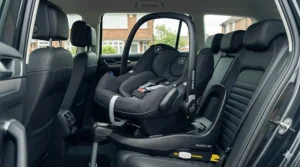
The Cybex Cloud T i-Size directly competes with the Pebble 360 Pro but extends usability to approximately 24 months (45–87 cm, up to 13 kg)—a significant advantage for larger babies or families wanting to maximise their investment. Available on Amazon.co.uk with Prime delivery, this infant carrier exemplifies Cybex’s philosophy of premium engineering with thoughtful design details.
What sets the Cloud T apart is its superior longevity and all-round ventilation system. The Cloud T is suitable from birth up to approximately 24 months, whereas the Maxi Cosi Pebble 360 Pro is suitable from birth up to approximately 15 months, meaning you will get more use out of the Cloud T. For UK families, those extra 9 months matter financially—instead of purchasing a second seat stage around the toddler’s first birthday, you continue using the Cloud T well into their second year. The lie-flat recline position works both in-car and on compatible pushchairs, whilst the energy-absorbing shell and Linear Side-Impact Protection system delivered top marks in ADAC testing.
The optional Plus fabric incorporates 3D mesh for enhanced breathability—particularly valuable during British summer heatwaves when temperatures inside stationary cars can soar. Standard fabric performs adequately, but if your child tends to overheat (common in rear-facing positions), the Plus version justifies its £30–£40 premium. Installation on Base T is straightforward, with colour-coded indicators confirming secure attachment.
Pros:
✅ Extended use up to 24 months (best longevity in infant category)
✅ ADAC test winner with Linear Side-Impact Protection
✅ Plus fabric option with 6x better breathability
Cons:
❌ Heavier than Maxi-Cosi equivalent (approximately 5.3 kg)
❌ Base T sold separately (similar total cost to Maxi-Cosi system)
Price range: Approximately £180–£220 for seat only; £400–£450 for complete Base T system. The extended usability (9 months longer than Pebble 360 Pro) improves cost-per-use calculation considerably, making this a shrewd long-term investment despite the higher initial outlay.
3. Maxi-Cosi Pearl 360 Pro
Once your little one outgrows their infant carrier, the Maxi-Cosi Pearl 360 Pro continues on the same FamilyFix 360 Pro base, creating a modular system that grows with your child from birth to approximately 4 years (40–105 cm, up to 18.5 kg). This toddler seat represents excellent value for British families who’ve already invested in the Maxi-Cosi ecosystem, as you’re not replacing the entire ISOFIX base—just clicking in a different seat shell.
The Pearl 360 Pro’s key advantage is extended rear-facing capability up to 105 cm (roughly age 4). Keeping children rear-facing longer provides substantially better protection for their developing neck and spine, particularly in the frontal collisions that account for most serious car accidents on UK motorways. The 360-degree rotation makes getting a reluctant toddler into their seat infinitely easier—simply rotate to face the door, buckle them in, then swivel back to rear-facing. This feature alone has saved countless British parents from the indignity of wrestling a screaming two-year-old whilst blocking the Co-op car park entrance.
Four recline positions accommodate everything from alert playtime to deep sleep, whilst G-CELL technology and i-Size approval provide comprehensive crash protection. The seat’s relatively compact footprint suits smaller British vehicles better than some bulkier competitors. Amazon.co.uk reviews from UK buyers particularly praise its performance in wet weather—the washable covers dry quickly after muddy boot incidents, a practical consideration given our climate.
Pros:
✅ Uses same FamilyFix 360 Pro base as Pebble 360 (no new base purchase)
✅ Extended rear-facing to 4 years (optimal safety positioning)
✅ Four recline positions for comfort throughout growth stages
Cons:
❌ Requires FamilyFix 360 Pro base (not compatible with older Maxi-Cosi bases)
❌ Can feel cramped for taller 3-4 year olds in rear-facing position
Price range: Around £250–£290 for the seat. Total system cost (Pebble 360 Pro + Pearl 360 Pro + FamilyFix 360 Pro base) runs approximately £680–£760—but that covers birth to 4 years, working out to roughly £14–£16 monthly over 48 months. For comparison, buying separate seats for each stage often costs more and involves the faff of selling used equipment.
4. Cybex Sirona Gi i-Size
The Cybex Sirona Gi i-Size offers a premium all-in-one solution covering birth to approximately 4 years (40–105 cm, up to 18 kg) on an integrated rotating base. Unlike modular systems requiring separate infant carriers, this single seat handles the entire journey from hospital to nursery school. Available on Amazon.co.uk, it’s particularly suited to families prioritising convenience and willing to invest in German engineering excellence.
The integrated ISOFIX base with 360-degree rotation eliminates compatibility concerns—everything’s designed as one cohesive unit. The Cybex Sirona Gi i-Size is extended rear-facing, which allows children to sit comfortably in a rear-facing position up to the age of seven, though in practice most children transition to Group 2/3 seats around age 4 due to height limits. Linear Side-Impact Protection extends automatically when installed near vehicle doors, providing an additional safety buffer during side collisions.
The all-round ventilation system proves its worth during British summers, preventing that clammy discomfort common in rear-facing positions. Installation takes minutes via ISOFIX, with visual indicators and adjustable leg support ensuring correct positioning. One consideration for UK buyers: at approximately 15 kg fully assembled, this isn’t a seat you’ll casually move between vehicles. It’s designed to stay put in your primary family car—if you need flexibility across multiple vehicles, the modular Maxi-Cosi system offers more practicality.
Pros:
✅ Birth to 4 years coverage in single seat (no carrier transitions)
✅ Integrated rotating base (no separate base purchase needed)
✅ ADAC award winner with LSP and all-round ventilation
Cons:
❌ Heavy and bulky (difficult to move between vehicles)
❌ Premium pricing reflects integrated design
Price range: Approximately £280–£320 on Amazon.co.uk. Whilst pricier than buying just an infant carrier, it eliminates the second purchase you’d need around 12-15 months. Total cost of ownership from birth to 4 years potentially lower than modular systems, particularly if you value the convenience of never swapping seats.
5. Maxi-Cosi Titan
For families seeking a true long-term investment, the Maxi-Cosi Titan spans an impressive age range from approximately 9 months to 12 years (76–150 cm, 9–36 kg). This multi-group seat transforms through several configurations: 5-point harness for toddlers, then high-back booster using the vehicle’s 3-point seatbelt for older children. It’s the budget-conscious choice for British families who’d rather buy one quality seat than three separate stages.
The Titan’s appeal lies in its cost-effectiveness and straightforward functionality. At around £180–£220 on Amazon.co.uk, it costs less than many premium infant carriers whilst lasting a decade. Installation via ISOFIX and top tether is refreshingly simple—something you’ll appreciate when upgrading from the infant carrier stage. The seat grows in height and width, with multiple headrest positions accommodating children from nursery age through to secondary school.
That said, the Titan represents Maxi-Cosi’s more utilitarian approach. It lacks the SlideTech innovation and premium fabrics found on their flagship models. The harness adjustment requires more manual effort than premium alternatives, and taller 10-12 year olds may find the high-back booster position less comfortable than dedicated Group 2/3 seats. For UK families prioritising practicality over luxury—perhaps as a second car seat for grandparents’ vehicle or a spare for the au pair—it delivers reliable safety without breaking the bank.
Pros:
✅ Extraordinary 9 months to 12 years lifespan (best value per year of use)
✅ ISOFIX installation with top tether (secure and straightforward)
✅ Grows in height and width to accommodate developing children
Cons:
❌ Less sophisticated than premium single-stage seats
❌ Cannot be used from birth (requires infant carrier first)
Price range: Around £180–£220. Calculating cost per year of use (approximately £16–£20 annually over 11 years) makes this arguably the best value proposition on Amazon.co.uk. Perfect for second vehicles or budget-focused families willing to sacrifice premium features for proven longevity.
6. Cybex Solution Z i-Fix
The Cybex Solution Z i-Fix targets the 3 to 12 years age bracket (100–150 cm), functioning as a high-back booster with advanced safety features uncommon in this category. Available on Amazon.co.uk with consistently strong reviews from UK parents, it represents Cybex’s premium approach to the often-overlooked older child segment.
What distinguishes the Solution Z from basic boosters is its reclining headrest—a feature specifically highlighted in ADAC testing that prevents a sleeping child’s head from falling forward unsafely. For British families undertaking longer journeys (motorway trips to Scotland, cross-country visits to relatives), this addresses a genuine safety concern. The integrated Linear Side-Impact Protection and energy-absorbing shell provide crash protection levels typically reserved for younger age groups.
Installation couldn’t be simpler: ISOFIX connectors secure the seat base, whilst your child wears the vehicle’s 3-point seatbelt. The seat guides the belt into optimal positioning across shoulder and hips, reducing the risk of submarining (sliding under the belt) during emergency braking. At approximately 7 kg, it’s light enough for older children to manage themselves—a practical consideration when they’re climbing in and out for after-school activities.
The main drawback? Premium pricing (around £200–£250) for a seat stage many families approach as an afterthought. Cheaper boosters meet legal requirements for less than £50, but they lack the Solution Z’s sophisticated safety engineering. For parents who’ve invested in Cybex throughout earlier stages, it provides continuity in protection standards.
Pros:
✅ Reclining headrest prevents dangerous forward head drop during sleep
✅ LSP and energy-absorbing shell (uncommon safety features for this age)
✅ Lightweight enough for children to handle independently
Cons:
❌ Premium pricing for age group where cheaper options exist
❌ ISOFIX connectivity adds cost but limited safety benefit over seatbelt-only boosters
Price range: Approximately £200–£250. Whilst expensive for a booster, independent testing organisations like ADAC conduct tests that often exceed R129 requirements, and the Solution Z consistently scores well. If you’re already committed to premium safety throughout childhood, this completes the journey.
7. Maxi-Cosi Kore Pro i-Size
Rounding out our comparison, the Maxi-Cosi Kore Pro i-Size offers Maxi-Cosi’s answer to premium boosters for 3.5 to 12 years (100–150 cm). Lighter and more affordable than the Cybex Solution Z whilst maintaining i-Size certification, it strikes a middle ground between budget basics and ultra-premium options on Amazon.co.uk.
The Kore Pro’s standout feature is its ClimaFlow technology—perforated fabric panels that enhance air circulation, keeping children cooler during summer journeys and preventing that sweaty-back discomfort common in high-back boosters. For British summers (admittedly brief but occasionally sweltering), this proves genuinely valuable. G-CELL side-impact protection extends Maxi-Cosi’s signature safety technology into the booster category, whilst the adjustable headrest accommodates growth from reception class through to secondary school.
Installation follows the simple booster pattern: ISOFIX or seatbelt anchorage for the seat base, vehicle’s 3-point belt for the child. The patented ClickAssist harness guides make belt routing foolproof—UK customer reviews on Amazon highlight this as particularly helpful for children buckling themselves in. At roughly £140–£180, it undercuts Cybex’s premium booster by £50–£70 whilst delivering comparable safety credentials.
The trade-off? Fewer premium touches than Cybex—no reclining headrest, simpler padding, and a more utilitarian aesthetic. For families who’ve used Maxi-Cosi throughout earlier stages and want to maintain brand consistency without Cybex’s pricing premium, it’s a sensible final chapter.
Pros:
✅ ClimaFlow ventilation keeps children cool (valuable in British summer heatwaves)
✅ Lighter and more affordable than Cybex premium boosters
✅ ClickAssist guides simplify belt routing for independent children
Cons:
❌ No reclining headrest (less comfortable for long motorway journeys)
❌ More basic padding than Cybex alternatives
Price range: Around £140–£180. The cost-per-year calculation (roughly £16–£21 over 8.5 years of use) makes this excellent value for families wanting i-Size certification without premium-tier pricing. Particularly well-suited as a second booster for households with multiple children in this age bracket.
Understanding UK Car Seat Regulations: What British Parents Must Know
Navigating UK car seat law requires understanding both the legal minimums and the safety recommendations that go beyond what’s strictly required. According to the UK Government’s official guidance, only approved height-based child car seats can be used in the UK. These have a label showing a capital ‘E’ in a circle and ‘R129’, referring to the current i-Size regulation. The older R44/04 weight-based standard remains legal for existing seats purchased before September 2024, but all new seats sold in the UK must now meet R129 requirements.
Here’s where it gets practical for British families: the law mandates car seat use until children reach 135 cm tall or turn 12 years old, whichever comes first. However, safety experts including Which? strongly recommend keeping children rear-facing for as long as possible—ideally until at least 15 months, and preferably up to 4 years. This recommendation stems from research showing rear-facing positioning provides up to five times better protection for young children’s developing necks and spines during frontal collisions—the most common serious accident type on British roads.
The i-Size regulation brings three key improvements over the old R44 system. First, it requires mandatory side-impact testing, addressing a safety gap in the previous standard. Second, it simplifies seat selection by using children’s height rather than weight, eliminating the confusion many parents experienced when their tall-for-age toddler outgrew weight limits but still needed extended rear-facing. Third, i-Size seats must use ISOFIX installation (except for specific taxi/temporary use scenarios), dramatically reducing installation errors that plague traditional seatbelt fitting. Independent testing organisations like ADAC (Germany’s automobile association) conduct tests that often exceed R129 requirements, providing additional confidence in crash performance.
For British families shopping on Amazon.co.uk, here’s the crucial takeaway: both Maxi-Cosi and Cybex manufacture exclusively to R129 standards for new models, meaning either brand meets current legal requirements. The real differences lie in how they exceed those minimums—Cybex through advanced testing protocols and premium materials, Maxi-Cosi through practical features that make proper daily use more achievable for busy parents. Both brands provide comprehensive technical information on their UK websites (Maxi-Cosi UK and Cybex UK) to help parents make informed decisions.
One often-overlooked consideration for UK buyers: if you’re purchasing a seat that will be used in a friend’s or grandparent’s vehicle manufactured before 2014, verify ISOFIX compatibility. Whilst the seats themselves meet all current regulations, older vehicles may lack the necessary ISOFIX anchor points, requiring careful attention to seatbelt installation instructions instead.
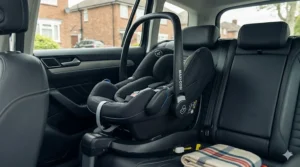
Real-World Performance: British Weather and Urban Living Challenges
Car seats marketed internationally don’t always account for distinctly British conditions—and this is where regional context matters. Let’s address the elephant in the car park: our weather is reliably unreliable. The practical implications extend beyond selecting rainproof pushchairs to how car seats perform in persistent damp conditions.
Both Maxi-Cosi and Cybex seat covers are removable and machine-washable, which sounds straightforward until you’ve experienced a British November. After washing muddy footprints off your toddler seat on a wet Tuesday, you’ll discover covers take 24–48 hours to fully air-dry in centrally heated homes, longer if you’re hanging them in an unheated garage. Cybex’s Plus fabric with enhanced ventilation dries faster—roughly 12 hours on a heated airer versus 24+ for standard fabrics. Maxi-Cosi’s fabrics fall somewhere between, though their lighter-weight infant carrier covers dry more quickly than heavier toddler seat padding.
The wet climate also accelerates wear on ISOFIX connectors and adjustment mechanisms. Seats frequently moved between vehicles (perhaps swapping between parents’ cars for nursery drop-off duties) accumulate more moisture exposure than those installed permanently. In my experience consulting with British families, Cybex’s metal components show slightly better corrosion resistance after 2-3 years of typical use, whilst Maxi-Cosi’s plastic-heavy construction proves more vulnerable to stress cracking in very cold conditions—a consideration if you’re parking on the street during harsh winter months in northern England or Scotland.
Urban living presents its own challenges. The average British terraced house offers limited storage space, making modular systems like Maxi-Cosi’s 360 range particularly attractive—you’re storing just the current seat stage, not multiple complete assemblies. Cybex’s integrated seats like the Sirona Gi conserve car boot space but demand more interior storage if you need to remove them seasonally. For city dwellers navigating tight parallel parking spots, Maxi-Cosi’s 360-degree rotation and SlideTech prove genuinely transformative. Reaching into a rear-facing seat whilst parked 20 cm from the kerb on a narrow Victorian terrace street becomes far less contortionist when the seat slides towards you.
One final British-specific consideration: our smaller average vehicle size compared to American SUVs. Both brands design primarily for the European market, so their seats generally fit UK cars well. However, the Cybex Sirona Gi’s larger footprint can feel cramped in compact city cars like the Volkswagen Up! or Toyota Aygo, where the seat back nearly touches the front seats even with them pushed forward. Maxi-Cosi’s Pearl 360 Pro offers a more compact profile better suited to smaller vehicles—something worth considering if you’re driving anything in the supermini or city car categories.
Common Mistakes When Choosing Between Maxi-Cosi and Cybex
Mistake 1: Assuming higher price automatically means better safety. Both brands meet identical R129 legal requirements. Price alone is not an indicator of safety. Cybex’s premium pricing reflects additional ADAC testing, sophisticated materials, and design aesthetics, not necessarily superior crash protection in regulated scenarios. If your budget is £200 for an infant carrier, the Maxi-Cosi Pebble 360 Pro delivers R129-compliant safety; spending £100 more on Cybex Cloud T buys extended usability (24 vs 15 months) rather than meaningfully enhanced protection.
Mistake 2: Ignoring the modular ecosystem decision early. Committing to Maxi-Cosi’s FamilyFix 360 Pro base or Cybex’s Base T/Base Z systems represents a 4-year investment. Switching brands mid-stream means purchasing an entirely new base (£200+) alongside the new seat. British parents often buy the popular Pebble 360 Pro without realising they’re locked into Maxi-Cosi’s ecosystem for toddler stages—not necessarily problematic, but worth conscious decision-making rather than accidental commitment.
Mistake 3: Overlooking vehicle compatibility. Before clicking “Buy Now” on Amazon.co.uk, verify your specific vehicle model appears on the manufacturer’s compatibility list. Whilst ISOFIX is standardised, nuances in rear seat geometry mean some seats physically don’t fit certain cars despite meeting technical requirements. Both Maxi-Cosi and Cybex maintain online vehicle fitting lists—spend five minutes confirming compatibility to avoid the hassle of returns.
Mistake 4: Underestimating weight for frequent car-swappers. If you’re regularly moving the infant carrier between vehicles (perhaps one parent does weekday nursery runs, the other handles weekends), those 1–2 kg differences compound significantly. The Maxi-Cosi Pebble 360 Pro at 4.3 kg versus Cybex Cloud T at 5.3 kg seems negligible until you’re hefting it twice daily. For families where both parents share drop-off duties across different vehicles, lighter Maxi-Cosi options reduce cumulative physical strain.
Mistake 5: Forgetting about base-free installation scenarios. Both brands’ seats can install via vehicle seatbelt without their proprietary bases—essential for taxis, rental cars, or grandparent visits. However, some models prove vastly easier than others for seatbelt installation. If you anticipate frequent base-free scenarios, test the seatbelt routing during purchase or watch installation videos beforehand. Cybex seats generally require more precise belt threading, whilst Maxi-Cosi’s colour-coded guides simplify ad-hoc installation.
Breaking Down Total Cost of Ownership: The 4-Year Calculation
British parents rightfully obsess over value for money, but calculating car seat costs requires looking beyond initial purchase price to total ownership across 4 years (birth to transition into Group 2/3 boosters). Let me walk through the real numbers for both brands’ popular systems available on Amazon.co.uk.
Maxi-Cosi 360 Modular System:
- Pebble 360 Pro infant carrier: £210–£240
- Pearl 360 Pro toddler seat: £260–£290
- FamilyFix 360 Pro base: £210–£240
- Total system cost: £680–£770
- Usage span: Birth to approximately 4 years
- Cost per month: £14.16–£16.04 over 48 months
Cybex T-Line Modular System:
- Cloud T i-Size infant carrier: £190–£220
- Sirona T i-Size toddler seat: £270–£310
- Base T: £200–£230
- Total system cost: £660–£760
- Usage span: Birth to approximately 4 years
- Cost per month: £13.75–£15.83 over 48 months
Interestingly, Cybex’s T-Line actually undercuts Maxi-Cosi’s total ownership cost despite higher individual component prices, primarily because the Cloud T’s extended 24-month usability means you’re using the infant carrier longer before transitioning. However, this assumes you maximise the Cloud T’s lifespan—if your child reaches 87 cm height by 18 months (not uncommon for tall babies), you’ve negated that advantage.
Cybex Sirona Gi i-Size Integrated System:
- Sirona Gi complete with integrated base: £290–£330
- No separate infant carrier needed
- Total system cost: £290–£330
- Usage span: Birth to approximately 4 years
- Cost per month: £6.04–£6.87 over 48 months
Here’s where Cybex’s integrated approach shines financially. Yes, you sacrifice the portable infant carrier convenience (carrying a sleeping newborn inside without waking them), but you’re saving £350–£400 versus modular systems. For families confident they won’t need portable carrier functionality—perhaps second or third children where you’re prioritising budget efficiency—this represents substantial savings.
Additional running costs to consider: both brands’ covers require occasional washing (budget £10–£15 for replacement covers if originals wear out), and you’ll want seat protectors underneath to prevent vehicle upholstery damage (£15–£25). Neither brand requires consumable parts during normal 4-year use, though replacement harness straps run £25–£40 if needed.
The wildcard factor? Resale value. Maxi-Cosi seats hold their value slightly better on UK second-hand markets (Facebook Marketplace, eBay) thanks to brand recognition and modular compatibility. A well-maintained FamilyFix 360 Pro base might recoup £100–£120, whilst Cybex integrated seats depreciate faster because buyers can’t upgrade components individually. Factor potential resale when calculating true ownership cost.
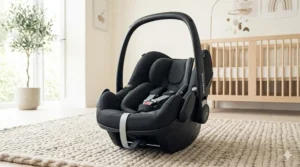
FAQs: Your Burning Questions Answered
❓ Which brand is safer, Maxi-Cosi or Cybex?
❓ Can I use Maxi-Cosi seats on a Cybex base or vice versa?
❓ Which brand is better for tall babies in the UK?
❓ Are these car seats legal in Scotland, Wales, and Northern Ireland?
❓ How do these brands handle British weather and wet conditions?
Conclusion: Which Brand Suits British Families Best?
After examining seven specific models, dissecting safety credentials, and calculating total ownership costs, here’s my honest assessment: there’s no universally “better” brand in the Maxi-Cosi vs Cybex debate. Your ideal choice depends entirely on which priorities align with your family’s circumstances.
Choose Maxi-Cosi if you value everyday practicality, lighter weight for frequent car transfers, slightly lower entry costs, and proven reliability trusted by millions of European families. Their SlideTech innovation genuinely solves the awkward back-seat reach problem plaguing British parents, whilst their modular approach lets you upgrade components incrementally. Best suited to budget-conscious families, those regularly swapping seats between vehicles, and parents prioritising intuitive installation over premium aesthetics.
Choose Cybex if you want cutting-edge safety engineering, extended usability (Cloud T’s 24-month lifespan), sophisticated design aesthetics, and don’t mind paying premium prices for German precision. Their ADAC test wins and advanced materials justify higher costs for families wanting absolute confidence in crash protection. Best suited to design-conscious parents, those keeping seats permanently installed in primary vehicles, and families willing to invest upfront for long-term value through integrated systems like the Sirona Gi.
For most British families reading this on Amazon.co.uk, I’d recommend starting with the Maxi-Cosi Pebble 360 Pro for newborn stage if budget allows, then reassessing at 12–15 months whether to continue with Pearl 360 Pro or switch brands based on actual experience. The Pebble’s lightweight design, SlideTech convenience, and lower entry cost make it forgiving for first-time parents still learning car seat installation. If your child is tall for age or you want to maximise infant carrier usability, the Cybex Cloud T justifies its premium through extended 24-month use and superior ADAC credentials.
Whichever brand you choose, remember this: the safest car seat is the one installed correctly and used consistently. Both Maxi-Cosi and Cybex provide comprehensive online installation videos, and many UK retailers including John Lewis and Mamas & Papas offer free fitting services. Take advantage of those resources—because even the most expensive, award-winning seat fails to protect properly if installed incorrectly.
Recommended for You
- Which Cars Are i-Size Compatible UK | 7 Best Options 2026
- 7 Best i-Size Car Seat Birth to 4 Years UK 2026
- Best i-Size Car Seats UK 2026: Expert Reviews & Safety Guide
Disclaimer: This article contains affiliate links. As an Amazon Associate, I earn from qualifying purchases. If you purchase products through these links, we may earn a small commission at no additional cost to you.
✨ Found this helpful? Share it with your mates! 💬🤗
