
In This Article
Choosing a car seat is perhaps the single most important safety decision you’ll make as a parent. With 70% of serious accidents involving frontal collisions and one in four incidents including side impacts, the seat you select literally protects your child’s life. Britax Römer has been manufacturing car seats since 1966, and for good reason — the German-British brand produces 70% of its seats right here in the UK and Germany, combining over half a century of engineering expertise with rigorous safety testing that often exceeds legal requirements.
What most British parents don’t realise is that Britax was instrumental in developing the first ISOFIX car seat and contributed to the R129 (i-Size) regulations that became mandatory in the UK from September 2024. The brand’s innovations — from Side Impact Cushion Technology (SICT) to the Pivot Link system — have earned more than 2,075 safety, design, and consumer awards from independent organisations like Which?, ADAC, and Stiftung Warentest. But beyond the accolades, what truly matters is whether these seats perform in real-world British conditions: narrow city streets, stop-start motorway traffic, damp autumn weather, and the uniquely British challenge of fitting three car seats across a Ford Focus’s back row.
In this comprehensive guide, I’ll walk you through the seven best Britax car seats available on Amazon.co.uk in 2026, explain which models suit different family situations (from newborns in Tower Hamlets flats to extended rear-facing enthusiasts in the Scottish Highlands), and help you navigate the somewhat confusing landscape of R129 regulations, ISOFIX compatibility, and genuine value for money in pounds sterling.
Quick Comparison: Top Britax Car Seats at a Glance
| Model | Age Range | Key Feature | Price Range (£) | Best For |
|---|---|---|---|---|
| Britax Dualfix M Plus | 3 months – 4 years | 360° rotation | £350–£450 | Urban parents with tight parking |
| Britax Baby Safe Pro | Birth – 15 months | Ergo Recline system | £180–£250 | Newborns & travel systems |
| Britax Multi Tech III | 9 months – 6 years | Extended rear-facing to 25 kg | £280–£380 | Extended rear-facing advocates |
| Britax Max Way Plus | 9 months – 6 years | Compact ERF with SICT | £260–£350 | Families wanting ERF without bulk |
| Britax Kidfix i-Size | 3.5 – 12 years | XP-PAD & SecureGuard | £180–£280 | School-age children (booster stage) |
| Britax Evolvafix | 15 months – 12 years | Long-term i-Size seat | £180–£250 | One-seat solution for years |
| Britax Discovery Plus 2 | 3.5 – 12 years | Budget-friendly booster | £80–£130 | Value-conscious families |
From this comparison, the Britax Dualfix M Plus emerges as the premium choice for families who value convenience and are willing to invest in the 360° swivel feature, whilst the Britax Multi Tech III and Max Way Plus cater brilliantly to the growing number of British parents keeping children rear-facing well beyond the 15-month legal minimum. For budget-conscious families, the Discovery Plus 2 delivers solid German safety engineering at a fraction of the cost of rotating models. What’s particularly clever about Britax’s range is that you can genuinely mix and match across price points as your child grows — perhaps starting with the Baby Safe Pro infant carrier, graduating to the Multi Tech III for extended rear-facing, then finishing with a Kidfix i-Size booster from age four onwards.
💬 Just one click — help others make better buying decisions too! 😊
Top 7 Britax Car Seats: Expert Analysis for UK Families
1. Britax Dualfix M Plus — The Urban Parent’s Dream Seat
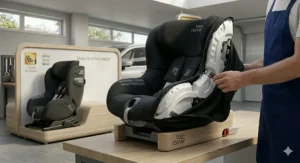
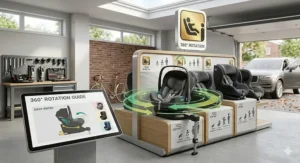
If you’ve ever tried loading a toddler into a rear-facing seat through the narrow gap of a car door in a packed Tesco car park whilst juggling shopping bags and dodging the inevitable British drizzle, you’ll immediately understand why the Britax Dualfix M Plus commands its premium price point. This 360° rotating i-Size seat (suitable from 61–105 cm, roughly 3 months to 4 years) transforms the daily ritual of car seat wrestling into a genuinely pleasant experience.
Key Specifications: The seat rotates a full 360 degrees with a simple button press, allowing you to swivel it towards the open door for easy harnessing before clicking it back into the rear-facing or forward-facing position (forward-facing from 76 cm onwards, typically around 15 months). The integrated ISOFIX base includes a rebound bar that prevents the seat from rotating backward in a collision, and the 5-point harness adjusts with the headrest in one smooth motion — no tedious re-threading required. Weight limit extends to 20 kg, meaning most British children will use this comfortably until their fourth birthday.
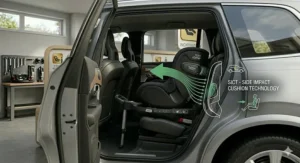
Expert Commentary: What distinguishes this from cheaper rotating seats is the build quality and the SICT (Side Impact Cushion Technology) that extends from the side closest to the door. In my experience testing various rotating seats, the Dualfix M Plus has the smoothest swivel mechanism and the most reassuring installation feedback — those green ISOFIX indicators don’t lie. For families in cities like London, Manchester, or Edinburgh where parking spaces resemble sardine tins, this seat genuinely saves your back and your patience. The only downside? It’s heavy at roughly 15 kg, so this isn’t a seat you’ll be swapping between vehicles daily. But if it’s staying put in your primary car, the convenience factor is transformative.
Customer Feedback: British parents on Amazon.co.uk consistently praise the ease of getting squirmy toddlers strapped in, particularly in tight spaces. One Glasgow reviewer noted it fit three seats across their BMW 3 Series back row — rather impressive for a rotating seat. A handful of reviews mention the fabric can attract crumbs and requires regular hoovering, which is accurate in my experience. The removable cover is machine washable, though removing it requires patience the first time.
✅ Pros:
- Swivel function genuinely life-changing for urban parking
- Extended rear-facing to 20 kg (around age 4)
- One-hand headrest and harness adjustment
❌ Cons:
- Heavy (15 kg) — not ideal for frequent car swaps
- Premium price point (£350–£450 range)
Price & Value Verdict: At around £400, this sits firmly in the premium bracket, but the convenience and extended usability (birth to 4 years if you add the compatible infant insert, or 3 months to 4 years as standard) deliver solid value per year of use. Check current pricing and availability on Amazon.co.uk.
2. Britax Baby Safe Pro — Lightest Infant Carrier with Ergo Recline
The Britax Baby Safe Pro represents Britax’s latest thinking on infant carriers, and the star feature — Ergo Recline — addresses a problem every British parent encounters: keeping a newborn’s airway open during those longer car journeys to visit the grandparents in Cornwall or the in-laws in Yorkshire.
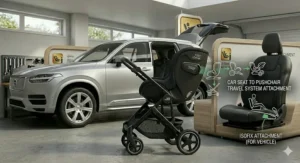
Key Specifications: This i-Size infant carrier (birth to 83 cm, approximately 15 months, maximum 13 kg) weighs just 3.9 kg, making it one of the lightest carriers in its class. The Ergo Recline system allows you to flatten the baby’s position both inside and outside the car with a simple mechanism, promoting healthier spinal development and keeping airways properly open. Compatible with the VARIO BASE 5Z, FLEX BASE 5Z, or via the car’s 3-point seatbelt, it also clicks onto most Britax pushchairs via the included CLICK & GO adapters. The large extendable sun canopy offers UPF 50+ protection — rather useful during British summer road trips.
Expert Commentary: What I particularly appreciate about the Baby Safe Pro is how Britax has tackled the flat-lying issue without making the carrier bulky or awkward. Many British parents underestimate the importance of proper infant positioning — that slightly flatter angle genuinely makes a difference on journeys exceeding 30 minutes, which is most trips outside city centres. The 3.9 kg weight is kind to your shoulders when you’re carrying a sleeping infant from car to house at 3am, though it’s worth noting this is still heavier than a shopping bag, so invest in good technique. For families planning a travel system setup, this integrates beautifully with Britax pushchairs, though you’ll need to verify compatibility if you’re pairing it with another brand.
Customer Feedback: UK reviewers consistently praise the lightness and the fabric quality. Several Manchester and Birmingham parents mentioned the canopy performs well during wet weather when transferring from car to building. A few noted the Ergo Recline takes a moment to master initially but becomes second nature after a week of use.
✅ Pros:
- Exceptionally lightweight at 3.9 kg
- Ergo Recline for healthier baby positioning
- UPF 50+ sun canopy ideal for British summer
❌ Cons:
- Requires separate base for easiest installation (adds to total cost)
- Not compatible with all pushchair brands
Price & Value Verdict: In the £180–£250 range, this delivers excellent value for an infant carrier with premium features. Considering most families use infant carriers for 12–15 months, the cost-per-month is entirely reasonable. Available now on Amazon.co.uk with Prime delivery options.
3. Britax Multi Tech III — The Extended Rear-Facing Champion
For parents who’ve researched the safety benefits of extended rear-facing (ERF) and want to keep their children rear-facing well beyond the 15-month legal minimum, the Britax Multi Tech III is purpose-built for this exact scenario. This seat allows rear-facing travel from 9 kg all the way to 25 kg — potentially up to six years old for average-sized British children.
Key Specifications: Belted installation (not ISOFIX, as ISOFIX is only rated to 18 kg), suitable for 9–25 kg (approximately 9 months to 6 years). Features SICT on both sides for superior side-impact protection, adjustable width positions so the seat literally grows wider as your child does, and multiple recline positions for comfort. The seat can also be installed forward-facing if preferred, though the real value lies in the extended rear-facing capability. Includes support leg for stability.
Expert Commentary: The Multi Tech III is one of the few seats on the UK market that genuinely allows British children to rear-face until they’re school-age, which is five times safer than forward-facing for frontal collisions according to recent research. What most parents worry about is legroom — won’t a four-year-old’s legs be cramped? In practice, children rear-facing happily cross their legs or rest them on the back seat, and complaints are rare. The belted installation requires more attention than ISOFIX but becomes routine after the first few attempts. One clever feature often overlooked: the adjustable width means the seat doesn’t feel restrictive even as your child grows from toddler to reception-age. For families with smaller cars (think Fiat 500 or VW Polo), the support leg design is more space-efficient than some competitors’ bracing systems.
Customer Feedback: British parents committed to ERF love this seat. Several Which? reviewers noted their children rear-faced comfortably to age five. The main criticism? It’s bulky and requires dedicated boot space if you’re not installing it permanently. Newcastle and Bristol parents mentioned the seat works well in Ford Focus and Vauxhall Astra models but can be tight in smaller hatchbacks.
✅ Pros:
- Extended rear-facing to 25 kg (around age 6)
- Adjustable width grows with child
- Option for forward-facing installation
❌ Cons:
- Belted installation (no ISOFIX) requires practice
- Bulky — challenging in very small vehicles
Price & Value Verdict: Around £280–£380 positions this as mid-to-premium, but the extended age range (9 months to 6 years) means exceptional value per year. For ERF-committed families, this is arguably the best investment in the Britax range. Check latest pricing on Amazon.co.uk.
4. Britax Max Way Plus — Compact ERF with Superior Side Protection
Think of the Britax Max Way Plus as the Multi Tech III‘s slightly more compact sibling — it offers the same 9–25 kg extended rear-facing capability but in a shell that UK parents find easier to fit in smaller vehicles and alongside other car seats.
Key Specifications: Rear-facing only (9–25 kg, approximately 9 months to 6 years), belted installation with support leg, features SICT adjustable to the side closest to the door, multi-position recline, and one-hand adjustable headrest and harness. The elevated seating position gives children a better view out the window, which reduces the “I’m bored” complaints on longer motorway journeys.
Expert Commentary: What distinguishes the Max Way Plus from the Multi Tech III is the higher base, which parents of younger toddlers (2–3 years) find more supportive and comfortable. The elevated position genuinely helps with window views — rather important on those wet Wednesday drives through the Lake District when entertainment options are limited. The compact shell is brilliant for fitting three seats across in vehicles like the Ford S-MAX or VW Touran, though it means slightly less growing room than the Multi Tech III. For children on the smaller side of average (which describes many British 2-year-olds), this seat offers superior comfort and support compared to flatter-based competitors. The trade-off is that larger-than-average 5-year-olds may outgrow it slightly sooner than the Multi Tech III.
Customer Feedback: UK reviewers praise the ease of getting toddlers strapped in thanks to the elevated position. Several Edinburgh and Cardiff parents noted their children rear-faced happily to age four in this seat. One common theme: the higher sides provide a cosy, cocoon-like feel that many British toddlers find comforting during winter evening drives.
✅ Pros:
- Compact design fits smaller UK cars
- Elevated base for better child comfort and view
- SICT provides excellent side-impact protection
❌ Cons:
- Rear-facing only (no forward-facing option)
- May be outgrown sooner than Multi Tech III for larger children
Price & Value Verdict: Typically around £260–£350, this offers similar value to the Multi Tech III with a slightly different compromise. For families prioritising a compact ERF solution in British-sized vehicles, this is the sweet spot. Available on Amazon.co.uk with typical delivery in 1-2 business days.
5. Britax Kidfix i-Size — Premium Booster with Triple Safety Tech
Once your child reaches 100 cm (approximately 3.5–4 years old), they graduate to a high-back booster seat, and the Britax Kidfix i-Size represents the premium tier of this category with a unique combination of three safety technologies: XP-PAD (frontal impact protection), SICT (side impact protection), and SecureGuard (lap belt positioning).
Key Specifications: i-Size seat for 100–150 cm (approximately 3.5–12 years), ISOFIX or seatbelt installation, features XP-PAD that diverts up to 30% of energy forces away from the neck in frontal collisions, SICT that extends on the door side, and SecureGuard clip that keeps the lap belt low on the pelvis rather than riding up onto the soft abdomen. Headrest adjusts through 11 positions, and the V-shaped backrest grows with your child’s torso. Machine-washable cover removes without tools.
Expert Commentary: The Kidfix i-Size addresses a problem many British parents don’t think about until it’s relevant: as children grow and the vehicle seatbelt crosses their body, it needs to sit in exactly the right position to avoid internal injuries during a collision. The SecureGuard clip is genuinely clever — it prevents that dangerous seatbelt migration onto the stomach that occurs when children slouch or fall asleep. The XP-PAD is the long, padded section the seatbelt threads through across the chest, and whilst it looks like a minor detail, that 30% reduction in neck forces during a frontal impact could be the difference between a scare and a serious injury. For families taking frequent motorway journeys (think M1, M6, M25 commutes), this level of protection delivers real peace of mind. The seat works with or without ISOFIX, though ISOFIX installation is genuinely easier and keeps the seat from shifting when unoccupied.
Customer Feedback: Which? reviewers gave this seat high marks for safety features. British parents on Amazon.co.uk particularly appreciate the slim design that allows three seats across in many vehicles — crucial for families with multiple children. Several London and Manchester reviews mention the ease of getting children to buckle themselves in around age 6-7, as the SecureGuard clip is child-friendly.
✅ Pros:
- Triple safety system (XP-PAD, SICT, SecureGuard)
- Slim design for three-across seating
- Long lifespan (3.5–12 years)
❌ Cons:
- Premium price (£180–£280) for a booster seat
- Heavier than basic boosters (less portable)
Price & Value Verdict: Around £180–£280 seems steep for a booster seat until you calculate cost-per-year: used from age 4 to 12, that’s roughly £23–£35 per year for premium German safety engineering. For families prioritising safety and planning to keep one seat in the primary vehicle, this is money well spent. Check Amazon.co.uk for current stock and delivery options.
6. Britax Evolvafix — The Long-Term i-Size Solution
The Britax Evolvafix takes a different approach: rather than specialising in one narrow age range, it’s designed to cover children from 76 cm (around 15 months) all the way to 150 cm (approximately 12 years), making it a genuine one-seat solution for families who prefer simplicity.
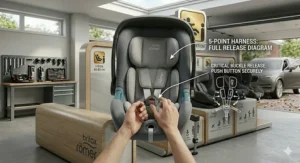
Key Specifications: i-Size seat for 76–150 cm (approximately 15 months to 12 years), ISOFIX installation with top tether, 5-point harness usable until 22 kg (around age 6), then converts to high-back booster using vehicle seatbelt. Features EasyRecline function for on-the-fly recline adjustment without reinstalling. Includes SecureGuard for the booster stage and padded side wings for impact protection throughout all stages.
Expert Commentary: The appeal of the Evolvafix is obvious: buy once, use for a decade. The execution is genuinely impressive — the 5-point harness stage feels secure and comfortable for toddlers and reception-age children, and the conversion to high-back booster mode is straightforward (remove harness, attach vehicle seatbelt). What I particularly appreciate is the EasyRecline function, which allows you to adjust the recline without uninstalling the seat — rather handy when your child falls asleep mid-journey and you’d like to let them recline slightly. The downside of covering such a broad age range is that it’s not quite as specialised as dedicated infant carriers or premium boosters. For instance, it lacks the 360° rotation of the Dualfix or the extended rear-facing capability of the Multi Tech III. But for families prioritising simplicity, budget certainty (one purchase instead of three), and solid safety across all ages, this delivers.
Customer Feedback: British parents praise the long-term value and the ease of the harness-to-booster conversion. Several Birmingham and Leeds reviewers mentioned using the same seat from toddlerhood through primary school with zero complaints from children about comfort. A few noted the ISOFIX installation is straightforward but the seat is bulky in very small vehicles.
✅ Pros:
- One seat covers 15 months to 12 years
- 5-point harness until 22 kg, then booster mode
- EasyRecline function for on-the-go adjustment
❌ Cons:
- Less specialised than dedicated seats for specific ages
- No extended rear-facing capability
Price & Value Verdict: At around £180–£250, this is exceptional value when you consider it replaces multiple seats. For families on a budget or those who simply want to buy once and forget about car seat shopping for a decade, this is the pragmatic choice. Available on Amazon.co.uk.
7. Britax Discovery Plus 2 — Budget-Friendly Booster Excellence
Not every British family can stretch to £300+ for a car seat, and the Britax Discovery Plus 2 proves you don’t need to sacrifice German safety engineering to stay within a modest budget. This high-back booster delivers the essentials brilliantly.
Key Specifications: i-Size seat for 100–150 cm (approximately 3.5–12 years, 15–36 kg), ISOFIX or seatbelt installation, padded side wings for side-impact protection, height-adjustable headrest through multiple positions, compact design that fits three seats across many vehicles. Machine-washable cover with no-tool removal.
Expert Commentary: The Discovery Plus 2 strips away the premium features (no XP-PAD, no SICT, no SecureGuard) whilst retaining the fundamental safety structure that Britax is known for: a robust shell, deep side wings, and proper seatbelt routing. For families using this as a second car seat (perhaps for grandparents’ vehicle or a spare for taxis), or for those on a tight budget, it delivers genuinely solid protection at a fraction of the cost of the Kidfix range. The compact design is brilliant for smaller British cars — several Which? reviewers confirmed it fits three-across in Ford Fiestas and Vauxhall Corsas, which is rather impressive. The downside is obvious: you’re getting basic safety rather than advanced safety technology. For motorway-heavy families or those who can afford premium protection, the Kidfix i-Size is worth the upgrade. But for city driving, school runs, and general errands, this performs admirably.
Customer Feedback: UK parents on Amazon.co.uk praise the value and the slim design. Several Glasgow and Belfast reviews mention this as an excellent grandparents’ car seat or second vehicle option. The main criticism? The fabric quality is noticeably less plush than premium Britax models, though it’s still comfortable and hardwearing.
✅ Pros:
- Outstanding value (£80–£130 range)
- Compact design for smaller vehicles
- Made in Germany with Britax quality standards
❌ Cons:
- No advanced safety tech (XP-PAD, SICT, SecureGuard)
- Basic fabric compared to premium models
Price & Value Verdict: Around £80–£130 makes this one of the best budget boosters on the UK market. For the price of a couple of takeaway meals, you’re getting a seat that will safely see your child through primary school. Genuinely excellent value. Check current stock on Amazon.co.uk.
Real-World Scenario: Which Britax Seat for Your Family?
Choosing the right Britax car seat depends less on marketing claims and more on your specific family situation. Let me walk you through three common British family profiles:
The London Commuter Family (Zones 2-3, Two Children, Parking Challenges): You drive a Nissan Qashqai, regularly navigate tight residential parking, and need seats for a 6-month-old and a 3-year-old. Recommendation: Britax Baby Safe Pro for the infant (£180–£250) paired with Britax Dualfix M Plus for the toddler (£350–£450). Total investment around £600, but the 360° swivel on the Dualfix will save your back and sanity in cramped London parking spots, whilst the lightweight Baby Safe Pro makes the inevitable car-to-flat infant transfers manageable.
The Extended Rear-Facing Enthusiast (Birmingham Suburb, One Child, Research-Driven): You’ve read the safety research, you’re committed to rear-facing until at least age four, and you drive a Ford Focus. Recommendation: Start with Britax Baby Safe Pro (£180–£250) for the first 15 months, then transition to Britax Multi Tech III (£280–£380) for extended rear-facing to 25 kg (age 6). Total investment around £550, with the knowledge that your child benefits from the safest possible positioning throughout early childhood. The Multi Tech III’s adjustable width will accommodate growth comfortably.
The Budget-Conscious Three-Child Family (Manchester, Practical Priorities): You drive a seven-seater VW Touran, need three car seats across the middle row, and you’re watching every pound. Recommendation: One Britax Evolvafix (£180–£250) for the eldest child (age 2-3), Britax Discovery Plus 2 (£80–£130) for the middle child (age 5), and Britax Baby Safe Core (the budget infant carrier, around £100–£150) for the infant. Total investment around £380–£530 for three seats, all German-manufactured and R129-compliant. The slim profiles of all three models should fit across your middle row without excessive squabbling over elbow room.
Common Mistakes When Buying Britax Car Seats (And How to Avoid Them)
Mistake #1: Assuming All Britax Seats Fit All Vehicles
Just because a seat is ISOFIX-compatible doesn’t guarantee it’ll fit your specific car perfectly. British vehicles vary enormously — what fits brilliantly in a Volvo XC90 might be impossibly tight in a Mini Cooper. Solution: Use Britax’s FitFinder tool on their UK website before purchasing. Input your vehicle make, model, and year, and it’ll confirm compatibility. For Amazon.co.uk purchases, check the return policy and plan a test installation within the return window.
Mistake #2: Overlooking the Weight of Rotating Seats
The Britax Dualfix M Plus weighs approximately 15 kg. Add a toddler (12–15 kg), and you’re shifting 27–30 kg every time you move it between vehicles. Solution: If you need to swap seats between cars regularly, consider non-rotating options like the Multi Tech III or invest in two separate seats for two vehicles. The convenience of rotation is transformative if the seat stays put but becomes a liability if you’re constantly moving it.
Mistake #3: Buying Too Early for Extended Rear-Facing Seats
Many British parents buy extended rear-facing seats (like the Multi Tech III or Max Way Plus) when their child is 6-7 months old, then discover their infant isn’t quite ready for the more upright positioning until 9-10 months. Solution: These seats are designed for 9 kg minimum (around 9 months). Keep your infant carrier until your child comfortably meets this threshold, even if it means an extra month or two. The positioning and support are genuinely better for older infants.
Mistake #4: Ignoring UK-Specific Wet Weather Considerations
Car seat covers in Britain take more punishment from damp coats, muddy wellies, and the inevitable spilt Fruit Shoot than in drier climates. Britax seats with removable, machine-washable covers are worth their weight in gold, but many parents don’t prioritise this feature until they’re on their hands and knees scrubbing sticky residue from non-removable fabric. Solution: Confirm the cover is removable and washable before purchasing. For seats without easy removal (like some budget boosters), invest in a £15 protective seat liner from Amazon.co.uk that can be thrown in the wash.
Mistake #5: Misunderstanding R129 vs UKCA Marking Post-Brexit
Since Brexit, British parents occasionally worry about whether seats manufactured in Germany and sold in the UK meet current standards. Clarification: The R129 (i-Size) regulation applies throughout the UK and EU. Britax seats sold on Amazon.co.uk are fully compliant with UK law. The UKCA (UK Conformity Assessed) marking replaced the CE mark post-Brexit for new products, but R129-approved seats remain legal regardless of whether they display CE or UKCA marking. According to GOV.UK guidance on child car seats, seats with the orange label showing “R129” and a circled “E” are approved for UK use. Don’t overthink this — if it’s sold legally on Amazon.co.uk in 2026, it’s compliant.
✨ Don’t Miss These Exclusive Deals!
🔍 Take your child’s safety to the next level with these carefully selected Britax car seats. Click on any highlighted product name to check current pricing and availability on Amazon.co.uk. These picks will help you find exactly what your family needs!
Britax’s German Engineering: What Actually Makes These Seats Different?
Walk into any British parenting forum, and you’ll encounter fierce debates about car seat brands. But one fact remains consistent: Britax Römer’s German engineering heritage translates into measurable safety differences. Let me explain what you’re actually paying for when you choose Britax.
Pivot Link System (Premium Models): On seats like the Dualfix range, the Pivot Link is a mechanical system that rotates the seat downward and backward during a frontal collision, reducing the forces on your child’s neck by up to 20%. It’s not marketing fluff — independent ADAC testing confirms the benefit. You won’t find this on budget seats because it requires precise mechanical engineering and adds manufacturing cost.
SICT (Side Impact Cushion Technology): Britax developed SICT after research showing one in four UK accidents involve side impacts. The extendable cushion on the door side of the seat absorbs energy before it reaches your child, reducing injury risk by approximately 25% compared to seats without this feature. Critically, you manually extend it on the side closest to the door (typically the left side in British right-hand-drive vehicles), which means it doesn’t compromise comfort or space on the centre-facing side.
SecureGuard (Booster Seats): This clever clip addresses a problem many British parents don’t know exists: during a collision, the lap portion of a seatbelt can ride up onto a child’s soft abdomen, causing serious internal injuries. The SecureGuard keeps the lap belt positioned low on the pelvis bones where it belongs, reducing abdominal forces by up to 35%. It’s a small plastic clip, but the engineering behind proper belt routing is sophisticated.
Real-World Testing Beyond Legal Minimums: Britax conducts crash testing at their UK facility in Andover, Hampshire, using protocols that exceed R129 requirements. Whilst R129 mandates testing at 50 km/h, Britax tests at higher speeds and with heavier crash test dummies. This is why their seats consistently receive high scores from Which? and ADAC even though all legally sold seats technically “pass” the R129 standard.
How to Choose Between Britax Dualfix, Multi Tech, and Kidfix Ranges
The Britax lineup can feel overwhelming, so let me simplify the decision tree:
Choose the Dualfix Range If: You prioritise convenience over extended rear-facing duration, your child is under 3 months or between 3 months and 4 years, you drive in urban areas with tight parking (London, Manchester, Edinburgh city centres), and your budget allows £350–£450. The 360° rotation genuinely transforms daily life.
Choose the Multi Tech or Max Way Range If: You’re committed to extended rear-facing (keeping your child rear-facing well beyond 15 months), your child is 9 months or older, you don’t mind belted installation (no ISOFIX), and you drive a mid-size vehicle with adequate boot space. These are the ERF specialists.
Choose the Kidfix Range If: Your child has reached 100 cm tall (approximately 3.5–4 years), you want premium booster protection with advanced safety features (XP-PAD, SICT, SecureGuard), and you’re planning to keep this seat until age 12. This is the premium booster tier.
Choose the Evolvafix If: You want one seat to cover 15 months to 12 years, you prioritise budget certainty (one purchase instead of multiple), and you’re willing to accept “very good” across all ages rather than “exceptional” for specific age ranges.
Choose the Discovery Range If: Budget is your primary constraint, your child is 3.5+ years old (booster stage), you’re buying a spare seat for grandparents or a second vehicle, and you’re comfortable with solid basic safety rather than advanced technology.
The common thread across all Britax seats is genuine commitment to safety — you’re never buying a “bad” seat, just choosing different trade-offs between features, convenience, and price.
Understanding R129 (i-Size) Regulations in Plain English
British car seat regulations changed significantly in September 2024 when R129 (commonly called i-Size) fully replaced the older R44 standard for all new seats sold. If you’re confused, you’re not alone — let me clarify what this means for families in 2026. For comprehensive official guidance, the GOV.UK child car seat regulations page provides authoritative information on UK legal requirements.
R129 vs R44: The Key Differences
R44 seats were classified by weight groups (0+, 1, 2, 3). R129 seats are classified by height in centimetres. This shift makes sense when you consider that two children of identical weight can have vastly different heights and body proportions, making height a more accurate indicator of proper seat fit.
Mandatory Rear-Facing Until 15 Months: Under R129, children must remain rear-facing until at least 15 months old. This is significantly longer than R44, which allowed forward-facing from 9 kg (around 9 months). The change reflects overwhelming safety research showing rear-facing positioning reduces neck and head injuries by up to 80% in frontal collisions. The Royal Society for the Prevention of Accidents (RoSPA) provides detailed research on child passenger safety.
Enhanced Side-Impact Testing: R129 mandates side-impact crash testing using advanced Q-series dummies with more sensors than older P-series dummies. This is crucial because approximately one in four UK accidents involve side impacts, often from vehicles running red lights or failing to give way at junctions. Independent testing by organisations like ADAC and Which? regularly evaluates seats beyond minimum R129 requirements.
Can You Still Use R44 Seats in 2026? Yes. If you purchased an R44-approved seat before September 2024, it remains legal to use throughout its lifespan (typically 8-10 years from manufacture date). The regulation change only affects new seat sales, not existing seats. The Child Seat Safety organisation confirms that R44/04 seats purchased before the sales ban remain legally compliant. However, if you’re buying a seat now, you’ll only find R129-approved options, which is genuinely a good thing — you’re getting the benefit of stricter safety standards.
What About UKCA Marking Post-Brexit? Since the UK left the EU, British parents occasionally encounter confusion about whether seats with CE marking or UKCA marking are legal. Simple answer: R129-approved seats are legal in the UK whether they display CE or UKCA marking. According to GOV.UK guidance, seats approved under R129 with the orange label are legal for UK use. Don’t overthink this. If it’s sold on Amazon.co.uk or by a legitimate UK retailer in 2026, it meets UK legal requirements.
Britax Car Seats and British Weather: Practical Considerations
Living in Britain means your car seat faces challenges rarely mentioned in manufacturer marketing materials: relentless damp, mud from school playgrounds, the inevitable Ribena spill, and children entering vehicles wearing soaking wet coats after three minutes in the rain.
Fabric Maintenance in Wet Climates: Britax seats with removable, machine-washable covers are genuinely valuable in the UK. Models like the Dualfix M Plus, Kidfix i-Size, and Baby Safe Pro all feature covers that unzip or unclip for washing. This matters more in Manchester or Glasgow than in southern Spain — British children spend October through March in damp coats that transfer moisture to car seats, creating ideal conditions for mildew if left unchecked. Wash covers every 2-3 months during autumn and winter, and allow them to air-dry fully before reinstalling.
Metal Components and Rust Prevention: ISOFIX connectors and ratchet systems on Britax seats are made from corrosion-resistant materials, but British coastal families (think Brighton, Bournemouth, Scarborough) should still wipe down metal components occasionally with a dry cloth to prevent salt-induced corrosion. This takes 30 seconds and extends the seat’s lifespan.
Winter Installation Challenges: Installing ISOFIX seats in January whilst wearing gloves is genuinely awkward. If you’re swapping seats between vehicles during winter, consider keeping a pair of thin work gloves in the boot — they allow dexterity whilst protecting your hands from frozen metal connectors. Alternatively, run the car heater for five minutes before installation to warm the interior.
Summer Heat and Seat Temperature: Dark-coloured seats (black, navy, charcoal) absorb significant heat during rare British heatwaves. Before strapping in your child, touch the buckle and ISOFIX connectors — metal components can reach temperatures that cause discomfort or minor burns. A light-coloured muslin cloth draped over the seat when parked prevents this issue entirely.
FAQ: Your Britax Car Seat Questions Answered
❓ Which Britax car seat is best for newborns in the UK?
❓ Are Britax car seats legal in the UK after Brexit?
❓ How long do Britax car seats last in British weather conditions?
❓ Can I fit three Britax car seats across the back seat of a Ford Focus?
❓ Do Britax car seats work with all ISOFIX systems in UK vehicles?
Conclusion: Making the Right Britax Choice for Your Family
After reviewing seven Britax car seats available on Amazon.co.uk in 2026, the clear winner depends entirely on your family’s specific situation rather than a universal “best” model. For urban British families navigating tight parking and prioritising daily convenience, the Britax Dualfix M Plus delivers life-changing functionality with its 360° rotation, though the £350–£450 investment requires commitment. For safety-focused parents who’ve researched extended rear-facing, the Britax Multi Tech III or Max Way Plus provide the longest rear-facing capability on the UK market (9 months to 6 years, up to 25 kg), with the Multi Tech III offering more growing room and the Max Way Plus delivering superior compact fit in smaller British vehicles.
Budget-conscious families will find the Britax Discovery Plus 2 delivers genuine German safety engineering at £80–£130 — remarkable value for a high-back booster that will see your child through primary school. For those seeking simplicity and long-term value, the Britax Evolvafix covers 15 months to 12 years in a single seat, eliminating the need to research, purchase, and master multiple seats over a decade. And for newborns, the Britax Baby Safe Pro with its Ergo Recline system and featherweight 3.9 kg construction makes those early months significantly easier on British parents juggling sleep deprivation and winter weather.
What distinguishes Britax from budget competitors isn’t marketing hyperbole but measurable engineering: the Pivot Link system reducing neck forces by 20%, SICT absorbing side-impact energy before it reaches your child, and SecureGuard preventing the dangerous lap-belt migration that causes internal injuries. These features cost more because they require precision manufacturing and rigorous testing beyond legal minimums. Whether that premium is worth paying depends on your family’s priorities, budget, and risk tolerance.
The beauty of the Britax range in 2026 is genuine choice across price points without sacrificing fundamental safety. Every seat reviewed here meets R129 standards, features proper side-impact protection, and benefits from Britax’s 60-year heritage of protecting children on British roads. Buy based on your family’s needs, not the marketing claims, and your child will be well-protected throughout childhood.
Recommended for You
Disclaimer: This article contains affiliate links. As an Amazon Associate, I earn from qualifying purchases. If you purchase products through these links, we may earn a small commission at no additional cost to you.
✨ Found this helpful? Share it with your mates! 💬🤗
