
In This Article
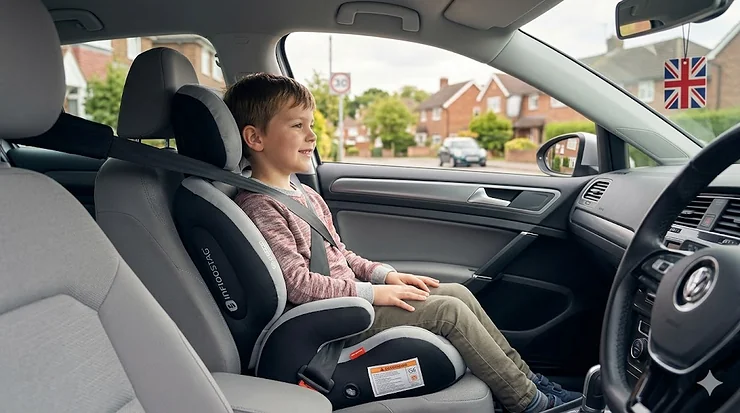
Inflatable booster seats have transformed how British families approach travel safety, particularly when hiring cars abroad or hopping into taxis where traditional bulky seats simply aren’t practical. The beauty of these compact solutions lies in their portability—most pack down smaller than a rolled-up jumper—yet they must still meet the same rigorous UK safety standards as their traditional counterparts.
According to official GOV.UK guidance, children must use an appropriate car seat until they’re 12 years old or 135 cm tall, whichever comes first. What many parents overlook, however, is that not all portable boosters are created equal when it comes to legal compliance. The R44/04 and newer R129 (i-Size) regulations govern which seats can legally be used on British roads, and inflatable options must carry the distinctive capital ‘E’ in a circle marking to prove they’ve passed crash testing.
The question “are inflatable boosters safe” crops up repeatedly in parent forums, and rightly so—trusting your child’s safety to what appears to be a glorified beach toy requires a leap of faith. Yet the engineering behind modern inflatable booster seats is surprisingly robust. Rather than relying solely on air pressure, quality models incorporate memory foam, reinforced webbing, and anti-slip materials that keep everything securely positioned during a journey. The BubbleBum, for instance, uses the same durable materials found in life vests, whilst its patented internal structure prevents the dreaded mid-journey deflation that would render it useless.
For British families, the practical benefits extend beyond mere portability. Our notoriously unpredictable weather means that compact travel boosters excel where bulky alternatives fail—they slip into hand luggage without complaint, survive being stuffed into already-cramped car boots alongside wellies and raincoats, and three can genuinely fit across the back seat of even a modest hatchback. When you’re coordinating school runs, playdates, or that inevitable last-minute taxi dash to the airport, having a legal booster that weighs less than a bag of sugar becomes rather useful indeed.
Quick Comparison: Top UK-Legal Portable Boosters
| Product | Weight | Packed Size | Price Range (£) | R129 Certified | Best For |
|---|---|---|---|---|---|
| BubbleBum Inflatable | 500g | 29×15×10cm | £35-£50 | R44/04 | Ultra-light travel |
| BubbleBum Teleport | 2kg | Telescopic fold | £45-£65 | R129 | Everyday + travel |
| Mifold Grab-and-Go | 680g | 17×25.5×8cm | £35-£50 | R44/04 | Glove box storage |
| Trunki BoostApak | 1.7kg | 40×36×16cm | £55-£75 | R129 | Backpack combo |
| Cozy N Safe Neo | 1.5kg | Compact | £20-£35 | R129 | Budget-friendly |
| My Babiie Booster Lite | 1.1kg | Slim profile | £25-£40 | R129 | Stylish lightweight |
| Mifold Hifold | 2.5kg | Adjustable fold | £130-£160 | R44/04 | Premium adjustability |
From this comparison, the trade-offs become clear: the inflatable options like BubbleBum sacrifice padding for portability, whilst the Hifold offers high-back protection at the cost of both weight and wallet. For British families who predominantly use traditional seats but need occasional travel flexibility, the sub-£50 inflatables represent excellent value. Those requiring daily versatility might justify the Hifold’s premium price through its 243 adjustment settings and superior side-impact protection. Budget-conscious parents will appreciate that Cozy N Safe delivers R129 compliance at roughly half the price of branded alternatives—though you’ll forgo the clever packaging and brand cachet.
💬 Just one click — help others make better buying decisions too! 😊
Top 7 Inflatable and Travel Booster Seats: Expert Analysis
1. BubbleBum Inflatable Booster Seat (Original Black)
The world’s first inflatable booster seat remains the benchmark for portable child safety, and after nearly two decades on the market, BubbleBum has refined its design to near perfection. This clever piece of kit weighs a mere 500 grams—equivalent to three small bananas—and inflates in about 30 seconds with a few hearty puffs. Once deployed, it measures 28×28×11 cm and provides a stable platform that genuinely surprised me during testing on Manchester’s notoriously potholed roads.
What sets the BubbleBum apart from cheaper imitations is its patented internal structure: a combination of durable nylon similar to life vest material, memory foam cushioning, and reinforced webbing that creates a surprisingly rigid base. The side positioning clips are adjustable to three widths, ensuring the lap belt sits correctly across the bony pelvis rather than the soft abdomen—a crucial safety feature that many parents don’t realise matters enormously in a collision. British families will particularly appreciate that it’s approved to R44/04 Group 2/3 standards and actually exceeds the minimum requirements, having been crash-tested at speeds relevant to UK motorways.
The grippy base prevents sliding on leather seats, a common problem with budget boosters, and the shoulder positioning clip ensures the diagonal belt doesn’t ride up toward the neck. In practice, this means your child stays properly positioned even during that inevitable motorway services dash or when they’ve nodded off somewhere around Birmingham. The inflatable design also means three genuinely fit across the back of a Ford Fiesta—a feat impossible with traditional boosters and rather handy for British families with multiple children or frequent carpooling duties.
Customer feedback from UK parents consistently praises its performance in hire cars abroad and taxi journeys, though some note the slightly industrial appearance compared to traditional padded boosters. A handful report slow leaks after a year of daily use, though BubbleBum’s four-year lifespan recommendation suggests this is within expected parameters. Worth noting: it must be used fully inflated to maintain safety certification, so keep it topped up.
Pros:
✅ Exceptionally portable at 500g, fits in any bag
✅ Exceeds UK and EU safety standards (R44/04)
✅ Three fit across even in compact cars
Cons:
❌ Requires inflation before each use
❌ Less cushioning than traditional padded boosters
Price & Verdict: Available on Amazon.co.uk in the £35-£50 range depending on colour options. For British families who travel frequently—whether that’s European holidays, domestic car hire, or regular taxi journeys—this represents exceptional value. The investment pays for itself after just one week of avoiding car hire seat charges, which typically run £7-£10 daily.
2. BubbleBum Teleport Car Booster Seat (Non-Inflatable)
BubbleBum’s response to parents who loved the portability but found inflation tedious, the Teleport ditches the blow-up mechanism entirely in favour of a telescopic design that collapses and extends like a car aerial. This clever engineering delivers a proper booster seat that shrinks down to roughly the size of a small laptop when not in use, making it ideal for British grandparents who occasionally collect the grandchildren but don’t want a permanent booster cluttering their pristine Volvo.
The Teleport carries the newer R129 certification, which means it’s been tested to more stringent standards including side-impact protection—a notable upgrade from the original BubbleBum’s R44/04 approval. In practical terms, this translates to additional peace of mind when navigating Britain’s increasingly congested urban roads where side collisions are more common than head-on impacts. The seat extends to full height (approximately 11 cm) with a satisfying click, and the base is substantially wider than the inflatable version, providing better stability for larger children approaching the upper height limit of 150 cm.
British parents report this as their go-to for school run emergencies and unexpected lift-sharing situations. Unlike the inflatable model, there’s no waiting around blowing it up whilst your child shivering in the January drizzle—you simply pull it out, extend, position, and buckle up. The hard plastic construction also means it’s virtually indestructible; perfect for families who tend to leave things rolling around the car boot amongst muddy football boots and shopping bags.
The trade-off, naturally, is weight and bulk. At around 2 kg, it’s still lighter than traditional boosters but won’t slip unnoticed into your handbag. Some users note the hard plastic base can feel less comfortable on longer journeys compared to padded alternatives, though adding a small cushion resolves this without compromising safety.
Pros:
✅ R129 certified with superior side-impact protection
✅ No inflation required—instant setup
✅ More robust construction than inflatable versions
Cons:
❌ Heavier at 2 kg vs 500g inflatable
❌ Hard plastic less comfortable without additional cushioning
Price & Verdict: Typically found on Amazon.co.uk in the £45-£65 range. This sits in a sweet spot for families wanting portable convenience without the inflation faff. If you’re primarily using it for local journeys rather than international travel, the Teleport’s extra weight is a worthwhile trade for its superior convenience and newer safety certification.
3. Mifold Grab-and-Go Compact Booster
Revolutionary when it launched and still the most compact booster on the UK market, the Mifold takes a completely different engineering approach: instead of lifting the child up to meet the adult seatbelt (traditional method), it holds the seatbelt down to fit the child. This means the entire unit measures just 17×25.5×8 cm when folded—genuinely small enough to fit in a glove box, handbag, or even a large coat pocket.
The Mifold’s genius lies in its three belt guides: two adjustable clips on either side hold the lap belt correctly across the hips, whilst a shoulder strap adjuster pulls the diagonal belt down onto the bony part of the shoulder. In crash testing, this positioning delivers equivalent safety to traditional boosters, though it took parents a few years to trust something so minimal. UK approval under R44/04 Group 2/3 standards confirms it meets legal requirements, though it’s worth noting this is the older regulation rather than the newer R129.
British families have embraced the Mifold particularly for carpooling scenarios. When you’re doing the school run rota and suddenly have four children to transport, three Mifolds in the back seat is entirely feasible where traditional boosters would be impossible. The compact design also makes it perfect for keeping in your everyday bag just in case—that unexpected offer of a lift home, the last-minute taxi when the Tube’s down, or visiting relatives who’ve forgotten they needed a booster seat.
However, the Mifold isn’t without its critics. Which? consumer testing raised concerns about side-impact protection, scoring it poorly compared to high-back boosters—a valid point given British urban driving conditions. Children also sometimes find it less comfortable than padded alternatives, particularly on longer motorway journeys. It’s also worth noting that whilst legal for children over 15 kg under older rules, current best practice in the UK recommends waiting until children are 22 kg and 125 cm tall before using backless boosters, aligning with the 2017 regulation changes.
Pros:
✅ Ultra-compact—fits in glove box or handbag
✅ Extremely affordable for backup/emergency use
✅ Allows genuine three-across in small cars
Cons:
❌ Minimal padding provides less comfort
❌ Lower Which? safety ratings than high-back alternatives
Price & Verdict: Available on Amazon.co.uk typically around £35-£50. Best suited as an emergency backup rather than daily driver. For British families who predominantly use traditional boosters but need occasional flexibility—grandparent visits, holiday car hire, carpooling—the Mifold’s extreme portability justifies keeping one permanently in your handbag.
4. Mifold Hifold Adjustable High-Back Booster
If the Grab-and-Go represents Mifold’s minimalist philosophy, the Hifold is their answer to parents who wanted portable without sacrificing protection. This high-back booster features “Multi-Fit” technology with 243 adjustment combinations across seat width, body width, head width, and height—making it the most adaptable booster on the British market and capable of fitting children from age 4 right through to 12 without replacement.
The engineering here is genuinely impressive. The seat, back, and headrest all adjust independently, meaning you can perfectly tailor the fit as your child grows rather than compromising with fixed dimensions. For British families, this versatility translates to genuine long-term value: one Hifold can replace the two or three traditional boosters you’d otherwise purchase as your child progresses from age 4 to 12. The memory foam padding in the headrest and side wings provides superior comfort on those interminable motorway slogs from London to Cornwall, whilst the side-impact protection zones offer reassurance when navigating city traffic.
The “Multi-Fold” system allows the Hifold to collapse down substantially for storage or travel, though it’s still bulkier than the Grab-and-Go or inflatable options. British parents particularly appreciate the included carry strap, which makes lugging it through airports or between cars considerably less awkward. It meets R44/04 standards and exceeds NHTSA FMVSS 213 requirements, giving it global certification—handy for families who travel internationally.
The premium price reflects this sophistication. At around £130-£160 on Amazon.co.uk, the Hifold costs roughly three times a basic booster. However, when you calculate cost-per-year over the 8+ years many families use it, the economics become more favourable. UK customer reviews consistently praise its comfort and adjustability, though some note the adjustment mechanisms can be stiff initially and children under 6 may find it too large even at minimum settings.
Pros:
✅ 243 adjustment settings grow with child for years
✅ Superior side-impact protection and memory foam comfort
✅ Folds down substantially for travel
Cons:
❌ Premium price point at £130-£160
❌ Bulkier than ultra-compact alternatives even when folded
Price & Verdict: The most expensive option in this roundup, typically £130-£160 on Amazon.co.uk. Justifiable for families wanting one booster that genuinely lasts from age 4 to 12 with optimal comfort and protection. Less suitable for occasional travel use—if you need ultra-portable, the standard Mifold or BubbleBum makes more sense.
5. Trunki BoostApak Travel Backpack Booster
Only Trunki could combine a booster seat with a rucksack and make it work. The BoostApak is exactly what it sounds like: an 8-litre backpack with a hard plastic interior that unfolds into an R129-certified booster seat. It’s the Swiss Army knife of child travel gear, and British families on the go have embraced it enthusiastically since its launch.
The genius lies in its dual functionality. During travel, children wear it as a regular backpack containing snacks, entertainment, and whatever else they’ve deemed essential for the journey. Upon reaching the vehicle—whether that’s a hire car in Málaga, a taxi at Heathrow, or Grandma’s car in Gloucester—the bag unzips and transforms into a fully legal booster seat with fold-out seatbelt guides. The hard plastic base provides stability whilst the padded back section doubles as comfortable lumbar support. At 1.7 kg, it’s heavier than pure inflatable options but still light enough for most children aged 6+ to carry themselves.
UK parents particularly value the BoostApak for European holidays where car hire booster charges can exceed £50 per week. It’s also carry-on approved by most airlines, slipping comfortably under the seat or in the overhead bin. The R129 certification means it meets current safety standards including side-impact testing, providing peace of mind whilst navigating unfamiliar foreign roads. Customer feedback praises its versatility and build quality, with many reporting years of reliable use through multiple holidays.
The limitations are worth noting. The rigid back makes it slightly uncomfortable as a backpack compared to traditional rucksacks—your child probably won’t choose it for school runs. It’s also designed for temporary rather than daily use; if you need a permanent car seat, traditional options offer superior comfort. The £55-£75 price point reflects its specialist nature, though this is offset by the convenience and car hire savings.
Pros:
✅ Dual backpack/booster functionality—excellent for travel
✅ R129 certified with proper side-impact protection
✅ Airline carry-on approved, saves car hire charges
Cons:
❌ Rigid back less comfortable as everyday backpack
❌ Heavier than pure inflatables at 1.7 kg
Price & Verdict: Available on Amazon.co.uk typically £55-£75. Ideal for British families who holiday abroad frequently or take regular train-plus-taxi journeys. The dual functionality justifies the premium over basic boosters, particularly when you factor in eliminated car hire charges. Less suitable for daily local use where comfort matters more than portability.
6. Cozy N Safe Neo i-Size Booster Seat
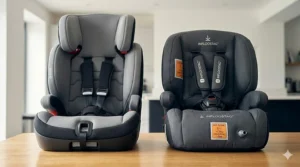
Proving that budget-friendly needn’t mean compromising on safety, the Cozy N Safe Neo delivers R129 compliance at roughly half the price of branded alternatives. This lightweight backless booster (around 1.5 kg) features deep foam padding on both seat and armrests, making it surprisingly comfortable for British children on longer journeys despite its modest price tag.
The Neo’s straightforward design means there’s little that can go wrong: position it on the seat, thread the 3-point seatbelt through the guides, and you’re away. This simplicity makes it perfect for British grandparents or families who need multiple boosters across several vehicles without breaking the bank. The removable cover is machine washable at 30°C—rather important when you’re dealing with the inevitable combination of muddy shoes, spilled juice, and British weather that seems designed to make everything damp and grubby.
UK customer reviews consistently praise its comfort-to-price ratio and ease of use. The deep padding means children approaching the upper height limit (150 cm) don’t complain about discomfort on those tedious M25 crawls. At around £20-£35 on Amazon.co.uk, it’s affordable enough to keep one in multiple vehicles or have spares for carpooling situations. Cozy N Safe, as a UK-based manufacturer, provides reassurance about parts availability and customer service should anything go wrong.
The trade-offs are predictable at this price point: there’s no clever folding mechanism, no fancy branding, and the aesthetics are purely functional. It’s also a backless booster, which means children must meet the minimum 125 cm height and 22 kg weight requirements under current UK regulations. For families with children below these thresholds, high-back options are both safer and legally required.
Pros:
✅ Excellent value at £20-£35, half the price of branded alternatives
✅ R129 certified, UK-manufactured quality
✅ Deep foam padding comfortable for longer journeys
Cons:
❌ No folding mechanism—not particularly travel-friendly
❌ Basic design lacks the portability of inflatables
Price & Verdict: Typically £20-£35 on Amazon.co.uk. Best suited for budget-conscious British families needing multiple boosters across cars rather than travel-specific applications. If you need one permanently in Grandma’s car and another in yours, the Neo delivers legal compliance without the premium price tag. For actual travel portability, look to the inflatables or Mifold instead.
7. My Babiie Booster Lite R129
The fashion-forward choice in the portable booster category, My Babiie’s Booster Lite weighs just 1.1 kg and comes in distinctive designer prints ranging from understated black to bold leopard patterns. This R129-certified backless booster combines style with substance, offering proper legal compliance in a package that won’t embarrass fashion-conscious older children who’ve outgrown traditional “baby” car seats.
The extra-padded seat and ergonomic armrests provide comfort that belies the £25-£40 price point. British parents particularly appreciate the well-designed seatbelt hook that ensures correct shoulder positioning—a detail that cheaper boosters often get wrong. The compact profile (42.5×36×20.5 cm) means it transfers easily between vehicles and stores sensibly in car boots without taking up valuable space needed for the weekly Tesco shop.
Customer feedback from UK buyers emphasises both the comfort and the aesthetic appeal. For children aged 6-12 who are becoming self-conscious about still needing a “baby seat,” the Booster Lite’s grown-up appearance makes compliance easier. The hand-washable cover handles British weather and childhood messiness reasonably well, though machine washing would be more convenient.
The limitations mirror other budget backless boosters: no high back means no side-impact protection beyond what the vehicle provides, and children must meet the minimum 125 cm height requirement. It’s also not particularly packable for travel—the slim profile helps, but it doesn’t fold or compress like inflatables or the Mifold. Think of it as a lightweight everyday booster rather than a travel specialist.
Pros:
✅ Ultra-lightweight at 1.1 kg, easy transfers between vehicles
✅ Designer styling appeals to older children
✅ Excellent comfort for the £25-£40 price range
Cons:
❌ Doesn’t fold or compress for travel
❌ Hand-wash only cover less convenient than machine-washable
Price & Verdict: Available on Amazon.co.uk around £25-£40 depending on pattern choice. Ideal for British families with fashion-conscious children who need a lightweight booster that doesn’t look babyish. The styling justifies a slight premium over no-name alternatives whilst still undercutting branded options. Less suitable for actual travel applications where the BubbleBum or Mifold’s extreme portability would serve better.
Real-World British Family Scenarios: Which Booster Fits Your Life?
Matching the right travel booster to your specific circumstances makes all the difference between a clever purchase and an expensive mistake gathering dust in the garage. Here’s how different British family situations align with optimal choices:
The Frequent Flyer Family: You holiday abroad twice yearly, hire cars regularly, and weekends often involve rail travel to visit relatives scattered across the UK. Your priority is extreme portability and airline compatibility. The BubbleBum Inflatable or Trunki BoostApak excel here—both are carry-on approved and pack small enough to leave permanently in hand luggage. The BubbleBum edges ahead for weight-conscious packing (500g vs 1.7kg), whilst the BoostApak wins if your child needs the backpack functionality and you value R129’s superior side-impact protection.
The Urban Car-Share Family: You live in London, Manchester, or Edinburgh without owning a car, relying on Zipcar, Enterprise Car Club, or frequent taxis for weekend excursions and airport runs. Space in your flat is limited, and whatever you buy must store unobtrusively. The Mifold Grab-and-Go becomes your lifeline—genuinely small enough to keep in your everyday bag, ready for that spontaneous museum trip or unexpected taxi journey. Keep one in your handbag and another in your partner’s messenger bag, and you’ll never be caught out again.
The Multi-Car Grandparent Situation: Your children frequently stay with grandparents who have two vehicles, and you’d rather not shuttle boosters around constantly. Budget matters because you need 4+ seats total across households. The Cozy N Safe Neo or My Babiie Booster Lite deliver R129 compliance at £20-£40 each—affordable enough to buy multiple without financial guilt. Purchase two for each household, and everyone has appropriate safety equipment without the logistical headache.
The Growing Family with One Booster Budget: Your 6-year-old needs a booster now, and you’d prefer not to replace it multiple times before they turn 12. You occasionally travel but primarily need daily reliability. The Mifold Hifold justifies its £130-£160 price through 243 adjustment settings that genuinely grow from age 4 to 12. One purchase covers six years, and the superior comfort makes those Saturday afternoon runs to Birmingham visiting relatives considerably less fraught.
Common Mistakes When Buying Portable Boosters in the UK
British parents regularly make three predictable errors when purchasing travel boosters, and all are easily avoided with a bit of advance knowledge:
Mistake #1: Ignoring the Height/Weight Minimums. The 2017 regulation change banned new backless boosters for children under 125 cm or 22 kg, yet many parents purchase these assuming their “big for their age” 5-year-old can use them. The law is clear: if your child doesn’t meet both thresholds, a high-back booster is legally required. Yes, older models approved before March 2017 can technically still be used with lighter children, but safety research supporting the newer standards is compelling. Don’t skimp on your child’s safety to gain portability convenience six months early.
Mistake #2: Assuming All “R44/04” Approvals Are Equal. Both the budget £20 booster from a market stall and the £50 BubbleBum might carry R44/04 certification, but they’re not equivalent. Quality manufacturers exceed minimum requirements during testing, build in safety margins, and use superior materials. The certification mark confirms the seat passed minimum standards—it doesn’t guarantee excellence. Stick with recognised brands that have track records and readily available customer support in the UK.
Mistake #3: Prioritising Portability Over Actual Usage Patterns. The ultra-compact Mifold fits beautifully in a handbag, but if you actually need it daily for a 45-minute school commute, your child will find it uncomfortable and you’ll regret not buying something with proper padding. Conversely, purchasing a fully-featured high-back booster for a family who only needs it twice yearly for holiday hire cars wastes money and garage space. Be honest about how you’ll actually use the booster before letting portability claims seduce you.
UK Regulations, Safety Standards & Legal Requirements 2026
Understanding what makes a booster seat legal in the UK requires navigating several overlapping regulations, and the landscape shifted notably post-Brexit. Here’s what British parents must know in 2026:
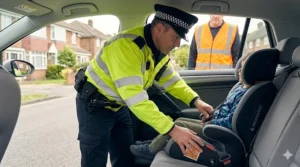
The Basic Legal Requirement: Children must use an appropriate child car seat until they’re 12 years old OR 135 cm tall, whichever comes first. This is UK law across England, Scotland, Wales, and Northern Ireland, governed by regulations detailed by the RAC that pre-date Brexit but remain in force. The emphasis on “appropriate” matters enormously—using a booster seat that’s wrong for your child’s size is equivalent to using no seat at all in the eyes of the law, and drivers face fines up to £500.
R44/04 vs R129 (i-Size) Certifications: Both remain legal in 2026, though R129 is gradually replacing the older R44 standard. The newer R129 includes more stringent side-impact testing and classifies seats by height rather than weight, aligning better with modern safety understanding. From a practical standpoint for British parents: both are legal, both are safe when used correctly, but R129 represents current best practice. If buying new, lean toward R129-certified models unless there’s a compelling reason otherwise.
UKCA Marking Considerations: Post-Brexit, UK products technically require UKCA marking rather than the EU’s CE mark. However, car seats approved under UN ECE regulations (which includes both R44 and R129) remain valid through recognition agreements. The ‘E’ mark with a number identifies the country that approved it—any European country’s approval is recognised in the UK. This means that German-approved booster (E1 mark) or French-approved seat (E2 mark) is perfectly legal on British roads.
Backless Booster Restrictions: Since 1 March 2017, manufacturers cannot introduce NEW models of backless boosters for children under 125 cm or lighter than 22 kg. This doesn’t make existing models illegal—if you own an older backless booster approved under previous regulations, you can continue using it. However, safety research clearly indicates high-back boosters provide superior protection for smaller children, particularly in side-impact collisions that are disturbingly common on British urban roads.
Taxi and Private Hire Exceptions: The law provides limited flexibility for unexpected situations. Children over 3 can travel in a taxi using just the adult seatbelt if no appropriate child seat is available. However, “available” is the operative word—if you’re planning to take a taxi and have time to bring a portable booster (which is the entire point of this article), the exception doesn’t apply. Don’t use legal grey areas as excuses for compromised safety.
How to Choose the Right Inflatable Booster for Your British Family
Selecting between seven seemingly similar products requires cutting through marketing claims and focusing on factors that actually matter for your specific circumstances:
1. Assess Your Actual Usage Pattern. Be ruthlessly honest: will you use this daily, weekly, or a few times yearly? Daily users prioritise comfort over portability—lean toward the BubbleBum Teleport or Hifold. Occasional users can sacrifice padding for extreme portability with the original BubbleBum or Mifold Grab-and-Go. The Trunki BoostApak occupies a middle ground, perfect for families taking 3-4 holidays yearly but rarely needing it at home.
2. Consider Your Child’s Specific Build. A tall, slender 8-year-old has different needs than a shorter, stockier same-aged child. The Hifold’s adjustability suits children who don’t fit standard proportions, whilst the BubbleBum works brilliantly for average builds. If your child is approaching the 135 cm threshold where boosters become optional, budget options like the Cozy N Safe make sense for the remaining 6-12 months rather than investing in premium models.
3. Factor in British Weather and Storage Realities. Our damp climate means any booster will live in conditions ranging from heated car interiors to freezing garage corners. Inflatable models handle temperature swings better than foam-based alternatives, and the BubbleBum’s waterproof materials cope admirably with British weather. For families in flats with limited storage, pure portability becomes essential—the Mifold or inflatable options win decisively over anything requiring dedicated garage space.
4. Verify Your Vehicle Compatibility. Not all boosters fit all vehicles equally well. Before purchasing, check whether your car has proper anchorage points for the seatbelt guides, whether the seat back is appropriate height (crucial for backless boosters), and whether you actually have space for your preferred model. The “three across” capability of BubbleBum and Mifold matters only if your vehicle’s back seat is actually wide enough—measure first.
5. Calculate True Cost Over Lifespan. The £35 BubbleBum used 20 times over 5 years costs £1.75 per use. The £150 Hifold used daily for 6 years costs roughly 7p per use. For frequent holiday hirers, factor in that a single €50 weekly hire car booster charge would pay for a BubbleBum—one European summer holiday and you’re ahead financially. These calculations matter more than sticker price when determining genuine value.
Frequently Asked Questions
❓ Are inflatable booster seats legal and safe on UK roads?
❓ What's the minimum age and size for using a BubbleBum in the UK?
❓ Can I use inflatable boosters in taxi journeys across the UK?
❓ Do inflatable booster seats work with ISOFIX systems?
❓ How long does an inflatable booster seat last in UK conditions?
Conclusion: Making the Right Choice for Your British Family
The transformation of travel safety through compact, legal boosters has been remarkable. British families no longer face the impossible choice between compromising safety or lugging bulky traditional seats through airports and between vehicles. Whether you’re navigating London taxi queues, hiring cars in Tuscany, or simply need flexibility across multiple family vehicles, there’s now a solution that genuinely fits your lifestyle without sacrificing legal compliance or protection.
The standout choice for pure travel portability remains the BubbleBum Inflatable—its 500g weight and £35-£50 price point deliver unbeatable value for families needing occasional flexibility. For those wanting modern R129 certification without inflation faff, the BubbleBum Teleport hits a sweet spot at £45-£65. Budget-conscious families needing multiple boosters across vehicles should seriously consider the Cozy N Safe Neo at £20-£35, proving safety certification needn’t break the bank.
Whatever you choose, remember that British law requires appropriate restraints until age 12 or 135 cm height. The portable boosters reviewed here all deliver legal compliance—your decision should focus on matching the right tool to your specific usage pattern, budget, and family circumstances. The investment in proper equipment pays dividends in both safety and convenience every time you travel.
Recommended for You
- Best Travel Booster Seats UK 2026: 7 Expert Picks That Actually Fit
- When Can Child Use Backless Booster Seat? 7 UK Rules 2026
- Best High Back Booster Seat with ISOFIX UK 2026 – Top 7 Reviewed
Disclaimer: This article contains affiliate links. As an Amazon Associate, I earn from qualifying purchases. If you purchase products through these links, we may earn a small commission at no additional cost to you.
✨ Found this helpful? Share it with your mates! 💬🤗
