
In This Article
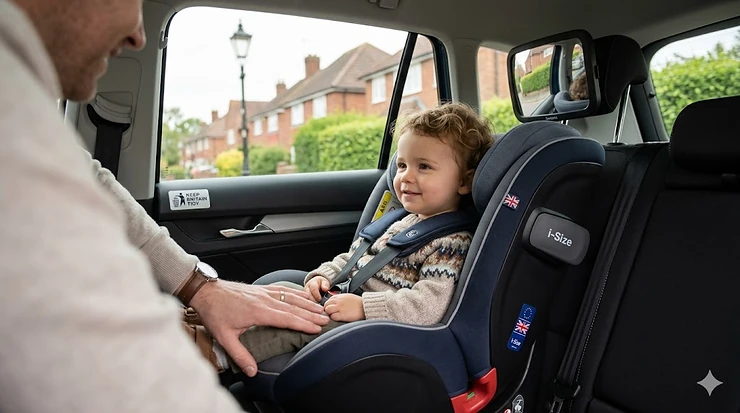
Finding the perfect i-size car seat birth to 4 years can feel rather overwhelming when you’re faced with dozens of options, conflicting reviews, and a bewildering array of safety standards. I’ve spent years advising British parents on car seat selection, and the question I hear most often is this: “Which single seat will keep my child safe from newborn right through to preschool?”

The answer lies in understanding what makes R129 (i-Size) regulation truly different from the older R44 standard. Since September 2024, R129 has fully replaced R44/04 for all new car seats sold in the UK and EU, meaning every new seat you purchase now must meet these stricter requirements. What does this mean for your family? Enhanced side-impact testing, height-based sizing that’s easier to track than weight, and mandatory rear-facing travel until at least 15 months—though safety experts strongly recommend extending this to four years where possible.
The i-size car seat birth to 4 years category represents brilliant value for British families. Rather than purchasing a separate infant carrier and toddler seat, one well-chosen model covers the entire period from hospital discharge to nursery school. In this guide, I’ll walk you through seven thoroughly researched options available on Amazon.co.uk, examining real-world performance in British conditions—because a car seat that performs beautifully in California sunshine needs different consideration when it’s facing six months of Manchester drizzle.
Whether you’re navigating the narrow streets of Bath in a compact hatchback or managing school runs across rural Scotland in a family estate, you’ll find practical, UK-focused guidance here. Let’s ensure your little one travels safely, comfortably, and legally through those crucial early years.
Quick Comparison: Top i-Size Car Seats at a Glance
| Car Seat Model | Height Range | Rear-Facing Until | 360° Rotation | Approx. Price Range (£) | Best For |
|---|---|---|---|---|---|
| Maxi-Cosi Emerald 360 Pro | 40-150cm (birth-12 years) | 105cm (≈4 years) | ✅ Yes (SlideTech) | £380-£420 | Long-term investment, all-in-one solution |
| Joie i-Spin 360 | 40-105cm (birth-4 years) | 105cm (≈4 years) | ✅ Yes | £220-£280 | Best value, excellent safety ratings |
| Nuna PRYM | 40-105cm (birth-4 years) | 105cm (≈4 years) | ✅ Yes | £350-£400 | Premium features, auto side-impact shields |
| Cybex Sirona Gi i-Size | 45-105cm (4 months-4 years) | 87cm (≈2 years) | ✅ Yes | £240-£290 | Smaller cars, shorter rear-facing |
| Britax Römer Dualfix M i-Size | 61-105cm (3 months-4 years) | 105cm (≈4 years) | ✅ Yes | £260-£320 | Robust build, British brand reliability |
| Maxi-Cosi Pearl 360 Pro | 40-105cm (birth-4 years) | 105cm (≈4 years) | ✅ Yes (SlideTech) | £280-£330 | Premium comfort, temperature regulation |
| Silver Cross Motion All Size 360 | 40-105cm (birth-4 years) | 105cm (≈4 years) | ✅ Yes | £200-£250 | British heritage, compact footprint |
💬 Just one click — help others make better buying decisions too! 😊
Top 7 i-Size Car Seats Birth to 4 Years: Expert Analysis
1. Maxi-Cosi Emerald 360 Pro — The Ultimate All-in-One Investment
The Maxi-Cosi Emerald 360 Pro represents the pinnacle of what a single car seat can achieve: genuine birth-to-12-years functionality without compromise. Designed to take your child from birth right through to around 12 years old, it adapts as they grow, starting with a supportive Newborn Inlay, then transitioning through toddler stages, and eventually into a high-back booster seat.
What sets this apart from cheaper alternatives is Maxi-Cosi’s SlideTech mechanism, which allows the seat to glide out towards you by up to 17cm from the base. For British parents wrestling with tight supermarket car parks or narrow terraced housing driveways, this feature transforms daily usability. You’re not contorting yourself into awkward positions whilst balancing a wriggly toddler—the seat comes to you.
The 360° rotation works in any recline position across five adjustable angles, and the headrest adjusts through fifteen different height settings. In my experience advising families, this adaptability proves crucial during the unpredictable growth spurts between ages one and three. One month your child fits perfectly; three months later they’ve shot up 5cm and you’re frantically readjusting everything.
UK parents particularly appreciate the integrated ISOFIX base with support leg for ages 0-4, then seamless transition to seatbelt installation for older children. The G-CELL side-impact protection and R129 compliance mean you’re getting the highest current safety standard, whilst the Eco Care fabrics (100% recycled polyester) address environmental concerns without sacrificing comfort.
Customer feedback: British reviewers consistently praise the smooth rotation mechanism and the way SlideTech eliminates back strain during the infant stage. Some note the seat’s substantial footprint—it’s not ideal for three-across seating in smaller vehicles like a Volkswagen Polo or Ford Fiesta.
✅ Pros:
- Genuine birth-to-12-years capability eliminates multiple purchases
- SlideTech reduces parent back strain significantly
- Extended rear-facing to 105cm (approximately four years)
❌ Cons:
- Large footprint unsuitable for compact cars or three-across seating
- Premium price point (around £380-£420) though amortised over 12 years, the per-year cost is excellent
Price verdict: At around £400, this represents exceptional long-term value when you consider it replaces infant carrier, toddler seat, and booster—potentially £600-£800 worth of separate purchases.
2. Joie i-Spin 360 — Best Value Extended Rear-Facing Seat
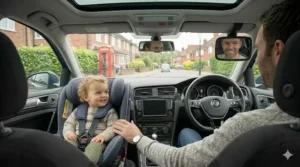
The Joie i-Spin 360 has earned cult status amongst British parents for one simple reason: it delivers premium safety features at a mid-market price point. A great all-rounder, the Joie i-Spin 360 is a popular choice among Mumsnet users thanks to its design, ease of installation and rearward-facing longevity.
This seat supports extended rear-facing from birth all the way to 105cm (approximately four years), which aligns perfectly with expert safety recommendations. Safety experts and organisations such as Which? strongly recommend keeping children rear-facing for as long as possible—ideally until at least 15 months, and preferably up to 4 years. The i-Spin 360’s Guard Surround Safety panels provide additional head, body, and hip protection, whilst the Tri-Protect headrest incorporates three layers of cushioning including memory foam.
Installation via ISOFIX is straightforward—even for first-time parents unfamiliar with car seat fitting. The colour-coded indicators provide clear visual confirmation when everything’s locked correctly, reducing the anxiety that often accompanies initial setup. The ‘Grow with me’ insert comes in three removable pieces that adapt to your child’s size, meaning you’re not purchasing additional newborn accessories.
What British buyers particularly value is the Smart Ride lock-off feature, which prevents accidental forward-facing rotation before 15 months. Given that UK roads see their fair share of distractions—from navigating roundabouts to dealing with unpredictable weather—this safety backstop provides genuine peace of mind.
In damp British conditions, the breathable fabrics and ventilation panels prove their worth. Unlike some premium seats that trap heat and moisture, the i-Spin 360 maintains comfortable airflow during those inevitable summer traffic jams on the M25.
Customer feedback: UK reviewers highlight the excellent value proposition and the smooth one-handed recline function. The rotation mechanism receives consistent praise, though some note it’s slightly stiffer than the Cybex Sirona’s ultra-smooth spin.
✅ Pros:
- Outstanding value at £220-£280 for full extended rear-facing capability
- ADAC safety rating of 1.8 (very good) provides independent validation
- Smart Ride lock-off prevents premature forward-facing
❌ Cons:
- Rotation mechanism requires slightly more effort than premium alternatives
- Large footprint may challenge compact car owners
Price verdict: In the £220-£280 range, this offers exceptional value for families wanting extended rear-facing without premium pricing.
3. Nuna PRYM — Premium Innovation Meets Dutch Design Excellence
The Nuna PRYM brings Dutch design sensibility to the i-size car seat birth to 4 years category, and it shows in the thoughtful details. This premium and innovative product is a smart i-Size seat, which means it’s approved to the latest R129 regulations and boasts some impressive safety aspects, most notably the automatic deployment of side impact shields as soon as your child is seated.
That automatic side-impact shield deployment represents genuinely clever engineering. The moment your child’s weight settles into the seat, protective panels deploy instantly—no manual intervention required. For harried British parents juggling shopping bags, siblings, and the perpetual threat of rain, this removes one more thing from the mental checklist.
The reinforced steel frame and Smart Ride lock-off technology mirror features found on seats costing considerably more. Nuna includes two seat covers—one thermal for British winters, one mesh for summer—which proves surprisingly practical given our unpredictable climate. You’re not purchasing separate accessories when autumn arrives; simply swap the cover and carry on.
The 360° rotation mechanism operates smoothly, and seven recline positions ensure comfort whether your child’s wide awake watching the Cotswolds roll past or napping through Glasgow traffic. The load leg and rebound bar work together to absorb and redirect impact forces, whilst the memory foam padding (Tailor Tech technology) provides superior comfort during longer journeys.
One notable absence is a sun hood, which some competing models include. For parents who frequently park in sunny spots or drive during low-sun conditions (particularly relevant during British winter mornings and evenings), this represents a genuine omission.
Customer feedback: British buyers appreciate the premium materials and the automatic safety features, though installation requires careful attention to the manual—some suggest having two people for initial fitting, particularly in vehicles with tight ISOFIX access.
✅ Pros:
- Automatic side-impact shield deployment requires no manual activation
- Two seasonal seat covers (thermal and mesh) included
- ADAC rating of 2.1 (good) from independent testing
❌ Cons:
- No integrated sun hood unlike some competitors
- Premium pricing (around £350-£400) positions it above mid-market alternatives
Price verdict: At £350-£400, this sits in the premium tier, justified by innovative safety features and included accessories like dual seat covers.
4. Cybex Sirona Gi i-Size — Compact Solution for Smaller Vehicles
The Cybex Sirona Gi i-Size addresses a specific British challenge: fitting a safe, rotating car seat into genuinely compact vehicles like the Fiat 500, Mini Cooper, or Peugeot 108. Safe and high-quality UN R129 i-Size compliant extended rear-facing car seat with innovative 360° rotation mechanism, from birth up to approximately 4 years.
However, there’s an important caveat: whilst the seat is marketed for birth to four years, it only supports rear-facing travel to 87cm (approximately two years). This represents a significant limitation if you’re committed to extended rear-facing, as safety research consistently demonstrates that rear-facing is five times safer than forward-facing for young children.
That said, the Sirona Gi excels in ease of use. The 360° rotation mechanism is genuinely butter-smooth—noticeably easier to operate than the Joie i-Spin 360 or Britax Dualfix. For parents with mobility limitations or those recovering from C-sections, this reduced physical effort proves meaningful. The one-handed recline adjustment across five positions similarly simplifies daily use.
The ISOFIX installation with colour-coded indicators takes minutes rather than the anxiety-inducing hours some parents experience with belt-fitted seats. Twelve adjustable headrest positions ensure the seat grows with your child, though you’ll need to purchase the newborn insert separately for use from birth (another £30-£40 typically).
In smaller British cars—particularly those three-door hatchbacks popular in city centres—the Sirona Gi’s compact footprint becomes a genuine advantage. You can fit it behind the driver’s seat in a Ford Fiesta and still have reasonable legroom, which simply isn’t possible with bulkier alternatives.
Customer feedback: UK reviewers praise the silky-smooth rotation and appreciate the space-saving design, though many express disappointment about the shortened rear-facing period ending at approximately two years rather than four.
✅ Pros:
- Ultra-smooth 360° rotation requires minimal physical effort
- Compact footprint suits smaller vehicles and urban parking
- One-handed recline adjustment simplifies daily use
❌ Cons:
- Rear-facing only to 87cm (≈2 years), well short of the recommended four years
- Newborn insert sold separately adds £30-£40 to initial cost
Price verdict: At around £240-£290, the price is competitive, but the shortened rear-facing capability means you may need an additional seat sooner than expected.
5. Britax Römer Dualfix M i-Size — British Engineering Reliability
The Britax Römer Dualfix M i-Size represents thoroughly British values: robust engineering, no-nonsense functionality, and the sort of over-engineered sturdiness that makes it feel like it could survive a nuclear incident. Britax Römer is known for robust, high-quality car seats, and the DualFix M i-Size is a strong example of that.
This is a seat designed to stay put in one vehicle rather than being shuffled between cars. That substantial heft contributes directly to the ultra-sturdy feel and exceptional side-impact protection via high padded side wings and the SICT (Side Impact Cushion Technology). The Pivot Link ISOFIX system represents clever engineering: during a collision, impact forces are directed down into the vehicle seat and then forward, reducing the rotational movement that causes injuries.
Extended rear-facing to 105cm (approximately four years) aligns with safety expert recommendations, and the support leg provides additional stability that’s particularly reassuring on bumpy British B-roads or during motorway emergency braking. The 360° swivel action facilitates easy child placement, though some parents find the rotation mechanism stiffer than the Cybex equivalent—this appears deliberate, preventing accidental movement rather than a design flaw.
The seat earns an ADAC rating of 2.1 (good), providing independent validation beyond manufacturer claims. For families prioritising crash-test performance over convenience features, this score matters more than marketing fluff about “revolutionary” this or “innovative” that.
One consideration: suitable from three months rather than birth, so you’ll need a separate infant carrier for the first few months. This adds cost and complexity, though many families already own an infant carrier compatible with their pram system.
Customer feedback: British reviewers consistently praise the bomber-proof build quality and the reassuring solidity during installation, though some note the seat’s substantial weight (around 15kg) makes moving between vehicles impractical.
✅ Pros:
- Exceptionally robust construction feels reassuringly solid
- Extended rear-facing to 105cm (approximately four years)
- Pivot Link ISOFIX technology provides superior crash protection
❌ Cons:
- Suitable from three months, requiring separate infant carrier for newborn stage
- Substantial weight (≈15kg) limits portability between vehicles
Price verdict: At £260-£320, this represents solid mid-premium value, though factor in the cost of a separate infant carrier for the first three months.
6. Maxi-Cosi Pearl 360 Pro — Temperature-Regulating Comfort Champion
The Maxi-Cosi Pearl 360 Pro tackles a problem that British parents know all too well: maintaining comfortable cabin temperature when weather swings from 5°C drizzle to unexpected 25°C sunshine within the same week. The Pearl 360 Pro has an extra-spacious seat, so your baby has plenty of room to grow over the years.
The ClimaFlow technology represents genuinely practical innovation rather than marketing gimmick. Ventilation panels, breathable foam, and carefully selected fabrics work together to prevent that clammy, overheated feeling that afflicts so many car seats during British summer. Equally, the thermal properties prevent excessive heat loss during January school runs when the car hasn’t fully warmed up.
Installation on the FamilyFix 360 Pro base (sold separately, adding approximately £220 to the total investment) brings Maxi-Cosi’s signature SlideTech functionality. The seat both rotates 360° and slides out towards you by up to 17cm, dramatically reducing the back strain associated with repeatedly lifting a growing toddler into a rear-facing position.
Five recline positions ensure comfort whether your child’s watching the Peak District scenery or napping through Norfolk’s arrow-straight A-roads. The Easy-in harness system incorporates magnetic buckle holders that stay out of the way when placing your child, then click satisfyingly into position—one of those small details that transforms daily usability.
The G-CELL side-impact protection provides superior crash performance, whilst the headrest adjusts through multiple positions as your child grows from 40cm newborn to 105cm preschooler (approximately four years). The Eco Care fabrics align with environmentally conscious parenting without sacrificing durability.
Customer feedback: British parents particularly value the temperature regulation during unpredictable weather, and appreciate the premium feel of materials. The requirement for a separate base adds complexity and cost, though families with multiple vehicles can purchase additional bases rather than moving the entire seat.
✅ Pros:
- ClimaFlow temperature regulation performs brilliantly in variable British weather
- SlideTech sliding mechanism reduces back strain significantly
- Premium materials and build quality justify the investment
❌ Cons:
- Requires FamilyFix 360 Pro base (sold separately, ≈£220 additional)
- Total system cost (seat + base) reaches £500-£550
Price verdict: The seat alone costs around £280-£330, but factor in the essential base (£220) for total investment of approximately £500-£550.
7. Silver Cross Motion All Size 360 — British Heritage Meets Modern Safety
The Silver Cross Motion All Size 360 brings over 140 years of British pram-making heritage to the modern i-size car seat birth to 4 years category. This is a brand synonymous with British royalty and premium nursery equipment, now applying that expertise to car seat safety.
The Motion All Size 360 supports extended rear-facing from birth to 105cm (approximately four years), with forward-facing capability from 15 months onward. The 360° rotation mechanism operates smoothly, whilst multiple recline positions ensure comfort during those endless British motorway journeys to visit grandparents in distant counties.
What distinguishes Silver Cross in the marketplace is the relatively compact footprint despite offering full functionality. For families managing Britain’s narrow residential streets, tight parking spaces, and the general spatial constraints of urban life, this matters enormously. You’re not sacrificing boot space or rear-seat legroom to the same extent as bulkier alternatives.
The ISOFIX installation with colour-coded indicators provides foolproof setup, whilst the integrated side-impact protection and R129 compliance ensure your child benefits from the latest safety standards. The premium fabrics reflect Silver Cross’s pram heritage—these are materials designed to withstand years of British weather and constant use without looking tatty.
At around £200-£250, the Motion All Size 360 represents excellent value from a premium British brand. You’re paying for proven engineering and quality control rather than gimmicky features or unnecessarily complex mechanisms.
Customer feedback: British buyers appreciate supporting a heritage brand and value the space-efficient design, though some note the seat lacks some premium features found on pricier alternatives like automatic side-impact deployment or temperature regulation systems.
✅ Pros:
- Competitive pricing (around £200-£250) from premium British brand
- Compact footprint suits smaller vehicles and urban environments
- Extended rear-facing to 105cm (approximately four years)
❌ Cons:
- Fewer premium features than similarly-priced international competitors
- Limited availability compared to mass-market brands
Price verdict: At £200-£250, this offers solid value, particularly for families valuing British heritage and space-efficient design.
Real-World Installation Guide: Making i-Size Work in British Conditions
Installing an i-size car seat birth to 4 years properly can mean the difference between optimal protection and dangerous vulnerability during a collision. Having guided dozens of British families through this process, I’ve identified the mistakes that crop up repeatedly—particularly in our unique driving conditions.
Tackling Damp and Condensation
British weather creates challenges absent in California or Australia. ISOFIX points located behind rear seats can accumulate condensation, particularly in vehicles parked outdoors overnight during autumn and winter. Before installation, check the ISOFIX points are dry and free from corrosion. A quick wipe with a dry cloth takes thirty seconds and prevents installation issues.
The seat fabric will encounter dampness from wet coats, soggy wellies, and the general British experience of perpetual moisture. Remove the seat cover monthly and air it thoroughly—don’t rely solely on washing machine cycles. Mould and mildew thrive in damp car interiors, and child car seats provide perfect conditions if neglected.
Optimising Limited Space
British cars tend towards the compact compared to American SUVs or Australian utes. When installing in vehicles like the Volkswagen Polo, Ford Fiesta, or Peugeot 208, every centimetre matters. Position the front passenger seat as far forward as comfortable before installing the car seat—you can adjust backward slightly if needed, but starting with maximum clearance prevents frustration.
For three-across installations in vehicles like the Ford Focus or Vauxhall Astra, measure the available width before purchasing. Some rotating seats simply won’t fit three abreast, no matter how determined you are. The Silver Cross Motion and Cybex Sirona Gi offer narrower profiles than bulkier alternatives.
Managing the British School Run
The daily school run presents unique installation challenges. You’re frequently getting children in and out during rain, wind, or that peculiar British combination of both simultaneously. Position the car seat on the kerbside (typically the left rear seat in the UK) to avoid children stepping into traffic. The 360° rotation becomes genuinely useful here—spin the seat towards the pavement, shelter your child with an umbrella, get them settled, then rotate back to travel position.
During winter’s 4pm darkness, good cabin lighting matters enormously. Keep a small torch in the door pocket for checking harness positioning and buckling when natural light disappears. Those colour-coded ISOFIX indicators prove their worth when you can barely see what you’re doing.
Comparing i-Size vs Traditional Group 0+/1 Seats: What British Parents Need to Know
The transition from weight-based (R44/04) to height-based (R129/i-Size) regulations fundamentally changed how we select and use car seats in the UK. R129, also known as the i-Size regulation, is the current European safety standard for child car seats, and understanding the practical implications helps British families make informed decisions.
Height Makes More Sense Than Weight
Ask any British parent their child’s exact weight at a given moment, and you’ll likely receive a vague guess. Ask their height, and you’ll get a precise answer—we measure children against doorframes, mark kitchen walls with pencil lines, and generally track vertical growth obsessively. The i-Size system acknowledges this reality, making it immediately obvious when your child approaches the seat’s height limit.
Traditional Group 0+/1 seats classified by weight (0-13kg, then 9-18kg) created confusion at the boundaries. Is your 12.5kg child still safe in the infant carrier? With i-Size, you simply measure against the height markers—no scales required, no guesswork, no anxiety.
Side-Impact Testing Actually Happens
Here’s something that surprises many British parents: Side-impact testing is not a legal requirement for R44 car seats (although some manufactures do side-impact tests anyway). Under the older R44/04 standard, manufacturers could legally sell seats tested only for frontal impacts.
i-Size mandates side-impact testing, which matters enormously on British roads. Consider the typical roundabout collision, the junction t-bone, or the motorway merge incident—these involve side impacts far more often than the frontal crashes that dominated older testing protocols. Your child’s car seat has been tested for the accidents they’re statistically more likely to encounter in Birmingham, Edinburgh, or Cardiff.
Extended Rear-Facing Becomes the Default
Under R129, children must remain in rear-facing seats until they are at least 15 months old, which is longer than under ECE R44, where children could forward-face after 9 kg (about 9 months old). This regulatory shift reflects decades of safety research demonstrating that rear-facing travel provides vastly superior protection for young children’s developing necks and spines.
British parents sometimes resist extended rear-facing, concerned about legroom or comfort. In practice, children accommodate naturally—they fold their legs, tuck their feet, and rarely complain. The discomfort is typically parental projection rather than child experience. Prioritise safety over adult assumptions about comfort.
Common Mistakes When Buying i-Size Car Seats in the UK
After years advising British families on car seat selection, I’ve identified recurring mistakes that waste money, compromise safety, or simply create frustration. Let’s address the most common pitfalls.
Mistake #1: Ignoring Your Vehicle’s ISOFIX Compatibility
Not all ISOFIX points are created equal. Older British vehicles (pre-2011) may have ISOFIX points positioned awkwardly or without sufficient clearance for modern seats with support legs. Before purchasing, physically check your vehicle’s ISOFIX location, measure the available space, and verify compatibility on the manufacturer’s vehicle list.
Some cars—particularly older models—have ISOFIX points recessed deeply behind the seat back, requiring significant force to engage. If you have limited hand strength or mobility issues, test the installation physically before committing to purchase. What works effortlessly in a showroom demonstration vehicle may prove impossibly awkward in your 2008 Ford Focus.
Mistake #2: Prioritising Price Over Safety Ratings
The cheapest i-size car seat birth to 4 years might meet legal minimums whilst failing independent safety testing. Organisations like ADAC (Germany’s automobile association), Stiftung Warentest, and Which? conduct rigorous testing beyond R129 requirements. Independent testing organisations like ADAC, Stiftung Warentest, and Which? conduct their own tests that often exceed R129 requirements.
A seat with an ADAC rating of 2.1 (good) or 1.8 (very good) has been tested at higher speeds, with heavier dummies, and in more severe conditions than the regulation requires. Yes, these seats cost £50-£100 more than barely-legal alternatives, but that premium buys validated crash performance rather than marketing promises.
Mistake #3: Assuming “Birth to 4 Years” Means Your Child Will Fit
Marketing claims and reality diverge significantly. A seat rated for birth to 105cm will accommodate most children to approximately four years, but tall children may outgrow the height limit by three years, whilst petite children might fit comfortably to four-and-a-half. Track your child’s growth percentile and plan accordingly—if they’re in the 95th percentile for height, budget for replacement earlier than average.
Similarly, “suitable from birth” often requires purchasing a separate newborn insert (£30-£50 typically), and some seats like the Cybex Sirona Gi and Britax Dualfix M are only suitable from 3-4 months. Read the small print carefully to avoid surprised disappointment.
Mistake #4: Underestimating the Impact of British Weather
California parents don’t worry about seat covers getting soaked during the school run. British parents absolutely should. Check how easily the seat cover removes for washing—some designs require near-complete disassembly, turning a simple cleaning task into an hour-long engineering project.
Look for seats with water-resistant or quick-drying fabrics, particularly if you’ll be using the seat in a vehicle without a garage. The Maxi-Cosi Pearl 360 Pro’s ClimaFlow technology and the Nuna PRYM’s dual seasonal covers directly address British weather realities.
Mistake #5: Buying Without Physical Installation Testing
Amazon.co.uk offers convenience and competitive pricing, but you can’t test installation before purchase. If possible, visit a physical retailer like John Lewis, Boots, or a specialist car seat shop to test installation in your actual vehicle before ordering online. Many retailers accommodate this even if you ultimately purchase elsewhere—they understand informed customers make better decisions and experience fewer returns.
Pay particular attention to seatbelt routing if your vehicle lacks ISOFIX (rare in modern cars but common in older models), and verify the support leg has adequate floor clearance—some vehicles have awkwardly positioned storage compartments that interfere with proper support leg placement.
i-Size Car Seat Safety Features That Actually Matter (And Those That Don’t)
Marketing teams love promoting “innovative” features that sound impressive but provide minimal real-world benefit. Let’s separate genuinely valuable safety features from expensive fluff.
Features That Genuinely Improve Safety
Side-impact protection systems: Whether it’s Maxi-Cosi’s G-CELL technology, Joie’s Guard Surround panels, or Britax’s SICT cushions, these features demonstrably reduce head and torso injury during side collisions. Independent testing validates their effectiveness, and they address the accident types common on British roads (roundabout incidents, junction collisions, motorway merges).
Load legs and rebound bars: These components limit seat movement during impacts, reducing the forces transmitted to your child. The physics is straightforward—preventing excessive forward or rearward rotation decreases injury severity. Every seat on our recommended list includes one or both features for good reason.
Five-point harness systems: Despite some manufacturers promoting impact shields or cushions as alternatives, five-point harnesses remain the gold standard for restraining children during crashes. They distribute forces across the strongest parts of a child’s body (shoulders, hips, crotch) and don’t create the abdominal injury risks associated with impact cushions during rollover accidents.
Reinforced steel frames: The Nuna PRYM and Britax Dualfix M both incorporate steel reinforcement, which provides structural rigidity during impacts. Whilst heavier and more expensive, steel frames demonstrably outperform all-plastic construction in independent crash testing.
Features That Improve Convenience (But Not Safety)
360° rotation: Undeniably useful for getting children in and out of the seat, particularly in tight parking spaces or when dealing with mobility limitations. However, rotation mechanisms don’t improve crash protection—they’re convenience features masquerading as safety innovations in some marketing materials.
Multiple recline positions: Comfort matters for long journeys and napping children, but recline angle doesn’t significantly impact crash protection within the range offered by modern seats. The difference between three positions and seven positions is about child comfort, not safety performance.
Colour-coded installation indicators: These genuinely help ensure correct installation, which indirectly improves safety (incorrectly installed seats perform poorly in crashes). However, they’re not a substitute for carefully reading instructions and having installation verified by a trained technician.
Features That Are Mostly Marketing
“Breathable fabrics” beyond basic ventilation: Unless you’re facing genuinely extreme temperatures, basic ventilation panels provide adequate airflow. Claims about “advanced moisture-wicking nanotechnology” typically describe fabrics marginally better than standard materials—not worth paying £100 extra.
Smartphone apps for monitoring: Some premium seats now offer Bluetooth connectivity and apps tracking temperature, recline angle, and other metrics. These provide peace of mind for anxious parents but don’t meaningfully improve safety outcomes. Your money is better spent on a seat with superior crash-test ratings.
Memory foam beyond reasonable levels: Yes, memory foam improves comfort. No, the difference between 2mm and 5mm memory foam padding doesn’t justify doubling the seat’s price. Beyond a certain threshold, you’re paying for luxury rather than meaningful comfort improvement.
Understanding UK Car Seat Regulations: What’s Legal in 2026
British car seat law can feel bewilderingly complex, particularly with the recent transition from R44/04 to R129/i-Size standards. Let’s clarify what’s actually required versus what’s merely recommended.
The Basic Legal Requirements
Children must normally use a suitable child car seat until they are 12 years old or 135cm tall, whichever comes first. This represents UK law, not merely guidance or recommendation. Failure to comply risks a £500 fine and, more importantly, exposes your child to serious injury during collisions.
The requirement applies in all vehicles except taxis and minicabs, where exemptions exist for rear-seat passengers on journeys of 3 miles or less. For your own vehicle, there are no exemptions—your child must be properly restrained in an age-appropriate seat until they reach 135cm height or their 12th birthday.
R44/04 Seats: Still Legal to Use in 2026
Despite R129/i-Size being the only regulation for new seat sales, using an R44 car seat is still legal in the UK in 2026. If you purchased an R44/04-approved seat before September 2024, you can continue using it throughout its lifespan (typically 6-10 years from manufacture date, check the label).
However, you cannot purchase new R44/04 seats—retailers can only sell R129-compliant models. If you’re buying now, you’ll automatically receive a seat meeting the newer, stricter standard, which represents a positive development for child safety.
Forward-Facing Regulations Under R129
Under R129, children must remain in rear-facing seats until they are at least 15 months old. This is a legal minimum, not a recommended maximum. Safety research consistently demonstrates that rear-facing travel provides superior protection through approximately four years of age, which is why many i-size car seat birth to 4 years models support extended rear-facing to 105cm.
You’re legally permitted to turn your child forward-facing from 15 months, but doing so sacrifices significant safety advantages. In frontal collisions (the most common serious accident type), rear-facing children experience forces distributed across their entire back, whilst forward-facing children’s heads snap forward violently, straining necks and spines that haven’t finished developing.
ISOFIX vs Seatbelt Installation Legality
Both ISOFIX and seatbelt installation methods are equally legal, provided they’re used correctly according to manufacturer instructions. ISOFIX generally provides more foolproof installation (harder to get wrong), but seatbelt installation remains perfectly acceptable if performed correctly.
The key word is “correctly”—incorrectly installed seats, regardless of method, fail to protect effectively. If you’re uncertain about your installation, visit a specialist retailer for verification. Many offer free installation checking services, understanding that properly installed seats save lives.
Long-Term Cost Analysis: i-Size Seats vs Traditional Progression in the UK
British families face genuine budget pressures, and car seats represent significant expenditure. Let’s analyse the true cost of i-size car seat birth to 4 years options versus traditional seat progression.
Traditional Seat Progression Costs
Following the traditional path, you’d purchase:
- Infant carrier (Group 0+): £80-£200 depending on brand
- Toddler seat (Group 1): £150-£350 for extended rear-facing capability
- Booster seat (Group 2/3): £50-£150 for basic models
Total investment: £280-£700 across approximately 10-12 years, plus the inconvenience of researching, purchasing, and installing three separate seats at different life stages.
i-Size Birth-to-4-Years Costs
A quality i-size car seat birth to 4 years typically costs:
- Budget option (Joie i-Spin 360): £220-£280
- Mid-range option (Britax Dualfix M, Cybex Sirona Gi): £240-£320
- Premium option (Nuna PRYM, Maxi-Cosi Pearl 360 Pro): £280-£400
- All-in-one option (Maxi-Cosi Emerald 360 Pro): £380-£420
You’ll still need a booster seat for ages 4-12 (£50-£150), except with the Emerald 360 Pro which extends to age 12.
Total investment with budget i-Size: £270-£430 (£220-£280 for birth-to-4, plus £50-£150 for booster) Total investment with all-in-one i-Size: £380-£420 (covers birth to 12 years)
The Hidden Costs Nobody Mentions
Installation time and stress: Researching, purchasing, and installing three separate seats consumes hours across your child’s development. The mental load of tracking when each transition occurs, ensuring you haven’t missed the critical moment, and managing the logistics of disposal and replacement represents genuine cognitive burden.
Depreciation and resale value: Infant carriers typically see heaviest use for 12-15 months, then sit unused. You might recoup £30-£50 selling a used infant carrier, but that’s minimal return on a £150-£200 investment. i-Size seats used for four years have similarly limited resale value, but you’ve extracted maximum utility before disposal.
Storage space in British homes: Storing unused car seats in British houses—where loft access might be via a rickety ladder and garages are genuinely rare—proves genuinely awkward. The single seat approach eliminates this problem entirely.
The Value Proposition
For most British families, a mid-range i-size car seat birth to 4 years (£240-£320) followed by a quality booster (£100-£150) represents optimal value. You’re spending £340-£470 total versus £280-£700 for traditional progression, whilst eliminating the research burden and installation complexity of multiple transitions.
Families committed to extended rear-facing and willing to invest upfront should seriously consider the Maxi-Cosi Emerald 360 Pro at £380-£420. Yes, it’s expensive initially, but it’s the only seat your child will ever need—birth to 12 years with no additional purchases required.
Frequently Asked Questions About i-Size Car Seats
❓ Are i-size car seats compulsory in the UK in 2026?
❓ Can my child stay rear-facing until 4 years in an i-size car seat birth to 4 years?
❓ What's the difference between i-Size and R129 in the UK?
❓ Do i-size car seats fit all UK vehicles with ISOFIX?
❓ How do I know when my child has outgrown their i-size car seat birth to 4 years?
Conclusion: Finding Your Perfect i-Size Car Seat for British Family Life
Selecting the right i-size car seat birth to 4 years ultimately depends on your specific circumstances rather than a universal “best” option. British families juggling compact cars, unpredictable weather, tight budgets, and genuine safety concerns need practical guidance tailored to real-world conditions.
For budget-conscious families prioritising extended rear-facing without premium pricing, the Joie i-Spin 360 at £220-£280 represents exceptional value. Its ADAC safety rating of 1.8, full 105cm rear-facing capability, and robust Guard Surround protection deliver premium performance at mid-market pricing. British parents consistently praise its reliability through years of daily school runs, motorway journeys, and the general abuse that toddlerhood inflicts on car seats.
Families driving smaller vehicles—Ford Fiestas, Volkswagen Polos, Peugeot 208s—should seriously consider the Cybex Sirona Gi i-Size despite its shortened rear-facing period. The ultra-smooth rotation mechanism and space-efficient footprint address the spatial constraints of British urban life, whilst the £240-£290 price point remains competitive.
For those willing to invest upfront in long-term value, the Maxi-Cosi Emerald 360 Pro at £380-£420 eliminates all future car seat purchases through age 12. The SlideTech functionality, superior G-CELL protection, and genuine birth-to-12-years capability justify the premium pricing when amortised across a child’s entire development.
Whichever option you choose, prioritise independent safety ratings (ADAC, Which?) over marketing claims, verify compatibility with your specific vehicle, and don’t compromise on extended rear-facing capability if your budget permits. Your child’s safety during the unpredictable British school run, motorway journey, or village high street trip depends on making an informed, thoughtful choice rather than defaulting to the cheapest option or most aggressive marketing.
The i-size car seat birth to 4 years category represents genuine progress in child safety standards. By choosing wisely and installing correctly, you’re providing your child the protection they deserve through those crucial early years of British family life.
✨ Don’t Miss These Exclusive Deals!
🔍 Take your child’s car seat safety to the next level with these carefully selected products. Click on any highlighted item to check current pricing and availability on Amazon.co.uk. These picks will help you find exactly what you need!
Recommended for You
- Best i-Size Car Seats UK 2026: Expert Reviews & Safety Guide
- Best Car Seat for 5 Year Old: 7 UK Expert Picks 2026
- Best High Back Booster Seats UK 2026: 7 Expert-Tested Picks
Disclaimer: This article contains affiliate links. As an Amazon Associate, I earn from qualifying purchases. If you purchase products through these links, we may earn a small commission at no additional cost to you.
✨ Found this helpful? Share it with your mates! 💬🤗
