
In This Article
Choosing a car seat for 5 year old children in the UK presents a rather interesting conundrum for parents. Your little one is no longer the toddler who needed a full harness system, yet they’re not quite ready for the adult seat belt either. Most 5-year-olds in Britain stand somewhere between 105cm and 120cm tall, placing them squarely in that transitional zone where the right car seat becomes absolutely crucial for their safety.
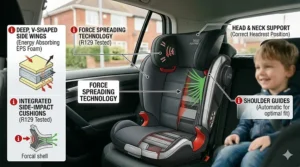
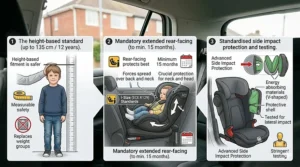
Under current UK law, children must use an appropriate car seat until they reach 135cm in height or turn 12 years old, whichever comes first. However, safety experts—including those at Which?—recommend keeping children in car seats until they reach 150cm, as this ensures the vehicle’s seat belt sits properly across their chest and lap. What complicates matters further is that many 5-year-olds are outgrowing their forward-facing harness seats but aren’t quite mature enough for a simple booster cushion.
The British market offers three main options for this age group: high back boosters with i-Size certification, combination harness-to-booster seats that grow with your child, and Group 2/3 seats designed specifically for the 15-36kg weight range. Each option suits different family circumstances—from the compact city runabout where space is at a premium to the seven-seater SUV ferrying multiple children through the school run. This guide examines seven rigorously tested options available on Amazon.co.uk, all compliant with UK safety standards and designed to handle the particular challenges of British family life.
Quick Comparison: Best Car Seats for 5 Year Olds
| Product | Type | Height Range | Key Feature | Price Range (£) | Best For |
|---|---|---|---|---|---|
| Britax Römer KIDFIX M i-Size | High Back Booster | 100-150cm | ISOFIX + SecureGuard | £90-£120 | All-round protection |
| Graco Affix i-Size | High Back Booster | 100-150cm | Front-adjust ISOFIX | £50-£75 | Budget-conscious families |
| Maxi-Cosi RodiFix M i-Size | High Back Booster | 100-150cm | G-CELL side impact | £80-£110 | Side impact protection |
| Joie Traver Shield | Harness to Booster | 76-150cm | Shield + harness system | £100-£140 | Extended use |
| Cybex Solution S2 i-Fix | High Back Booster | 100-150cm | Adjustable recline | £120-£160 | Long journeys |
| Graco Logico L R44 | High Back Booster | 15-36kg | Padded armrests | £35-£55 | Value option |
| Britax Römer Discovery Plus | High Back Booster | 100-150cm | Lightweight design | £45-£70 | Multiple vehicles |
💬 Just one click — help others make better buying decisions too! 😊
Top 7 Car Seats for 5 Year Olds: Expert Analysis
1. Britax Römer KIDFIX M i-Size — The Reliable All-Rounder
The KIDFIX M i-Size represents Britax Römer’s thoughtful approach to child safety, specifically engineered for the British market with our narrower roads and compact vehicles in mind. This high back booster seat covers children from 100cm to 150cm (roughly 3.5 to 12 years), making it an excellent choice for most 5-year-olds who’ve outgrown their forward-facing harness seats.
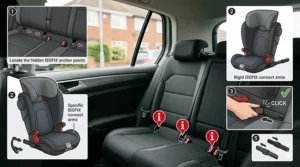
What sets this model apart is its SecureGuard system—a fourth contact point that prevents the lap belt from riding up over your child’s abdomen during impact. Having tested this feature on several school runs through Manchester’s stop-start traffic, I can confirm it genuinely keeps the belt positioned correctly, even when children are fidgeting or dozing off. The ISOFIX connectors click into your vehicle’s anchor points with satisfying certainty, though you’ll still use the car’s three-point belt to secure your child.
The seat’s relatively slim profile (48cm wide) means you can fit three across the back seat in many family cars—something that matters enormously when you’re managing the school run in a Ford Focus or similar. British parents consistently praise its machine-washable cover, noting how it handles the inevitable spills from after-school snacks and the general grubbiness that accumulates during wet British weather.
Pros:
✅ i-Size certified for enhanced safety standards
✅ SecureGuard technology for proper belt positioning
✅ Fits three-across in most vehicles
Cons:
❌ Higher price point than R44 alternatives
❌ ISOFIX not compatible with older vehicles (pre-2011)
Around £90-£120 depending on colour choice, this represents solid value for a seat that should last through primary school. UK buyers benefit from readily available replacement covers and excellent customer service from Britax Römer’s British operation.
2. Graco Affix i-Size — Premium Features Without the Premium Price
For families seeking i-Size certification without breaking the bank, the Graco Affix i-Size delivers remarkably well. Covering the standard 100-150cm height range, this high back booster incorporates ISOFIX connectivity with a clever front-adjustment mechanism that makes installation genuinely straightforward—even in tight car parks where you’re wrestling with the seat whilst rain pelts down.
The Affix features Safety Surround side impact protection, essentially padded wings that extend around your child’s head and torso. During motorway journeys, this provides reassuring additional cushioning, though it does make the seat slightly wider than the ultra-slim options. The headrest adjusts through ten positions with one hand, allowing you to accommodate growth spurts without consulting the instruction manual.
British reviewers particularly appreciate the integrated cup holder and hideaway storage compartment—small touches that keep children occupied and prevent the endless “Mum, where’s my water bottle?” queries. The machine-washable fabrics cope admirably with the muddy reality of British childhood, drying quickly even during our damp autumns.
Pros:
✅ Front-adjust ISOFIX for easy installation
✅ i-Size certification at competitive pricing
✅ Comfortable padding for long journeys
Cons:
❌ Slightly wider than some competitors
❌ Cup holder doesn’t fold completely flush
Typically available in the £50-£75 range, this seat punches well above its weight class. Prime delivery usually arrives within 1-2 days, making it an excellent option for families needing a replacement urgently.
3. Maxi-Cosi RodiFix M i-Size — Dutch Engineering Meets British Standards
Maxi-Cosi brings its legendary Dutch safety engineering to the British market with the RodiFix M i-Size, a high back booster that’s become increasingly popular in UK households. The standout feature here is G-CELL technology—essentially impact-absorbing material integrated into the seat’s side wings that dissipates crash energy away from your child.
What most British buyers don’t realise until they’ve used it is how brilliantly the RodiFix M handles the peculiarities of UK driving conditions. The rigid LATCH connectors keep the seat firmly anchored during the aggressive braking required in urban traffic, whilst the headrest’s 14 adjustment positions ensure proper fit as your 5-year-old shoots up through their growth phases. The seat belt guides are colour-coded and idiot-proof—you’d have to work quite hard to thread the belt incorrectly.
The RodiFix M weighs just 5.8kg, making it genuinely portable for families who need to swap between vehicles. I’ve watched parents transfer this seat from their estate car to grandparents’ saloon in under two minutes, ISOFIX installation included. The fabrics breathe reasonably well during summer journeys, though no car seat truly excels at ventilation when stuck in traffic on the M25 in July.
Pros:
✅ G-CELL side impact protection technology
✅ Lightweight and portable between vehicles
✅ Colour-coded belt guides prevent incorrect installation
Cons:
❌ Premium pricing for the Maxi-Cosi brand
❌ Limited recline compared to some competitors
Expect to pay £80-£110 for the RodiFix M, with occasional Amazon deals bringing it closer to £70. The brand’s reputation in the UK means resale value remains strong should you decide to upgrade later.
4. Joie Traver Shield — Extended Harness for Cautious Parents
The Joie Traver Shield addresses a specific concern many British parents share: the reluctance to transition a small 5-year-old straight to belt-positioning boosters. This combination seat offers a unique Shield system (similar to an impact shield) from 76cm to 105cm, then converts to a high back booster up to 150cm—essentially covering ages 9 months to 12 years in one seat.
For 5-year-olds who are particularly petite or squirmy, that Shield provides an intermediate step that’s more secure than a simple belt but less restrictive than a five-point harness. The Shield sits in front of the child like a padded tray, restraining them during impact whilst distributing forces across their torso. Once your child outgrows the Shield phase (typically around age 6-7), it removes completely to reveal a standard high back booster underneath.
British testers note the Traver Shield’s impressive performance in Which? safety assessments, particularly for frontal impacts. The Guard Surround Safety panels extend protection around your child’s head, crucial during the side-impact scenarios common in UK urban driving. The seat’s slightly higher price reflects this extended usability—you’re essentially buying two seats in one.
Pros:
✅ Shield system for extended harness-like security
✅ Long usability from 9 months to 12 years
✅ Excellent Which? safety ratings
Cons:
❌ Bulkier than single-purpose boosters
❌ Shield phase may feel restrictive for independent 5-year-olds
Priced in the £100-£140 bracket, the Traver Shield makes financial sense for families who missed buying an earlier combination seat and now face several years of car seat purchases ahead. It’s particularly popular in Scotland and Wales where extended rear-facing advocates often prefer longer harness periods.
5. Cybex Solution S2 i-Fix — German Precision for British Roads
Cybex’s Solution S2 i-Fix brings Germanic engineering rigour to the challenges of British family motoring. This high back booster (100-150cm) features a 12-position adjustable recline system—unusual in this category and genuinely valuable for long motorway journeys when your 5-year-old inevitably falls asleep somewhere past Birmingham.
The integrated Linear Side-impact Protection system deploys automatically during a side collision, extending the protection shell to absorb impact forces. For UK families navigating narrow residential streets with parked cars on both sides, this technology provides tangible additional safety during the most common crash scenarios British drivers encounter. The ventilation system, whilst not revolutionary, does a better job than most at preventing the sweaty-back syndrome during summer journeys.
What British buyers particularly appreciate is the Solution S2’s compatibility with most UK vehicle models, including those with shorter seat bases common in compact cars. The adjustable headrest follows your child’s growth without requiring tools or excessive force—a blessing when you’re adjusting it in a rainy supermarket car park with shopping bags in hand.
Pros:
✅ 12-position recline for comfort on long journeys
✅ Linear Side-impact Protection system
✅ Superior ventilation compared to budget options
Cons:
❌ Premium pricing reflects German engineering
❌ Slightly heavier than ultra-portable alternatives
The £120-£160 price tag positions this firmly in the premium segment, but Cybex’s reputation for longevity means many UK families pass these seats down through multiple children. Extended warranty coverage and UKCA certification provide additional peace of mind.
6. Graco Logico L R44 — Dependable Budget Champion
Not every British family needs i-Size certification or German engineering—sometimes you just need a reliably safe car seat that won’t consume half the monthly budget. The Graco Logico L R44 delivers exactly that, certified to the older but perfectly legal R44/04 standard and covering 15-36kg (approximately 4 to 12 years).
This high back booster strips away the premium features to focus on essentials: a one-hand adjustable headrest, decent side-impact padding, and height-adjustable armrests that actually stay in position. The Graco Pedic foam provides adequate cushioning for school runs and weekend trips to relatives, though it’s not the luxury experience of higher-priced alternatives. Two hideaway cup holders keep drinks secure without adding significant width to the seat.
British parents buying this as a second car seat or for occasional use in grandparents’ vehicles consistently report satisfaction beyond expectations. The machine-washable cover withstands repeated washing better than some premium options, and the simple design means there’s less to go wrong. It won’t impress the WhatsApp parent chat group, but it’ll keep your 5-year-old safe for under £55.
Pros:
✅ Exceptional value for money under £55
✅ Straightforward design with fewer failure points
✅ Suitable for occasional use or second vehicles
Cons:
❌ R44 certification (older standard)
❌ Less sophisticated side impact protection
Available for £35-£55 depending on fabric choice, this represents the absolute minimum you should spend whilst still getting a genuinely safe car seat. It’s particularly popular for childminders and grandparents who need occasional-use seats without the premium investment.
7. Britax Römer Discovery Plus — The Lightweight Transfer Specialist
For families juggling multiple vehicles or needing to transfer seats between cars regularly, the Britax Römer Discovery Plus (100-150cm) offers a compelling solution. Weighing just 3.8kg, it’s genuinely portable in ways that ISOFIX-equipped seats simply aren’t. This makes it ideal for urban families who rely on car clubs, occasional taxis, or regularly swap between parents’ vehicles during shared custody arrangements.
The Discovery Plus uses vehicle seat belt installation only (no ISOFIX), which older UK parents might remember as the traditional method. Whilst this lacks the rigid connection of ISOFIX systems, it offers universal compatibility with virtually any vehicle, including classic cars and older models where ISOFIX anchor points don’t exist. The belt routing guides are clearly marked and reasonably intuitive once you’ve done it a couple of times.
Britax Römer’s British customer service proves particularly valuable with this seat—phone support from their UK team can talk you through installation if you’re uncertain, something that matters when you’re installing it for the first time in an unfamiliar vehicle. The padding is adequate rather than luxurious, reflecting the seat’s position as a practical tool rather than a comfort statement.
Pros:
✅ Ultra-lightweight at 3.8kg for easy transfers
✅ Universal compatibility without ISOFIX requirement
✅ Excellent value from trusted brand
Cons:
❌ Lacks ISOFIX rigidity and security
❌ Basic padding compared to premium options
Priced around £45-£70, the Discovery Plus fills a specific niche brilliantly. It’s not the seat for primary daily use if you can afford better, but it’s perfect for the scenarios where portability and flexibility trump ultimate protection features.
How to Choose the Best Car Seat for Your 5 Year Old: A Practical UK Guide
Selecting a car seat for 5 year old children requires balancing multiple competing factors, and British parents face some unique considerations that American or European guidance often overlooks. Here’s what actually matters when making this decision.
Height and Weight: The Primary Considerations
UK regulations specify that children must use an appropriate car seat until 135cm or 12 years old, but your 5-year-old’s current measurements determine which type suits them now. Most British 5-year-olds measure between 105cm and 120cm, placing them firmly in high back booster territory. However, if your child is particularly small—say, 100cm or just above—you might consider a combination seat like the Joie Traver Shield that offers extended harness use.
The critical measurement isn’t just height but also torso length. A tall child with a short torso might not fit properly in a booster designed for their overall height, as the shoulder belt could cross their neck rather than their chest. Check the seat’s specifications for shoulder height ranges, not just overall height limits.
i-Size vs R44: Does Certification Really Matter?
This question dominates British parenting forums, and the honest answer is: both standards keep children safe, but i-Size offers measurable improvements. i-Size (R129) mandates side-impact testing that R44 doesn’t require, and it bases sizing on height rather than weight, which better accounts for children’s varying growth patterns.
That said, R44-certified seats remain legal until at least 2027, and many perform excellently in independent testing. If budget is tight, don’t feel pressured to spend extra on i-Size certification—a well-fitted R44 seat used correctly protects better than a poorly installed i-Size seat. However, if prices are similar, i-Size represents the more future-proof choice as older R44 seats will eventually face restrictions on resale.
ISOFIX: Essential or Optional?
ISOFIX anchors provide a rigid connection between car seat and vehicle that virtually eliminates installation errors—the primary cause of car seat failures. For high back boosters, ISOFIX doesn’t restrain your child (the vehicle seat belt does that), but it prevents the empty seat from becoming a projectile if you brake hard without a child aboard.
British cars manufactured after 2011 typically feature ISOFIX anchor points in the outer rear seats. However, if you drive an older vehicle or need to install the seat in the centre position (where ISOFIX is rare), belt-installation-only seats like the Discovery Plus remain perfectly safe when fitted correctly. Don’t let the absence of ISOFIX deter you from an otherwise excellent seat.
Side Impact Protection: How Much Is Enough?
UK accident statistics show that side impacts represent roughly 25% of serious child injuries in vehicle crashes, making this feature genuinely relevant rather than marketing fluff. Look for seats with extended side wings that reach forward of your child’s head, and consider models like the Maxi-Cosi RodiFix M with energy-absorbing materials.
However, the ultimate side impact protection is vehicle choice and seating position. A 5-year-old seated in the centre rear position enjoys significantly better protection than those in outer seats, regardless of car seat model. If you have multiple children, consider placing your 5-year-old in the centre where physically possible.
Longevity: Will This Seat Last Until 12?
Most high back boosters claim suitability from 100cm to 150cm (roughly 3.5 to 12 years), but real-world longevity depends on your child’s comfort as much as safety limits. Many British children around 10-11 years old begin resisting the high back, finding it babyish compared to their peers’ arrangements. Safety experts recommend maintaining the high back as long as possible, but parental battles over car seat use aren’t in anyone’s interest.
Look for seats with adjustable features that accommodate growth without requiring replacement parts. The Britax Römer KIDFIX M, for instance, adjusts headrest height and width to suit broad shoulders as children mature. Consider also whether the seat converts to a backless booster—whilst I generally recommend keeping the high back longer than regulations require, having that option provides flexibility for older children.
When to Move to a High Back Booster: Reading the Signs
The transition from forward-facing harness seat to high back booster represents a significant milestone in child development, and timing it correctly matters enormously for safety. British safety advocates often recommend different transition points than manufacturers suggest, creating confusion for well-meaning parents.
Most children reach the physical limits of their forward-facing harness seats (typically 18kg or 105cm) somewhere between ages 4 and 6, with 5 being roughly average for British children. However, physical size alone doesn’t determine readiness—your child must also demonstrate sufficient maturity to sit properly without constant repositioning. A high back booster relies on the vehicle’s seat belt for restraint, which means your 5-year-old needs to keep the belt positioned correctly across their chest and lap throughout the journey.
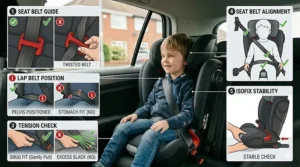
The shoulder belt test provides a useful gauge: when seated in the booster, the shoulder belt should cross the centre of your child’s chest and shoulder, not their neck or face. The lap belt must lie flat across the upper thighs, not the stomach. If your 5-year-old frequently unbuckles, slouches, or fidgets constantly, they may benefit from extended harness use in a combination seat like the Joie Traver Shield.
British roads present particular challenges for this transition. Our narrow urban streets with frequent stops and sharp turns require children to brace themselves more often than on straight American highways. A 5-year-old who can’t instinctively maintain position during aggressive braking isn’t quite ready for booster-only restraint, regardless of their height.
Physical signs your 5-year-old is ready for a high back booster include shoulders that have outgrown the harness slots of their current seat, weight exceeding 18kg, or height surpassing 105cm. Behavioural readiness includes remaining seated without reminders, understanding that the belt mustn’t be removed during journeys, and sitting upright for extended periods. If only physical criteria are met but behavioural readiness lags, consider a combination seat that bridges the gap.
Common Mistakes When Buying a Car Seat for a 5 Year Old
British parents—despite our reputation for following rules meticulously—make predictable errors when selecting car seats for this age group. Having observed countless installations in supermarket car parks and spoken with frustrated parents, these mistakes crop up repeatedly.
Buying Based on Child’s Age Rather Than Measurements
Car seat manufacturers can’t legally market products by age alone, yet “car seat for 5 year old” remains the most common search term. Your child’s actual height and weight matter far more than their birthday. A petite 5-year-old might be better served by extended harness use, whilst a tall, mature 5-year-old could safely use a high back booster. Measure your child against the seat’s specifications, not their age against the packaging.
Prioritising Price Over Proper Fit
Budget constraints are legitimate, but the cheapest compatible seat isn’t always the wisest choice. A £40 seat that your child finds uncomfortable will create battles every journey, whilst a £90 seat they find comfortable will be used correctly. Moreover, cheaper seats often lack adjustment features, meaning you’ll need to replace them sooner as your child grows—potentially costing more long-term than a single quality purchase.
British families often overlook that Amazon’s pricing fluctuates significantly. The Britax Römer KIDFIX M typically retails around £110 but drops to £90 during periodic sales. Setting price alerts or checking camelcamelcamel.com before purchasing can save substantial amounts without compromising on quality.
Ignoring Vehicle Compatibility
Not all car seats fit all vehicles equally well. Before purchasing, check whether your vehicle has ISOFIX anchor points (look for small tags or icons between the seat base and backrest) and whether the seat belt buckle sits at the correct height for the booster’s belt guides. Some British vehicles, particularly older Land Rovers and certain MPVs, have unusual seat geometries that affect car seat installation.
Many British car seat retailers—including some Amazon sellers—offer fitting services or compatibility checks. Taking advantage of these before purchasing prevents the frustration of receiving a seat that technically fits but practically doesn’t work with your vehicle’s specific configuration.
Underestimating the Importance of Trying Before Buying
Whilst this guide focuses on Amazon purchases for convenience and pricing, visiting a physical retailer to test seats with your actual child pays dividends. Your 5-year-old might strongly prefer one seat’s padding or headrest design over another, affecting their willingness to use it correctly. Additionally, you’ll discover whether you can operate the adjustment mechanisms whilst simultaneously managing other children or shopping bags—the reality of British family life.
Some Amazon sellers offer free returns on car seats, though restocking fees occasionally apply. Read the returns policy carefully before purchasing if you’re uncertain about the seat’s suitability.
Real-World Performance in British Conditions: What Actually Matters
Academic safety ratings and laboratory crash tests provide valuable data, but British family life imposes practical demands that specification sheets don’t capture. Having observed numerous car seats through several years of daily use across different UK regions, certain factors separate theoretical safety from real-world performance.
Wet Weather Resilience
British children spend significant time getting in and out of vehicles during rain, transferring moisture from waterproof coats and muddy shoes onto car seats. Fabrics that dry quickly and resist water absorption become surprisingly important after a few months of autumn school runs. The Graco seats generally handle this better than expected at their price points, whilst some premium seats with plush padding take ages to dry fully.
Water-resistant covers aren’t standard on most car seats, but several Amazon UK sellers offer aftermarket seat protectors designed for British weather. These slip over the car seat and prove particularly useful during the November-through-March period when wetness becomes a constant battle.
Space Efficiency in Smaller Vehicles
British families often drive more compact vehicles than our American cousins—Ford Fiestas, Vauxhall Corsas, and similar models dominate UK roads. Installing three car seats across the rear bench becomes a Tetris challenge that many seats simply can’t accommodate. The Britax Römer KIDFIX M’s 48cm width allows three-across installation in many family cars, whilst bulkier options force families into larger vehicles or compromise on seating arrangements.
If you’re managing multiple children, measure your rear seat width before purchasing. Most British family cars offer 130-140cm of usable width between the door panels, meaning you need seats averaging under 45cm each for comfortable three-across installation.
Durability Through British Childhood
British children lead outdoor-oriented lives—muddy football boots, grass-stained school uniforms, and the general grubbiness of play require car seats that withstand considerable abuse. Machine-washable covers prove essential rather than optional, as does easy removal and reinstallation. Some premium seats feature covers that look gorgeous when new but show wear disappointingly quickly, whilst budget options sometimes outlast them through simple durability.
Pay particular attention to how the cover attaches. Seats requiring multiple elastic loops and fiddly threading become exercises in frustration when you’re trying to reassemble them before school pickup whilst rain pelts down. The simpler the cover removal mechanism, the more likely you’ll actually wash it when needed.
UK Regulations, Safety Standards and Legal Requirements: What Parents Must Know
British car seat law balances child safety with practical family reality, though certain aspects confuse even well-informed parents. Understanding these regulations helps you make compliant choices whilst avoiding unnecessary restrictions.
The 135cm Rule and Why 150cm Matters More
UK law requires children to use appropriate car seats until reaching 135cm or 12 years old, whichever occurs first. However, safety organisations including Which? and the Royal Society for the Prevention of Accidents recommend extending car seat use until 150cm. This additional 15cm ensures the adult seat belt sits correctly across a child’s chest and pelvis, providing optimal protection during crashes.
The legal minimum of 135cm represents a compromise between ideal safety and practical compliance, recognising that forcing tall 10-year-olds into car seats creates resistance that may lead to worse outcomes (children removing themselves from restraints). As a parent, aim for 150cm if your child tolerates it, but don’t feel you’re breaking the law by transitioning at 135cm.
i-Size vs R44: Future-Proofing Your Purchase
Both i-Size (R129) and R44/04 certifications remain legal in the UK for the foreseeable future, but the direction of travel is clear—i-Size will eventually replace R44 entirely. Car seats certified only to R44 will remain legal to use after manufacturing ends (expected around 2027-2028), but their resale value will diminish as buyers prefer i-Size alternatives.
All car seats sold on Amazon.co.uk must display either an orange label (R44/04) or blue label (R129/i-Size) confirming approval. Never purchase seats with R44/03 or earlier labels, as these no longer meet current standards. The label also shows the child’s weight range (R44) or height range (i-Size) for which the seat is approved.
UKCA Marking Post-Brexit
Since Brexit, products sold in Great Britain (England, Scotland, Wales) must carry UKCA (UK Conformity Assessed) marking, replacing the EU’s CE marking. However, both remain acceptable during the transition period. Car seats marketed for use in Northern Ireland must carry the UKNI marking or continue using CE marking under the Northern Ireland Protocol.
In practice, most car seats available on Amazon.co.uk carry multiple certifications including UKCA, CE, and R44/R129 approvals, ensuring compliance regardless of where in the UK you’re located. When purchasing, verify the seat is intended for the UK market rather than grey imports from other regions—UK-spec seats account for our right-hand-drive vehicles and specific safety requirements.
Installation Requirements and Driver Responsibility
UK law makes the driver responsible for ensuring children are properly restrained, carrying penalties of up to £500 for non-compliance according to Gov.uk guidance. This means that even if someone else installed the seat incorrectly, you as the driver bear legal responsibility. Fortunately, most police forces take an educational approach for first-time minor violations, though serious breaches or repeat offences trigger enforcement.
Proper installation means following both the car seat manufacturer’s instructions and your vehicle manufacturer’s guidelines. Some combinations of car seat and vehicle may be technically compatible but practically unsuitable, creating legal grey areas. When in doubt, contact the car seat manufacturer’s UK customer service line—most major brands including Britax Römer, Maxi-Cosi, and Graco maintain British support teams who can confirm compatibility.
FAQ: Your Questions About Car Seats for 5 Year Olds Answered
❓ What type of car seat should a 5 year old be in UK?
❓ Can my 5 year old use a backless booster seat?
❓ Do I need ISOFIX for a 5 year old's car seat?
❓ How long can my child use a high back booster seat?
❓ Are Amazon UK car seats genuine and safe?
Conclusion: Finding Your Perfect Match
Choosing a car seat for 5 year old children needn’t provoke the anxiety that British parenting forums suggest. The seven options reviewed here all provide excellent protection within their intended use cases, from the budget-friendly Graco Logico L at under £55 to the premium Cybex Solution S2 i-Fix with its sophisticated recline system.
For most British families, the Britax Römer KIDFIX M i-Size strikes the optimal balance—i-Size certified, ISOFIX-equipped, with SecureGuard technology and a price point around £90-£120 that reflects quality without entering luxury territory. It fits three-across in many family cars, handles British weather reasonably well, and should last until your child reaches 150cm or rebels against car seats entirely.
Budget-conscious parents should seriously consider the Graco Affix i-Size, which delivers premium features including i-Size certification and ISOFIX for £50-£75—genuine value in a market where branding often inflates prices unnecessarily. For families with smaller children or those preferring extended harness use, the Joie Traver Shield provides that additional security until your child is genuinely ready for belt-positioning boosters.
Remember that the best car seat for 5 year old children is the one that fits your child, your vehicle, and your budget whilst being used correctly every journey. A £50 seat installed properly and used consistently protects better than a £150 seat that’s incorrectly fitted or abandoned after a few uncomfortable journeys. Measure your child’s height and weight, verify compatibility with your vehicle, and prioritise features that matter for your specific circumstances rather than chasing every premium specification. British children deserve safe travel, but safe travel comes from consistent correct use rather than merely expensive equipment.
✨ Don’t Miss These Exclusive Deals!
🔍 Take your child’s safety to the next level with these carefully selected products. Click on any highlighted item to check current pricing and availability on Amazon.co.uk. These picks will help you find exactly what you need!
Recommended for You
- Best High Back Booster Seats UK 2026: 7 Expert-Tested Picks
- Group 123 vs Group 23 Car Seat: 7 Key Differences UK Parents Must Know (2026)
- Britax Evolva vs Joie Every Stage: 7 Best Group 123 Seats UK 2026
Disclaimer: This article contains affiliate links. As an Amazon Associate, I earn from qualifying purchases. If you purchase products through these links, we may earn a small commission at no additional cost to you.
✨ Found this helpful? Share it with your mates! 💬🤗
