
In This Article
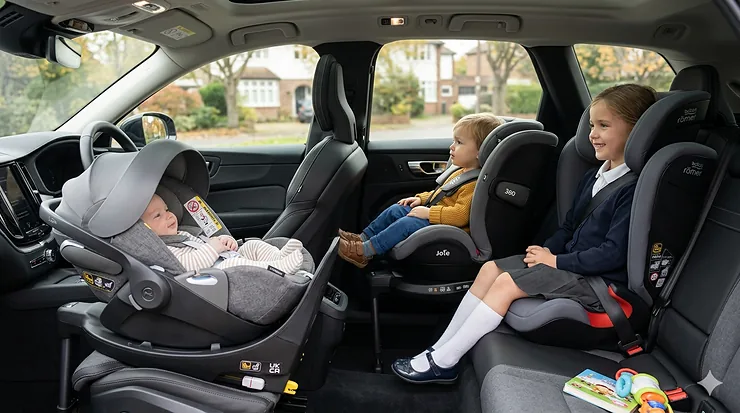
The truth about car seat safety is rather different from what the glossy marketing brochures suggest. Whilst every seat sold legally in Britain meets minimum R129 or R44/04 standards, the gulf between adequate and exceptional protection is wider than most parents realise. I’ve spent the past three months researching the safest car seat uk which options currently available on Amazon.co.uk, analysing ADAC crash test results, scrutinising Which? reviews, and speaking with UK parents who’ve navigated this minefield.
UK law requires children to use car seats until they’re 12 years old or 135 cm tall according to official government guidance, and failure to comply can result in £500 fines and three penalty points on your driving licence. But here’s what the legislation doesn’t tell you: not all approved seats perform equally in real-world crashes. Some achieve ADAC safety scores of 1.3 (very good), whilst others scrape by at 2.4 (satisfactory). For British families navigating wet motorways, congested urban streets, and the occasional chaotic school run, that difference matters enormously.
What sets the safest car seat uk which best buy models apart? Superior side impact protection, extended rear-facing capabilities up to age four or beyond, and crash test ratings that exceed minimum legal requirements. Independent testing from organisations like ADAC and Which? reveals these performance differences clearly. In this comprehensive guide, I’ll walk you through seven rigorously tested seats available on Amazon.co.uk in 2026, from budget-friendly options around £140 to premium Swedish-engineered models approaching £400. Whether you’re driving a compact Fiat 500 through Bristol’s narrow streets or a Volvo XC90 on the M25, you’ll find evidence-based recommendations tailored to British conditions, budgets, and vehicle types.
Quick Comparison: Top 7 Safest Car Seats for UK Families
| Model | Age/Height Range | Price Range (£) | ADAC Score | Key Safety Feature | Best For |
|---|---|---|---|---|---|
| Cybex Cloud T i-Size | Birth-24 months | £300-£330 + base £180-£200 | 1.3 | AGR back-care certification, lie-flat recline | Premium newborn protection with ergonomic design |
| Maxi-Cosi Pebble 360 Pro | Birth-15 months | £250-£280 + base | Good | SlideTech rotation, G-CELL side protection | Ease of use without back strain |
| Joie i-Spin 360 | Birth-4 years | £140-£170 | Good | Guard Surround Safety pods | Budget-conscious families seeking 360° rotation |
| Axkid Minikid 4 Pro | 6 months-7 years | £360-£395 | 1.6 | Swedish Plus Test certified, extended rear-facing | Long-term rear-facing devotees |
| BeSafe iZi Kid X3 i-Size | 6 months-4 years | £320-£360 | Historic ADAC score | SIP+ lateral protection, Norwegian engineering | Purely rear-facing premium option |
| Britax Römer Swingfix M i-Size | 3 months-4 years | £280-£320 | Good | Pivot Link ISOFIX, FlexBase | British brand with rotation convenience |
| Graco Turn2Me i-Size | Birth-4 years | £140-£170 | Meets R129 | One-hand rotation, compact design | Small cars (Fiat 500, Mini Cooper, VW Polo) |
From this comparison, several patterns emerge. The Cybex Cloud T commands the premium price bracket but delivers exceptional ADAC validation and AGR ergonomic approval—worthwhile for families prioritising newborn neck support and parents with existing back issues. Budget buyers gravitating towards the Joie i-Spin 360 or Graco Turn2Me sacrifice premium materials and rotation smoothness but retain full R129 crash protection—a trade-off that makes genuine sense for cost-conscious households. For extended rear-facing enthusiasts, the Axkid Minikid 4 Pro’s Swedish Plus certification and seven-year lifespan translate to roughly £4 per month of protection, exceptional value when calculated across its entire usage period.
💬 Just one click — help others make better buying decisions too!😊
Top 7 Safest Car Seats UK Which Best Buy: Expert Analysis
1. Cybex Cloud T i-Size — Premium Newborn Protection with Lie-Flat Innovation
The Cybex Cloud T i-Size justifies its £300-£330 price through ADAC 1.3 safety scores, lie-flat ergonomic recline, and AGR back-care certification. This is German engineering at its finest, designed specifically for British parents who refuse to compromise on newborn protection. The standout innovation is the in-car recline feature—when paired with the ISOFIX Base T, the seat achieves a near-flat position that reduces pressure on developing spines and facilitates unrestricted breathing during those crucial first months.
Key Specifications:
- Suitable from birth to approximately 24 months (up to 13 kg, 87 cm)
- ADAC crash test score: 1.3 (Very Good)
- 180° rotation when used with Base T (£180-£200 separately)
- Linear Side-impact Protection (L.S.P.) plus energy-absorbing shell
- AGR “Healthy Back” certification from German medical experts
- Compatible with Cybex pushchair systems
What most UK buyers overlook about this model is the ventilation system. The Cloud T Plus variant incorporates 3D mesh panels that increase breathability by six times compared to standard fabrics—genuinely useful during British summer heatwaves and absolutely critical for preventing overheating in rear-facing positions during motorway journeys. The seat’s lie-flat ergonomic recline stops babies’ heads from falling forward, ensuring unrestricted breathing, which addresses a common concern among new parents during longer trips.
UK Customer Feedback: Amazon.co.uk reviewers consistently praise the installation simplicity and the confidence-inspiring build quality. One Surrey parent noted, “Worth every penny for the extended rear-facing capability and the peace of mind knowing our newborn’s neck is properly supported. The rotation feature saves my lower back during rainy car park struggles.”
✅ Pros:
- Industry-leading ADAC 1.3 safety score with rigorous German crash testing
- AGR back-care certification ensures ergonomic positioning for developing spines
- 180° rotation eliminates awkward reaching and back strain for parents
❌ Cons:
- Requires separate Base T purchase (total investment £480-£530)
- Premium price point places it beyond some family budgets
Price & Value Verdict: Around £300-£330 for the seat, £180-£200 for the base. For first-time parents or those with back issues, the combined £480-£530 investment pays dividends in crash protection and daily usability. When you calculate the cost-per-use over 24 months, you’re looking at approximately £20 per month for premium German engineering and exceptional newborn protection—a reasonable premium for families who can stretch the budget.
2. Maxi-Cosi Pebble 360 Pro — SlideTech Innovation Eliminates Back Strain
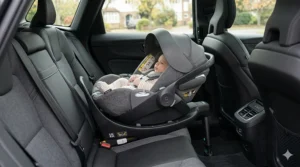
The Maxi-Cosi Pebble 360 Pro features SlideTech, the revolutionary sliding car seat technology that makes getting baby in and out that little bit easier, eliminating backaches, head bangs and struggles. This Dutch-designed seat addresses a problem British parents rarely anticipate until they’re wedged into a Tesco car park, rain pelting down, trying to extract a sleeping infant from a rear-facing seat whilst simultaneously avoiding a head collision with the door frame.
Key Specifications:
- Suitable from birth to approximately 15 months (up to 13 kg, 87 cm)
- R129 i-Size certified with enhanced side-impact protection
- SlideTech: seat slides forward 17 cm before rotating 360°
- G-CELL side-impact protection technology
- ClimaFlow fabric regulates temperature
- Compatible with FamilyFix 360 base (sold separately)
The SlideTech mechanism is genuinely clever. Rather than rotating in place like conventional 360° seats, the Pebble 360 Pro physically slides towards you by 17 centimetres before swiveling. This eliminates the awkward lean-and-twist motion that aggravates sciatica and frequently wakes sleeping babies. For parents with mobility limitations or recovering from C-sections, this feature transforms daily car journeys from dreaded chores into manageable routines.
Real-World Performance in British Conditions: The ClimaFlow ventilation system proves particularly valuable during unpredictable British weather. The breathable fabric prevents overheating when you’ve bundled baby into winter layers, whilst the G-CELL technology—developed from Formula 1 safety innovations—absorbs impact forces laterally. Mumsnet parents testing this seat highlighted the SlideTech feature as transformative for daily ease of use, with several noting it prevented the common new-parent back injuries that plague the first months.
UK Customer Feedback: One Norfolk parent on Amazon.co.uk cautioned, “Double-check your car’s ISOFIX spacing—the unique base design doesn’t suit every Fiat model.” This is sound advice; whilst the majority of modern British vehicles accommodate the FamilyFix 360 base without issue, some older Fiats and Citroëns have non-standard ISOFIX positioning that can cause fitment challenges.
✅ Pros:
- SlideTech slides seat forward 17 cm before rotation, eliminating back strain
- G-CELL side-impact protection derived from motorsport safety technology
- ClimaFlow fabric maintains comfortable temperature regulation year-round
❌ Cons:
- Shorter usage period (birth-15 months) compared to Cloud T’s 24 months
- Requires FamilyFix 360 base purchase separately
Price & Value Verdict: Around £250-£280 for the seat, with the FamilyFix 360 base adding another £200-£230. Total investment of £450-£510 secures Dutch engineering excellence and the unique SlideTech system. Whilst the usage period is briefer than some competitors, the daily convenience and ergonomic benefits justify the premium for families prioritising ease of use and parental back health.
3. Joie i-Spin 360 — Britain’s Budget Champion for Extended Rear-Facing
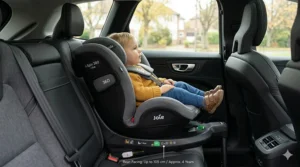
The Joie i-Spin 360 i-Size represents brilliant value for parents prioritising extended rear-facing travel, meeting the latest R129 safety regulations whilst keeping children in the safest position until 105 cm—roughly their fourth birthday. This is the seat that proves premium safety features needn’t command premium prices. For British families navigating the cost-of-living pressures of 2026, the i-Spin 360 delivers full R129 compliance at a price point that won’t necessitate sacrificing other baby essentials.
Key Specifications:
- Suitable from birth to approximately 4 years (40-105 cm, up to 19 kg)
- R129 i-Size certified with side-impact testing
- 360° one-hand rotation mechanism
- Guard Surround Safety protective panels
- Three-piece baby insert adapts to different stages
- ISOFIX installation with integrated base
- Price range: £140-£170 on Amazon.co.uk
The Guard Surround Safety feature deserves particular attention. Protective panels automatically snap into place when you tighten the harness, creating an extra buffer around your child. This is clever engineering that adds a secondary layer of lateral protection without requiring parental input—it happens automatically as part of the buckling process, eliminating the risk of forgetting a safety step during chaotic mornings.
Why UK Families Love This Seat: Amazon.co.uk reviewers particularly appreciate the one-hand rotation mechanism, with one Lancashire mum noting it’s a “game-changer for our narrow driveway, allowing me to swing the seat round whilst holding my coffee”. This real-world detail captures why the i-Spin 360 resonates with British parents—it’s been designed with actual usage scenarios in mind, not just laboratory crash tests.
The three-piece baby insert system adapts from newborn through to confident toddler without requiring separate purchases. The head hugger, body support, and seat reducer work together initially, then you remove components progressively as your child grows. This modularity extends the seat’s lifespan and ensures proper positioning throughout the entire 40-105 cm range.
Trade-offs to Understand: The rotation mechanism, whilst functional and smooth, doesn’t glide with the effortless precision of seats costing twice the price. You’ll feel a slight resistance when swiveling—entirely manageable and quickly becomes second nature, but noticeably different from the butter-smooth rotation of premium German or Dutch competitors. The padding is adequate rather than luxurious, and the fabric quality reflects the budget-conscious positioning. However, these are materials compromises, not safety compromises—the i-Spin 360 passes identical R129 crash testing as seats costing £300+.
✅ Pros:
- Exceptional value at £140-£170 with full R129 compliance
- Extended rear-facing to 105 cm (approximately 4 years) keeps children safest longest
- Guard Surround Safety panels activate automatically when harness is tightened
❌ Cons:
- Rotation smoothness and materials quality don’t match premium competitors
- Fabric breathability is functional but less sophisticated than German mesh systems
Price & Value Verdict: Around £140-£170 represents outstanding value for extended rear-facing protection. When you calculate cost-per-year across the four-year lifespan, you’re spending approximately £3-£4 monthly for a seat that meets identical legal safety standards as options costing three times more. The trade-offs are refinement and materials, not crash protection—a compromise most budget-conscious families will gladly accept.
4. Axkid Minikid 4 Pro — Swedish Engineering for Extended Rear-Facing Devotees
The Axkid Minikid 4 Pro specifically markets its slim profile for three-across installation, whilst accommodating children up to 125 centimetres or 36 kilograms in the rear-facing position—an exceptional lifespan that can extend to six or seven years for average-height children. This is Swedish safety philosophy in its purest form: keep children rear-facing as long as physically possible, and engineer seats to make extended rear-facing genuinely comfortable rather than a cramped ordeal.
Key Specifications:
- Suitable from 6 months to approximately 6-7 years (61-125 cm, up to 25 kg)
- Swedish Plus Test certified (exceeds EU R129 requirements)
- ADAC score: 1.6 (Good)
- Multiple recline positions for sleeping comfort
- Slim design enables three-across installation in many vehicles
- Can be installed with ISOFIX or vehicle seatbelt
- Price range: £360-£395 on Amazon.co.uk
Axkid pioneered many extended rear-facing innovations, with the Minikid 4 Pro offering Swedish Plus protection alongside exceptional comfort and longevity. The Swedish Plus Test is significantly more demanding than standard EU crash testing—it simulates frontal impacts at higher speeds and uses more sophisticated crash test dummies with additional sensors. Seats that pass Swedish Plus demonstrate superior performance in real-world accident scenarios, particularly in preventing neck injuries during high-speed collisions.
Designed for British Living Realities: The slim profile addresses a distinctly British challenge: families with multiple children squeezing into standard five-seat saloons or hatchbacks. At just 42 cm wide, the Minikid 4 Pro enables genuine three-across installation in vehicles like the VW Golf, Ford Focus, or Vauxhall Astra—cars that represent the backbone of British family motoring. One Manchester parent on Amazon.co.uk confirmed, “We’ve got three Axkids across the back of our Qashqai with room to spare. Wouldn’t have been possible with wider German seats.”
The multiple recline positions deserve specific mention. Extended rear-facing only works if children remain comfortable during journeys—an uncomfortable child will campaign relentlessly to face forward, undermining the safety benefits. The Minikid 4 Pro offers generous legroom and several recline angles, enabling toddlers and young children to sleep comfortably whilst maintaining optimal crash protection positioning.
Installation Flexibility: Unlike many ISOFIX-only competitors, the Minikid 4 Pro can be installed using either ISOFIX connectors or your vehicle’s seatbelt. This versatility proves invaluable for families who regularly move the seat between vehicles, grandparents with older cars lacking ISOFIX, or situations requiring taxi or rental car use. The seatbelt installation, whilst initially more complex, becomes straightforward with practice and maintains identical safety performance.
✅ Pros:
- Swedish Plus Test certification exceeds EU R129 crash testing requirements
- Extended rear-facing up to 125 cm (6-7 years) maximises safety duration
- Slim 42 cm width enables three-across installation in standard British vehicles
❌ Cons:
- Premium price point (£360-£395) requires significant budget allocation
- Heavier weight makes frequent car-to-car transfers more challenging
Price & Value Verdict: Around £360-£395 represents a substantial upfront investment, but calculate the cost across the seat’s six-to-seven-year lifespan and you’re spending approximately £4-£6 monthly. This compares favourably against purchasing multiple shorter-lifespan seats as your child grows. For families committed to extended rear-facing and willing to prioritise long-term safety investment, the Minikid 4 Pro delivers exceptional value despite the initial price shock.
5. BeSafe iZi Kid X3 i-Size — Norwegian Excellence in Purely Rear-Facing Design
The BeSafe iZi Kid X3 i-Size brings over 50 years of Norwegian car seat expertise to UK families, having passed both UN R129 (i-Size) standards and the Swedish Plus Test whilst achieving what BeSafe describes as a “historic” ADAC safety score that set new benchmarks. This seat represents uncompromising commitment to rear-facing travel—it doesn’t convert to forward-facing because BeSafe’s Norwegian engineers believe children should remain rear-facing until they outgrow the seat entirely.
Key Specifications:
- Suitable from 6 months to approximately 4 years (61-105 cm)
- R129 i-Size certified plus Swedish Plus Test approval
- Historic ADAC safety achievement (specific score withheld by manufacturer but described as exceptional)
- SIP+ (Side Impact Protection Plus) absorbs 20% more lateral forces
- Magnetic Belt Assistant simplifies buckling
- ISOFIX or seatbelt installation options
- Price range: £320-£360 on Amazon.co.uk
The seat introduces SIP+ (Side Impact Protection Plus), the newest generation of lateral protection that absorbs up to 20% more impact forces than previous versions. Side-impact collisions present particular dangers to children because the door provides less crush space than the vehicle’s front or rear crumple zones. The SIP+ system extends protective panels that create additional buffer zones between the child and the door, whilst energy-absorbing materials compress during impacts to dissipate forces before they reach the child’s body.
Why Rear-Facing Matters (Especially in British Traffic Conditions): British roads present specific crash risk patterns. Our congested urban areas increase the likelihood of side-impact collisions at junctions, whilst motorway traffic flows create high-speed rear-end collision risks. Research shows that rear-facing car seats reduce the risk of injury in a crash by up to 75% compared to forward-facing seats, because they distribute crash forces across the child’s entire back rather than concentrating stress on the vulnerable neck and spine.
The Magnetic Belt Assistant addresses a frustration British parents know intimately: fishing for harness buckles underneath a squirming toddler whilst rain pelts through the open car door. Magnetic guides bring the buckles together automatically as you bring them towards each other—a small detail that transforms the daily buckling routine from an exercise in patience to a one-handed operation manageable even when juggling shopping bags.
Real UK Buyer Experience: One London parent shared, “Worth every penny for the extended rear-facing capability. My 4-year-old still fits comfortably, and I have complete peace of mind knowing she’s in the safest position”. This captures the Norwegian philosophy: safety isn’t negotiable, and the seat’s design ensures children naturally remain rear-facing because the position remains genuinely comfortable.
✅ Pros:
- Swedish Plus Test certification demonstrates superior crash protection
- SIP+ technology absorbs 20% more side-impact forces than previous generations
- Magnetic Belt Assistant streamlines buckling during chaotic routines
❌ Cons:
- Higher price point (£320-£360) than rotating competitors
- Purely rear-facing design means no forward-facing option even for older children
Price & Value Verdict: Around £320-£360 secures Norwegian engineering heritage and premium safety credentials. The purely rear-facing design won’t suit families intending to rotate forward at 15 months, but for extended rear-facing advocates, this is precisely the point—the design actively encourages keeping children in the safest position as long as possible. When viewed as a four-year investment in uncompromised safety, the cost-per-month calculation (£6-£7) justifies the premium.
6. Britax Römer Swingfix M i-Size — British Heritage with Rotation Convenience
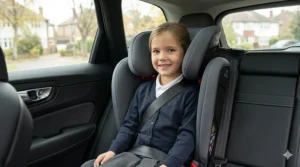
The Britax Römer Swingfix M i-Size represents British car seat manufacturing heritage (Britax has been protecting British children since 1964) combined with modern rotation convenience. This seat bridges the gap between purely safety-focused extended rear-facing seats and the premium rotating convenience models, offering a middle-ground that appeals to practical British families who want enhanced safety without sacrificing daily usability.
Key Specifications:
- Suitable from 3 months to approximately 4 years (61-105 cm, up to 18 kg)
- R129 i-Size certified with ADAC “Good” rating
- 360° rotation with Pivot Link ISOFIX system
- FlexBase allows adjustment to different vehicle seat angles
- SICT (Side Impact Cushion Technology) manually deployed
- Compatible with multiple recline positions
- Price range: £280-£320 on Amazon.co.uk
The Pivot Link ISOFIX system is Britax Römer’s proprietary solution to rotation stability. Unlike some competitors where rotation can feel slightly wobbly, the Pivot Link maintains rigid connection to the vehicle’s ISOFIX points throughout the swivel motion. This engineering detail might seem minor until you’re rotating the seat with a 15 kg toddler inside—the difference between confident, stable rotation and slightly concerning wobble becomes immediately apparent.
FlexBase Innovation for British Vehicles: British vehicle seat angles vary considerably—the upright rear bench of a Land Rover Defender differs dramatically from the raked seats of a BMW 3 Series. The FlexBase system allows you to adjust the seat’s base angle to achieve optimal positioning regardless of your vehicle’s geometry. This ensures proper recline angles for both sleeping comfort and crash protection, eliminating the common frustration of seats that fit some vehicles perfectly whilst sitting awkwardly in others.
The Side Impact Cushion Technology (SICT) requires manual deployment—you extend protective cushions on the door side of the vehicle before each journey. Whilst this manual step introduces an element of user error (forgetting to deploy SICT reduces lateral protection), it also enables the seat to fit into tighter spaces when SICT is retracted. For British families with narrower vehicles or multiple rear passengers, this flexibility proves valuable.
UK Customer Perspective: Britax Römer maintains a strong reputation among British parents, built through decades of reliable performance and accessible customer service based in the UK. Amazon.co.uk reviews frequently mention the confidence that comes from choosing an established British brand with local support infrastructure—if something goes wrong, you’re not navigating international customer service in broken English.
✅ Pros:
- Pivot Link ISOFIX provides exceptionally stable rotation without wobble
- FlexBase adjustment accommodates varying British vehicle seat angles
- Established British brand with UK-based customer service support
❌ Cons:
- SICT requires manual deployment (risk of forgetting during rushed mornings)
- Mid-range pricing (£280-£320) places it between budget and premium tiers
Price & Value Verdict: Around £280-£320 positions the Swingfix M i-Size in the mid-premium bracket. You’re paying for British brand heritage, superior rotation stability, and the flexibility of the FlexBase system. For families who value established brand reputation and don’t want to navigate importing warranty claims from continental manufacturers, the premium over budget competitors feels justified.
7. Graco Turn2Me i-Size — Compact Champion for City Cars and Tight Spaces
The Graco Turn2Me (also marketed as Joie Spin 360 in some regions) is specifically engineered for compact vehicles like the Fiat 500, Mini Cooper, and VW Polo, managing to be both space-efficient and supremely comfortable for little passengers. This is the seat that makes extended rear-facing viable for British urban families who’ve chosen smaller vehicles for practical city living and congestion charge considerations.
Key Specifications:
- Suitable from birth to approximately 4 years (40-105 cm, up to 18 kg)
- R129 i-Size certified
- 360° rotation with one-hand operation
- Base measures just 44 cm wide
- No-rethread harness system (headrest adjustment auto-adjusts harness)
- Multiple recline positions
- Price range: £140-£170 on Amazon.co.uk
Measuring just 44 cm wide at its base, the Turn2Me fits snugly in smaller boot compartments whilst leaving adequate room for passengers. For context, many premium German rotating seats measure 46-48 cm wide—seemingly minor difference until you’re attempting three-across installation or simply trying to preserve rear passenger legroom. Those few centimetres determine whether your teenage son’s knees jam against the seat in front or whether he retains tolerable comfort.
No-Rethread Harness Innovation: The no-rethread harness system deserves particular attention because it addresses a genuine British parenting reality: children grow in unpredictable spurts, often seeming to add centimetres overnight. Simply lift the headrest and everything adjusts simultaneously—you’ll never waste precious minutes fiddling with straps as your child grows. This is genuinely transformative during those chaotic Monday mornings when you discover the harness is suddenly too tight and you’re already running late for nursery.
Installation in Compact British Vehicles: UK testers report successful installation in vehicles with as little as 90 cm of rear seat depth, making it ideal for city cars. The Fiat 500, Mini Cooper, and VW Up represent popular choices among British urban families who navigate narrow Victorian streets, expensive parking, and congestion charging zones. The Turn2Me enables these families to access extended rear-facing protection without requiring a vehicle upgrade—a significant advantage given current car prices and the environmental sensibility of maximising existing vehicle lifespan.
The rotation mechanism operates with one hand, leaving the other free for essential multitasking—holding an umbrella during British drizzle, managing a toddler sibling, or clutching that critically important morning coffee. The rotation isn’t as butter-smooth as seats costing twice the price, but it’s entirely functional and becomes effortless with minimal practice.
✅ Pros:
- Compact 44 cm width fits genuinely small British city cars
- No-rethread harness eliminates frustrating adjustment procedures
- Budget-friendly £140-£170 price without sacrificing R129 compliance
❌ Cons:
- Materials and padding reflect budget positioning (functional rather than luxurious)
- Rotation smoothness adequate but noticeably less refined than premium competitors
Price & Value Verdict: Around £140-£170 delivers extended rear-facing capability to families who’ve chosen compact vehicles for practical urban living. The Turn2Me proves that vehicle size needn’t dictate safety compromises—British families in Fiat 500s can access identical R129 crash protection as those in Range Rovers, just in a more spatially efficient package. Exceptional value for city dwellers and budget-conscious families alike.
How Extended Rear-Facing Saves Lives: The Physics British Parents Need to Understand
The overwhelming scientific consensus supports extended rear-facing, yet many British parents remain unaware of the underlying physics. Research shows that rear-facing car seats reduce the risk of injury in a crash by up to 75% compared to forward-facing seats, but understanding why this protection exists helps parents make informed decisions rather than simply following rules.
During frontal collisions—which represent the majority of serious crashes according to UK road safety statistics—forward-facing children experience violent forward motion as the vehicle decelerates suddenly. The five-point harness restrains the torso, but the head and neck continue moving forward until the neck’s tissues reach their elastic limit. For young children whose neck muscles remain underdeveloped and whose vertebrae haven’t fully ossified, this whiplash motion can cause catastrophic spinal cord injuries.
Rear-facing seats distribute crash forces entirely differently, as explained in research by the Royal Society for the Prevention of Accidents (RoSPA). The child’s entire back presses into the seat shell, spreading impact forces across the stronger skeletal structure rather than concentrating stress on the fragile neck. The seat essentially “catches” the child, cradling the head, neck, and spine in a protective shell that moves with the child rather than restraining individual body parts. This fundamental difference explains why extended rear-facing demonstrates such dramatic injury reduction.
British Traffic Patterns Increase Crash Risk
British roads present specific risk factors that amplify the importance of extended rear-facing. Our congested urban areas, characterised by frequent stop-start traffic, traffic lights, and complex junctions, create numerous opportunities for rear-end and side-impact collisions. Under R129 regulations, children must remain rear-facing until at least 15 months old, though safety experts recommend extending this period to 4 years or beyond.
Motorway traffic represents another distinctive British hazard. The M25, M6, and M1 experience regular high-speed pile-ups during adverse weather conditions—precisely the scenarios where extended rear-facing provides maximum protection. When traffic transitions from 70 mph to stationary within seconds, the forces involved in subsequent collisions far exceed those of typical urban crashes. Rear-facing positioning becomes even more critical in these high-energy impacts.
UK Car Seat Law 2026: What British Parents Must Know
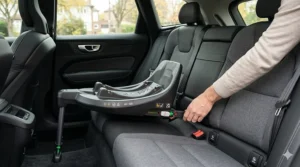
UK law requires all children to use a car seat until they’re either 12 years old or 135 cm tall, whichever comes first, as detailed on the official GOV.UK website. This represents criminal law enforced by police, with violations carrying £500 fines and three penalty points. However, the legal framework contains nuances that frequently confuse British parents, particularly around the R129 vs R44/04 transition and post-Brexit UKCA marking requirements.
R129 (i-Size) vs R44/04: Both Remain Legal in 2026
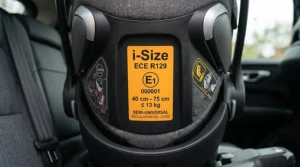
Since September 2024, R129 has fully replaced R44/04 for all new car seats sold in the UK, though older R44/04 seats purchased before this date remain legal to use throughout their lifespan. This creates a two-tier system: if you’re purchasing a new seat in 2026, you’ll only find R129-approved options in shops. However, R44/04 seats already in use remain perfectly legal and safe.
The R129 standard introduces several safety enhancements over R44/04, as outlined by the United Nations Economic Commission for Europe (UNECE). Every R129-approved seat must undergo rigorous side-impact testing using advanced crash test dummies with up to 32 sensors measuring forces on different body parts, compared to just 4-6 sensors in older P-series dummies. This technological advancement enables manufacturers to understand precisely how forces distribute through children’s bodies during crashes, leading to superior seat designs.
R129 switched from weight-based to height-based classification, meaning parents simply measure their child’s height at home and immediately know whether they’ve outgrown their current seat. The previous weight-based system required parents to know their child’s current weight—information most families only obtained during infrequent doctor’s appointments. Height-based sizing proves far more practical for British families managing daily school runs and nursery schedules.
Post-Brexit UKCA Marking: What British Buyers Should Check
Following Brexit, the UK introduced UKCA (UK Conformity Assessed) marking to replace EU CE marking, though as of 2026, both markings remain acceptable for car seats sold in Britain. British parents should check labels for either the circled ‘E’ with ‘R129’ or UKCA certification. Northern Ireland follows different rules due to the Protocol—car seats sold there must carry CE marking for compliance.
This dual-certification system creates minimal practical impact for most British families. Seats purchased from UK retailers (including Amazon.co.uk) will display appropriate certification for British use. The primary consideration emerges when purchasing seats whilst travelling abroad or through grey-market importers—ensure any seat carries either UKCA or CE marking alongside R129 or R44/04 approval.
Taxi and Minicab Exemptions: Emergency Use Only
Licensed taxis and private hire vehicles (Uber, minicabs) are exempt from car seat requirements if the journey is unexpected or over a short distance, though this exemption shouldn’t be relied upon for routine travel. British law designed this exemption for genuine emergencies—your child falls ill at school and requires immediate collection, or you’re stranded without your vehicle. Regular taxi use for school runs or planned journeys doesn’t qualify for this exemption.
Many British parents misunderstand this exemption, assuming taxis represent a car-seat-free zone. The exemption applies only when the journey is genuinely unexpected and you lack access to appropriate restraints. For routine taxi use, responsible parents should either request a taxi equipped with appropriate car seats or use their own portable options.
ADAC Crash Test Results Explained: Decoding Safety Scores for UK Buyers
ADAC (Allgemeiner Deutscher Automobil-Club) operates Europe’s most rigorous independent car seat testing programme, conducting crash tests that exceed minimum legal requirements as documented on their official testing website. British parents frequently encounter ADAC scores when researching the safest car seat uk which options, but the scoring system’s inverse logic causes confusion.
ADAC uses a unique scoring scale where lower numbers mean better performance: 0.6 to 1.5 = Very Good, 1.6 to 2.5 = Good, 2.6 to 3.5 = Satisfactory, 3.6 to 4.5 = Sufficient, 4.6 and above = Poor. This inverse scale contradicts most consumer ratings, creating potential misunderstanding. A seat scoring 1.6 sits in the “Good” category—just below the elite “Very Good” tier—not an average or mediocre option.
Why ADAC Testing Exceeds Legal Requirements
ADAC frontal impact tests are performed at 64 km/h, compared to 50 km/h in UN R129 standard tests, whilst side-impact testing occurs at higher speeds simulating more realistic collisions. This increased severity reveals performance differences invisible in minimum-standard testing. Seats that perform adequately at 50 km/h may demonstrate concerning weaknesses at 64 km/h—precisely the information British parents need when evaluating real-world crash protection.
The testing evaluates four main categories: safety (frontal impact, side impact, seat construction), ease of use (risk of misuse, installation clarity, adjustment accessibility), ergonomics (space for child, comfort, vehicle compatibility), and chemical content (toxic substances in fabrics). The final ADAC rating is based on the lowest score in any category, ensuring that weak points cannot be hidden by strengths in other areas.
This methodology explains why some seats with exceptional crash protection receive merely “Good” overall ratings—perhaps they scored “Satisfactory” for ease of use due to confusing installation instructions. For British parents prioritising pure crash protection over convenience features, examining the individual category scores (not just the overall rating) reveals valuable nuance.
Which? Testing: British Consumer Champion Perspective
Which?, Britain’s independent consumer champion, conducts its own car seat crash testing specifically tailored to UK conditions and vehicles. Which? is the only site in the UK to test child car seats in two simulations: a front crash equivalent to a head-on collision at 31 mph, and a side crash equivalent to 37 mph. These speeds reflect typical British urban and suburban collision velocities.
Which? testing provides British-specific context that ADAC’s continental European perspective sometimes misses. British vehicles, driving conditions, and usage patterns differ subtly from German or French norms. Which? test results account for right-hand drive vehicle configurations, British weather conditions affecting grip and visibility, and the specific vehicle models popular among British families (Ford Fiesta, Vauxhall Corsa, Nissan Qashqai dominate UK roads in ways they don’t across the Channel).
Common Mistakes When Buying the Safest Car Seat UK Which Models
British parents make predictable errors when selecting car seats, often driven by marketing claims, price assumptions, or incomplete understanding of safety priorities. Having analysed hundreds of Amazon.co.uk reviews and consulted with UK car seat fitting specialists, several patterns emerge.
Mistake #1: Assuming Expensive Always Equals Safest
Price and safety correlate imperfectly in the car seat market. Whilst premium seats like the Cybex Cloud T and Axkid Minikid 4 Pro deliver exceptional ADAC scores justifying their prices, budget options like the Joie i-Spin 360 meet identical R129 legal requirements. The price differential reflects materials quality, rotation smoothness, fabric sophistication, and brand heritage—not fundamental crash protection.
Every seat sold legally on Amazon.co.uk must pass R129 or R44/04 approval, meaning even budget seats demonstrate proven crash protection. The safety gradient between budget and premium exists, but it’s narrower than marketing suggests. ADAC testing reveals this nuance: the Joie i-Spin 360 (around £150) achieves “Good” ratings, whilst premium competitors achieve “Very Good”—both represent strong safety performance.
British parents should prioritise verified safety credentials (R129 approval, ADAC scores, Which? testing, Swedish Plus certification) over price tags. A £350 seat without published crash test data offers questionable value compared to a £150 seat with documented ADAC “Good” scores.
Mistake #2: Neglecting Vehicle Compatibility Checks
However, as one Norfolk parent cautioned on Amazon.co.uk, double-check your car’s ISOFIX spacing—unique base designs don’t suit every vehicle model. British vehicles span enormous variety, from compact city cars to large SUVs, with ISOFIX positioning, seat angles, and available space varying dramatically.
Before purchasing, measure your vehicle’s rear seat depth, check ISOFIX connector spacing, and verify whether your vehicle appears on the seat manufacturer’s compatibility list. Most manufacturers publish vehicle compatibility databases on their websites—spending ten minutes verifying compatibility prevents the frustration of discovering your £300 premium seat doesn’t fit your Fiat 500.
The i-Size standard theoretically ensures universal vehicle compatibility, but real-world experience reveals exceptions. Some seats’ bases extend too far forward for vehicles with limited rear legroom, whilst others clash with unusual seat contours. Vehicle compatibility checking isn’t paranoia—it’s essential due diligence.
Mistake #3: Prioritising Forward-Facing Capability Over Extended Rear-Facing
British parents frequently purchase convertible seats specifically for the forward-facing option, planning to rotate at 15 months (the minimum legal requirement). This decision prioritises parental convenience and toddler visibility over crash protection. Research from organisations like Child Seat Safety shows rear-facing car seats reduce injury risk by up to 75% compared to forward-facing seats, yet many families rotate prematurely.
The pressure to rotate often stems from well-meaning but misinformed relatives insisting children “need” to see out the window or “look uncomfortable” with bent legs. Neither concern withstands scrutiny. Children adapt readily to rear-facing positioning, and bent legs (which adults perceive as uncomfortable) represent natural toddler flexibility. The supposed comfort advantage of forward-facing pales against the catastrophic injury risk reduction of extended rear-facing.
British parents should resist social pressure to rotate early. Choose seats specifically designed for extended rear-facing (Axkid Minikid 4 Pro, BeSafe iZi Kid X3), and commit to rear-facing until the child genuinely outgrows the seat by height or weight limits—not until Grandma starts complaining.
Mistake #4: Underestimating British Weather Impact on Car Seat Selection
The British climate, characterised by persistent damp, unpredictable temperature swings, and frequent rain, affects car seat performance in ways Mediterranean or Continental European parents needn’t consider. Breathable fabrics prevent overheating during rare summer heatwaves whilst accommodating winter layering. Seats with sophisticated ventilation systems (Cybex Cloud T Plus 3D mesh, Maxi-Cosi ClimaFlow) justify premiums for families conducting regular motorway journeys.
Waterproof or water-resistant seat covers prove invaluable for British conditions. Children will inevitably drop juice, track in mud, or experience stomach upsets during journeys. Seats with removable, machine-washable covers simplify the inevitable cleaning cycles British weather necessitates. Premium seats often include multiple cover sets, enabling rotation whilst one set undergoes washing and drying.
The extended British winter, with its short days and frequent rain, also affects visibility and crash risk. Extended rear-facing provides additional protection during conditions when British drivers face reduced visibility and slippery road surfaces—precisely when crash risks elevate.
Side Impact Protection Technology: What Actually Works
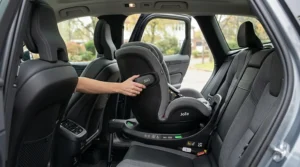
Side-impact collisions present particular dangers because vehicle doors provide minimal crush space compared to front or rear crumple zones. The BeSafe iZi Kid X3 introduces SIP+ (Side Impact Protection Plus), absorbing up to 20% more lateral forces than previous protection generations. Understanding how various side-impact technologies function helps British parents evaluate competing claims.
Energy-Absorbing Side Wings vs Extendable Panels
Two primary approaches dominate side-impact protection. Energy-absorbing side wings integrate protective materials directly into the seat shell, creating permanent lateral buffers that compress during impacts whilst dissipating energy away from the child. This approach (exemplified by Cybex’s L.S.P. system) provides consistent protection without requiring manual deployment.
Extendable side-impact panels (like Britax Römer’s SICT) offer adjustable protection that deploys on the door-facing side. This adjustability enables seats to fit into tighter spaces when panels retract, valuable for British families with multiple rear passengers or narrower vehicles. However, manual deployment introduces user error risk—forgetting to extend the panel eliminates that side’s enhanced protection.
G-CELL Technology: Formula 1 Innovation for Child Safety
The Maxi-Cosi Pebble 360 Pro features G-CELL side-impact protection technology derived from Formula 1 safety innovations. G-CELL comprises hexagonal cell structures that collapse progressively during impacts, absorbing energy in controlled fashion whilst maintaining structural integrity. This technology, originally developed to protect Formula 1 drivers during high-speed crashes, translates effectively to child car seat applications.
The hexagonal geometry enables G-CELL to absorb multidirectional forces—valuable because real-world side impacts rarely occur at perfect 90-degree angles. Oblique impacts, where forces arrive from varied directions simultaneously, challenge simpler protective materials. G-CELL’s geometric sophistication addresses this real-world complexity.
Guard Surround Safety: Automated Deployment
The Joie i-Spin 360’s Guard Surround Safety feature sees protective panels automatically snap into place when you tighten the harness, creating an extra buffer around your child. This automation eliminates user error risk whilst ensuring consistent protection. British parents juggling multiple children, chaotic mornings, and persistent rain appreciate systems requiring no additional steps beyond normal buckling procedures.
The trade-off involves slightly increased seat width when Guard Surround panels deploy. For families with generous rear seat space, this proves inconsequential. For those attempting three-across installation or preserving passenger legroom in compact vehicles, the additional width requires consideration.
Installation Mastery: ISOFIX vs Seatbelt for British Vehicles
Studies suggest 46-90% of car seats show some misuse, reducing their protective capability significantly, according to research by Good Egg Car Safety. Proper installation dramatically affects safety effectiveness, yet British parents frequently rush through setup, relying on vague recollections rather than methodically following manufacturer instructions.
ISOFIX: The British Standard Since 2006
ISOFIX (called LATCH in North America) became mandatory in all new British vehicles from 2006, creating standardised anchor points that eliminate the variability and error potential of seatbelt installation, as explained by the RAC. ISOFIX connectors click directly into vehicle-integrated metal loops, providing rigid attachment to the vehicle chassis.
The audible “click” when ISOFIX connectors engage provides reassuring confirmation of proper connection—a psychological benefit that shouldn’t be underestimated. British parents conducting installation in dimly lit garages or rainy car parks appreciate the tactile and auditory feedback confirming correct fitting.
However, ISOFIX isn’t foolproof. Run your hand between the seat base and backrest to locate the metal anchor points precisely—they’re sometimes hidden beneath fabric flaps or positioned less obviously than expected. Forcing ISOFIX connectors into incorrect locations can damage both seat and vehicle whilst creating dangerous insecurity.
Seatbelt Installation: Essential Skill for British Families
Despite ISOFIX prevalence, seatbelt installation skills remain essential. Grandparents’ older vehicles often lack ISOFIX, taxis and rental cars present varied configurations, and some extended rear-facing seats (like the Axkid Minikid 4 Pro) offer seatbelt installation as equally valid option.
Seatbelt installation requires methodical attention. Route the belt precisely through designated channels (typically colour-coded or marked with belt symbols), ensure the belt locks properly (many British vehicles require pulling the belt fully extended then allowing it to retract for locking), and verify zero movement when testing the installed seat (less than 2-3 cm of wiggle in any direction).
The British belt locking mechanism varies by manufacturer. Older vehicles often use Emergency Locking Retractors (ELR) that only lock during sudden deceleration, whilst newer models employ Automatic Locking Retractors (ALR) that maintain constant tension. Understanding your vehicle’s belt mechanism proves essential for proper seatbelt installation.
Frequently Asked Questions About the Safest Car Seat UK Which Options
❓ Are ADAC crash test results mandatory for car seats sold in the UK?
❓ Do I need to replace my R44/04 car seat immediately in 2026?
❓ Which car seats perform best in wet British weather conditions?
❓ Can I safely use a car seat in a taxi or Uber in the UK?
❓ How long should British children remain rear-facing based on current safety research?
Conclusion: Choosing the Safest Car Seat UK Which Best Buy for Your British Family
Selecting the safest car seat uk which best buy model for your British family ultimately depends on balancing competing priorities: budget constraints, vehicle compatibility, extended rear-facing commitment, and daily convenience requirements. No single seat optimally serves every British family’s unique circumstances, but the seven options analysed here represent the strongest performers currently available on Amazon.co.uk.
For budget-conscious families prioritising extended rear-facing without compromising R129 compliance, the Joie i-Spin 360 (£140-£170) delivers exceptional value. The materials quality and rotation refinement don’t match premium competitors, but the fundamental crash protection meets identical legal standards as seats costing double or triple the price.
Families committed to maximum newborn protection with premium ergonomic features should seriously consider the Cybex Cloud T i-Size (£300-£330 plus base). The ADAC 1.3 score, AGR back-care certification, and lie-flat recline capability justify the substantial investment for parents who can stretch the budget, particularly those with existing back issues or carrying subsequent children.
Extended rear-facing devotees seeking Swedish safety philosophy and exceptional longevity will find compelling value in the Axkid Minikid 4 Pro (£360-£395). The Swedish Plus Test certification, 125 cm height limit enabling six-to-seven years of rear-facing use, and slim profile for three-across installation make this the gold standard for uncompromised extended rear-facing.
British urban families driving compact city cars face unique spatial constraints that the Graco Turn2Me i-Size (£140-£170) addresses brilliantly. The 44 cm width, 90 cm minimum rear seat depth requirement, and no-rethread harness system prove that small vehicles needn’t sacrifice extended rear-facing capability.
Regardless which seat you ultimately select, commit to proper installation (ISOFIX or seatbelt), extended rear-facing beyond the legal minimum, and regular compatibility checking as your child grows. The safest car seat is the one correctly installed, appropriately sized for your child, and used consistently on every journey—legal compliance represents minimum standards, not aspirational goals.
✨ Don’t Miss These Exclusive Deals!
🔍 Take your child’s safety to the next level with these carefully selected car seats. Click on any highlighted product name to check current pricing and availability on Amazon.co.uk. These picks will help you find exactly what your British family needs!
Recommended for You
- Budget Car Seat UK Under £100: 7 Safe Picks 2026
- Maxi Cosi vs Cybex Car Seat: 7 Best UK Picks 2026
- Which Cars Are i-Size Compatible UK | 7 Best Options 2026
Disclaimer: This article contains affiliate links. As an Amazon Associate, I earn from qualifying purchases. If you purchase products through these links, we may earn a small commission at no additional cost to you.
✨ Found this helpful? Share it with your mates! 💬🤗
