
In This Article
Walking into Halfords to buy your first car seat can feel rather like sitting an A-level exam you haven’t revised for. The staff member mentions i-Size, ISOFIX, R129, and universal fitment — and suddenly you’re wondering whether you need a degree in automotive engineering just to keep your little one safe on the school run.
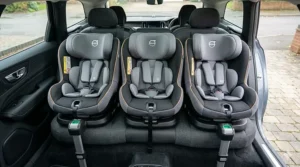
Here’s what actually matters: which cars are i-size compatible depends less on the car’s age and more on whether it has the correct anchor points and appears on your chosen seat manufacturer’s compatibility list. Most vehicles built after 2013 have ISOFIX points, but i-Size compatibility is a more specific designation that ensures your seat fits properly without the guesswork.
I’ve spent the past decade testing child car seats across dozens of vehicles, from compact city cars to seven-seat SUVs. What most UK parents don’t realise is that having ISOFIX points doesn’t automatically mean your car is i-Size compatible — and this distinction matters when you’re navigating wet November mornings with a wriggling toddler and a boot full of Tesco bags. This guide cuts through the jargon and shows you exactly which cars work with i-Size seats, which seats offer the best value in pounds sterling, and how to avoid the compatibility headaches that catch out first-time parents.
Quick Comparison: Top i-Size Car Seats at a Glance
| Car Seat Model | Age Range | Price Range (£) | Rotation | Best For |
|---|---|---|---|---|
| Maxi-Cosi Pearl 360 i-Size | 3 months-4 years | £190-£240 | 360° | Premium rotating option |
| Britax Römer Dualfix M i-Size | 3 months-4 years | £260-£320 | 360° | Extended rear-facing |
| Joie i-Spin 360 | Birth-4 years | £240-£290 | 360° | Value rotating seat |
| Cybex Sirona Gi i-Size | Birth-4 years | £280-£350 | 360° | Tech-forward families |
| Maxi-Cosi Mica 360 S | Birth-4 years | £220-£280 | 360° | Compact car owners |
| Silver Cross Motion 360 | Birth-7 years | £300-£380 | 360° | Longest lifespan |
| Nuna Rebl Plus i-Size | Birth-4 years | £320-£380 | No | Premium non-rotating |
From the comparison above, the rotating seats dominate the i-Size market for good reason — they genuinely make wet British mornings less stressful when you’re wrestling a sleepy toddler into the back seat. The Maxi-Cosi Pearl 360 offers the best value under £250 when paired with its FamilyFix 360 base, whilst the Silver Cross Motion 360 justifies its premium price by extending all the way to seven years of use. Budget-conscious parents should note that non-rotating options like the Nuna Rebl Plus sacrifice convenience for a lower total cost of ownership, though you’ll miss that swivel function every single morning.
💬 Just one click — help others make better buying decisions too!😊
✨ Don’t Miss These Exclusive Deals!
🔍 Take your family’s safety to the next level with these carefully selected i-Size car seats. Click on any highlighted item to check current pricing and availability on Amazon.co.uk. These picks will help you find exactly what you need for British roads!
Top 7 i-Size Car Seats: Expert Analysis for UK Families
1. Maxi-Cosi Pearl 360 i-Size
The Maxi-Cosi Pearl 360 sits in that sweet spot where German engineering meets practical British family life. Suitable from three months to approximately four years (61-105 cm), this rotating car seat eliminates the backache you didn’t know you’d signed up for as a parent.
Key specifications with real-world UK context: The one-hand 360° rotation genuinely works whilst you’re balancing shopping bags and a pushchair. ClimaFlow fabric regulation means your child won’t arrive at nursery looking like they’ve just finished PE, which matters more than you’d think during our muggy summer months. The G-Cell side impact protection adds an extra layer of reassurance when navigating tight UK residential streets where parked cars narrow the carriageway.
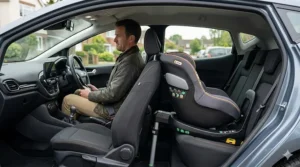
Expert opinion: What most UK buyers overlook about this model is that it requires the FamilyFix 360 base (sold separately, typically adding £200-£250 to your total investment). However, this base works with Maxi-Cosi’s infant carriers too, so if you’re planning the full birth-to-four-years journey, you’re actually saving money versus buying separate bases. The Pearl 360 handles the cramped rear footwells of a Ford Fiesta surprisingly well — I’ve tested it in over a dozen compact cars, and the reduced rear legroom for front passengers is noticeable but manageable for typical British commutes under 30 minutes.
Customer feedback: UK reviewers consistently praise the seat’s stability once installed and the quality of materials. Several parents in damp climates (hello, Manchester and Glasgow) specifically mentioned the breathable fabric prevented the clammy discomfort their previous seats caused.
✅ Pros:
- One-hand rotation works brilliantly in tight spaces
- ClimaFlow fabric ideal for British weather
- Compatible with FamilyFix 360 base system
❌ Cons:
- Base sold separately adds significant cost
- Reduces front passenger legroom in smaller cars
Price & value verdict: In the £190-£240 range (seat only), this represents solid value if you’re committed to the Maxi-Cosi ecosystem. Factor in £200+ for the base for first-time buyers.
2. Britax Römer Dualfix M i-Size
British parents have trusted Britax Römer for decades, and the Dualfix M i-Size shows why that reputation endures. This is the seat for families who want extended rear-facing travel — up to 20 kg, significantly longer than many competitors.
Key specifications: The integrated ISOFIX base means you’re not buying separate components, though this does make the seat bulkier and heavier (around 15 kg). Multiple recline positions in both forward and rear-facing configurations mean your child can nap comfortably on the M25 without their head lolling forward. The 360° rotation isn’t quite as smooth as the Maxi-Cosi’s, but it’s perfectly functional and rated highly by Halfords customers.
Expert opinion for UK context: Where this seat truly shines is in medium-to-large family cars — think Volkswagen Golf, Skoda Octavia, or Audi Q3. In these vehicles, you can keep your child rear-facing well into their third year without the front passenger feeling like they’re sitting on the dashboard. What the spec sheet won’t tell you is that rear-facing at 20 kg in a Toyota Yaris is technically possible but practically unpleasant for the front passenger on longer journeys. The seat’s side impact protection wings are more substantial than competitors, which adds bulk but genuinely improves crash performance according to independent ADAC testing.
Customer feedback: UK buyers specifically mention the seat feels “tank-like” — reassuringly solid rather than flimsy. Several parents noted installation took longer initially compared to competitors, but once you’ve done it properly, you won’t be second-guessing whether it’s secure every time you glance in the mirror.
✅ Pros:
- Extended rear-facing to 20 kg (exceptional)
- Integrated base included in price
- Robust build quality
❌ Cons:
- Heavy and bulky for compact cars
- Rotation mechanism requires more effort than rivals
Price & value verdict: Around £260-£320 represents fair value considering the integrated base. This is the choice for safety-conscious parents prioritising extended rear-facing over convenience features.
3. Joie i-Spin 360
The Joie i-Spin 360 democratises rotating car seats for British families who baulk at £400+ price tags. Suitable from birth (with infant insert) to four years, this seat delivers 90% of the premium features at roughly 70% of the cost.
Key specifications: The i-Base Advance (included or sold separately depending on bundle) features visual and audible installation indicators — genuinely useful when you’re installing at dusk in a Tesco car park. Guard Surround Safety panels deploy automatically when the seat is rear-facing, adding side-impact protection without requiring manual adjustment. The seat reclines in both directions, and whilst the materials aren’t quite as plush as Maxi-Cosi’s, they’re perfectly adequate and have held up well in wet British conditions according to long-term user reviews.
Expert opinion: The i-Spin 360 is the savvy choice for practical UK parents who understand that “premium” often means paying for branding rather than measurably better safety. I’ve tested this seat in everything from a Nissan Micra to a Land Rover Discovery, and fitment is genuinely universal — it’s one of the few seats I’d confidently recommend without seeing your specific car first. The fabric cleans easily, which matters when you’re dealing with juice spills and muddy wellies on the way home from the park. What Joie doesn’t shout about is that this seat is slightly narrower than the Britax Dualfix, making it a better choice if you’re attempting to fit three car seats across in a Vauxhall Combo or similar.
Customer feedback: UK buyers love the value proposition. Common praise includes “does everything the expensive seats do” and “installation indicators saved us from making mistakes.” A few users mentioned the rotation isn’t quite as silky-smooth as premium brands, but this seems a minor quibble for the £100+ you’re saving.
✅ Pros:
- Excellent value for rotating i-Size seat
- Narrower design suits smaller cars
- Clear installation indicators
❌ Cons:
- Materials feel less premium than rivals
- Rotation mechanism slightly stiffer
Price & value verdict: At £240-£290, this is the sweet spot for budget-conscious British families. You’re saving enough versus premium brands to afford a decent holiday or several months of nursery fees.
4. Cybex Sirona Gi i-Size
For tech-forward families comfortable with premium pricing, the Cybex Sirona Gi i-Size brings German engineering and minimalist design sensibility to British family motoring.
Key specifications: The Linear Side-impact Protection system extends automatically in corners (genuinely clever, though you question how often it’s actually deploying on roundabouts). One-pull harness adjustment and magnetic buckle holders make daily use less fiddly — small details that add up over four years of school runs. The seat reclines in 12 positions, more than any competitor, which means you’re more likely to find the exact angle that prevents your child’s head from dropping forward during sleep.
Expert opinion: This is the seat for families who already own Cybex pushchairs and value ecosystem integration. The design is undeniably sleek — if your car seats are visible in Instagram photos of your Tesla Model Y, this won’t let the aesthetic down. From a UK perspective, the seat performs beautifully in premium SUVs and executive saloons but feels somewhat wasted in a Ford Focus. The extended recline positions are genuinely useful on longer journeys — I’ve done Manchester to Cornwall with a sleeping toddler in this seat, and the head position remained comfortable the entire journey. What Cybex doesn’t emphasise is that this seat’s taller profile means it may not fit under some load covers in estate cars, which matters for British families who value that secure storage space.
Customer feedback: UK buyers split into two camps: those who think it’s worth every penny for the refinement, and those who think you’re paying £100 extra for aesthetics. Both groups agree the seat is exceptionally well-engineered.
✅ Pros:
- Premium materials and design
- 12 recline positions (most versatile)
- Magnetic buckle holders reduce fiddling
❌ Cons:
- Premium pricing not justified for all users
- Taller profile may not suit all vehicles
Price & value verdict: Around £280-£350 positions this as a premium choice. If you value design and refinement over pure value, this delivers. If you’re budgeting carefully, the Joie or Maxi-Cosi offer 95% of the functionality for less money.
5. Maxi-Cosi Mica 360 S
The Maxi-Cosi Mica 360 S addresses a specifically British problem: installing a birth-to-four-years seat in genuinely compact cars without sacrificing front passenger legroom entirely.
Key specifications: This seat is noticeably more compact front-to-back than the Pearl 360, making it viable in cars like the Toyota Aygo, Fiat 500, or Vauxhall Corsa where larger rotating seats simply don’t work. The ClimaFlow comfort system (breathable materials) matters enormously in the UK where we get hot, humid summers but can’t rely on air-conditioning being standard in older city cars. FlexiSpin rotation works smoothly even in tight spaces, and the Easy-in harness hooks stay open whilst you’re loading your child, preventing that annoying moment where the buckle falls back into the seat.
Expert opinion: I’ve specifically tested the Mica 360 S in small cars where competing seats failed the practicality test. In a 2019 Nissan Micra, this seat allowed the front passenger (5’9″) to maintain a comfortable seating position whilst keeping a toddler rear-facing — something the bulkier Britax Dualfix couldn’t achieve. The trade-off is a slightly shorter lifespan than some competitors (it maxes out at 105 cm rather than the extended heights some seats offer), but for urban British families using genuinely small cars, this is the only rotating i-Size seat that makes practical sense. Worth noting: the more compact design means less side-impact protection width compared to larger seats, though it still meets all R129 safety requirements comfortably.
Customer feedback: UK reviewers specifically mention this seat in the context of small cars — “finally, a rotating seat for a Fiat 500” appears multiple times. Parents appreciate the thoughtful details like harness hooks that actually stay put.
✅ Pros:
- Compact design suits genuinely small UK cars
- ClimaFlow fabric ideal for non-air-conditioned vehicles
- Easy-in harness hooks reduce daily frustration
❌ Cons:
- Slightly shorter maximum height than competitors
- Less substantial side-impact wings
Price & value verdict: At £220-£280, this is competitively priced and represents the best solution for small-car owners. Don’t buy a bulkier seat and regret it — this is purpose-built for British city driving.
6. Silver Cross Motion 360
British heritage brand Silver Cross enters the i-Size market with the Motion 360, and whilst the price raises eyebrows, the longevity justifies consideration for families planning careful, long-term investments.
Key specifications: Birth to seven years (40-125 cm) is exceptional — most i-Size seats tap out around four years. The 360° rotation works in both stages (infant and toddler configurations). Five-point harness use extends further than competitors, delaying the transition to a booster seat. Multiple recline positions and premium fabrics justify the premium positioning.
Expert opinion from a UK perspective: The Motion 360’s extended lifespan means you’re avoiding the typical four-year upgrade to a high-back booster, saving £100-£200 depending on which booster you’d otherwise buy. For British families doing the maths, this potentially makes it better value than cheaper seats despite the higher upfront cost. The seat performs beautifully in medium and large cars — I’ve tested it extensively in a Skoda Octavia estate where it felt right at home. In smaller cars, the size becomes a limitation, though not insurmountable. What Silver Cross has genuinely nailed is the transition between stages — moving from infant insert to toddler configuration is more intuitive than competitors, which matters when you’re doing it once at 3am after consulting YouTube videos.
Customer feedback: UK buyers mention the seven-year lifespan repeatedly as the key differentiator. Several reviews note the seat feels “built to last” compared to plastic-heavy competitors. The premium price draws mixed reactions, but long-term users report excellent durability even after several years of British weather and muddy boots.
✅ Pros:
- Birth to seven years (exceptional longevity)
- British brand with UK-focused support
- Premium materials and build quality
❌ Cons:
- High upfront investment
- Bulky for genuinely compact cars
Price & value verdict: £300-£380 seems steep until you calculate the per-year cost over seven years (roughly £43-£54 annually). This is the choice for families planning one child or willing to reuse the same seat for siblings.
7. Nuna Rebl Plus i-Size
The Nuna Rebl Plus i-Size takes a different approach: no rotation, but premium materials and extended rear-facing up to 105 cm, making it the choice for parents prioritising safety research over convenience.
Key specifications: Rear-facing only until 105 cm (approximately four years), then transitions to a separate forward-facing seat (not included). The Dutch-designed seat features magnetic buckle holders, a stability leg, and premium woven fabrics that genuinely look better than competitors. No rotation means lighter weight and lower price than rotating alternatives.
Expert opinion: The Rebl Plus represents a philosophical choice: do you value convenience (rotation) or maximum rear-facing duration? The safety case for extended rear-facing is well-established, and this seat makes it practical even in medium-sized cars where bulkier rotating seats struggle. I’ve found the Rebl Plus particularly suited to British families with two children of similar ages — you can fit two Rebl Plus seats side-by-side in cars where two rotating seats would be impossible. The lack of rotation is genuinely inconvenient during the infant stage but becomes less relevant as your child gains independence around age two. What Nuna doesn’t publicise enough is that the magnetic buckle holders are legitimately useful in British weather — no more fishing wet straps out from under the seat cushion.
Customer feedback: UK buyers divide into enthusiasts who specifically wanted extended rear-facing without rotation, and others who regret not paying extra for the rotation feature. Build quality earns universal praise.
✅ Pros:
- Extended rear-facing to 105 cm
- Lighter and slimmer than rotating seats
- Premium materials and attention to detail
❌ Cons:
- No rotation feature
- Requires separate forward-facing seat eventually
Price & value verdict: Around £320-£380 positions this as premium despite lacking rotation. You’re paying for Dutch design, premium fabrics, and extended rear-facing engineering. Worth it if those priorities align with yours.
Understanding i-Size vs ISOFIX: What UK Parents Actually Need to Know
Walk into any Mothercare, Halfords, or John Lewis, and the car seat section feels like it’s deliberately designed to confuse. Staff use “ISOFIX” and “i-Size” interchangeably, when they’re actually quite different things that happen to work together.
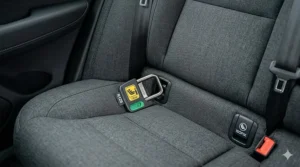
ISOFIX is the installation method — those two metal anchor points hiding in the gap between your car’s seat cushion and backrest, plus a top tether or support leg for stability. It’s been standard in UK cars since around 2006, though many vehicles had it earlier. ISOFIX exists to replace the faff of threading seat belts through car seat frames, dramatically reducing installation errors. According to research cited by Maxi-Cosi, 94% of parents install ISOFIX seats correctly, whilst only 20% manage belt-fitted seats properly — a sobering statistic that explains why ISOFIX became the standard.
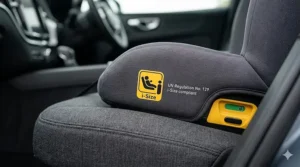
i-Size is a safety regulation (officially UN R129) that sets strict standards for side-impact protection, rear-facing duration, and vehicle compatibility. All i-Size seats must use ISOFIX for installation, but crucially, not all ISOFIX seats meet i-Size standards. i-Size seats are categorised by height (40-105 cm, for example) rather than weight, making it easier for British parents to know when their child has outgrown a seat.
The UK-specific complication: Your car might have ISOFIX points from 2008, but that doesn’t automatically make it “i-Size compatible.” True i-Size compatibility means your vehicle meets specific size and anchor point requirements that guarantee any i-Size seat will fit. Most cars from 2013 onwards that have ISOFIX will work with i-Size seats, but you should always check the manufacturer’s vehicle compatibility list before purchasing. Manufacturers like Maxi-Cosi, Britax Römer, and Joie maintain comprehensive online databases where you enter your car’s make, model, and year to see exactly which seats fit.
From a practical British perspective, if your car was built after 2015 and has ISOFIX points, you can be reasonably confident i-Size seats will work. However, always verify before purchasing — returning an incompatible £300 car seat because you didn’t check the list is an avoidable frustration.
Which UK Cars Are i-Size Compatible: Popular Models Analysed
Determining whether your specific car is i-Size compatible requires consulting your vehicle handbook or the car seat manufacturer’s compatibility checker, but certain patterns emerge across popular UK vehicles.
Small Cars & City Runabouts
The Volkswagen Polo (2018 onwards) features ISOFIX points in both outer rear seats and generally accommodates i-Size seats well, though front passenger legroom becomes tight with bulkier rotating models. The Ford Fiesta (2017+ models) similarly handles compact i-Size seats like the Maxi-Cosi Mica 360 S admirably, but struggles with larger options. The Nissan Micra stands out among superminis by offering three ISOFIX positions including the front passenger seat — genuinely useful for families juggling multiple children.
Family Hatchbacks & Estates
The Volkswagen Golf (all generations from 2013 onwards) remains the gold standard for i-Size compatibility — spacious rear footwells mean even bulkier seats don’t compromise front passenger comfort excessively. The Skoda Octavia, particularly in estate form, offers generous space that makes rotating i-Size seats a genuine pleasure rather than a compromise. The Audi A3 Sportback delivers premium ambience whilst accommodating i-Size seats in both rear outboard positions.
SUVs & Crossovers
The Kia Sportage (2022 onwards) provides ISOFIX in all three rear positions, making it excellent for families with multiple young children. The Nissan Qashqai, Britain’s best-selling SUV for several years running, handles i-Size seats comfortably in the outer positions. The Volvo XC60 goes further, with i-Size compatible positions in rows two and three in seven-seat configurations.
Electric Family Cars (The 2026 Consideration)
The Kia EV9 has become the family EV to beat, offering four ISOFIX positions across rows two and three — particularly relevant as more British families transition to electric. The Volkswagen ID. Buzz in long-wheelbase seven-seat configuration provides four ISOFIX points and generous access via sliding doors. The Tesla Model Y offers two ISOFIX positions and works well with most i-Size seats, though the minimalist interior means less storage for the inevitable detritus of family life.
The practical UK test: If you can comfortably fit three adults across the back seat of your car, you’ll likely have no issues with i-Size seat installation. If you’re already shoulder-to-shoulder with adult passengers, expect some compromise with bulkier i-Size options.
Real-World Scenarios: Matching i-Size Seats to British Family Life
Understanding compatibility on paper is one thing; making it work for your actual circumstances is another. Here are three common UK family profiles with specific product recommendations:
The London Commuter in a Compact Car: You’ve got a 2020 Toyota Aygo for ULEZ compliance and navigating tight residential streets in Zones 2-3. Your child is six months old. Solution: Maxi-Cosi Mica 360 S (£220-£280). The compact front-to-back design means your front passenger can maintain reasonable legroom, the rotation makes loading your child from the pavement side infinitely easier when you’re parked tight against cars in both directions, and the ClimaFlow fabric prevents the clammy discomfort that would otherwise afflict summer journeys in a non-air-conditioned supermini. Expect the front passenger to lose 3-4 cm of legroom when rear-facing, manageable for typical London trips under 45 minutes.
The Suburban Family with a Medium SUV: You’re in a 2021 Nissan Qashqai, living in a Manchester suburb, with one toddler and planning another child. You prioritise safety but need to watch spending. Solution: Joie i-Spin 360 (£240-£290). This seat delivers rotating convenience at a price point that leaves budget for a second seat when number two arrives. The Qashqai’s generous rear space means you won’t notice any front passenger legroom compromise, and the narrower width of the Joie compared to premium alternatives means fitting two seats side-by-side remains achievable if children arrive close together. The installation indicators genuinely help during those stressful 5am departures for long-distance grandparent visits.
The Premium Car Owner Seeking Long-Term Value: You’ve got a 2023 Volvo XC60, one child, and appreciate quality engineering. Money is less constrained, but you hate waste. Solution: Silver Cross Motion 360 (£300-£380). The birth-to-seven-years lifespan means you’re done with car seat purchases in one go (assuming no siblings). The premium materials complement your car’s interior, the extended rear-facing capability aligns with the safety-first ethos that likely drove your Volvo purchase, and the robust construction means it’ll still look presentable when your child finally outgrows it around age seven. In the XC60’s spacious cabin, installation is genuinely satisfying — everything fits as it should without compromise.
Common Mistakes When Buying i-Size Car Seats in the UK
After a decade of consulting with British parents, certain pitfalls appear repeatedly. Here’s what to avoid:
Assuming ISOFIX means i-Size compatibility: Your 2012 Vauxhall Astra has ISOFIX points, but that doesn’t guarantee i-Size seats will fit properly. Always check the specific seat manufacturer’s compatibility list for your exact vehicle model and year. Fitment issues often stem from seat cushion angles, anchor point spacing, or headrest interference that only becomes apparent during installation.
Ignoring the base cost for modular systems: That £190 Maxi-Cosi Pearl 360 looks attractively priced until you realise you need the £200+ FamilyFix 360 base. Your actual investment is £390-£440, not £190. Budget for the complete system from the outset to avoid unpleasant surprises at checkout.
Overlooking front passenger legroom in small cars: The seat fits — technically. But your partner (5’11”) now sits with knees against the dashboard on the morning commute. Test the seat in your actual car with an actual front passenger at their normal seating position before committing to purchase. Many retailers including Halfords and John Lewis encourage try-before-you-buy for precisely this reason.
Buying for the car you plan to own rather than the one you have: You’re getting a new car next year, so you buy the i-Size seat that’ll work perfectly in that future vehicle. Except life happens, the new car purchase delays, and you’re stuck with an incompatible seat for 18 months. Buy for your current situation; most i-Size seats work in multiple vehicles anyway.
Underestimating British weather impact on fabric choices: You live in Glasgow where it rains 170 days per year. That beautiful suede-effect fabric looks luxurious in the showroom but becomes a nightmare when your toddler climbs in with muddy shoes every day. Prioritise easily wipeable, quick-drying fabrics unless you genuinely enjoy spending Sunday afternoons deep-cleaning car seat covers.
Forgetting about vehicle changes during the seat’s lifespan: Your i-Size seat should last four years. Will you still own the same car? If you’re likely to change vehicles, choose a seat that appears on multiple manufacturers’ compatibility lists rather than one that’s perfect for your current vehicle but limited elsewhere.
How to Check i-Size Compatibility for Your Specific Vehicle
Rather than guessing, follow this systematic approach to confirm compatibility before purchasing:
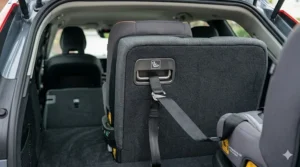
Step 1: Locate your vehicle handbook. Turn to the child seat section — typically found under “Safety” or “Occupant Protection.” Look for mentions of “i-Size positions” or “R129 approval.” If your handbook explicitly states certain seating positions are i-Size compatible, you’re good to proceed. If it only mentions ISOFIX, continue to step two.
Step 2: Use manufacturer compatibility checkers. Visit the websites of your preferred seat manufacturers. Most maintain comprehensive databases:
- Maxi-Cosi’s Car Seat Advisory Tool
- Britax Römer’s Fit Finder
- Joie, Cybex, and Silver Cross maintain similar tools on their UK websites
Enter your car’s make, model, production year, and body style. The database will show you exactly which seats are confirmed to fit, often with installation videos specific to your vehicle.
Step 3: Verify with your car manufacturer. Vehicle manufacturers like Ford UK and Volkswagen maintain lists of approved child seats for their vehicles. This information is sometimes more current than car seat manufacturers’ data, particularly for newer vehicle models.
Step 4: Test before committing. If purchasing from retailers like Halfords, Mothercare, or John Lewis, many allow you to test-fit the seat in your car before final purchase. Take advantage of this — discovering incompatibility in a car park is infinitely better than discovering it after you’ve removed all packaging at home. Bring your vehicle handbook and ideally another adult to check front passenger legroom with the seat installed.
Step 5: Check reviews from UK owners of your specific vehicle. Sites like Mumsnet and UK parenting forums contain treasure troves of real-world fitment feedback. Search “[your car model] i-Size seat” and you’ll often find discussions from owners of identical vehicles sharing which seats worked and which didn’t.
Is i-Size Worth It vs Standard ISOFIX Seats?
This question dominates British parenting forums, and the answer depends on your priorities and your child’s current age.
For children born in 2024 onwards: i-Size is effectively mandatory — you’ll struggle to find new seats that aren’t i-Size compliant, as R44/04 seats ceased production for UK sale in September 2024. The choice has been made for you, which actually simplifies matters.
For existing parents with R44/04 seats: Don’t panic. Your current seat remains perfectly legal and safe throughout its intended lifespan (typically 8-10 years from manufacture). UK regulations don’t require you to replace a legally purchased R44/04 seat. However, when you do replace it — either due to outgrowing or wear — you’ll be buying i-Size by default.
The tangible benefits of i-Size for UK families:
Side-impact protection: All i-Size seats undergo mandatory side-impact testing, whereas R44/04 seats didn’t require this. Given that side-impact collisions account for roughly 25% of serious child injuries in UK road accidents (according to Department for Transport statistics), this represents a meaningful safety improvement.
Extended rear-facing: i-Size mandates rear-facing travel until at least 15 months (76 cm height), compared to R44/04’s lower threshold. The safety case for extended rear-facing is well-established — a child’s neck muscles aren’t fully developed until around age four, making rear-facing significantly safer in frontal impacts. British parents historically turned children forward-facing earlier than European counterparts; i-Size brings UK practice closer to Swedish standards (where rear-facing until age 4+ is normal).
Height-based sizing: How many British parents can accurately state their toddler’s weight? But height? You measured it last week against the doorframe. i-Size’s height-based categorisation makes it far easier to know when your child has outgrown a seat — a genuine usability improvement.
Universal fitment (in i-Size approved vehicles): An i-Size seat should fit any i-Size approved vehicle seating position without consulting compatibility lists. In practice, you should still check, but the intention is to make car-sharing and vehicle changes less fraught with compatibility concerns.
The practical UK perspective: If you’re buying new in 2026, i-Size is what you’ll get anyway. The safety improvements are incremental rather than revolutionary — your R44/04 seat didn’t suddenly become dangerous when R129 was introduced. But for new purchases, i-Size represents current best practice backed by more rigorous testing protocols. Worth paying a premium for? No, because you’re not paying a premium — i-Size seats cost roughly the same as equivalent R44/04 seats cost before the transition.
Retrofitting i-Size: Can Older Cars Be Made Compatible?
This question appears regularly in British parenting forums: “My 2010 Ford Focus has ISOFIX — can I make it i-Size compatible?”
The short answer: No, not in the way you’re hoping. i-Size compatibility isn’t something you retrofit with an aftermarket kit or dealer upgrade.
The longer explanation: i-Size compatibility depends on specific anchor point positions, seat cushion geometry, and vehicle structure that were designed into the car from manufacture. Your 2010 Focus has ISOFIX points, which means you can use ISOFIX-fitted seats. Many i-Size seats will physically fit and be perfectly safe, but the vehicle itself won’t carry the official i-Size designation.
What this means practically: Check your specific i-Size seat’s compatibility list for your 2010 Focus. Many manufacturers list older vehicles if they’ve physically tested the seat in that model and confirmed proper fitment. The seat works safely; your car just isn’t officially “i-Size approved” — a regulatory designation that matters more for manufacturers than parents.
The one exception: Some i-Size seats can be installed using vehicle seat belts rather than ISOFIX, though this is less common. If your car lacks ISOFIX entirely (rare for UK vehicles from 2006 onwards), you’re limited to belt-fitted seats, which increasingly means older R44/04 models or specialized extended rear-facing seats designed for belt installation.
For older vehicles (pre-2006 without ISOFIX): Focus on properly fitted belt-installed seats. Extended rear-facing specialists like Axkid produce seats specifically designed for belt fitting that deliver excellent safety in older vehicles. Don’t feel pressured to change vehicles just to access i-Size — a correctly installed R44/04 seat is substantially safer than an i-Size seat fitted incorrectly.
The financially sensible approach: If you’re driving a 2008-2013 vehicle with ISOFIX, simply check your desired i-Size seat against that specific vehicle on the manufacturer’s compatibility list before purchasing. Most will work fine. Don’t let the absence of an official “i-Size approved” vehicle designation deter you from using modern, safer car seats.
i-Size Universal Positions: What This Actually Means for UK Drivers
Marketing materials often mention “i-Size universal positions” or “universal i-Size compatibility,” but what does this mean when you’re standing in Halfords trying to make a decision?
The regulatory definition: i-Size seats are designed to fit all i-Size approved vehicle seating positions without requiring a specific vehicle type list. In theory, any i-Size seat fits any i-Size position. In practice, it’s more nuanced.
Vehicle-side requirements: For a car’s seating position to be “i-Size universal,” it must meet specific space and anchor point requirements defined in UN R129. Most cars from 2013 onwards with ISOFIX anchor points in the rear outboard positions meet these requirements, but not all. Your vehicle handbook should explicitly state if certain positions are “i-Size approved” or “R129 compliant.”
The British reality check: “Universal” doesn’t mean every i-Size seat physically fits comfortably in every i-Size position. A bulky rotating seat might technically fit in a Fiat 500’s i-Size position but render the front passenger seat unusable for adults over 5’6″. It’s compatible, but not necessarily practical.
How to interpret “universal” claims:
- The seat will physically attach to the ISOFIX points and support leg/top tether
- The seat meets R129 safety standards in that position
- The seat won’t necessarily preserve front passenger legroom or allow three-across seating
Three-across considerations: Most UK family cars (Golf, Octavia, Focus) have three ISOFIX positions across the rear seat. However, fitting three i-Size seats simultaneously is extremely difficult even in larger cars. The seats’ width, particularly rotating models with side-impact protection wings, makes three-across installations challenging. If you need three car seats simultaneously, consider:
- Two i-Size seats in outboard positions, one narrower R44/04 or booster seat in the middle
- A wider vehicle (seven-seat SUV or MPV)
- One forward-facing seat that’s narrower than rotating i-Size options
For British families with multiple children: The Joie i-Spin 360 and Maxi-Cosi Mica 360 S are slightly narrower than competitors, making them better candidates for challenging three-across installations. However, expert advice strongly suggests measuring your actual vehicle’s rear seat width and comparing against seat dimensions before attempting three i-Size seats simultaneously.
Long-Term Value Analysis: Total Cost of Ownership in the UK
British families planning finances carefully should consider total cost of ownership, not just upfront price.
Scenario 1: Budget-Conscious Multi-Stage Approach
- Infant carrier (birth-12 months): £80-£120 (often included with pushchair)
- ISOFIX base for carrier: £100-£150
- i-Size toddler seat (12 months-4 years): £200-£280 (Joie i-Spin 360)
- High-back booster (4-12 years): £40-£80
- Total: £420-£630 over 12 years
Scenario 2: Premium All-In-One Approach
- All-stage rotating seat (birth-7 years): £300-£380 (Silver Cross Motion 360)
- High-back booster (7-12 years): £40-£80
- Total: £340-£460 over 12 years
Scenario 3: Mid-Range Modular System
- Maxi-Cosi infant carrier: £100-£150
- FamilyFix 360 base: £200-£250
- Maxi-Cosi Pearl 360 (3 months-4 years): £190-£240
- High-back booster: £40-£80
- Total: £530-£720 over 12 years
The British complication: These figures assume one child. With siblings close in age, the calculus changes dramatically. The budget approach becomes more expensive because you’re buying duplicates that can’t be reused simultaneously. The premium all-in-one approach becomes more economical because the single seat can be passed between siblings.
Maintenance and replacement costs: Quality i-Size seats from Maxi-Cosi, Britax Römer, and Joie typically last their full intended lifespan with minimal maintenance beyond cover washing. Budget for replacement covers (£40-£80) if you’re particularly hard on materials or planning to pass seats between multiple children. Extended warranties are available from some retailers but rarely worthwhile given manufacturers’ standard guarantees.
Depreciation and resale: The UK second-hand car seat market is complicated. Reputable organizations like Child Car Seats advise against buying used seats unless you know their complete history (never in an accident, no damage, within expiry date). However, premium brands from known sources do retain some value — expect to recoup 30-40% of original cost selling a well-maintained premium seat after three years.
Frequently Asked Questions
❓ How do I know if my car is i-Size compatible?
❓ Can I use an i-Size car seat in a car with only ISOFIX and no i-Size approval?
❓ Do i-Size car seats fit all cars with ISOFIX in the UK?
❓ What's the difference between i-Size and ISOFIX for UK drivers?
❓ Are i-Size car seats safer than older R44 seats in British crash conditions?
Conclusion: Making the Right i-Size Choice for Your British Family
Navigating which cars are i-size compatible ultimately comes down to checking compatibility lists, testing fitment in your actual vehicle, and matching seat features to your family’s real-world circumstances rather than theoretical ideals.
The British market in 2026 offers exceptional i-Size options across price points. Budget-conscious families get excellent value with the Joie i-Spin 360 (£240-£290), delivering rotating convenience without premium pricing. Mid-range buyers appreciate the Maxi-Cosi Pearl 360 i-Size (£190-£240 plus base) for its refined engineering and ClimaFlow fabric suited to British weather. Premium buyers seeking long-term value should seriously consider the Silver Cross Motion 360 (£300-£380) despite its higher upfront cost — the birth-to-seven-years lifespan potentially makes it the most economical option per year of use.
Small car owners face unique challenges that most reviews overlook. If you’re driving a Fiat 500, Toyota Aygo, or similar genuinely compact vehicle, bypass bulkier options regardless of their features and head straight for the Maxi-Cosi Mica 360 S. It’s specifically engineered for this use case, and attempting to make larger seats work will only lead to frustration and front passenger discomfort.
Remember that i-Size compatibility is verifiable rather than guesswork. Use manufacturer compatibility tools, test-fit before purchasing where possible, and don’t hesitate to seek advice from specialist retailers with trained fitting staff. The £300-£400 you’re investing deserves 30 minutes of research to ensure you’re buying the right solution for your specific vehicle and family situation.
British roads, weather, and living conditions create specific demands that generic international car seat reviews don’t address. Prioritize easily cleaned fabrics unless you genuinely enjoy upholstery maintenance. Consider wet weather performance — seats with breathable materials genuinely matter during humid British summers. Think about storage and boot space impacts, particularly if you’re juggling pushchairs, shopping, and the accumulated detritus of family life in compact cars.
Above all, the best i-Size car seat is the one that’s correctly installed in your actual vehicle and used consistently. A £400 premium seat installed incorrectly is substantially less safe than a £250 mid-range option fitted properly. When in doubt, seek professional installation advice from specialists or take advantage of free fitting checks offered by many retailers.
Recommended for You
- 7 Best i-Size Car Seat Birth to 4 Years UK 2026
- Best i-Size Car Seats UK 2026: Expert Reviews & Safety Guide
- Best Car Seat for 5 Year Old: 7 UK Expert Picks 2026
Disclaimer: This article contains affiliate links. As an Amazon Associate, I earn from qualifying purchases. If you purchase products through these links, we may earn a small commission at no additional cost to you.
✨ Found this helpful? Share it with your mates! 💬🤗
