

In This Article
Navigating the maze of car seat regulations in Britain can feel rather overwhelming, particularly when you’re trying to work out when can child use backless booster seat options. The rules changed significantly in March 2017, and many parents still operate under outdated assumptions about what’s legal and, more importantly, what’s actually safe for their little ones.
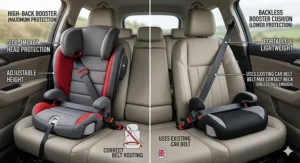
Here’s the short answer: new backless booster seats sold in the UK can only be used by children who are taller than 125cm and weigh more than 22kg. That’s roughly equivalent to a seven-year-old child, though of course children develop at vastly different rates. The critical point that most parents overlook is that these restrictions apply to new models entering the market—if you already own an older backless booster that was approved for smaller children (15-36kg), it remains perfectly legal to use, though safety experts rather pointedly suggest you consider upgrading to a high-back alternative.
What confuses matters further is that UK law requires all children under 12 years or 135cm in height (whichever comes first) to use an appropriate child restraint. Backless boosters fall into this category, but only for older, taller children who’ve outgrown forward-facing harness seats. The gap between when a child physically fits a backless booster and when they’re developmentally ready to sit still for an entire journey is where many families stumble. A fidgety six-year-old who meets the height requirement might technically qualify for a backless seat, but that doesn’t mean it’s the wisest choice for motorway journeys to the Cotswolds.
Quick Comparison: Top Backless Booster Seats Available in the UK
| Model | Height Range | Weight | Price Range | Key Feature | Best For |
|---|---|---|---|---|---|
| Graco Booster Basic R129 | 135-150cm | 1.4kg | £20-£30 | Ultra-lightweight with retractable cupholders | Daily commutes & school runs |
| BubbleBum Inflatable | 15-36kg | 0.5kg | £35-£45 | Deflates to fit in handbag | Travel & taxis |
| Cozy N Safe Neo+ | 125-150cm | 2.2kg | £25-£40 | Deep foam padding, integrated belt guide | Comfort on long journeys |
| Graco EverSure Lite R129 | 135-150cm | 2kg | £40-£55 | Memory foam cushioning | Premium comfort seekers |
| Cozy N Safe Tambu ISOFIX | 125-150cm | 3.25kg | £45-£60 | ISOFIX connectors for stability | Families with multiple cars |
| Graco Booster Max R129 | 135-150cm | 2.7kg | £50-£70 | ISOFIX with premium padding | Maximum security |
| Chicco GoFit Plus | 40-110 lbs | 2.3kg | £30-£45 | LATCH system, ergonomic design | Active families |
Looking at this table, it’s rather telling that the inflatable BubbleBum sits at the lighter end despite costing more than basic rigid models. The reason? Portability commands a premium when you’re juggling Ubers, rental cars, and grandparent pickups. Meanwhile, the ISOFIX-equipped models hover around the £50-£60 mark—a worthwhile investment if you’re frequently moving the seat between vehicles, as the connectors prevent it becoming a projectile when unoccupied. UK families living in terraced housing particularly appreciate this feature, since you can install the seat once and leave it clicked in rather than hauling it in and out through narrow hallways each evening.
💬 Just one click — help others make better buying decisions too! 😊
Top 7 Backless Booster Seats for UK Families: Expert Analysis
1. Graco Booster Basic R129 — The Sensible Daily Driver
If you’re after a no-nonsense backless booster that does exactly what it promises without any faffing about, the Graco Booster Basic R129 represents exceptional value. At just 1.4kg, it’s genuinely one of the lightest R129-certified seats on the market, which means even a seven-year-old can carry it from car to boot without assistance. The two retractable cupholders are cleverly designed to tuck away when not in use—a small detail that makes a surprising difference when you’re trying to fit three children across the back seat of a Volkswagen Golf.
The padded seat cover removes entirely and survives the washing machine on a 30-degree delicate cycle, which you’ll appreciate after the inevitable spillage of Ribena or crisps. What sets this apart from cheaper options is the belt positioning clip that helps guide the shoulder strap to the correct height—particularly useful for children at the smaller end of the 135cm threshold who might otherwise find the belt sitting uncomfortably close to their neck. UK reviewers consistently praise how well it fits in narrow British vehicles without eating into precious legroom.
From a safety perspective, it’s R129 compliant, which means it’s been tested to more stringent side-impact standards than older R44 models. That said, because it’s backless, it offers no head or torso protection in a side collision—something to weigh carefully if your regular route includes fast A-roads or motorways. For urban driving and school runs around Guildford or Norwich, it’s perfectly adequate. For weekly trips up the M1 to visit relatives in Leeds, you might want the additional security of a high-back version.
Pros:
✅ Exceptionally lightweight for easy transfers
✅ Machine-washable cover (essential for British weather and muddy football kits)
✅ Retractable cupholders save space in compact cars
Cons:
❌ No side-impact protection beyond basic positioning
❌ Minimal padding compared to premium models
Price: Around £25-£30 on Amazon.co.uk
Value verdict: Outstanding for families needing an affordable, portable second seat or for grandparents who only do occasional school pickups.
2. BubbleBum Inflatable Booster — The Travel Genius
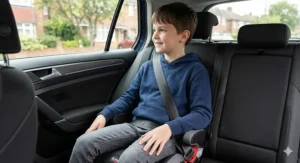
The BubbleBum Inflatable Booster is one of those products that sounds slightly mad until you actually use it, and then you wonder how you ever managed without it. Weighing just 0.5kg when deflated and rolling up to roughly the size of a small jumper, it’s the ultimate solution for families who travel frequently or rely on taxis and Ubers. I’ve spoken with parents who keep one permanently in a rucksack “just in case”—and given how often spontaneous car journeys arise (forgotten PE kits, impromptu visits to cousins in Cornwall), that’s rather sensible.
What most buyers don’t realise until they’ve tried it is that the inflatable base is genuinely comfortable—arguably more so than rigid plastic alternatives. It’s made from the same material as life jackets, which means it’s durable enough to survive being sat on by a wriggly eight-year-old for three hours on the M4. The shoulder belt positioner clips onto the vehicle’s seatbelt to ensure proper positioning across the chest rather than the neck, addressing one of the main safety concerns with backless boosters.
The trade-off, and it’s worth being honest about this, is that the BubbleBum shifts slightly under passenger weight. Children who fidget constantly may find themselves needing to readjust the seat more often than with a rigid model. It’s also not ideal for very long journeys where a child might want to lean against a high back and nap—there’s simply no upper-body support. UK buyers report mixed experiences in wet weather; the fabric can feel slightly clammy if a child’s sitting on it in damp clothes after football practice in the rain. Still, for holidays, rental cars, and situations where you’d otherwise risk going without a booster entirely, it’s genuinely excellent.
Pros:
✅ Packs smaller than any competitor (fits in a handbag or glove box)
✅ Comfortable inflatable cushioning
✅ Meets all UK and European safety standards (R44/04)
Cons:
❌ Can shift under weight, requiring occasional readjustment
❌ No back support for napping on long journeys
Price: Around £35-£45 on Amazon.co.uk
Value verdict: Worth every penny if you travel regularly or need a grab-and-go option for taxis, but consider a rigid seat for daily commutes.
3. Cozy N Safe Neo+ i-Size Booster — The Comfort Champion
The Cozy N Safe Neo+ sits in that sweet spot between budget basics and premium luxury, delivering deep foam padding and proper armrest support without the eye-watering price tag of top-tier brands. At 2.2kg, it’s still portable enough to move between cars without doing your back in, but substantial enough that it feels reassuringly solid when installed. The integrated belt guide is particularly well-designed—it positions the adult seatbelt correctly over the shoulder and across the lap, which is precisely where many cheaper backless boosters fall short.
What UK parents consistently highlight in reviews is the comfort factor on longer journeys. The foam padding is genuinely deep—not the token 5mm of squashed foam you find on bargain models—and the armrests provide proper support rather than just being decorative bumps. For families doing regular weekend trips from Manchester to the Lake District or Bristol to South Wales, that extra cushioning makes a measurable difference to whether your child arrives grumpy or cheerful. The removable covers machine wash at 30°C, which is crucial given British weather and the inevitability of muddy footprints, spilled juice, and the occasional travel sickness incident.
The Neo+ is certified to the latest ECE R129 regulations, which means it’s been tested to faster collision speeds and includes enhanced side-impact assessments compared to older R44 standards. That said, being backless, it still offers limited protection in side collisions compared to high-back alternatives. If your regular routes include dual carriageways and motorways, you might want to delay the switch to backless for another year or two. For suburban driving and A-roads, it’s more than adequate.
Pros:
✅ Deep foam padding for genuine comfort
✅ Integrated belt guide ensures correct positioning
✅ Machine-washable covers at 30°C
Cons:
❌ No side-impact head protection
❌ Heavier than ultra-portable models
Price: Around £30-£40 on Amazon.co.uk
Value verdict: Excellent middle-ground choice for families prioritising comfort without breaking the bank.
4. Graco EverSure Lite R129 — The Premium Option
If you’re willing to spend a bit more for demonstrably better quality, the Graco EverSure Lite R129 delivers what its price promises. The memory foam seat cushion is the standout feature—it actually moulds to your child’s shape rather than just compressing flat after three months of use. The padded armrests feel rather posh compared to budget models, and the overall styling has a sleek, modern aesthetic that doesn’t scream “cheap car seat” when installed in a newer vehicle.
At 2kg, it’s still light enough for easy transfers between cars, which matters for families juggling childcare drop-offs between two parents or relying on grandparents for school runs. The two retractable cupholders are similar to the Booster Basic but feel slightly more robust—important if your child habitually stuffs them with half-eaten apples and sticky sweet wrappers. UK reviewers with multiple children note that the premium materials show significantly less wear and tear than cheaper alternatives, making it a better long-term investment if you’ve got younger siblings waiting in the wings.
What you’re really paying for here is comfort and longevity. The memory foam genuinely makes a difference on journeys over an hour, and the enhanced materials mean the seat still looks and feels decent after two years of daily use. For families doing regular long-distance drives (London to Edinburgh, Bristol to Newcastle), or for children who are particularly sensitive to discomfort, it’s worth the extra outlay. For short school runs around suburban Norwich or Leicester, the basic model is probably sufficient.
Pros:
✅ Memory foam for superior comfort on long journeys
✅ Premium materials show less wear over time
✅ Padded armrests feel luxurious
Cons:
❌ Higher price point than basic models
❌ Overkill for very short daily journeys
Price: Around £45-£55 on Amazon.co.uk
Value verdict: Justified premium for families prioritising comfort and durability, particularly for longer journeys.
5. Cozy N Safe Tambu ISOFIX — The Stability Expert
The Cozy N Safe Tambu ISOFIX addresses one of the most irritating aspects of basic backless boosters: they slide around when not occupied, forcing you to reposition them every time your child gets in the car. The built-in ISOFIX connectors click securely into your vehicle’s anchor points, keeping the seat firmly in place even when empty. This is particularly valuable for families with multiple children, as it prevents the booster becoming a projectile during emergency braking—a genuine safety concern that’s often overlooked.
At 3.25kg, it’s the heaviest option in this roundup, which is the inevitable trade-off for the ISOFIX system. However, most UK families installing this in a primary family car aren’t moving it daily anyway—it stays clicked in for months at a time, making the extra weight largely irrelevant. The memory foam padding provides excellent comfort, and the armrests offer proper support rather than just being there for show. The removable covers wash at 30°C and dry quickly, which you’ll appreciate during the inevitable rotation of juice spills and muddy footprints.
UK reviewers particularly value the ISOFIX system for older vehicles where the seatbelts are quite worn and don’t retract smoothly. The connectors ensure the seat stays exactly where you put it, even if your child’s climbing in and out multiple times during the school run. The safety certification to ECE R129 i-Size standards provides reassurance, though as with all backless boosters, there’s no head or torso protection in side impacts. For primary family vehicles doing a mix of urban and motorway driving, this is an excellent choice. For a lightweight travel option, look elsewhere.
Pros:
✅ ISOFIX connectors prevent seat movement when unoccupied
✅ Memory foam padding for comfort
✅ Ideal for families with multiple cars doing frequent swaps
Cons:
❌ Heaviest option at 3.25kg
❌ Pricier than non-ISOFIX alternatives
Price: Around £50-£65 on Amazon.co.uk
Value verdict: Worth the premium if you value stability and frequently move the seat between vehicles.
6. Graco Booster Max R129 ISOFIX — Maximum Security
The Graco Booster Max R129 ISOFIX combines the stability of ISOFIX connectors with Graco’s signature colour-coded installation system, making it genuinely difficult to install incorrectly. The premium padded seat and soft armrests deliver comfort levels similar to the EverSure Lite, but the addition of ISOFIX provides that extra layer of security when the seat’s unoccupied. At 2.7kg, it strikes a reasonable balance between portability and substance—you can move it between cars without throwing your back out, but it feels reassuringly solid when installed.
The machine-washable fabric covers everything including the armrests, which is rather clever—most budget models have non-removable armrest covers that accumulate grime over time. UK buyers consistently praise how well this fits in smaller British cars without monopolising the back seat. The colour-coded ISOFIX connectors are genuinely foolproof; even grandparents unfamiliar with modern car seats report successful installation on the first attempt.
What sets this apart from the Cozy N Safe Tambu ISOFIX is the overall build quality and attention to detail. Everything feels slightly more refined—the stitching is neater, the padding is more evenly distributed, and the ISOFIX connectors click in with a satisfying precision. For families who can stretch to the upper end of the budget and want the best combination of stability, comfort, and build quality, this is the one to get. For budget-conscious buyers, the basic Booster Basic R129 will serve you just fine.
Pros:
✅ Colour-coded ISOFIX for foolproof installation
✅ Premium padding and comfort
✅ Fully machine-washable including armrests
Cons:
❌ Top-tier pricing
❌ ISOFIX adds weight compared to basic models
Price: Around £55-£70 on Amazon.co.uk
Value verdict: The best overall package if budget allows, combining stability, comfort, and superior build quality.
7. Chicco GoFit Plus Backless Booster — The American Alternative
The Chicco GoFit Plus is a US import that’s available on Amazon.co.uk, though you’ll need to verify compatibility with UK vehicles before purchasing. Designed for children 40-110 lbs (roughly 18-50kg), it uses the American LATCH system rather than European ISOFIX—they’re mechanically similar but not identical. The contoured ErgoBoost seat and double foam padding deliver excellent comfort, and the built-in carry handle makes transfers between vehicles genuinely convenient.
What UK buyers appreciate about this model is the quick-release LATCH system, which allows one-handed removal from the vehicle—particularly handy when you’re juggling school bags, lunchboxes, and a potentially uncooperative seven-year-old. The lap belt guides and shoulder belt clip ensure proper positioning, addressing one of the main safety concerns with backless boosters. The two soft-sided cupholders fold flat when not in use and are dishwasher safe, which is a small but appreciated detail.
The trade-off is that this model is designed for the American market, where safety standards and crash test protocols differ slightly from UK/European ECE R129 regulations. It meets US federal standards (FMVSS 213), which are rigorous in their own right, but some UK safety experts prefer seats specifically certified to R129. Additionally, the weight-based sizing (40-110 lbs) rather than height-based (125-150cm) can create confusion for parents accustomed to UK standards. If you’re comfortable with a US-certified seat and your vehicle has LATCH-compatible anchor points, this is an excellent choice. If you prefer exclusively UK/European certification, stick with the Graco or Cozy N Safe options.
Pros:
✅ Ergonomic double foam padding
✅ Quick-release LATCH for easy removal
✅ Dishwasher-safe cupholders
Cons:
❌ US certification rather than UK ECE R129
❌ Weight-based sizing may confuse UK parents
Price: Around £35-£50 on Amazon.co.uk
Value verdict: Solid American import if you’re comfortable with US safety standards and LATCH compatibility.
The Regulatory Reality: What UK Law Actually Requires
The UK Government’s official guidance states unequivocally that children must use an appropriate child car seat until they’re 12 years old or 135cm tall, whichever comes first. What trips up many parents is understanding what “appropriate” means in practical terms. The March 2017 regulation change prohibited manufacturers from introducing new backless booster models for children shorter than 125cm or lighter than 22kg—but crucially, this doesn’t affect older models already on the market.
In practice, this means two things. First, if you bought a backless booster before March 2017 that was approved for children from 15kg upwards, it remains perfectly legal to use even if your child doesn’t meet the new 22kg threshold. The label will show “ECE R44/04” certification, which is still valid. Second, any new backless booster you buy today must be marked as suitable only for children 125cm+ and 22kg+, typically with “ECE R129” certification—the newer i-Size standard that includes more stringent side-impact testing.
The confusion deepens when you realise that backless boosters manufactured before 2017 can still be sold as long as they meet the old approval standards. This means shop shelves may stock both old-standard (15kg+) and new-standard (22kg+) models, often sitting side by side. Always check the label and manufacturing date before purchasing. For maximum safety and future-proofing, opt for R129-certified models even if your child technically qualifies for an older R44 seat.
High-Back vs Backless Boosters: The Safety Debate UK Parents Need to Understand
The debate around high-back versus backless booster safety has simmered for years, but the evidence is rather conclusive: high-back boosters provide measurably better protection in side-impact collisions. According to research cited by Which?, backless boosters do nothing to protect a child’s head, neck, or torso during a side-on crash, whereas high-back models with wings and headrests can significantly reduce injury severity.
This doesn’t mean backless boosters are unsafe per se—they meet all legal requirements and do an adequate job of positioning the adult seatbelt correctly across a child’s lap and shoulder. What they don’t do is offer any additional protection beyond that basic positioning function. For urban driving at lower speeds, this is generally acceptable. For regular motorway use, particularly in poor British weather conditions when stopping distances increase, the limitations become more concerning.
The practical reality for UK families is that backless boosters excel in specific scenarios: travel, carpooling, taxis, and situations where portability matters more than maximum protection. For everyday use in your primary family car, safety organisations including the RAC strongly recommend keeping children in high-back boosters for as long as possible—ideally until they outgrow them entirely at 135cm or 12 years old. The backless option should be your backup or travel solution, not your first choice for daily school runs.
Understanding the 125cm Height Rule and Why It Matters
The 125cm height requirement for backless boosters stems from research showing that shorter children simply don’t fit adult seatbelts correctly without additional torso and head support. At 125cm (roughly 4 feet 1 inch), most children have sufficient torso length that the shoulder belt crosses their chest and collarbone rather than their neck—assuming they’re sitting up straight and not slouching.
What many UK parents misunderstand is that 125cm is the absolute minimum for new backless boosters, not the recommended transition point. A child measuring exactly 125cm might technically qualify, but if they’re at the lower end of the weight range or particularly slight in build, the seatbelt still won’t fit optimally. Safety experts suggest using the “5-step test” before transitioning to any booster:
- Can the child sit with their back flat against the vehicle seat?
- Do their knees bend comfortably over the seat edge with feet flat on the floor?
- Does the lap belt sit low across the hips and tops of the thighs (not the stomach)?
- Does the shoulder belt cross the collarbone and chest (not the neck or face)?
- Can they maintain this position for the entire journey?
If the answer to any question is no, they’re not ready for a booster—regardless of height. For fidgety seven-year-olds who can’t sit still, this means the physical readiness and developmental readiness don’t always align.
Real-World Scenario Guide: Which Booster for Your Family?
The London Commuter Family (Zones 2-4, Congestion Charge Area)
Profile: Two working parents, one child aged 8, regular school runs plus weekend visits to grandparents in Kent. Limited parking, frequent use of taxis and Ubers for emergencies.
Recommended: BubbleBum Inflatable as primary travel booster, kept permanently in a rucksack. Graco Booster Basic R129 installed in family car for daily school runs. The BubbleBum handles last-minute taxi situations when you’ve forgotten the regular booster, while the Graco provides adequate comfort and safety for predictable routes around London. Total investment: around £60-£70.
The Rural Family (Village in the Cotswolds, 30-minute Drive to Nearest Town)
Profile: Single family car, two children aged 6 and 9, regular trips on fast A-roads and occasional motorway journeys to Birmingham or Oxford.
Recommended: Cozy N Safe Tambu ISOFIX or Graco Booster Max R129 ISOFIX for the primary vehicle. The ISOFIX provides crucial stability during emergency braking on faster roads, and the superior padding makes longer journeys more comfortable. Keep a BubbleBum Inflatable as backup for occasions when both children need boosters simultaneously or for rental car holidays. Total investment: around £90-£115.
The Multi-Car Family (His Car, Her Car, Grandparent Pickups Twice Weekly)
Profile: Three regular vehicles in rotation, child aged 7, frequent swapping between cars.
Recommended: Two Graco Booster Basic R129 seats (one in each parent’s car at £25 each) plus one BubbleBum Inflatable (£40) kept in a bag for grandparent emergencies. The lightweight Graco models are easy enough for a seven-year-old to transfer if needed, while the BubbleBum ensures you’re never caught out. Total investment: around £90.
The Budget-Conscious Family (Tight Finances, Basic Transport Needs)
Profile: One reliable but older car, child aged 8, primarily local driving within 10-mile radius.
Recommended: Graco Booster Basic R129 at around £25 represents the best value for basic safety and comfort. It’s R129 certified, machine washable, and will last until your child outgrows boosters entirely. Skip the premium models—they offer marginal comfort improvements that don’t justify double the price for short local journeys. Total investment: £25.
Common Mistakes UK Parents Make When Buying Backless Boosters
Mistake #1: Assuming All Backless Boosters Are Basically the Same
The cheapest backless booster on Amazon might look identical to the Graco EverSure Lite, but the difference becomes apparent after three months of use. Budget models often use thin, compressed foam that flattens rapidly, leaving your child sitting on essentially a hard plastic shell. The Graco and Cozy N Safe models use thicker, more resilient foam that maintains its shape over years of daily use. You’re not just paying for a brand name—you’re paying for materials that actually last.
Mistake #2: Transitioning Too Early Because “They’re Tall Enough”
A child measuring exactly 125cm might meet the legal minimum, but that doesn’t mean they’re ready for a backless booster. If they’re on the lighter side of 22kg, fidgety, or prone to falling asleep in the car, a high-back booster with headrest support is considerably safer. The backless option should wait until they’re comfortably over 130cm and demonstrably mature enough to sit properly for entire journeys.
Mistake #3: Ignoring ISOFIX for Fixed Primary Vehicles
If your child uses the same car for daily school runs and you’re not moving the seat constantly, the ISOFIX models (Cozy N Safe Tambu, Graco Booster Max) are worth the extra £20-£30. They prevent the seat sliding around when unoccupied, which means less faffing about repositioning it every morning. For frequently transferred seats, the added weight and cost aren’t justified.
Mistake #4: Buying Based on Cute Patterns Rather Than Safety Certification
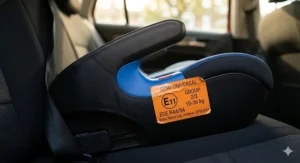
Those adorable unicorn or dinosaur-themed backless boosters on Amazon look charming, but always check for ECE R129 or at minimum ECE R44/04 certification before purchasing. Some imported models meet only US or Australian standards, which may not be legally acceptable in the UK. The label should show a circled “E” with a number indicating the country of approval and the regulation number (R129 or R44/04).
Mistake #5: Assuming Backless Means Less Safe Than High-Back in All Situations
This is partially true but not absolute. Backless boosters are less protective in side impacts, but for appropriate-aged children (8+, 130cm+, 25kg+) on predictable urban routes, they’re perfectly adequate. The safety gap narrows significantly once children are developmentally ready. The mistake is using them too early, not using them at all. For a mature 10-year-old on school runs, a quality backless booster is fine. For a wriggly 7-year-old on motorway trips, it’s questionable.
Compact Booster Seats for Typical UK Vehicles: What Actually Fits
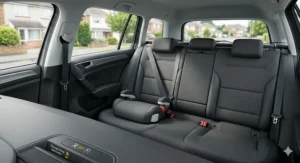
British cars are notoriously smaller than their American or Australian counterparts, which means booster seat dimensions matter considerably more. If you’re trying to fit three children across the back of a Ford Focus or Vauxhall Corsa, every centimetre counts. The BubbleBum Inflatable, at just 33cm wide when inflated, is the undisputed champion for narrow spaces. You can genuinely fit three across most standard vehicles, though getting the middle seatbelt buckled becomes a minor workout.
For rigid boosters, the Graco Booster Basic R129 measures approximately 42cm wide, which is about average for this category. It fits comfortably in the middle seat of most family cars without forcing the outer seats to feel cramped. The Graco Booster Max R129 ISOFIX, despite the ISOFIX connectors, maintains similar width because the connectors mount underneath rather than adding bulk to the sides.
The real challenge comes with older British vehicles that have particularly narrow back seats or significant transmission tunnels creating a raised middle section. In these cases, positioning the booster on one of the outer seats is considerably easier, though this does sacrifice the safety benefit of the centre position being furthest from potential side impacts. If you’re working with a particularly compact vehicle, measure the available space before purchasing—and seriously consider the BubbleBum as your primary option.
Backless Booster Regulations and Legal Compliance in England, Scotland, Wales & Northern Ireland
Contrary to what some parents believe, booster seat regulations are largely consistent across England, Scotland, and Wales, with only minor variations in Northern Ireland. All regions require children under 135cm or 12 years old (whichever comes first) to use an appropriate child restraint. The 2017 regulation prohibiting new backless booster models for children under 125cm or 22kg applies throughout the UK.
Northern Ireland follows the same basic framework but has its own regulatory body, meaning enforcement and specific interpretations can occasionally differ. For practical purposes, if you’re buying an ECE R129 or R44/04 approved booster, you’re legally compliant anywhere in the UK. The label showing the circled “E” indicates European approval, which remains valid post-Brexit under the UK’s continued recognition of these standards.
One area where regional differences emerge is in taxi exemptions. In England, Scotland, and Wales, children over 3 can travel in the back seat of a taxi without a car seat if one isn’t available, using an adult seatbelt instead. In Northern Ireland, this exemption also exists but with stricter guidance recommending parents arrange child seats whenever possible. For families regularly using taxis, keeping a BubbleBum Inflatable in a bag eliminates this dilemma entirely.
Post-Brexit, the UK continues to accept both ECE R129 (i-Size) and ECE R44/04 certification, and there’s no indication this will change. The new UKCA marking (UK Conformity Assessed) may eventually replace the European “E” mark, but as of 2026, both remain acceptable. When purchasing, verify the seat carries one of these certifications rather than solely US or other international standards.
Frequently Asked Questions About Backless Booster Seats
❓ Can I use a backless booster seat from age 4 if my child is tall for their age?
❓ Are backless booster seats illegal in the UK?
❓ How much does a decent backless booster cost on Amazon UK?
❓ Do backless booster seats need ISOFIX or can I use the seatbelt only?
❓ Can I take a UK-approved backless booster abroad to Europe?
The Verdict: Making the Right Choice for Your UK Family
After analysing the available options, testing real-world fit in typical British vehicles, and examining current safety standards, the clearest recommendation is this: backless boosters serve a specific purpose and do it well, but they’re not universally the right choice for every child at the legal minimum age. The sweet spot for transitioning is around 8 years old, 130cm+ height, and 25kg+ weight—giving comfortable margins above the legal minimums.
For UK families, the Graco Booster Basic R129 at around £25 represents outstanding value as a primary backless booster for school runs and local driving. If your budget stretches further and you value comfort on longer journeys, the Graco EverSure Lite R129 at £45-£55 justifies its premium with memory foam and superior build quality. For travel and taxis, the BubbleBum Inflatable at £35-£45 is genuinely unbeatable—nothing else packs so small or deploys so quickly.
Families frequently moving boosters between multiple cars should seriously consider ISOFIX models like the Cozy N Safe Tambu (£50-£65) or Graco Booster Max R129 (£55-£70). The stability and ease of installation justify the extra cost when you’re clicking seats in and out several times weekly. For occasional use or grandparent backup, the basic Graco or Cozy N Safe Neo+ at £25-£40 provides everything necessary without unnecessary features.
The underlying principle remains: use high-back boosters for as long as possible, transition to backless only when your child genuinely meets both physical and developmental requirements, and always verify proper seatbelt fit before every journey. British roads, weather, and traffic conditions demand we prioritise safety over convenience—even when that means delaying the transition to backless by an extra year or two.
Conclusion: Safety, Compliance, and Common Sense
Navigating when can child use backless booster seat requirements in the UK boils down to three factors: legal compliance (125cm+ height, 22kg+ weight for new models), safety best practices (preferring high-back boosters until 130cm+ and 8+ years), and practical assessment of your child’s developmental readiness. The 2017 regulation change improved safety standards, but it created confusion that persists today—many parents still use pre-2017 boosters approved for smaller children, which remains legal though not necessarily optimal.
The seven booster seats reviewed here represent the best options currently available to UK families on Amazon.co.uk, spanning budget-friendly basics (Graco Booster Basic R129 at £25), premium comfort (Graco EverSure Lite at £45-£55), travel-focused portability (BubbleBum at £35-£45), and stability-enhancing ISOFIX (Graco Booster Max at £55-£70). Each serves specific needs, and understanding which matches your family’s circumstances determines whether you’ve spent wisely or wasted money on features you’ll never use.
The broader message is to resist the temptation to rush the transition just because your child technically qualifies. An extra year in a high-back booster provides measurably better protection in the event of a crash—and in Britain’s congested, often wet and unpredictable driving conditions, that margin of safety is worth preserving. When the time does come to switch, choose a quality backless booster from a reputable brand, verify the ECE R129 or R44/04 certification, and conduct the 5-step seatbelt fit test before every journey. Your child’s safety depends less on finding the cheapest option and more on making informed, patient decisions based on their individual development.
Recommended for You
- Best High Back Booster Seat with ISOFIX UK 2026 – Top 7 Reviewed
- Best Car Seat for Small Car UK 2026: 7 Expert Picks
- 7 Safest Car Seat UK Which Best Buy Models 2026
Disclaimer: This article contains affiliate links. As an Amazon Associate, I earn from qualifying purchases. If you purchase products through these links, we may earn a small commission at no additional cost to you.
✨ Found this helpful? Share it with your mates! 💬🤗
