
In This Article
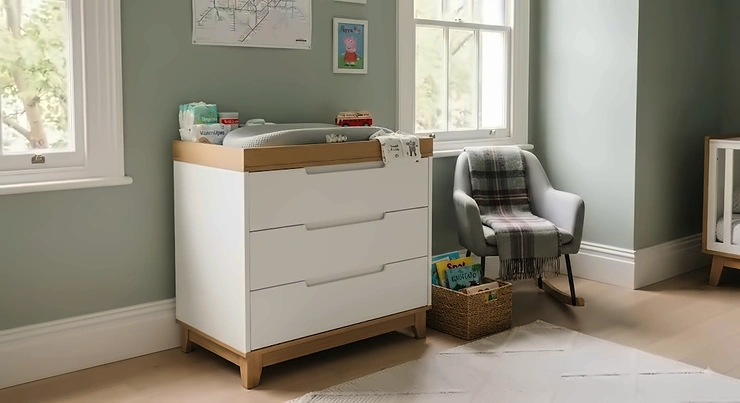
Somewhere between the fourth babygrow explosion and the third relative who’s turned up with “just a few bits” for the baby, most new parents hit the same wall: there simply isn’t enough drawer space. A changing dresser with deep drawers solves two problems at once — it gives you a proper nappy-changing station at a sensible height, and it swallows an alarming volume of vests, sleepsuits, muslins and blankets without you needing a second piece of furniture crammed into an already tight nursery.

What is a changing dresser with deep drawers? It’s a chest of drawers, typically three to seven drawers deep, topped with a fixed or removable changing surface, designed so nappy-changing kit and clothing storage live in the same footprint. The “deep drawer” part matters more than it sounds: shallow drawers force you to fold everything flat and still run out of room by month three, while genuinely deep drawers let you store bulkier items — towels, sleeping bags, a stack of muslins — without a fight every time you open one.
Getting this piece of furniture right early on saves a lot of hassle later. As the NHS points out, babies may need changing as many as 10 or 12 times a day in the early weeks, so whatever surface and storage system you choose is going to earn its keep fast. Below, we’ve dug into seven real, currently available options across budget, mid-range and premium price points, with honest analysis of who each one actually suits — not just a spec sheet copied from the product page.
Quick Comparison Table
| Product | Drawers | Best For | Price Range |
|---|---|---|---|
| AIYAPLAY Baby Changing Table with 4 Drawers | 4 | Budget-conscious first-time buyers | Under £150 |
| Obaby Belton Chest of Drawers with Changing Top | 3 (38L each) | Best value deep-drawer capacity | £200-£250 range |
| Tutti Bambini Rio Chest Changer | 3 | Most popular mid-range all-rounder | £220-£280 range |
| Obaby Stamford Sleigh Tall Chest of Drawers | 5 (24L each) | Maximum drawer count / tallboy storage | £250-£300 range |
| CuddleCo Clara 3 Drawer Dresser & Changer | 3 | Stylish nurseries on a mid-premium budget | £280-£350 range |
| Silver Cross Bromley Dresser | 3-4 | Soft-close premium quality | £350-£450 range |
| Boori Universal 3 Drawer Dresser | 3 | Sustainable, solid-wood premium pick | £450-£600 range |
Looking across this line-up, the pattern is fairly clear: fewer, deeper drawers (like the Obaby Belton and Boori Universal) tend to win on raw capacity per drawer, while higher drawer counts (the Obaby Stamford and AIYAPLAY) win on organisation and being able to separate categories of clothing. Budget doesn’t map neatly onto capacity here — the Obaby Belton undercuts several rivals while offering some of the deepest individual drawers in the group. If soft-close mechanisms and solid timber matter more to you than saving £150, the Silver Cross Bromley and Boori Universal justify their higher price with quieter, sturdier long-term use.
💬 Just one click — help others make better buying decisions too!😊
Top 7 Changing Dressers With Deep Drawers: Expert Analysis
1. AIYAPLAY Baby Changing Table with 4 Drawers — best budget entry point
The AIYAPLAY Baby Changing Table with 4 Drawers is one of the most consistently in-stock budget options on amazon.co.uk, and its appeal is simple: four genuinely deep drawers for a fraction of what the boutique nursery brands charge. It’s rated for changing use up to roughly 11kg (around the 0-12 month mark), which lines up with when most parents actually rely on a raised changing surface.
Built from engineered wood rather than solid timber, the frame won’t have the heft of a Silver Cross or Boori piece, but the four drawers run on a smooth glide system and are deep enough to hold folded sleepsuits three or four layers high without spilling over. Based on the spec comparison with pricier rivals, what you’re sacrificing here is long-term durability and resale value, not day-one usability — this is a dresser built to do a specific job for twelve to eighteen months, not necessarily to be handed down.
Reviewers consistently note that assembly is the main friction point, with flat-pack instructions that reward patience over speed; once built, though, feedback on the drawer smoothness and the raised-edge changing top is largely positive. If you can’t verify pristine long-term durability from public reviews at this price point, that’s honestly reflective of budget flat-pack furniture generally, not a flaw unique to this piece.
Pros:
- ✅ Lowest price point of any deep-drawer changer in this guide
- ✅ Four drawers give strong category separation for clothes
- ✅ Raised-edge changing top and safety strap included
Cons:
- ❌ Engineered wood build feels less premium under load
- ❌ Assembly instructions are fiddly for a first attempt
At under £150, the AIYAPLAY Baby Changing Table with 4 Drawers represents strong value for parents who want deep-drawer storage without a big upfront spend, particularly for a first baby where needs are still being worked out.
2. Obaby Belton Chest of Drawers with Changing Top — best value deep-drawer capacity
The Obaby Belton Chest of Drawers with Changing Top is, on paper, one of the best capacity-per-pound deals in the UK nursery furniture market. Each of its three drawers holds roughly 38 litres — genuinely deep, full-width storage rather than the shallow top drawer you get on many budget dressers — and the slatted drawer fronts give it a timeless look that doesn’t scream “flat-pack.”
What most buyers overlook about the Belton is that the changing top is sold as a genuinely optional add-on: you can buy the chest alone and fit the multi-top changer later, or skip it altogether if you’re using a separate changing mat on the floor (which, as the NHS advises, is actually the safest surface for a wriggling baby). This modularity means the Belton doubles as long-term bedroom furniture far more convincingly than pieces where the changing top is permanently fused to the frame.
Obaby backs the range with a two-year warranty once registered, and the brand’s aggregated review sentiment across retailers consistently highlights smooth-gliding runners and straightforward self-assembly as strengths, with occasional complaints about the depth of the top-drawer opening for smaller hands. Three deep, 38-litre drawers is genuinely more storage volume than several six-drawer units offer, once you account for how shallow most six-drawer dressers make each individual compartment.
Pros:
- ✅ 38L capacity per drawer — among the deepest in this list
- ✅ Changing top is a separate, removable purchase
- ✅ Two-year warranty when registered with Obaby
Cons:
- ❌ Only three drawers limits category separation
- ❌ Slatted fronts collect dust and need occasional wiping
For parents who value raw capacity over drawer count, the Obaby Belton Chest of Drawers with Changing Top is arguably the smartest buy in the entire line-up.
3. Tutti Bambini Rio Chest Changer — best-selling mid-range all-rounder
The Tutti Bambini Rio Chest Changer turns up again and again across UK nursery retailers as a genuine bestseller, and the reasoning is fairly transparent once you look at the spec sheet: three full-width, generously sized drawers, a changer top designed to fit most standard changing mats, and a neutral colour palette (white, or dove grey and oak) that suits almost any nursery scheme without dating quickly.
Constructed from New Zealand pine, the Rio sits in a sensible middle ground — sturdier and better finished than budget MDF options, without the price tag of the fully premium ranges. Reviewers consistently note that the drawers run smoothly and the overall build feels stable once assembled, though as with most self-assembly nursery furniture, a handful of buyers have flagged fitting issues with cam dowels on delivery — worth checking your parts against the included list before you start building.
What makes the Rio a smart long-term buy is that Tutti Bambini explicitly designs it to shed its changing-top identity: once your child outgrows nappy changes, you simply remove the changer top and you’re left with a proper three-drawer chest that will comfortably see a child through their toddler years. Based on the spec comparison, it also pairs directly with Tutti Bambini’s Rio and Malmo cot ranges if you’re building out a matching nursery set, which is a genuine convenience most single-item purchases can’t offer.
Pros:
- ✅ Three generously sized, full-width drawers
- ✅ Converts cleanly to a standalone chest later
- ✅ Backed by Tutti Bambini’s 3-Year Guarantee
Cons:
- ❌ Some reported issues with missing cam dowels on delivery
- ❌ Three drawers may feel tight for cloth-nappy households
Sitting comfortably in the £220-£280 range, the Tutti Bambini Rio Chest Changer is the safe, sensible middle-ground pick most parents end up choosing.
4. Obaby Stamford Sleigh Tall Chest of Drawers — best for maximum drawer count
If category separation matters more to you than raw single-drawer volume, the Obaby Stamford Sleigh Tall Chest of Drawers is the standout in this guide. Five drawers, each rated at 24 litres, means you can genuinely dedicate whole drawers to vests, sleepsuits, bedding and outgrown-clothes-to-donate without everything merging into one overstuffed pile.
The sleigh design with recessed handles is a small but clever touch — snag-free drawer pulls matter more than they sound once you’re operating one-handed with a baby balanced on your hip. What the spec sheet won’t tell you, but the design implies, is that the flat top surface doubles as genuinely useful display or storage space once the changing days are over, unlike sloped or curved-top dressers that only really work as-is.
Aggregated review sentiment for the Stamford range consistently praises the metal drawer runners for smoothness and longevity compared with plastic glide systems on cheaper units, though a taller five-drawer unit does mean more careful anti-tip anchoring is required — something worth flagging given how much a five-drawer-high chest can weigh once fully loaded, particularly with a curious toddler around later on.
Pros:
- ✅ Five drawers for genuine category separation
- ✅ Sturdy metal runners rated for longevity
- ✅ Coordinates with the wider Obaby Stamford range
Cons:
- ❌ Taller unit needs robust wall anchoring
- ❌ Five smaller drawers hold less per-drawer than deeper 3-drawer rivals
At around £250-£300, the Obaby Stamford Sleigh Tall Chest of Drawers earns its place as the pick for parents who want maximum organisation over maximum single-drawer depth.
5. CuddleCo Clara 3 Drawer Dresser & Changer — best stylish mid-premium pick
The CuddleCo Clara 3 Drawer Dresser & Changer leans hard into design, and it largely delivers: a cashmere or ash finish with gold brushed handles gives it a boutique look that punches above its price bracket, while three deep drawers keep the practical side of the equation solid. CuddleCo positions the Clara as suitable for changing use up to roughly 11kg, or around the 12-month mark, before you remove the top and keep the dresser as standalone storage.
What’s worth weighing here is CuddleCo’s mixed reputation on customer service and delivery reliability, which shows up clearly in aggregated third-party review platforms — some buyers report smooth, fast delivery and genuinely impressed reactions to build quality, while others describe frustrating experiences around damaged items or unresponsive support. Here’s what to weigh: the product itself is well regarded when it arrives intact, but it’s honest to flag that the surrounding buying experience has been inconsistent according to public review data, rather than pretending otherwise.
On the storage side, the Clara’s three roomy drawers are pitched squarely at nappies, wipes, sleepsuits and muslins, and the removable changing station genuinely does convert the unit into a standalone dresser without leaving visible fixing marks — a detail that matters if you’re planning to keep the furniture well beyond the nappy years.
Pros:
- ✅ Genuinely striking design with premium-feel hardware
- ✅ Three deep, roomy drawers for essentials
- ✅ Changing top removes cleanly, no visible marks
Cons:
- ❌ Aggregated reviews flag inconsistent delivery/customer service
- ❌ Premium finish commands a real price jump over the Rio
If style is a genuine priority and you’re comfortable weighing mixed service feedback against strong product-level reviews, the CuddleCo Clara 3 Drawer Dresser & Changer is one of the more distinctive options here.

6. Silver Cross Bromley Dresser — best premium soft-close pick
The Silver Cross Bromley Dresser moves the conversation from “good enough” to genuinely premium. Three deep drawers with soft-close mechanisms mean no 2am drawer slams waking a sleeping baby down the hall — a small feature that becomes surprisingly important once you’re living through the newborn stage. The pure white, high-gloss finish with cast pewter handles gives it a boutique-showroom look that several budget alternatives simply can’t replicate.
Based on the spec comparison with the rest of this line-up, what you’re paying the premium for isn’t extra capacity — it’s finish quality, hardware, and a brand backed by a three-year warranty against manufacturing faults. Silver Cross has built its reputation over decades in the UK pram and nursery market, and that legacy shows in the fit and finish rather than in raw drawer volume, which stays broadly comparable to the mid-range options.
The changer top attaches and detaches easily, and doubles as extra storage or play-tray space once removed — a genuinely practical afterlife most cheaper changing tops don’t offer. Reviewers consistently frame the Bromley as an investment piece rather than a bargain, which is a fair characterisation: you’re buying quiet drawers, a hard-wearing finish, and a brand’s reputation for durability over a decade of use, not just three drawers and a changing mat holder.
Pros:
- ✅ Soft-close drawers reduce noise and slam damage
- ✅ Pure white high-gloss finish with premium hardware
- ✅ Three-year manufacturer warranty included
Cons:
- ❌ Meaningfully pricier than mid-range alternatives
- ❌ Delivery charges apply on top of furniture price
Positioned in the £350-£450 range, the Silver Cross Bromley Dresser suits parents prioritising finish and longevity over squeezing every possible litre of storage from the unit.
7. Boori Universal 3 Drawer Dresser with Squared Changing Station — best sustainable premium pick
The Boori Universal 3 Drawer Dresser with Squared Changing Station sits at the top of this guide’s price range, and the case for it rests on materials as much as storage. Boori builds from sustainably sourced solid timber rather than the engineered board used in most budget and mid-range dressers, finished with what the brand calls Eco-Blend Bio-Paint — a nursery-friendly finish designed to minimise the chemical exposure that comes with standard furniture coatings.
Three deep, fully extendable drawers give genuinely generous capacity, and the squared changing station includes a clever divider that separates the changing area from an accessories space, with a false bottom designed to stop spills reaching the dresser below — a small design detail that speaks to a brand thinking carefully about real-world use rather than just listing features. Delivered fully assembled in most cases, it also removes the flat-pack assembly headache that affects every other product in this guide.
What most buyers overlook about solid-timber nursery furniture is total cost of ownership: a piece like the Boori Universal is genuinely built to be handed down between siblings or resold years later holding real value, which shifts the cost-per-use maths considerably compared with flat-pack alternatives that rarely survive a second child intact. Boori backs timber items with an extendable warranty of up to five years when registered, reinforcing the brand’s own confidence in longevity.
Pros:
- ✅ Solid sustainable timber construction, not engineered board
- ✅ Delivered fully assembled in most cases
- ✅ Up to five-year warranty on registered timber items
Cons:
- ❌ Highest price point in this entire guide
- ❌ Overkill for parents who won’t reuse or resell the piece
At roughly £450-£600, the Boori Universal 3 Drawer Dresser with Squared Changing Station is the pick for parents thinking in terms of decades, not months.
Practical Usage Guide: Setting Up Your Changing Dresser
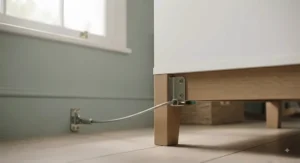
Getting a new changing dresser with deep drawers from delivery box to fully functional nursery station takes more thought than it first appears. Start by positioning the unit away from radiators, windows and trailing cords — not just for baby’s safety later on, but because direct sunlight can fade a painted or gloss finish unevenly over a couple of years. Before you load a single drawer, fit any anti-tip anchoring straps or brackets that came with the unit (or buy a compatible kit if none was included); this is genuinely one of the most-skipped steps in nursery setup, and it’s the one most likely to matter once your baby is mobile enough to pull up on drawer fronts.
In the first 30 days, resist the urge to fill every drawer with every gifted item at once. A simple system that works well: top drawer for 0-3 month essentials in daily rotation (vests, sleepsuits, socks), middle drawer for the next size up plus muslins and bibs, bottom drawer for bulkier items like blankets, sleeping bags or spare bedding. This front-loads the drawers you’ll access most at a height that doesn’t require excessive bending. For maintenance, wipe the changing top surface after every use with a baby-safe antibacterial spray, and check drawer runners every few months — a light rub of candle wax or a specialist furniture lubricant on wooden runners keeps things gliding smoothly long after the factory lubrication wears off. A common first-month mistake is overloading the top drawer with newborn clothes your baby will outgrow within weeks, leaving no room to size up; label drawers loosely by size range rather than by item type to make the inevitable clear-outs faster.
Real-World Scenarios: Which Dresser Suits Your Situation?
Picture three genuinely different households, because the “best” changing dresser with deep drawers really does depend on who’s buying it. First, a first-time parent in a one-bedroom flat on a tight budget, expecting their first baby and unsure how much nursery furniture they’ll actually need long-term: the AIYAPLAY Baby Changing Table with 4 Drawers or Obaby Belton Chest of Drawers with Changing Top make sense here — enough capacity to get through the first year without a large upfront commitment, and low enough risk if priorities shift once the baby arrives.
Second, a family expecting their second child and reusing (or replacing) nursery furniture, with a slightly larger budget and a clear sense that whatever they buy needs to survive two children’s worth of daily use: the Tutti Bambini Rio Chest Changer or Obaby Stamford Sleigh Tall Chest of Drawers fit well, offering a step up in build quality and, in the Stamford’s case, enough drawers to run two children’s wardrobes in parallel during any overlap period.
Third, parents furnishing a forever-home nursery with a longer view — perhaps planning multiple children, prioritising sustainable materials, or simply wanting furniture that will genuinely last into the child’s teenage bedroom: the Silver Cross Bromley Dresser or Boori Universal 3 Drawer Dresser are the more sensible long-term investments, where the higher upfront cost is offset by materials, finish and resale value that budget flat-pack options simply can’t match.
How to Choose a Changing Dresser With Deep Drawers
- Measure your nursery footprint first. A tall five-drawer unit like the Stamford needs more floor-to-ceiling clearance than a wide three-drawer changer; measure the space before falling for a specific design.
- Decide whether you want a removable or fixed changing top. Removable tops (Obaby, Tutti Bambini, CuddleCo, Silver Cross, Boori) extend the furniture’s useful life well past the nappy years; fixed tops can look neater but limit flexibility.
- Prioritise drawer depth over drawer count if storage volume is your main concern. Three 38-litre drawers, as on the Obaby Belton, can outperform six shallow drawers for bulky items like towels and blankets.
- Check the weight rating and construction material. Solid timber (Boori) and quality engineered wood (Tutti Bambini, Obaby) tend to outlast basic MDF budget builds under daily drawer use. Reputable UK manufacturers typically test changing units against the BS EN 12221 safety standard for domestic changing units, which is worth asking about if it isn’t stated on the product listing.
- Factor in soft-close or standard runners. Soft-close drawers, as on the Silver Cross Bromley, are a genuine quality-of-life upgrade during nighttime nappy changes.
- Read aggregated delivery and assembly feedback, not just product reviews. As the CuddleCo example shows, a well-reviewed product can still come with inconsistent delivery experiences worth weighing into your decision.
- Budget for anti-tip anchoring hardware separately if it isn’t included. This is a genuine safety cost, not an optional extra, once your child starts pulling up on furniture.

Large Capacity Changing Dresser: What Deep Drawers Actually Give You
The phrase “large capacity” gets thrown around loosely in nursery furniture marketing, so it’s worth being precise about what it actually buys you. A large capacity changing dresser isn’t necessarily the one with the most drawers — it’s the one with the most usable litres relative to its footprint. The Obaby Belton’s three 38-litre drawers, for instance, out-capacity plenty of six-drawer units where each individual drawer holds barely 15 litres once you account for drawer wall thickness and runner mechanisms eating into usable space.
Here’s what to weigh: bulky items like towels, blankets, sleeping bags and multi-packs of muslins genuinely need drawer depth, not just drawer width. A drawer that’s wide but shallow forces you to fold everything down flat and still hit the ceiling of the drawer within weeks, while a properly deep drawer lets bulkier items sit without compression. If you’re the kind of household that receives a lot of gifted clothing in the early months — and most UK parents are — genuine large-capacity storage isn’t a luxury, it’s the difference between a tidy nursery and a floor covered in overflow piles by month two.
Changing Dresser vs Wardrobe Storage
It’s a common assumption that a wardrobe automatically beats a dresser for storage, but for a baby’s nursery specifically, that’s not quite right. A wardrobe excels at hanging storage — coats, dresses, going-home outfits you want to keep pristine — but babies generate far more folded storage needs than hanging ones in the first year: vests, sleepsuits, muslins, cloth nappies, bibs and blankets are all drawer items, not hanger items. A changing dresser with deep drawers directly serves that folded-storage majority, while a wardrobe’s hanging rail sits mostly empty for the first several months.
The practical answer for most UK nurseries, where floor space is genuinely limited, is that a changing dresser earns its footprint faster than a standalone wardrobe does, precisely because it does double duty as a changing station too. Many parents end up adding a wardrobe later, once the child has more hanging-appropriate clothing (school uniforms, coats, dressier outfits), rather than starting with one. If you’re choosing between the two for a first nursery purchase on a limited budget, a deep-drawer changing dresser generally delivers more day-to-day value per square foot than a wardrobe does.
Drawer Organisers for Nursery: Getting the Most from Deep Drawers
Even the deepest drawer benefits from internal organisation — without it, deep drawers just become deep piles. Simple fabric or bamboo drawer dividers, sized to fit inside your specific dresser, let you split a single deep drawer into zones: vests in one section, sleepsuits in another, socks and bibs in a third, without needing a separate drawer for each category. This matters more with the deeper 24-38 litre drawers featured across this guide than with shallow ones, since a genuinely deep space without dividers tends to become a single unsorted pile that’s harder to search through one-handed while holding a squirming baby.
Stackable interlocking drawer organisers work particularly well in the Obaby Stamford’s five-drawer layout, letting you subdivide by size range as your baby grows rather than repurchasing furniture. For the deeper three-drawer units like the Boori Universal or CuddleCo Clara, consider vertical fabric dividers that let you file folded clothes upright, library-style, rather than stacking flat — this makes it far easier to see and reach the item at the bottom of the pile without disturbing everything above it, a small trick that saves real time during rushed 2am changes.
Baby Clothing Storage Tips: Organising What Goes Where
Beyond the dresser itself, how you sort baby clothing storage tips into practice day-to-day makes a bigger difference than the furniture alone. Sort by size range rather than by season when your baby is very young — babies outgrow clothes based on their own growth curve, not the calendar, so a “0-3 months” drawer that you rotate stock through as items are outgrown works better than seasonal sorting for the first year. Keep a small “next size up” section in the bottom drawer so you’re never caught out by a sudden growth spurt with nothing to dress your baby in.
For households managing gifted or hand-me-down clothing, a useful habit is doing a quick sort-and-donate pass every six to eight weeks rather than letting outgrown items accumulate in already-full drawers — this keeps deep drawers genuinely usable rather than becoming storage for clothes your baby will never wear again. Vacuum storage bags are worth avoiding for baby clothes specifically, since delicate fabrics and any embellishments can be damaged by compression; a spare underbed storage box works better for out-of-rotation sizes than compressing them into the dresser itself.
Common Mistakes When Buying a Changing Dresser
The most frequent mistake is buying based on drawer count alone without checking actual drawer depth — a seven-drawer unit with shallow drawers can hold less total volume than a well-designed three-drawer dresser. A second common error is skipping anti-tip anchoring hardware to save a few pounds, which genuinely matters once your child is mobile; RoSPA’s guidance on securing freestanding furniture makes clear how seriously furniture stability should be taken around young children, and a changing dresser — often loaded and used daily — is exactly the kind of furniture worth anchoring properly. A third mistake is choosing a fixed, non-removable changing top purely because it looks neater in photos, without considering that you’ll want the option to convert the unit to standalone storage once nappy days are behind you. Finally, many parents underestimate delivery lead times on made-to-order nursery furniture ranges, ordering too close to their due date and risking a delivery that arrives after the baby does.
Safety, Regulations and Compliance Guide
UK nursery furniture doesn’t operate in a regulatory vacuum, even though the rules have shifted recently. Historically, upholstered nursery items fell under the Furniture and Furnishings (Fire) (Safety) Regulations 1988, but amendments that came into force in late 2025 specifically removed a range of baby and children’s products from that scope, reflecting government analysis that chemical flame-retardant exposure posed a greater risk to babies than the fire risk itself for many baby-specific items. A wooden changing dresser without significant upholstery generally sits outside these flammability rules regardless, but it’s worth knowing the regulatory landscape is genuinely evolving rather than fixed.
What does remain squarely relevant is general furniture stability and anti-tip safety — a well-loaded changing dresser is exactly the kind of freestanding furniture that safety bodies flag as a tip-over risk once a baby becomes mobile. Practically, that means fitting anti-tip straps, keeping heavier items in lower drawers, and never leaving a baby unattended on any changing surface regardless of how sturdy the unit feels.
Long-Term Cost & Maintenance
Thinking in terms of total cost of ownership rather than sticker price changes the calculus on several products in this guide. A £150 budget dresser that needs replacing after eighteen months of heavy use, versus a £500 solid-timber piece that lasts a decade and holds resale value, can end up costing similarly per year of actual use — the premium option just requires a larger single outlay. Maintenance costs stay low across the board for wooden nursery dressers: an occasional wipe-down, periodic runner lubrication, and tightening any loosened fixings every few months is typically all that’s required. Where costs diverge is in resale and hand-me-down value; solid timber pieces from brands like Boori or Silver Cross tend to hold noticeably more value on the secondhand nursery furniture market than engineered-wood budget alternatives, which is worth factoring in if you’re planning further children or hoping to recoup some cost later.
Features That Actually Matter (And Those That Don’t)
Soft-close drawer mechanisms, genuine drawer depth, and a removable changing top are features that make a measurable day-to-day difference and are worth paying for. Anti-tip compatibility and solid (rather than engineered) construction matter for long-term safety and durability, particularly once a baby becomes a climbing toddler. On the other hand, decorative flourishes like elaborate carved detailing or matching accessory ranges rarely affect how well the furniture actually functions, and colour-matched nursery “sets” often cost meaningfully more than buying pieces individually without adding proportional value. Built-in features like USB charging ports or LED lighting, seen on some budget changing dressers, sound appealing but add complexity and potential failure points to a piece of furniture that’s fundamentally meant to be simple, sturdy storage.
What to Expect: Real-World Performance
On paper, most of these dressers look broadly similar; in daily use, the differences show up quickly. Drawer runners are the first thing to reveal quality differences — cheaper plastic glide systems tend to become slightly sticky or noisy within the first year of heavy daily use, while metal runners (as on the Obaby Stamford) and soft-close mechanisms (Silver Cross Bromley) stay smooth for years. The changing top experience also varies more than expected: raised edges that feel adequate when empty can feel noticeably tight once you’re wrangling a squirming six-month-old, so it’s worth checking changing-surface dimensions against your actual changing mat before buying. Assembly time is the other real-world factor rarely mentioned in marketing copy — budget flat-pack units can take two to three hours for a first-time builder, while fully-assembled premium options like the Boori Universal remove that friction entirely, at a cost.

Frequently Asked Questions
❓ How deep should nursery dresser drawers be?
❓ Is a changing dresser worth it over a separate changing table?
❓ How long can you use a changing dresser as a changing station?
❓ Do I need to anchor a nursery dresser to the wall?
❓ What's the difference between a changing dresser and a standard chest of drawers?
Conclusion
A changing dresser with deep drawers is one of those nursery purchases that quietly earns its keep every single day, long after the excitement of picking a cot or a pram has faded. Across this guide, the AIYAPLAY Baby Changing Table with 4 Drawers and Obaby Belton Chest of Drawers with Changing Top cover genuine budget needs without compromising on drawer depth, the Tutti Bambini Rio Chest Changer and Obaby Stamford Sleigh Tall Chest of Drawers sit comfortably in the mid-range sweet spot most parents land on, and the CuddleCo Clara, Silver Cross Bromley and Boori Universal push into premium territory where finish, sustainability and long-term durability justify the higher price.
There’s no single “best” pick here — the right choice depends on your budget, how much you value drawer depth over drawer count, and whether you’re furnishing for one child or planning ahead for more. What matters more than any individual spec is getting genuine deep-drawer capacity that will actually absorb the volume of clothing a baby generates, paired with proper anti-tip safety measures from day one. Whichever of these seven you land on, checking current pricing and availability before you commit is always worth the extra two minutes.
✨ Don’t Miss These Exclusive Deals!
🔍 Take your nursery storage to the next level with these carefully selected products. Click on any highlighted item to check current pricing and availability. These tools will help you create an organised, calm nursery your family will love!
Recommended for You
- Best Oak Changing Dresser UK: 7 Solid Wood Picks
- White Changing Dresser: 7 Best Picks for 2026 Nurseries
- Removable Top Changing Dresser: 7 Honest UK Picks for 2026
Disclaimer: This article contains affiliate links. As an Amazon Associate, I earn from qualifying purchases. If you purchase products through these links, we may earn a small commission at no additional cost to you.
✨ Found this helpful? Share it with your friends! 💬🤗
