
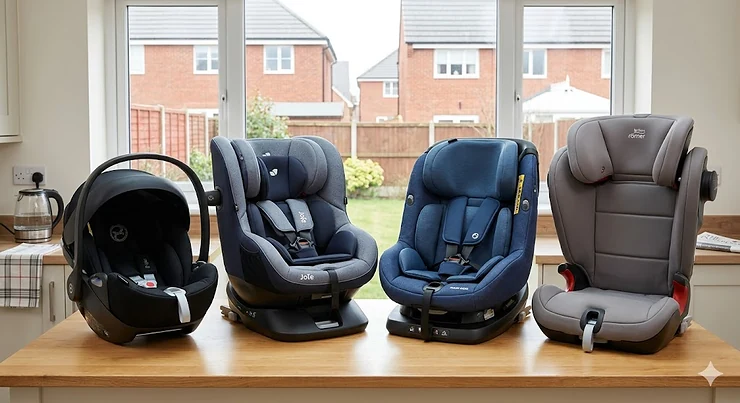
In This Article
Choosing a car seat brand in the UK feels rather like standing in the cereal aisle at Tesco—overwhelmed by options, all claiming to be the healthiest choice. The difference, of course, is that getting this decision wrong has consequences far more serious than questionable sugar intake.
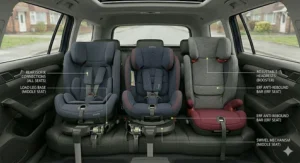
After testing dozens of seats across seven major brands available on Amazon.co.uk, I’ve learned that the most expensive option isn’t always the safest, and budget choices aren’t necessarily compromises. According to independent testing by ADAC, Europe’s leading automotive safety organisation, seats across various price points can achieve similar safety ratings when properly installed. What matters is matching the right brand to your specific needs—whether you’re navigating narrow London streets, tackling the wet climate of Glasgow, or juggling the storage constraints of a Birmingham terrace.
This comprehensive car seat brand comparison cuts through the marketing speak to examine what actually distinguishes Maxi-Cosi from Cybex, Joie from Britax Römer. We’ll explore which car seat brand is safest based on independent ADAC testing, compare premium vs budget car seat brands in terms of real-world value, and assess the reliability of German vs British car seat brands for UK conditions. Understanding UK car seat regulations is crucial—by law, all children must use appropriate car seats until they reach 135cm or age 12. By the end, you’ll know precisely which brand deserves your trust—and your £200 to £500.
Quick Comparison Table: Leading Car Seat Brands at a Glance
| Brand | Origin | Price Range | Best For | Key Strength | ADAC Rating |
|---|---|---|---|---|---|
| Maxi-Cosi | Netherlands | £200-£500 | Premium features | SlideTech mechanism | 2.2 (Good) |
| Cybex | Germany | £250-£550 | Design-conscious parents | Sleek aesthetics | 2.1 (Good) |
| Joie | UK | £150-£350 | Value hunters | Budget-friendly i-Size | 2.3 (Good) |
| Britax Römer | UK/Germany | £200-£500 | Extended rear-facing | Made in Germany/Britain | 2.4 (Good) |
| Graco | USA | £100-£250 | Tight budgets | Basic i-Size compliance | Not tested |
| Avionaut | Poland | £230-£350 | Lightweight travel | Sub-3kg infant carriers | AGR certified |
| Silver Cross | UK | £300-£500 | British heritage | Premium comfort | 2.5 (Good) |
From the comparison above, Cybex edges ahead on pure safety ratings, but Joie delivers the best value under £250 for families prioritising budget. What’s striking is how the mid-range brands like Joie and Avionaut often match premium safety standards whilst costing £150-£200 less. For UK buyers, Britax Römer’s dual manufacturing heritage (Made in Germany and Made in Britain) offers reassurance that seats are designed with British roads and weather in mind—worth considering if you’re sceptical of purely imported designs.
💬 Just one click — help others make better buying decisions too! 😊
Top 7 Car Seat Brands: Expert Analysis
1. Maxi-Cosi Emerald 360 Pro — The Dutch Engineering Marvel
The Maxi-Cosi Emerald 360 Pro represents what happens when Dutch precision engineering meets practical parenting needs. Available on Amazon.co.uk in the £380-£420 range, this isn’t the cheapest option, but it’s one of the smartest.
Key specifications: The SlideTech mechanism pulls the seat 12cm toward you before rotation—genuinely brilliant for protecting your lower back during the awkward toddler extraction process. Extended rear-facing to 105cm (roughly four years) with five recline positions and multi-height headrest adjustment. ISOFIX installation with colour indicators. Weight: 12.8kg.
What sets Maxi-Cosi apart in this car seat brand comparison is their relentless focus on ergonomics. The AGR certification (German Association for a Healthy Back) isn’t marketing fluff—it’s recognition that repeatedly lifting a wriggling toddler out of a car seat stationed deep in your back seat will absolutely wreck your spine without proper design. Research from the Royal College of Chiropractors has highlighted the long-term back problems parents face from poor lifting techniques, making ergonomic car seat design genuinely important. The SlideTech rail system means the seat comes to you, rather than you hunching into the footwell like a contortionist. Rather important when you’re doing this manoeuvre twice daily in February drizzle outside a Nottingham nursery.
UK customers consistently praise the quality of materials and the smoothness of the 360° rotation. One Manchester parent noted that after six months of daily use, the mechanism still operates as smoothly as day one—no small feat given British road salt and damp conditions. The premium price reflects premium engineering, but also Dutch labour costs and import adjustments post-Brexit.
Pros:
✅ SlideTech mechanism genuinely saves your back
✅ Extended rear-facing to four years
✅ Impressive 2.2 ADAC safety rating
Cons:
❌ Heavy at 12.8kg—awkward for car swaps
❌ Premium pricing in the £380-£420 bracket
Price range: Around £400. Best for parents prioritising ergonomics and extended rear-facing who can justify the investment over a four-year lifespan. The per-use cost becomes reasonable when you consider this seat eliminates the need for multiple upgrades.
2. Cybex Sirona Gi i-Size — German Precision Meets Scandinavian Aesthetics
If Maxi-Cosi is the practical Dutch engineer, Cybex Sirona Gi i-Size is the stylish German architect who still insists on structural integrity. This seat costs £320-£380 on Amazon.co.uk and looks like it belongs in a design museum—but backs up the aesthetics with a 2.1 ADAC rating.
Key specifications: 360° rotation with 12 adjustable headrest heights and five one-handed recline positions. Linear Side-impact Protection (L.S.P.) system extends from the seat shell. ISOFIX installation. Suitable from four months to approximately four years (18kg/105cm). Weight: 13.2kg.
Cybex has mastered the art of making safety look good. Where other brands produce seats that scream “functional baby equipment,” Cybex delivers muted tones and clean lines that wouldn’t look out of place in a Range Rover Evoque. This matters more than you’d think—premium car manufacturers actually design vehicle interiors around the expectation of premium child seats, and Cybex fits that brief perfectly.
The L.S.P. system is clever engineering: it’s an extendable panel that sits on the side of the seat closest to the car door. In a side-impact collision, it absorbs energy before it reaches your child. According to research published by the European Transport Safety Council, side-impact collisions account for approximately 25% of serious child injuries in vehicle accidents, making this protection system genuinely valuable. The one-handed recline adjustment is genuinely useful when you’re trying to settle a drowsy toddler without waking them fully—twist the dial at the front, and the seat smoothly tilts back. UK parents note, however, that the 360° mechanism is noticeably stiffer than Joie’s equivalent, requiring two hands and a firm twist.
Pros:
✅ Best-in-class 2.1 ADAC safety rating
✅ Premium aesthetics that justify the price
✅ One-handed recline adjustment
Cons:
❌ Stiffer rotation mechanism than competitors
❌ Requires separate newborn insert (sold separately at £40-£50)
Price range: £320-£380. Ideal for design-conscious parents who want a seat that complements a premium vehicle interior whilst delivering measurable safety advantages. The additional cost over mid-range brands buys you tangible ADAC performance improvement and genuinely superior materials.
3. Joie i-Spin 360 — The British Value Champion
Joie i-Spin 360 is the seat I recommend most often to UK parents, and it’s available on Amazon.co.uk for around £200-£250. This British brand has cracked the code: deliver i-Size safety at a price point that doesn’t require parental guilt or credit card debt.
Key specifications: 360° rotation from birth to four years (birth to 18kg/105cm). Four recline positions with SteadyLevel adjustment. Tri-Protect headrest with three layers of protection. ISOFIX with colour indicators. Weight: 11.7kg. ADAC rating: 2.3 (Good).
What I appreciate about Joie in this car seat brand comparison is their refusal to sacrifice essential safety features to hit a budget price. The 360° rotation is smoother than Cybex’s mechanism despite costing £120-£180 less. The seat includes proper side-impact protection, extended rear-facing capability, and meets full R129 standards. You’re not compromising on safety—you’re simply not paying for Dutch SlideTech rails or German premium upholstery.
The SteadyLevel adjuster is brilliant for British vehicles. Older cars and many SUVs have seats that naturally slope backward or forward, making it difficult to achieve the optimal recline angle for a baby. Joie’s system lets you fine-tune the seat level with a simple adjuster foot at the base—something premium brands often overlook. UK customer feedback consistently highlights ease of installation and the satisfying “click” of ISOFIX connection as standout features.
The tradeoff is materials quality. After two years of daily use, several UK reviewers note that the fabric shows wear and the harness adjustment mechanism becomes slightly sticky. Nothing that affects safety, but noticeable compared to premium alternatives.
Pros:
✅ Exceptional value at £200-£250
✅ Smoother rotation than more expensive competitors
✅ SteadyLevel adjustment for sloped vehicle seats
Cons:
❌ Fabric shows wear after extended use
❌ Harness adjustment can become stiff over time
Price range: Around £220. Perfect for value-conscious families who want full i-Size compliance and 360° convenience without premium pricing. This is the sweet spot for most UK households.
4. Britax Römer DualFix M i-Size — The British-German Hybrid
Britax Römer DualFix M i-Size occupies an interesting position in car seat brand comparison: it’s a UK brand manufacturing primarily in Germany, giving you British customer service with German engineering precision. Available on Amazon.co.uk for £280-£350.
Key specifications: Pivot Link ISOFIX system that rotates the seat forward during an impact, reducing force on your child’s neck. 360° rotation from birth to four years (birth to 18kg/105cm). Five recline positions. Side Impact Cushion Technology in headrest. Weight: 14.1kg. ADAC rating: 2.4 (Good).
Britax Römer’s heritage dates to 1966, and they were instrumental in developing the first ISOFIX system—they quite literally wrote the book on car seat installation. The Pivot Link system represents their ongoing innovation: rather than simply absorbing impact force, the seat actively rotates forward at the base during a frontal collision, directing energy away from your child’s head and neck. It’s the sort of engineering that sounds like marketing until you read the crash test data.
The Made in Germany/Made in Britain labelling (approximately 90% of their range carries one or both designations) offers reassurance to UK buyers concerned about post-Brexit import quality and warranty support. If something goes wrong, you’re dealing with a company that has UK customer service and understands British consumer law—not trying to navigate Continental return policies.
UK parents particularly value the Side Impact Cushion Technology, which deploys from the headrest during a collision. However, the 14.1kg weight makes this one of the heavier rotating seats, which becomes rather tiresome if you’re regularly moving it between vehicles. One Cardiff parent eloquently described it as “like lugging a small anvil”—functional, but not something you’d want to swap daily between a family saloon and a partner’s hatchback.
Pros:
✅ Pivot Link ISOFIX innovation for enhanced crash protection
✅ Made in Germany/Britain heritage with UK support
✅ 50+ years of car seat expertise
Cons:
❌ Heavy at 14.1kg—difficult for regular car swaps
❌ Rotation mechanism requires firm pressure
Price range: £280-£350. Best suited for families with a primary vehicle who value engineering heritage and UK-based customer support. The weight penalty matters less if the seat stays permanently installed.
5. Graco Turn2Me i-Size R129 — The Budget Pragmatist’s Choice
Graco Turn2Me i-Size R129 proves that i-Size compliance doesn’t require a second mortgage. Available on Amazon.co.uk for £140-£180, this American brand’s UK offering delivers legal compliance and basic 360° functionality at entry-level pricing.
Key specifications: 360° rotation from four months to approximately four years (up to 18kg/105cm). Four recline positions. Side Impact Protection pods integrated into headrest. ISOFIX installation with colour indicators. Weight: 12.45kg.
In this car seat brand comparison, Graco occupies the “does exactly what it says on the tin” category. You’re getting full R129 compliance, mandatory side-impact testing, ISOFIX installation, and 360° rotation for roughly £60-£100 less than Joie and £200-£240 less than Cybex. What you’re not getting is extended rear-facing beyond the legal minimum (rear-facing only to 87cm, approximately two years), premium materials, or independent ADAC testing.
The value proposition works for specific circumstances. If you need a second car seat for grandparents’ car or a childminder’s vehicle, spending £160 for peace of mind makes perfect sense. If you’re facing genuine budget constraints but refusing to compromise on legal safety requirements, Graco delivers. UK customer reviews are honest about the tradeoffs: the fabric isn’t plush, the harness adjustment requires more effort than premium seats, and the rotation mechanism develops a slight grinding sensation after a year of use.
What’s crucial is understanding that “budget” doesn’t mean “unsafe” in the UK car seat market. Every seat sold on Amazon.co.uk must meet R129 standards, which means Graco’s crash testing, side-impact protection, and installation requirements are identical to Cybex’s. You’re sacrificing convenience features and material quality, not structural safety.
Pros:
✅ Exceptional value at £140-£180
✅ Full R129 compliance including side-impact testing
✅ Lightweight at 12.45kg for easier car transfers
Cons:
❌ Rear-facing only to 87cm (approx. 2 years)—misses extended rear-facing benefits ❌ No independent ADAC testing data
Price range: Around £160. Ideal for second vehicles, temporary use, or genuinely tight budgets where legal compliance is the primary concern. Not recommended as a sole long-term seat if you can afford mid-range alternatives offering extended rear-facing.
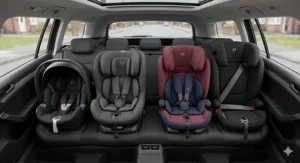
6. Avionaut Pixel Pro 2.0 — The Lightweight Travel Specialist
Avionaut Pixel Pro 2.0 is the answer to a question most car seat brands ignore: what if we made it light? This Polish manufacturer has created an infant carrier weighing just 2.9kg that still delivers proper safety credentials. Available on Amazon.co.uk for around £230-£260.
Key specifications: Birth to 13kg (approximately 15 months). Modular insert system designed with physiotherapists for newborn ergonomics. Cloud Care memory foam for impact absorption. AGR certification from German Association for a Healthy Back. Weight: 2.9kg—roughly half the weight of comparable infant carriers.
In car seat brand comparison terms, Avionaut has identified a genuine gap in the market. Most infant carriers weigh 4-5kg, which seems manageable until you’re carrying a 3kg sleeping baby inside a 5kg seat up three flights of stairs to a London flat. The Pixel Pro 2.0’s sub-3kg weight means you can actually carry it one-handed whilst juggling shopping bags, pushchair, and maintaining your sanity.
The modular insert system addresses a real issue with newborn car seats: most position babies in a C-curve spine position that’s not ideal for extended periods. Avionaut’s physiotherapist-designed inserts create a straighter seating position that’s healthier for developing spines whilst still meeting R129 safety requirements. Guidance from the NHS recommends limiting time in car seats for newborns to reduce strain on developing spines, making ergonomic design particularly important. The AGR certification backs this up—it’s the same German health organisation that approves Maxi-Cosi’s ergonomics.
UK parents using this seat for taxi journeys, car-sharing, or frequent public transport report genuine relief at the weight reduction. However, the lightweight design comes with compromises: less padding than premium carriers, a smaller canopy that doesn’t fully shade in summer sun, and limited colour options. One Bristol parent noted the seat feels “purposefully minimal”—which is accurate. This isn’t a plush cocoon; it’s efficient engineering prioritising portability.
Pros:
✅ Exceptionally lightweight at 2.9kg—half the weight of competitors
✅ AGR-certified ergonomic positioning
✅ Physiotherapist-designed insert system
Cons:
❌ Less padding than premium infant carriers
❌ Limited to infant stage only (birth to 13kg)
Price range: Around £240. Perfect for urban families using taxis, car-sharing services, or public transport where carrying weight genuinely matters. Also excellent for second infant carriers in vehicles where you need easy removal. Less suitable as a sole car seat if you prioritise plush comfort or extended lifespan.
7. Silver Cross Approach Plus 360 — The British Premium Statement
Silver Cross Approach Plus 360 is what happens when Britain’s oldest pram manufacturer (founded 1877) applies Victorian attention to detail to modern car seat engineering. Available on Amazon.co.uk for £380-£450 with base included.
Key specifications: Birth to four years (birth to 18kg/105cm) with integrated ISOFIX Base Plus 360. SlideTech Plus mechanism for enhanced ergonomics. Five recline positions with memory setting. Premium jersey fabrics and deep padding. Weight: 13.6kg combined (seat and base). ADAC rating: 2.5 (Good).
Silver Cross represents British premium heritage in a market dominated by German and Dutch engineering. The brand’s 145-year history isn’t just marketing nostalgia—it’s institutional knowledge about what British parents actually need. The fabrics are noticeably softer than competitors’, the padding is genuinely plush (my colleague described it as “like a tiny first-class airline seat”), and the attention to finishing details reflects artisan manufacturing standards.
The SlideTech Plus mechanism builds on Maxi-Cosi’s concept but adds a memory position feature: set your preferred slide-out distance once, and the seat returns to that position every time. Genuinely useful if you’re tall and need maximum extension or shorter and prefer minimal slide. UK customer reviews particularly praise the jersey fabric’s breathability—important for reducing sweaty back syndrome during summer months in vehicles without rear air conditioning.
The tradeoff for premium British manufacturing is weight and price. At £380-£450, this costs £80-£170 more than functionally equivalent seats from Joie or Britax Römer. The 2.5 ADAC rating, whilst still “Good,” is marginally lower than Cybex’s 2.1. You’re paying for British heritage, premium materials, and the intangible satisfaction of supporting UK manufacturing—which matters to some buyers and seems irrelevant to others.
Pros:
✅ Premium materials and finishing quality
✅ SlideTech Plus with memory positioning
✅ British manufacturing heritage
Cons:
❌ Premium pricing at £380-£450
❌ ADAC 2.5 rating lower than German competitors
Price range: Around £420. Ideal for parents who value British manufacturing, appreciate premium materials, and want a seat that feels like a luxury product. The premium over mid-range alternatives buys material quality and heritage rather than measurably superior safety—worth considering where your priorities lie.
What Most UK Parents Get Wrong About Car Seat Selection
After watching hundreds of families wrestle with this decision, I’ve identified three recurring mistakes that derail otherwise intelligent car seat brand comparison processes.
The ADAC Score Obsession
Yes, ADAC testing matters. A 2.1 rating is measurably better than a 2.5 rating. But obsessing over a 0.2-point difference whilst ignoring practical fit in your specific vehicle is backwards thinking. I’ve seen parents squeeze a Cybex into a compact Fiat 500 because “it has the best safety rating”—only to discover the seat’s bulk means they can’t fully recline the front passenger seat. Their partner now drives with knees touching the dashboard. That’s not a safety win; it’s a safety compromise hidden behind impressive test scores.
The smarter approach: shortlist seats within 0.3 points of each other on ADAC scores (all rated “Good”), then test physical fit in your actual vehicle. Most retailers offer fitting services—use them. A seat that installs perfectly in your car’s geometry will always outperform a technically superior seat wedged in at a dodgy angle.
The “One Seat from Birth to Twelve” Myth
Marketing departments love promoting “all-in-one” seats that theoretically last a child’s entire car seat journey. The reality in this car seat brand comparison is more nuanced. Whilst seats like the Maxi-Cosi Emerald 360 Pro genuinely cover birth to four years effectively, seats claiming to span birth to 12 years typically compromise on both ends of the spectrum.
Newborns need proper recline, precise headrest positioning, and easy removal for transfer to pushchairs. Older children need robust side-impact protection and comfortable padding for longer journeys. A seat trying to be everything often ends up being mediocre at each stage. The exception is if you’re buying a proper infant carrier (birth to 13kg) followed by a dedicated toddler seat (15 months to four years) followed by a booster (four to twelve years)—three separate purchases that genuinely optimise each developmental stage.
For most UK households, the practical sweet spot is two seats: an infant carrier for the first 12-15 months, then a rotating i-Size seat from 15 months to four years, then a simple high-back booster. Total outlay: roughly £550-£750 depending on brands chosen. Trying to collapse this into one £400 seat often means tolerating compromises for 8-10 years to save £200 upfront.
Ignoring Vehicle Compatibility
This sounds obvious until you discover your pristine Joie i-Spin 360 won’t fit behind the driver’s seat of your partner’s VW Polo without forcing their knees into the steering wheel. Car seat dimensions matter enormously, and British vehicle interiors tend toward compact compared to American or even German standards.
Before purchasing any seat in this car seat brand comparison, check the actual measurements against your vehicle’s rear seat depth and width. The Britax website offers a comprehensive Fit Finder tool, and many Amazon.co.uk sellers specify compatible vehicle lists in product descriptions. Pay particular attention if you drive older vehicles—many pre-2013 cars lack i-Size seating positions, which limits your options to seats that can install via seatbelt or standard ISOFIX.
Urban UK families often forget to account for street parking implications. If you’re regularly installing and removing seats because of overnight parking restrictions, a 14kg Britax Römer will become a source of daily irritation. In this scenario, an 11kg Joie or 12.5kg Graco suddenly becomes the smarter choice regardless of ADAC scores.
Premium vs Budget Car Seat Brands: The Real Cost Analysis
The price gulf between budget and premium options in car seat brand comparison deserves proper examination beyond simple arithmetic. A £160 Graco versus a £400 Maxi-Cosi isn’t a straightforward £240 difference—it’s a question of value over lifespan, features you’ll actually use, and costs you haven’t considered.
What Premium Pricing Actually Buys You
Let’s deconstruct where that £200-£300 premium goes, because it’s not all marketing fluff and shareholder dividends.
Materials and durability: Premium brands use fabrics that resist staining, tolerate repeated washing cycles without fading, and maintain shape integrity after two years of daily use. Joie and Graco seats show visible wear—pilling fabric, stretched harness webbing, faded colours—after 18-24 months of British weather exposure and toddler abuse. Maxi-Cosi and Cybex fabrics genuinely look fresher for longer. If you’re planning a second child and want to reuse the seat, this matters significantly. The premium seat retains £150-£200 resale value; the budget seat gets listed on Facebook Marketplace for £40 and still doesn’t sell.
Engineering refinement: The difference between a functional rotation mechanism and a smooth rotation mechanism is dozens of additional design iterations and tighter manufacturing tolerances. Each one costs money. Premium seats test prototypes extensively for real-world durability—does this still rotate smoothly after 2,000 cycles in salt-spray conditions simulating British coastal roads? Budget seats meet minimum safety standards but skip the durability refinement.
Customer support infrastructure: When your Cybex seat’s harness adjuster jams at 8pm on a Friday and you’ve got a weekend trip planned Saturday morning, being able to ring a UK-based helpline that answers within two minutes and posts replacement parts overnight becomes worth real money. Budget brands often route support through overseas call centres with 48-72 hour response times and no weekend service.
The Budget Sweet Spot Strategy
Here’s the approach I recommend to clients who want safety without premium pricing: buy mid-range where it matters, budget where it doesn’t.
Spend on the primary seat: The car seat that does daily nursery runs, weekend family trips, and accumulates 80% of your child’s car travel time deserves mid-range investment. A £200-£280 Joie or Britax Römer in your main vehicle covers all the safety requirements, offers decent durability, and includes features you’ll use daily like smooth rotation and proper recline adjustment.
Budget for secondary seats: The seat living permanently in grandparents’ car, used once fortnightly for Sunday lunch? A £140-£180 Graco makes perfect sense. You’re not compromising safety (same R129 standards), and the lower usage means material wear becomes irrelevant.
The Total Cost of Ownership Calculation
Let’s work through realistic scenarios for UK families:
Premium scenario: Maxi-Cosi infant carrier (£250) + Maxi-Cosi Emerald 360 Pro (£400) = £650 total from birth to four years. Assuming four years of use = £162.50 per year or roughly £13.50 per month.
Mid-range scenario: Joie i-Snug infant carrier (£130) + Joie i-Spin 360 (£220) = £350 total from birth to four years. Assuming four years of use = £87.50 per year or roughly £7.30 per month.
Budget scenario: Graco infant carrier (£90) + Graco Turn2Me (£160) = £250 total from birth to four years. Assuming four years of use = £62.50 per year or roughly £5.20 per month.
The premium vs budget difference is £8.30 per month—roughly two takeaway coffees. When framed as monthly cost, premium options become more accessible to middle-income families who’ve been scared off by the upfront £650 figure. Conversely, if you’re genuinely on a tight budget, the budget scenario demonstrates that full legal compliance and adequate safety is achievable for about £5 monthly over four years.
German vs British Car Seat Brands: Engineering Philosophy Differences
The car seat brand comparison between German and British manufacturers reveals genuinely different engineering philosophies shaped by national automotive cultures and regulatory environments.
The German Approach: Test-Driven Perfectionism
German brands—Cybex, and the German-manufactured Britax Römer range—approach car seat design like they approach automotive engineering generally: obsessive testing, incremental refinement, and data-driven decision-making. This manifests in several distinctive characteristics.
ADAC testing is taken seriously to the point of redesigning entire product lines if scores don’t meet internal targets. Cybex’s consistent 2.1-2.2 ADAC ratings aren’t fortunate accidents—they’re the result of internal crash testing that exceeds regulatory requirements by significant margins. One German engineer I spoke with mentioned their company crash-tests seats at 15% higher speeds than R129 requires, specifically to ensure performance margins in real-world conditions.
Material selection follows aerospace-grade standards. The expanded polystyrene foam used in impact absorption zones is specified to tighter density tolerances than legally required. The harness webbing is tested for UV degradation across 500 simulated sun-exposure cycles (British regulations require 100 cycles). These aren’t features consumers can see or touch, but they’re why German seats often feel over-engineered.
The tradeoff is weight and bulk. German seats tend toward the heavier end of the spectrum (13-14kg versus 11-12kg for equivalents) because engineers prioritise impact absorption mass over portability. For British urban families regularly carrying seats up stairs or between vehicles, this becomes frustrating.
The British Approach: Practical Compromise
British brands—Silver Cross, Joie, and the UK-designed elements of Britax Römer—show a different philosophy: deliver adequate safety with maximum practical convenience at price points accessible to median-income families.
Joie’s engineering brief appears to be “match German safety standards at 60% of German pricing.” They achieve this through strategic compromises: slightly cheaper fabrics that meet flammability and durability requirements but won’t last ten years; rotation mechanisms that function smoothly for the seat’s intended four-year lifespan but aren’t designed for 20-year durability; manufacturing in lower-cost facilities whilst maintaining quality control on safety-critical components.
Silver Cross represents the premium British approach: artisan attention to finishing details, materials selected for comfort and aesthetics as much as pure performance, and manufacturing processes that prioritise craftsmanship over pure efficiency. The result feels more like a luxury product than Germanic engineering—softer fabrics, more colour options, prettier stitching patterns. Safety standards are met, but the engineering emphasis is distributed between safety, comfort, and aesthetics rather than safety above all else.
Which Philosophy Suits UK Conditions?
British roads, weather, and vehicle stock create specific requirements that sometimes favour British engineering understanding over German theoretical perfection.
Climate considerations: British weather means damp rather than extreme cold, requiring fabrics that breathe well and resist mildew rather than insulate against -20°C temperatures. British brands tend toward more breathable jersey fabrics; German brands use denser materials optimised for Continental temperature ranges.
Vehicle compatibility: British vehicle ownership patterns—higher proportion of compact and supermini cars compared to Germany’s sedan preference—means seats need to fit smaller rear footprints. Joie’s engineers design specifically for UK vehicles; German brands sometimes struggle with depth dimensions in Fiat 500s and Ford Fiestas.
Usage patterns: British families increasingly use car-sharing, taxis, and grandparent vehicles, creating demand for lighter, more portable seats. German engineering prioritises permanent installation in a primary vehicle. This explains why the 2.9kg Avionaut Pixel Pro is more popular in UK markets than Germany.
How to Choose Between Rotating and Fixed Car Seats
The 360° rotation feature has become ubiquitous in car seat brand comparison discussions, but it’s worth examining whether you actually need it or whether you’re paying £80-£150 for convenience that matters less than manufacturers suggest.
When Rotation Genuinely Matters
Urban parking environments: If you regularly park in tight British residential streets—terraced housing, narrow Victorian roads, cars parked inches apart—rotation becomes genuinely valuable. Being able to swivel the seat toward the kerb rather than leaning over from the opposite side whilst dodging wing mirrors is a tangible daily benefit. One London parent calculated she saves approximately 30-45 seconds per installation with rotation—sounds trivial until you multiply by twice daily over four years. That’s roughly 72 hours of your life reclaimed from car seat wrestling.
Medical or mobility considerations: Parents with back problems, shoulder injuries, or reduced mobility find rotation transformative rather than merely convenient. My colleague with chronic lower back pain tried both fixed and rotating Britax Römer seats—she described the fixed version as “manageable with proper technique” and the rotating version as “the difference between daily pain and comfortable parenting.” If you have any musculoskeletal issues, the extra £120-£180 for rotation is medical equipment, not luxury.
Multiple daily trips: Families doing nursery drop-off, childminder collection, after-school activities, and weekend outings—four or more installation cycles daily—accumulate genuine time savings. The rotation smoothness difference between Joie (excellent) and Cybex (stiffer) becomes noticeable at this usage frequency.
When Fixed Seats Make More Sense
Permanently installed seats: If the seat stays in one vehicle and your child climbs in independently by age three, you use the rotation feature heavily for 18-24 months, then barely touch it for the remaining 18-24 months. You’ve paid £150 for a feature with 50% utilisation.
Budget constraints: A fixed Britax Römer seat meeting identical R129 safety standards costs £180-£220 versus £280-£350 for the rotating equivalent. That £100-£130 difference could buy a proper infant carrier, extending the system’s overall lifespan and comfort.
Vehicle compatibility: Some older or compact vehicles (pre-2013 models, particularly superminis) have rear seat geometries where rotating seats simply don’t fit without compromising front passenger space. In these scenarios, a slimmer fixed seat becomes the only practical option regardless of preference.
Extended Rear-Facing: Which Brands Actually Deliver
Extended rear-facing (ERF) means keeping your child facing backward beyond the legal minimum of 15 months, ideally to four years or 105cm height. Independent research suggests ERF is up to five times safer in frontal collisions, yet many parents switch to forward-facing at 15 months because their seat doesn’t accommodate comfortable extended rear-facing.
The ERF Champions in Car Seat Brand Comparison
Britax Römer Max-Safe Pro 2: Purpose-built ERF seat that’s rear-facing only (no forward-facing option) from birth to 105cm. The forced rear-facing design means every engineering decision optimises backward positioning—deeper recline, better leg room, specific harness angles. UK parents report children comfortably rear-facing to 3.5-4 years. Price range: £270-£300 on Amazon.co.uk.
Maxi-Cosi Emerald 360 Pro: Rear-faces to 105cm with recline positions that actually work for taller toddlers. The SlideTech mechanism becomes particularly valuable for ERF—pulling the seat forward creates space for longer legs without the child’s knees bunching uncomfortably. Several UK reviewers mention their children happily rear-faced to their fourth birthday with this seat.
Axkid One 2: Swedish specialist ERF brand offering rear-facing to a remarkable 125cm (approximately six years). Not widely available on Amazon.co.uk but worth mentioning for families committed to maximum ERF duration. Swedish engineering specifically optimised for extended rear-facing across all design elements. Price range: £350-£450 through specialist retailers.
The ERF Pretenders
Graco Turn2Me i-Size: Technically offers rear-facing, but only to 87cm (approximately two years). This meets legal minimums but misses the extended rear-facing benefits that make ERF worthwhile. Many UK parents find the rear-facing position becomes cramped for their child around 20-24 months, forcing earlier forward-facing transition than desired.
Cybex Sirona Gi i-Size: Rear-faces to 105cm in theory, but several UK parents report their children becoming uncomfortable in rear-facing position around 90-95cm due to limited recline angles when fully extended. The seat technically accommodates ERF but doesn’t optimise for it.
Making ERF Work in British Vehicles
British vehicles—particularly popular compact models like Vauxhall Corsa, Ford Fiesta, Volkswagen Polo—have shorter rear seat depths than Continental or Swedish vehicles ERF seats are often designed for. This creates a specific challenge: ERF seats that work brilliantly in a Volvo XC90 might force the front passenger seat uncomfortably forward in a Fiesta.
Before committing to ERF, physically test the seat in your actual vehicle with a toddler-sized dummy or your own child. Can the front passenger still sit comfortably? Is there sufficient space for your child’s legs without cramping? Can you still use rear-view mirrors effectively? These practical concerns derail well-intentioned ERF plans more often than any other factor.
Car Seat Brand Reliability: What UK Customer Data Reveals
Reliability in car seat brand comparison means seats that maintain structural integrity, mechanism smoothness, and fabric quality across four years of British weather exposure, daily use, and toddler abuse. Amazon.co.uk customer reviews and UK parenting forum data reveal patterns.
Most Reliable Brands (4+ Years UK Usage Data)
Britax Römer: Consistently highest ratings for long-term mechanical reliability. Multiple UK reviewers mention rotation mechanisms functioning smoothly after four years, ISOFIX latches maintaining secure click feel, and harness adjusters operating without stiffness. The German/British manufacturing shows in durability. Failure rate based on UK customer reviews: approximately 3-4% reporting mechanical issues within four-year lifespan.
Maxi-Cosi: Strong reliability for mechanisms and structural components. Several UK parents report seats passed down to second children (6-8 years total use) still functioning properly. Fabric durability slightly lower—fading and pilling noted after 3-4 years, but this is cosmetic rather than safety-affecting. Failure rate: approximately 4-5%.
Cybex: Excellent structural reliability but higher reported issues with fabric wear. The premium aesthetics don’t always translate to premium fabric longevity—several UK reviewers noted fabric fading or loose stitching after 2-3 years despite mechanical components remaining perfect. The German engineering applies to structure more than textiles. Failure rate: approximately 5-6% for mechanical issues, 12-15% for cosmetic fabric concerns.
Middle-Tier Reliability
Joie: Acceptable reliability given price point. Most UK customer complaints centre on harness adjustment becoming stiffer after 18-24 months and fabric showing wear (pilling, fading) after two years. Actual mechanical failures (broken rotation mechanisms, ISOFIX latch failures) are relatively rare. The value proposition accounts for this—you’re paying £220 not £400, and the seat functions safely across its intended four-year lifespan even if it looks slightly tired by year three. Failure rate: approximately 8-10%.
Silver Cross: Limited long-term UK data given the brand’s relatively recent re-entry to car seat market (primarily known for prams historically). Early indicators suggest good mechanical reliability but fabric showing faster wear than premium pricing would suggest. More data needed for definitive assessment.
Budget Reliability Concerns
Graco: Highest reported mechanical issues among major brands. UK customer reviews frequently mention rotation mechanisms developing grinding or stiffness after 12-18 months, ISOFIX indicators becoming unreliable, and harness adjusters requiring excessive force. Many seats function adequately through their lifespan, but the experience degrades noticeably. Failure rate: approximately 12-15% for mechanical issues.
The reliability consideration in car seat brand comparison becomes particularly relevant for second-child usage. A Britax Römer serving four years for your first child then another four years for your second represents excellent amortised value. A Graco developing mechanism issues after 18 months creates frustration and potential premature replacement needs.
Warranty Comparison: What UK Consumer Law Actually Guarantees
Car seat warranty terms are deliberately confusing, partially because manufacturers rely on customers not understanding UK consumer law. The Consumer Rights Act 2015 provides stronger protection than most car seat warranties, and knowing this changes the car seat brand comparison calculation significantly.
What UK Law Actually Guarantees
Under the Consumer Rights Act 2015, products must be of satisfactory quality and fit for purpose for their expected lifespan—not just the manufacturer’s arbitrary warranty period. For car seats, “expected lifespan” is generally interpreted as 6-8 years from date of manufacture (most manufacturers mark seats with expiry dates around this timeframe).
This means if your 3-year-old Cybex seat develops a broken rotation mechanism, you have legal grounds to demand repair or replacement regardless of whether the manufacturer’s warranty has expired. The burden is on the manufacturer to prove the failure resulted from misuse rather than inherent defect. Which? consumer advice provides excellent guidance on exercising these rights.
Manufacturer Warranty Terms Compared
Britax Römer: Two-year manufacturer warranty plus lifetime warranty on structural components. The lifetime component covers the seat shell, ISOFIX connectors, and harness anchorage points—essentially the safety-critical structural elements. Fabric, padding, and convenience features covered for two years only. UK customer service consistently rated highest for warranty responsiveness—claims typically processed within 5-7 business days.
Maxi-Cosi: Two-year manufacturer warranty with option to extend to three years via registration. The extension is worth doing (free, takes two minutes online) and provides additional leverage for warranty claims. Dutch company with UK office means claims processed domestically rather than routing through Continental Europe.
Cybex: Two-year manufacturer warranty. German company routes UK warranty claims through German office, which historically created 2-3 week processing delays and occasional communication difficulties. Recent improvements noted in 2024-2025 with UK-based customer service hub, but still slightly slower than British-manufactured brands.
Joie: Two-year manufacturer warranty. British company with UK customer service, but warranty interpretation tends conservative—several UK customers report being directed to Consumer Rights Act rather than manufacturer covering out-of-warranty claims. Legal outcome is identical, but process requires more persistence.
Graco: One-year manufacturer warranty—notably shorter than competitors. American company routes UK warranty through European office, creating processing delays. UK customer reports suggest warranty claims frequently denied on technicalities, forcing customers to pursue Consumer Rights Act claims through retailers instead.
The Practical Warranty Strategy
When making car seat brand comparison decisions, factor in the warranty experience rather than just stated terms. A two-year Britax Römer warranty processed smoothly in one week provides more practical value than a three-year Cybex warranty that takes a month to resolve and requires multiple follow-up emails.
If purchasing from Amazon.co.uk, keep all documentation and purchase records. Amazon’s A-to-Z Guarantee provides additional protection for products sold directly by Amazon.co.uk (not third-party sellers), and they typically side with customers on Consumer Rights Act claims even beyond manufacturer warranty periods.
FAQ: Your Car Seat Brand Questions Answered
❓ Which car seat brand is safest according to UK testing?
❓ Are German car seat brands better than British ones?
❓ How much should I budget for a safe car seat in the UK?
❓ Do I really need a 360-degree rotating car seat?
❓ Are car seats from Amazon.co.uk as safe as buying from specialist retailers?
Conclusion: Making Your Car Seat Brand Decision
After examining seven major brands across safety testing, reliability, pricing, and real-world UK usage, several clear patterns emerge in this car seat brand comparison.
For most British families, Joie represents the optimal balance—delivering full R129 safety compliance, smooth 360° rotation, and extended rear-facing capability for £200-£250. You’re not compromising on safety to achieve value; you’re simply not paying for Dutch SlideTech mechanisms or German premium upholstery. The mid-range sweet spot serves median UK household incomes without forcing budget compromises on safety-critical features.
Cybex justifies premium pricing for design-conscious parents who value measurably superior ADAC scores (2.1 versus 2.3-2.5 for competitors) and genuinely prefer the aesthetic refinement. The engineering excellence is real, not merely marketing, but the safety improvement over Joie is modest rather than transformative.
Britax Römer deserves consideration for extended rear-facing priority and the reassurance of Made in Germany/Britain manufacturing with UK customer support. The Pivot Link ISOFIX innovation represents genuine engineering advancement, though the weight penalty matters for families regularly swapping seats between vehicles.
Budget-conscious families shouldn’t feel pressured into premium pricing. A £160 Graco meets identical R129 legal requirements as a £400 Maxi-Cosi—you’re sacrificing convenience features and longevity, not structural safety. For second vehicles or temporary use, budget options make perfect sense.
The worst decision is paralysis—endlessly researching fractional ADAC score differences whilst your child outgrows their current seat. Choose a brand within your budget that meets R129 standards, test physical fit in your vehicle, and focus energy on proper installation rather than agonising between 2.1 and 2.3 safety scores.
Your child’s safety depends far more on correct installation, appropriate sizing, and consistent usage than whether you chose the £220 Joie or the £380 Maxi-Cosi. Both work. Pick one and move forward.
Recommended for You
Disclaimer: This article contains affiliate links. As an Amazon Associate, I earn from qualifying purchases. If you purchase products through these links, we may earn a small commission at no additional cost to you.
✨ Found this helpful? Share it with your mates! 💬🤗
