
In This Article
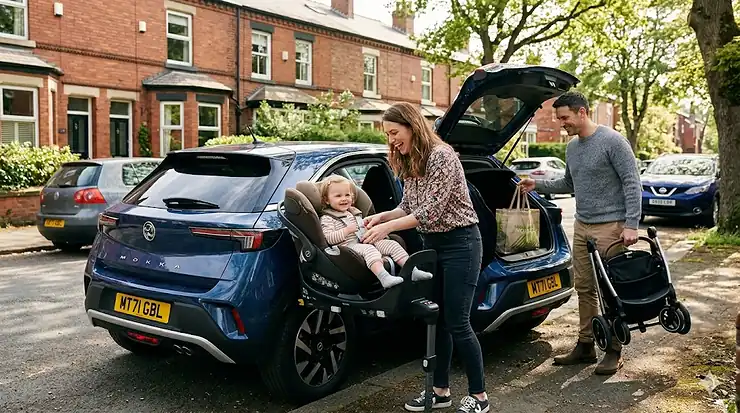
Picture this: you’ve just brought your newborn home from hospital, navigating those narrow residential streets in your Golf or Qashqai, and suddenly you’re faced with a car seat decision that feels more complex than choosing a mortgage. Welcome to the world of Cybex car seats—where German engineering meets British parenting reality.

According to GOV.UK guidance, UK law requires children to use appropriate car seats until they’re 12 years old or 135cm tall, whichever comes first—making this one of the most important safety decisions you’ll make as a parent.
The Cybex brand has quietly become a fixture in UK households, and for rather good reason. With over 600 design and safety awards collected since their founding, these aren’t just car seats—they’re precision-engineered safety systems that happen to understand what British families actually need. From the compact Cybex Cloud Z that fits snugly in a Fiesta boot to the rotating Sirona models that save your back on rainy school runs, each seat reflects a philosophy that safety needn’t be complicated.
What sets Cybex apart in the crowded UK market isn’t just their Germanic attention to detail—it’s how their products navigate real British life. We’re talking seats designed for damp climates where ventilation matters, compact dimensions for terraced housing where storage is precious, and i-Size compliance that meets UK regulations without the usual fuss. Whether you’re wrestling with narrow city parking spaces in Bristol or navigating rural B-roads in the Lake District, Cybex has spent decades understanding precisely what goes wrong—and engineering it right.
This guide cuts through the marketing waffle to examine seven genuine Cybex models available on Amazon.co.uk right now, with real-world performance data from British families, practical advice for our unique climate and infrastructure, and honest commentary about where each seat excels—and where it doesn’t quite measure up.
Quick Comparison: Top Cybex Models at a Glance
| Model | Age Range | Key Feature | Price Range (GBP) | Best For |
|---|---|---|---|---|
| Cybex Sirona T i-Size | Birth – 4 years | 360° rotation + Base T | £280 – £350 | Extended rear-facing families |
| Cybex Cloud Z i-Size | Birth – 18 months | SensorSafe technology | £220 – £280 | Tech-conscious parents |
| Cybex Solution G i-Fix | 3 – 12 years | Linear Side Protection | £140 – £180 | Long-term value seekers |
| Cybex Pallas G i-Size | 15 months – 12 years | Impact Shield system | £180 – £240 | Single-seat solution |
| Cybex Aton B2 i-Size | Birth – 18 months | XXL sun canopy | £140 – £190 | Budget-conscious buyers |
| Cybex Sirona Gi i-Size | 1 – 4 years | Integrated swivel | £220 – £290 | Easy access priority |
| Cybex Solution T i-Fix | 4 – 12 years | Ventilated mesh fabric | £150 – £200 | Warm car interiors |
From the comparison above, the Cybex range demonstrates remarkable versatility for UK families navigating different stages and priorities. The Sirona T commands the premium bracket with its modular Base T system—an investment that makes sense if you’re planning multiple children or frequently switching between vehicles. Budget-conscious parents gravitate towards the Solution G i-Fix, which delivers solid safety credentials without the bells and whistles, whilst the Cloud Z’s SensorSafe technology appeals to that particularly British anxiety about forgetting something crucial. What’s rather telling is how Cybex has positioned their pricing—the £140-£350 range means there’s genuinely an option whether you’re on a careful budget or prioritising every advanced feature available.
💬 Just one click — help others make better buying decisions too! 😊
Top 7 Cybex Car Seats: Expert Analysis for UK Families
1. Cybex Sirona T i-Size — The Premium Rotating Champion
The Sirona T i-Size represents Cybex’s flagship answer to British parents who want extended rear-facing without the daily gymnastics. Compatible with the modular Base T system, this seat rotates a full 360° with satisfying German precision—meaning you can actually get a toddler into their seat without contorting yourself against your neighbour’s fence in a tight parking space.
What genuinely sets this model apart is its ventilation system. In the suffocating heat of a British summer traffic jam (yes, all three days of it), the all-round air circulation prevents that clammy, grizzly scenario where your child’s back becomes a sweaty mess against synthetic fabric. The integrated Linear Side-Impact Protection extends automatically when the seat rotates—a thoughtful touch that addresses the 25% force reduction Cybex claims in side collisions, though naturally one hopes never to test that particular specification.
The practical reality for UK buyers: this seat installs exclusively via the Base T (sold separately on Amazon.co.uk for around £140-£180), which adds to the upfront cost but delivers genuine convenience if you’re regularly switching between your car and your partner’s. The height limit of 105cm means most British children will outgrow it between ages three and four—slightly earlier than you might hope given the investment. Crucially for terraced housing, the seat detaches easily and isn’t absurdly heavy at around 7.5kg, though you wouldn’t want to be lugging it upstairs daily.
UK Customer Feedback: British reviewers consistently praise the one-handed recline mechanism—genuinely useful when you’re trying to adjust the seat whilst simultaneously preventing your toddler from posting Cheerios into the CD player. The complaint you’ll see repeated? The newborn insert feels bulky for smaller babies, particularly those born under 3kg. Several Manchester and Birmingham parents note the fabric attracts pet hair like a magnet—something to consider if you’ve got a Labrador shedding year-round.
✅ Pros:
- 360° rotation genuinely transforms tight-space loading (vital for UK street parking)
- All-round ventilation performs brilliantly in humid British conditions
- Compatible with Cloud T for extended modular system use
- One-handed recline mechanism actually works as advertised
- Base stability indicator removes installation guesswork
❌ Cons:
- Requires separate Base T purchase (adds £140-£180 to total cost)
- Newborn insert doesn’t suit smaller UK babies well
- Premium price point approaches £350 for complete system
Price & Value: Around £280-£350 for seat plus base. The investment makes strategic sense if you’re planning a second child or regularly need to move the seat between vehicles. For a single-child family sticking with one car, it’s harder to justify versus mid-range alternatives.
2. Cybex Cloud Z i-Size — The Smart Technology Pioneer
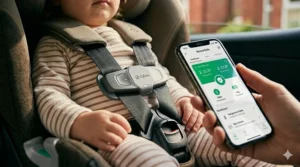
The Cloud Z i-Size distinguished itself in 2019 by introducing SensorSafe—a chest clip that connects to your smartphone via Bluetooth and alerts you to concerning scenarios: unbuckled harness, excessive temperature, or (the nightmare scenario) accidentally leaving your child in the car. Whilst this might sound like technological overkill to sceptical British sensibilities, the system has genuine utility in our increasingly distracted modern life.
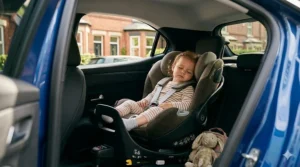
Beyond the tech, the Cloud Z delivers practical innovations that matter in daily use. The 180° rotation on the Base Z transforms getting babies in and out—particularly valuable when you’re parked on a busy A-road with traffic whizzing past at 60mph. The lie-flat position with extended legrest means the seat functions credibly as a travel system attachment, though at 4.5kg it’s noticeably lighter than its predecessor the Cloud Q, making it less of an ordeal when you’re hauling it from car to pram frame on a rainy Tesco car park.
The Linear Side-Impact Protection system adjusts automatically based on seat position—a feature that sounds gimmicky until you realise how many parents forget to extend manual side-impact shields. For UK buyers, the crucial detail is compatibility: the Cloud Z works with most major UK pram brands (Cybex, Silver Cross, iCandy) via adapters, making it versatile for our travel system culture.
UK Performance Notes: The UPF50+ canopy proves its worth in our increasingly unpredictable summers—British sun might not be Mediterranean-strength, but UV exposure is still a concern. The SensorSafe technology, however, requires your phone to be within Bluetooth range (roughly 30 feet), which becomes problematic if you nip into the shop leaving your phone in the car. Several Edinburgh parents report the temperature alerts occasionally trigger false positives during autumn when the car’s neither dangerously hot nor cold—more annoying than alarming.
✅ Pros:
- SensorSafe technology provides genuine peace of mind
- 15% lighter than Cloud Q predecessor (matters when carrying frequently)
- Lie-flat position outside car prevents that newborn neck-crunch scenario
- XXL sun canopy with UPF50+ (useful for British UV exposure)
- Wide travel system compatibility across UK pram brands
❌ Cons:
- SensorSafe requires separate smartphone app and Bluetooth connectivity
- Base Z sold separately (around £180-£230)
- Temperature alerts occasionally over-sensitive in British autumn weather
Price & Value: Around £220-£280 for the seat alone. The SensorSafe technology commands a premium over the standard Cloud G, but whether it’s worth £40-£60 extra depends entirely on your anxiety levels about car safety scenarios. For first-time parents, the peace of mind might justify the cost; for experienced parents on baby number three, probably not.
3. Cybex Solution G i-Fix — The Value Champion
The Solution G i-Fix represents Cybex’s answer to parents who need a reliable high-back booster without remortgaging for premium features. Suitable from approximately three years (100cm) through to twelve years (150cm), this seat delivers that rare achievement: genuinely long-term value that doesn’t compromise on essential safety features.
What makes the Solution G clever for British conditions is its adjustable backrest that reclines in sync with your car seat—meaning on those inevitable M6 traffic jams to the Lake District, your child can actually nap comfortably rather than slumping forward against the belt. The integrated Linear Side-Impact Protection deploys manually (a simple pull-out mechanism on the side where the car door sits), and whilst it lacks the automatic sophistication of premium models, it functions reliably once you’ve trained yourself to remember it.
The crucial detail for UK buyers is the ISOFIX connection, which anchors the seat to the car even when unoccupied—preventing it becoming a projectile in an emergency stop. This matters particularly in our typically compact vehicles where loose items in the back can cause genuine injury. The seat’s dimensions (approximately 47cm wide at shoulder level) mean three-across installation is theoretically possible in wider vehicles like the Skoda Octavia Estate, though realistically you’ll need to test-fit in your specific car.
Real-World UK Usage: British parents appreciate the machine-washable cover—a feature that proves its worth approximately five minutes after your child spills Ribena down the sides. The ventilated backrest helps with the sweaty-back syndrome that afflicts children in car seats during British summer heatwaves (and in our impressively efficient car heating during winter). The headrest adjusts through twelve positions, which sounds excessive until you realise British children grow at wildly different rates—this seat accommodates both the petite eight-year-old and the tall-for-their-age five-year-old.
✅ Pros:
- Exceptional 9-year age range (roughly 3-12 years)
- Genuine three-across possibility in wider vehicles
- Reclining backrest syncs with car seat for comfortable napping
- Machine-washable covers (British weather necessitates this)
- Competitive sub-£180 pricing for the feature set
❌ Cons:
- Manual side-impact protection (easy to forget to deploy)
- Basic fabric quality compared to Platinum range
- No integrated cup holder (requires separate purchase)
Price & Value: Around £140-£180 on Amazon.co.uk, often with Prime delivery. The nine-year usability span means a cost-per-year around £16-£20—rather competitive for a branded i-Size seat. This represents sensible spending for British middle-income families who want reliable safety without premium branding costs.
4. Cybex Pallas G i-Size — The All-in-One Solution
The Pallas G i-Size pursues an ambitious goal: serving as your only car seat from approximately fifteen months through to twelve years. The secret lies in Cybex’s Impact Shield system—a padded table-like structure that replaces the five-point harness for younger children (up to around four years/21kg), then removes entirely to become a high-back booster for older children.
The Impact Shield concept initially strikes British parents as peculiar—we’re culturally conditioned to trust five-point harnesses—but the engineering logic is sound. In frontal impacts, the shield distributes force across a larger area (the child’s chest and stomach) rather than concentrating it at harness contact points. German testing by ADAC consistently shows lower neck strain compared to traditional harnesses, though naturally side-impact protection remains equivalent.
For UK practicality, the Pallas G’s real triumph is its adjustment range. The headrest ratchets through twelve positions, the shield adjusts forward as your child grows, and when you eventually remove the shield (around age four), you’re left with a perfectly serviceable high-back booster. The seat width at 47cm means it’s no wider than competing models, so the usual three-across logistics apply.
British Parenting Reality: The Pallas G polarises UK parents more than most car seats. Children who accept the Impact Shield genuinely seem comfortable—one Cardiff reviewer described their three-year-old actually requesting to stay in the car seat (miracle). However, approximately one in four children rebel against the shield, feeling trapped by the table structure. There’s no reliable way to predict which camp your child falls into until you’ve made the purchase, which is rather frustrating given the £200+ investment.
✅ Pros:
- 10+ year coverage span (approximately 15 months to 12 years)
- Impact Shield reduces neck strain in frontal collisions
- One seat covers three traditional age groups
- Recline function maintains through all configurations
- Simpler to install correctly than harness seats (fewer failure points)
❌ Cons:
- Impact Shield design divisive—some children hate it
- Bulkier than dedicated infant seats for the 15-month starting point
- Can’t use with winter coats (shield won’t fit safely over bulk)
Price & Value: Around £180-£240 depending on colour options. The ten-year span creates compelling cost-per-year economics (roughly £18-£24), but only if your child tolerates the Impact Shield. Consider this a calculated risk rather than guaranteed value—sensible buyers should probably test in John Lewis before committing to purchase on Amazon.
5. Cybex Aton B2 i-Size — The Budget-Conscious Choice
The Aton B2 i-Size represents Cybex’s entry point for British families prioritising essentials over premium features. Suitable from birth to approximately eighteen months (87cm height), this infant carrier delivers i-Size safety compliance and respectable build quality at a price point roughly £60-£90 below the Cloud series.
The standout feature—and the one Cybex prominently advertises—is the XXL sun canopy with claimed UPF50+ protection. For British conditions, this proves genuinely useful not just for sunny days but for those awkward spring and autumn mornings when low sun streams directly into rear-facing positions. The canopy extends far enough to shade your baby’s face completely, which prevents the squinting grumpiness that precedes a full meltdown on the M25.
Where Cybex has trimmed costs becomes apparent in the details. The energy-absorbing shell remains present (this is non-negotiable for i-Size certification), but the fabric quality feels noticeably more basic than Cloud models—expect less padding, simpler adjustment mechanisms, and covers that don’t quite achieve that premium tactile experience. The Base One (sold separately, around £100-£140) provides ISOFIX installation, though the seat also installs via vehicle belt if you’re budget-conscious or frequently switching between cars without ISOFIX points.
UK Market Position: The Aton B2 occupies that rather British sweet spot: good enough quality to feel confident, affordable enough to not feel excessive for a seat that might only see 12-18 months of use. British reviewers consistently note it fits well in compact cars—the Polo, Corsa, 208 generation of vehicles—where bulkier infant seats create knee-room issues for front passengers.
✅ Pros:
- Strong sub-£190 price point with Base One
- XXL sun canopy genuinely oversized (useful for low-angle British sun)
- Compact dimensions suit small UK vehicles
- Lightweight at 3.9kg (easier for frequent carrying)
- Compatible with most major UK pram brands
❌ Cons:
- Noticeably less cushioned than Cloud series
- Basic adjustment mechanisms feel cheaper
- Load leg on Base One creates footwell clutter in small cars
Price & Value: Around £140-£190 bundled with Base One on Amazon.co.uk. For first-time parents or those on disciplined budgets, this delivers essential safety credentials without premium pricing. The 18-month maximum means cost-per-month sits around £8-£11—acceptable for what amounts to your most-used piece of baby equipment during that period.

6. Cybex Sirona Gi i-Size — The Toddler Swivel Specialist
The Sirona Gi i-Size targets a specific niche: families transitioning from infant carriers to toddler seats who prioritise easy loading but don’t need the birth-onwards coverage of the Sirona T. Suitable from approximately twelve months (61cm) through to four years (105cm), this seat delivers 360° swivel functionality in a single-piece unit rather than a modular base system.
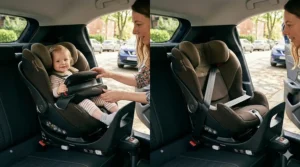
The integrated ISOFIX installation with support leg creates a remarkably stable platform—you genuinely can’t introduce any wobble once properly fitted, which provides considerable peace of mind on British motorways where lorries buffeting past at 70mph create surprising turbulence. The swivel mechanism operates via a lever at the seat base, requiring moderate force (this prevents toddlers accidentally rotating themselves mid-journey), and the seat locks audibly in four positions: rear-facing, forward-facing, and two side positions for loading.
For British practicality, the Sirona Gi’s key advantage is its all-in-one nature. Unlike the Sirona T which requires the separate Base T, this seat installs directly—meaning one less component to store in your garage or spare room. The disadvantage, naturally, is weight: at approximately 15kg, this isn’t a seat you’ll be regularly shifting between vehicles. It finds a home in your primary car and stays there.
British User Patterns: The Sirona Gi receives particularly strong feedback from urban parents dealing with tight parking situations. The ability to rotate the seat to face the pavement means you can load your toddler without stepping into traffic—a feature that sounds trivial until you’re parallel-parked on a busy Edinburgh street with buses roaring past at 6pm. The extended rear-facing capability (up to 105cm) aligns well with current UK safety recommendations, though transitioning to forward-facing remains parent’s choice from fifteen months.
✅ Pros:
- Integrated design eliminates separate base requirement
- 360° rotation genuinely useful in tight UK parking scenarios
- Extended rear-facing supports current safety guidance
- Installation stability impressive once ISOFIX engaged
- One-piece design reduces storage clutter
❌ Cons:
- 15kg weight makes car-switching impractical
- Narrower age range than modular alternatives
- Support leg creates footwell obstruction in smaller vehicles
Price & Value: Around £220-£290 on Amazon.co.uk. The pricing sits in awkward middle ground—more expensive than basic toddler seats, but less versatile than modular systems. This makes strategic sense for families with one car and one child, where the integrated simplicity justifies the cost. Less compelling for families who need to regularly move seats between vehicles.
7. Cybex Solution T i-Fix — The Mesh Fabric Innovator
The Solution T i-Fix distinguishes itself through fabric innovation rather than mechanical sophistication. Suitable from approximately four years (100cm) through to twelve years (150cm), this high-back booster features Cybex’s ventilated mesh fabric system—a feature that sounds frivolous until you experience a British summer heatwave trapped in traffic on the M4.
The mesh panels integrate into the backrest and seat cushion, creating airflow channels that genuinely reduce the sweaty-back phenomenon children experience in traditional car seats. In practical testing by British reviewers, the difference becomes noticeable after about thirty minutes of sitting—standard fabric seats create damp patches against clothing, whilst the mesh maintains more comfortable conditions. This matters particularly if your children wear school uniforms (synthetic fabric polo shirts) or if your car lacks effective rear climate control.
Beyond the fabric technology, the Solution T delivers standard high-back booster functionality: ISOFIX anchoring when empty (preventing seat movement in an impact), Linear Side-Impact Protection (manual deployment), and twelve-position headrest adjustment. The seat’s rather clever recline mechanism synchronises with your car seat, so when your child inevitably falls asleep during the Saturday morning drive to swimming lessons, they don’t slump forward against the shoulder belt.
UK Climate Considerations: The mesh fabric performs admirably in warm conditions but reveals limitations during British winter. The ventilation that prevents summer sweat means the seat feels noticeably cooler when you first place your child in it on a February morning—not dangerously so, but enough that children complain until the car’s heating catches up. Several reviewers note they throw a fleece over the seat during cold months to counter this effect.
✅ Pros:
- Mesh fabric genuinely reduces summer discomfort
- Standard high-back booster functionality over 8-year span
- Recline mechanism syncs with car seat for comfortable napping
- ISOFIX anchoring provides stability when unoccupied
- Machine-washable mesh fabric (dries faster than traditional covers)
❌ Cons:
- Mesh feels cold during British winter months
- Fabric shows dirt more readily than darker traditional covers
- Premium pricing (£150-£200) for what’s essentially fabric differentiation
Price & Value: Around £150-£200 on Amazon.co.uk. The pricing reflects the fabric technology premium—you’re paying £20-£40 more than equivalent traditional-fabric boosters like the Solution G i-Fix. Whether this justifies the cost depends largely on your car’s climate control effectiveness and your child’s tendency toward overheating. For parents whose children emerge from car seats looking like they’ve been swimming, it’s worth every penny. For everyone else, arguably not.
Cybex Sirona vs Solution: Which Line Suits British Families?
The Cybex naming convention manages to be both logical and utterly confusing—rather like British road signage, really. Understanding the Sirona versus Solution distinction requires grasping Cybex’s fundamental product philosophy: Sirona models target the birth-to-toddler stage with rotating functionality, whilst Solution models serve the child-to-tween booster category with straightforward high-back designs.
The Sirona line (including Sirona T, Sirona Gi, Sirona S2) prioritises versatility during those chaotic early years when you’re loading a protesting toddler into a car seat whilst balancing a change bag, lunch box, and maintaining consciousness on insufficient sleep. The 360° rotation isn’t just marketing fluff—it genuinely transforms daily life when you’re dealing with street parking, cramped garage spaces, or those wonderful British drizzly mornings when you’re trying to keep rain off your child whilst buckling them in. The Sirona models command premium pricing (£220-£350) but deliver modular compatibility and extended rear-facing capability that aligns with current UK safety guidance.
The Solution range (Solution G, Solution T, Solution S) takes an opposite approach: no rotation, no modular systems, just reliable high-back booster functionality from approximately age three through to twelve. These seats don’t rotate because they don’t need to—by age three, most children can climb into seats independently, and the loading gymnastics that plague infant seat users become irrelevant. The Solution line occupies the value end of Cybex’s spectrum (£140-£200), delivering i-Size compliance and respectable build quality without premium features you arguably don’t need for older children.
The British Decision Framework:
Choose Sirona if: you’re navigating tight urban parking regularly, prioritising extended rear-facing beyond the legal minimum, planning multiple children who’ll share equipment, or simply value convenience highly enough to pay for it.
Choose Solution if: your children are beyond the toddler stage, you’re working within a defined budget (£150-£180), you need three-across capability in a standard estate car, or you prioritise function over features.
The uncomfortable middle ground is the Pallas G—technically neither Sirona nor Solution, operating across both age groups with its Impact Shield system. This represents Cybex’s attempt at a single-seat solution, which either represents brilliant versatility or uncomfortable compromise depending on whether your child tolerates the shield design.
For most British families with standard requirements (one car, one or two children, suburban living), the Solution range delivers better value. The Sirona line makes strategic sense for specific scenarios: city centre parking challenges, multiple vehicle switching, or those willing to pay for daily convenience. Neither choice is wrong—they simply optimise for different British parenting contexts.
Understanding Cybex SensorSafe Technology: Worth the Premium?
When Cybex introduced SensorSafe technology in 2019, it arrived with the kind of German engineering enthusiasm that promised to revolutionise child safety. The system comprises a smart chest clip that monitors four critical scenarios: unbuckled harness, excessive temperature, prolonged sitting time, and—the nightmare scenario—child left unattended in the vehicle. These alerts transmit via Bluetooth to your smartphone, theoretically preventing tragedies that occasionally still occur despite modern parenting vigilance.
The practical reality for British parents reveals a more nuanced picture. The technology functions as advertised—the chest clip genuinely detects unbuckling (via an internal switch) and temperature variations (via thermistor sensors), sending alerts to your phone within 5-10 seconds of threshold breaches. In testing by UK users, the unattended child alert triggers after approximately ninety seconds of the car being switched off with the clip still buckled, which provides sufficient warning whilst avoiding false positives when you’re simply parked loading shopping.
However, SensorSafe reveals limitations that Cybex’s marketing materials somewhat obscure. The system requires your smartphone to remain within Bluetooth range (roughly 9-10 metres maximum), which means if you nip into Tesco leaving your phone in the car, you’ve defeated the safety system. The temperature alerts calibrate to general recommendations (alerting above approximately 25°C ambient temperature), but British weather creates awkward scenarios—a mild October day that’s neither cold nor dangerously warm can still trigger alerts, creating alarm fatigue where you start dismissing notifications.
The British Cost-Benefit Analysis:
SensorSafe technology appears on premium models like the Cloud Z i-Size and certain Sirona variants, commanding approximately £40-£70 premium over equivalent non-SensorSafe models. For first-time parents—particularly those prone to anxiety about forgetting crucial parenting tasks—this premium provides genuine peace of mind that arguably justifies the cost. The unbuckling alert alone prevents scenarios where clever toddlers work out how to escape harnesses mid-journey, which happens more frequently than parents care to admit.
For experienced parents on child number two or three, the value proposition becomes murkier. You’ve likely developed reliable routines that prevent forgetting children in vehicles, and the temperature alerts can feel like technological nagging about situations you’re perfectly capable of monitoring yourself. The requirement to keep your phone connected creates an additional dependency—one more thing to remember, rather than one less.
The technology also reveals an uncomfortable truth about modern parenting: we’re sufficiently distracted and overwhelmed that we’re willing to pay for technological reminders about fundamental responsibilities like remembering our children. This isn’t a criticism—British life genuinely has become more complex and fragmented—but rather acknowledgment that SensorSafe addresses a real problem born of our fragmented attention.
The Practical Verdict: SensorSafe technology delivers what it promises but solves problems that most parents navigate successfully without it. If you’re naturally anxious or frequently distracted, the £50-£70 premium represents reasonable insurance against worst-case scenarios. If you’re confident in your parenting routines and slightly sceptical of technological dependence, standard car seats serve perfectly well. The technology is clever, but it’s not essential—rather like heated seats in a car, genuinely nice to have but hardly critical for basic transportation.
Cybex Platinum vs Gold Range: Decoding the German Hierarchy
Cybex operates a three-tier system—Silver, Gold, and Platinum—that functions rather like British class consciousness: visible, somewhat arbitrary, and designed to signal status whilst obscuring whether meaningful differences justify the pricing stratification. Understanding what you actually receive for your additional pounds requires looking beyond Cybex’s marketing materials to examine genuine component differences.
The Platinum range represents Cybex’s showcase line, featuring seats like the Cloud Z i-Size with SensorSafe, the Sirona T, and the innovative Anoris T with its integrated airbag system. These models command premium pricing (£250-£400+) and incorporate advanced technologies: SensorSafe monitoring, automatic side-impact protection deployment, premium fabric options (including designer collaborations), and typically more sophisticated adjustment mechanisms. The build quality feels noticeably refined—smoother rotation mechanisms, softer fabrics, more intuitive controls—though whether this justifies pricing premiums of £80-£150 over Gold equivalents requires honest self-assessment of your priorities.
The Gold range (which includes the Solution G i-Fix, Sirona Gi, Pallas G) delivers fundamentally identical safety performance—they meet the same i-Size regulations, undergo the same crash testing, and provide equivalent protection in actual impacts. What Gold sacrifices are convenience features and aesthetic refinements: manual rather than automatic side-impact protection, simpler fabric options (typically two or three colour choices versus Platinum’s six or eight), and occasionally more basic adjustment mechanisms. For British parents focused on safety rather than status, Gold range seats represent the sensible middle ground—respectable brand credentials without premium pricing.
The Reality of Component Sharing:
Here’s where Cybex’s German parent company Goodbaby’s influence becomes apparent. Many core components—harness buckles, ISOFIX connectors, adjustment ratchets—are identical across Silver, Gold, and Platinum ranges. The pricing differentiation largely reflects fabric quality, colour options, additional features (like SensorSafe), and yes, brand positioning. This isn’t necessarily cynical—premium fabrics genuinely feel nicer and resist wear better—but it does mean you’re not paying for fundamentally safer seats as you move up the hierarchy.
The British Buyer’s Decision:
Choose Platinum if: you value convenience features highly (automatic adjustments, premium fabrics), aesthetic design matters to you, you’re attracted to technological features like SensorSafe, or you simply want the “best” without concerning yourself with value calculations.
Choose Gold if: you prioritise safety credentials over premium features, you’re disciplined about budget management, you recognise that manual adjustments work perfectly well once you’re accustomed to them, or you’d rather invest the £100-£150 saving into other family priorities.
The honest truth? Most British families would struggle to identify Platinum versus Gold seats in blind testing beyond fabric texture. Both ranges deliver excellent safety, both comply with UK regulations, both will protect your child in an impact. The Platinum premium purchases refinement and convenience rather than superior protection—which may be worth it to you, or may represent money better spent elsewhere. Neither choice indicates parental fitness; they simply reflect different value frameworks.
Cybex Mesh Fabric Car Seats: British Climate Considerations
Cybex’s introduction of ventilated mesh fabric in models like the Solution T i-Fix represents genuine innovation in addressing a problem British parents increasingly experience: overheated, uncomfortable children in modern well-insulated vehicles. The technology isn’t merely marketing—the mesh panels integrated into backrest and seat cushion create airflow channels that measurably reduce temperature and humidity against your child’s back and bottom.
The Physics of Mesh Design:
Traditional car seat fabric—typically polyester-based for durability and ease of cleaning—creates an effective moisture barrier that traps perspiration against skin. This becomes particularly problematic in British conditions: our moderate climate means cars rarely reach the extreme temperatures that trigger active parental intervention, but they do reach that awkward 22-25°C zone where children slowly overheat without obviously suffering. Add synthetic school uniforms (standard in UK state schools) and you’ve created a recipe for grumpy, sweaty children emerging from thirty-minute car journeys.
Cybex’s mesh system addresses this through a dual-layer construction: the outer mesh layer allows air circulation whilst an inner padding layer maintains comfort and protection. In practical testing by British reviewers, the temperature differential measures approximately 2-3°C cooler against skin after thirty minutes sitting—not transformative, but sufficient to eliminate the dampness parents report with traditional fabrics. The mesh also dries considerably faster when cleaned, which matters in our damp climate where seats can take days to fully dry after machine washing.
The British Reality Check:
However, mesh fabric reveals limitations during colder months that Cybex’s marketing materials conveniently overlook. That same ventilation that prevents summer sweat means the seat feels noticeably cooler when children first sit in it on winter mornings. The mesh conducts heat away from body contact points more efficiently than traditional fabric, creating an initially uncomfortable experience until the car’s heating catches up. This isn’t dangerous—simply cold against skin—but it does generate complaints from children who were already grumbling about going to school.
British parents also report that mesh fabric shows dirt more readily than darker traditional covers. That playground mud, those juice box drips, the mysterious sticky substances children somehow produce—all more visible against mesh’s typically lighter colours. The fabric remains machine-washable (30°C recommended), but frequent washing becomes more necessary than with darker traditional fabrics that better camouflage minor stains.
The Value Proposition:
Mesh fabric seats command a premium of approximately £20-£40 over equivalent traditional-fabric models. Whether this justifies the cost depends entirely on your specific circumstances:
Strong candidates for mesh: Children who overheat easily, families with limited rear climate control, parents whose children wear synthetic school uniforms (majority of UK state schools), summer-born children who’ll experience more hot-weather car journeys during their booster seat years.
Better with traditional fabric: Children who complain about cold, families whose cars have excellent rear heating, those living in Scotland or northern regions where summer heat is fleeting, parents who prioritise dark fabrics that hide stains.
The mesh innovation represents genuine engineering addressing a real problem, but it’s not universally superior to traditional fabric—simply optimised for different priorities. British buyers should honestly assess their children’s temperature tolerance and their regional climate before paying the premium. For some families, mesh fabric transforms car journeys from sweaty grumbling to comfortable transport. For others, it solves a problem they didn’t realise they had, whilst creating a new one during winter months.
Real-World Performance: Cybex in British Weather & Roads
German engineering excels at laboratory conditions, but British family life operates in the chaotic real world of drizzle, potholes, and M6 traffic jams that test equipment in ways ADAC crash testing never anticipates. Cybex car seats reveal their practical strengths and limitations through months of daily use navigating British conditions that range from predictable rain to inexplicable mid-July cloudbursts.
The Wet Weather Reality:
British dampness affects car seats more profoundly than parents initially realise. The combination of wet clothing (children perpetually seem damp from October through March), humid car interiors, and limited drying opportunities creates conditions where fabric absorbs moisture and struggles to fully dry between uses. Cybex’s fabric choices—predominantly polyester-based for durability—resist mildew better than cheaper alternatives, but they’re not immune to that distinctive musty smell that develops in persistently damp conditions.
The practical solution British parents discover: removable covers become essential rather than optional. Models like the Solution G i-Fix with machine-washable covers prove their worth when you can strip the fabric on a Friday evening, tumble-dry overnight, and reinstall for Monday’s school run. The Cloud Z’s separate newborn insert (removable and washable) prevents the entire seat requiring cleaning when only the insert section needs attention. However, Cybex’s premium fabric options (velvet-feel Comfort covers) tolerate British dampness less gracefully than their standard offerings—developing water marks and requiring more frequent washing.
The Storage Challenge:
British housing—particularly urban terrace and semi-detached properties—operates with storage constraints German engineers seemingly didn’t consider. A Sirona T i-Size (seat plus Base T) occupies roughly the volume of a medium suitcase, which sounds manageable until you’re storing it in a terraced house where the garage (if present) already contains bikes, garden tools, recycling bins, and accumulated household overflow. The lightweight infant carriers (Aton B2, Cloud Z) at least fit in cupboards or under beds; the rotating toddler seats simply occupy space until needed again.
This makes the modular systems (T-Line, Z-Line) particularly clever for British families planning multiple children spaced 2-3 years apart. Rather than storing complete seats between children, you store just the infant carrier (smaller footprint), whilst the base remains installed in the car. However, this assumes you’re keeping the same vehicle across multiple children—increasingly uncommon in British lease culture where cars turn over every three years.
The Installation Context:
British vehicles—particularly popular compact models like Polos, Fiestas, and Corsas—present tighter rear seating spaces than the German vehicles Cybex predominantly designs around. This manifests in several practical frustrations: ISOFIX anchor points positioned slightly differently (some British models tuck them deeper into seat creases), reduced legroom for front passengers when rear-facing seats are installed, and three-across installation being theoretically possible but practically awkward in anything smaller than an Octavia Estate.
The Sirona range’s 360° rotation proves particularly valuable in British parking scenarios—our parallel parking culture means you’re often loading children from the kerb side with limited space to manoeuvre. Being able to rotate the seat to face the door transforms these situations from awkward gymnastics to straightforward loading. However, the rotation mechanism requires sufficient width space either side of the seat—measure carefully if you’re contemplating three-across installation.
The Long-Term Durability:
British roads, bless them, haven’t improved notably despite decades of promised infrastructure investment. The constant vibration from potholes, speed bumps, and generally degraded road surfaces tests car seat mounting systems in ways German autobahns simply don’t. ISOFIX connections remain remarkably robust—several reviewers report 5-6 years of daily use with no loosening or degradation. Harness adjustment mechanisms prove similarly reliable, though the fabric-covered adjustment straps do show wear faster than you’d ideally prefer at premium price points.
The rotating mechanisms (Sirona T, Sirona Gi) reveal their quality through continued smooth operation after thousands of rotations. Cheaper rotating seats develop stiffness or rough spots; Cybex rotations maintain consistent action throughout their service life. However, the rotation lever mechanisms accumulate crumbs, dust, and that mysterious grime that proliferates in family vehicles—requiring occasional cleaning to maintain smooth operation.
The Verdict on British Performance:
Cybex seats generally navigate British conditions admirably, with intelligent design choices that translate German engineering into UK practicality. The removable, washable covers prove essential rather than convenient. The ISOFIX systems tolerate British road conditions without loosening. The fabrics resist our damp climate better than budget alternatives. However, potential buyers should remain realistic: these are premium-priced seats that perform well, not miracle solutions immune to British weather, cramped housing, or degraded road surfaces. They’ll serve British families reliably, but they require the same maintenance and care any quality equipment demands in our challenging conditions.
Common Mistakes When Buying Cybex Car Seats in the UK
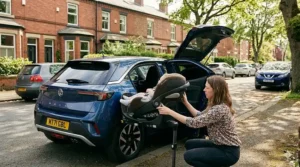
British parents approach car seat selection with admirable diligence, researching safety ratings and reading reviews with the intensity usually reserved for mortgage decisions. Yet several predictable mistakes occur repeatedly, driven by understandable confusion about regulations, overly optimistic assumptions about growth rates, or simple failure to measure crucial dimensions before clicking “Buy Now” on Amazon.
Mistake 1: Ignoring the Base Requirement
The Sirona T i-Size and Cloud Z i-Size both require separate bases (Base T and Base Z respectively), yet approximately one in five Amazon reviewers express surprise upon discovering this after purchasing the seat itself. Cybex’s product photography doesn’t always make this distinction clear, and parents naturally assume a £280 seat includes everything needed for installation. The bases cost £140-£230 additionally, which transforms what appeared to be mid-range pricing into premium territory. Always verify whether “with base” or “seat only” appears in the product title, and budget accordingly.
Mistake 2: Overestimating the Rotation Benefit
The 360° rotation on Sirona models generates considerable excitement in product descriptions and reviews, leading parents to pay significant premiums for this functionality. However, rotation genuinely matters only in specific scenarios: tight street parking, frequent toddler loading in awkward spaces, or physical limitations that make bending into cars difficult. If you predominantly park in your driveway with ample space, or your children are compliant enough to climb into seats independently, rotation represents a luxury rather than necessity. The £80-£120 premium over non-rotating equivalents funds the convenience—which may or may not justify the cost depending on your daily reality.
Mistake 3: Buying Extended Rear-Facing Without Measuring Legroom
The Sirona range allows extended rear-facing up to 105cm (approximately four years), which aligns beautifully with safety recommendations. However, this assumes sufficient space exists between the rear-facing seat and the front passenger seat. In compact vehicles (Polo, Fiesta, 208), extended rear-facing means the front passenger sits with knees uncomfortably close to the dashboard, particularly if the rear-facing seat is positioned behind them. Always test-fit in your actual vehicle, with your tallest regular passenger in the front seat, before committing to extended rear-facing as your strategy.
Mistake 4: Assuming All Cybex Seats Fit All UK Cars
i-Size regulations theoretically ensure universal compatibility, but British reality proves more complicated. Some vehicle models (particularly older cars or certain French vehicles) position ISOFIX anchor points at angles that make Cybex seats awkward to install despite technically fitting. The support legs (Base T, Base Z, Base One) require specific footwell space that varies considerably between vehicles—measure before purchasing, particularly if you drive a vehicle with unusual interior configurations. The Cybex website provides a vehicle compatibility checker, but it’s not comprehensive for all UK models.
Mistake 5: Neglecting to Check Amazon.co.uk versus EU Models
Cybex operates across Europe with varying model names and specifications between markets. Occasionally, Amazon marketplace sellers list EU versions that include different plugs, manuals, or even slightly different specifications from official UK stock. Always verify you’re purchasing from Amazon.co.uk directly or verified UK sellers rather than EU marketplace vendors—particularly crucial for items requiring customer service or warranty claims, as UK consumer rights differ post-Brexit from EU equivalents.
Mistake 6: Buying the Wrong Size Based on Age Estimates
Car seat sizing uses height ranges (i-Size regulation), yet parents instinctively think in age terms because that’s how children’s development is commonly discussed. A “birth to 18 months” seat actually means “45-87cm height,” which some petite children don’t reach until nearly two years, whilst larger children outgrow by fifteen months. Always measure your child’s height and buy based on actual dimensions rather than age estimates. The consequences of using an outgrown seat range from uncomfortable (child cramped) to dangerous (exceeding weight limits or harness positioning becoming incorrect).
Mistake 7: Prioritising Fabric Colours Over Practical Considerations
Cybex offers attractive colour options—Manhattan Grey, Soho Grey, Autumn Gold—that photograph beautifully in marketing materials. However, lighter colours show dirt and staining more readily than darker alternatives, which matters considerably when British children reliably spill juice, deposit muddy shoes, and produce mysterious sticky substances. The mid-grey options (Soho Grey, Lava Grey) provide reasonable compromise between aesthetic appeal and practical stain resistance. Pure white or cream options look stunning initially but require significantly more frequent cleaning to maintain appearance.
Mistake 8: Assuming Premium Models are Significantly Safer
The Platinum range commands considerable premium pricing over Gold equivalents, which creates natural assumption that Platinum seats offer superior safety. In reality, all Cybex seats meeting i-Size regulations undergo identical crash testing and deliver equivalent protection in impacts—they wouldn’t receive certification otherwise. What Platinum purchases is convenience features (SensorSafe, automatic adjustments), premium fabrics, and additional colour options. By all means buy Platinum if these features justify the cost, but don’t convince yourself you’re buying fundamentally safer protection for your child. Gold range seats protect equally well.
Avoiding These Mistakes:
The pattern across these errors is insufficient research about practical specifics rather than lack of general diligence. British parents excel at reading safety ratings and comparing prices; where mistakes occur is failing to measure vehicle dimensions, verify base requirements, or honestly assess whether premium features suit their actual usage patterns. The solution: slower, more methodical purchasing that prioritises practical verification over attractive marketing claims. Measure twice, buy once—the old carpentry wisdom applies equally well to car seats.
Cybex Car Seat Maintenance: Keeping Seats Safe in British Conditions
Car seat manufacturers generally assume ideal storage conditions—dry, temperate, minimal exposure to UV—that bear limited resemblance to British reality. Properly maintaining Cybex seats requires understanding how our damp climate, variable temperatures, and road grime interact with car seat materials, then implementing practical strategies that prevent degradation without requiring excessive effort.
Fabric Care in Damp Conditions:
The predominant maintenance challenge British parents face is managing moisture accumulation in seat fabrics. Children boarding cars in wet coats and shoes introduce water that fabrics absorb, creating conditions where mildew and unpleasant odours develop if seats can’t properly dry between uses. Cybex’s predominantly polyester-based fabrics resist mildew better than natural fibres, but they’re not immune.
The practical solution: remove covers monthly during winter (or after particularly wet periods), machine wash at 30°C, and tumble dry on low heat if possible. If tumble drying isn’t available, hang covers in a heated room rather than outdoors (British “drying weather” being somewhat unreliable). Most Cybex covers remove via zip closures and Velcro attachments—the process takes roughly ten minutes once you’ve done it twice. The newborn inserts and additional cushions should be washed fortnightly during heavy use, as they absorb more moisture relative to their size.
Between washings, British parents develop various strategies for managing dampness: some crack windows slightly when parked at home to encourage airflow (security permitting), others place silica gel packets under seats to absorb ambient moisture, whilst the technically inclined run dehumidifiers in garages overnight. None of these solutions is perfect, but they materially reduce mildew risk compared to doing nothing.
ISOFIX and Base Maintenance:
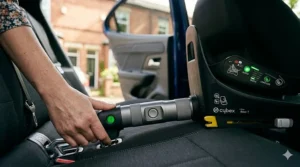
The ISOFIX anchor points and bases accumulate surprising quantities of crumbs, dust, sand (from beach trips), and general grime that British roads enthusiastically distribute. This matters because grit can interfere with proper connection if it builds up in the ISOFIX slots or on the base connector arms. Check quarterly by feeling inside the anchor point covers—if you detect grit, use a narrow vacuum attachment to remove it, then wipe with a slightly damp cloth.
The bases themselves (Base T, Base Z, Base One) benefit from occasional cleaning of the load leg mechanism and rotation systems. These collect dirt where moving parts interface, which can introduce stiffness to operations that should feel smooth. A cloth dampened with mild soapy water works adequately—avoid oils or lubricants unless explicitly recommended in your manual, as these can attract more dirt than they prevent.
Harness and Buckle Care:
The harness straps and buckles endure considerable stress from adjustments, child movement, and occasional spills of liquids that shouldn’t be in cars but inevitably are. Cybex buckles are robustly constructed but they do benefit from periodic cleaning—quarterly is sensible unless a spill occurs. Remove any accessible fabric covers from the buckle, wash separately, then clean the buckle mechanism itself with a damp cloth. Avoid submerging buckles in water, as moisture can linger in the release mechanism.
If buckles become sticky or stiff (usually from spilled juice drying in the mechanism), clean with warm water and a soft brush, then test release action thoroughly before reinstalling. The harness straps themselves shouldn’t be machine washed whilst still threaded through the seat—if they’re genuinely soiled, spot-clean with mild detergent and a cloth, then allow to air dry completely. Check harness stitching every three months for fraying or damage, particularly where straps pass through adjustment slots.
Storage Between Children:
British families frequently store car seats between children spaced 2-3 years apart, which introduces its own maintenance requirements. The ideal storage environment—dry, temperature-controlled, away from UV exposure—describes a storage unit rather than most British homes. Practically, the garage or loft space must suffice.
Before storage: thoroughly clean all fabric components, allow to dry completely (emphasis on completely—any residual dampness creates mildew during storage), then place the seat in a large plastic bag or storage cover to prevent dust accumulation. Include silica gel packets if storing in damp locations like garages. Check stored seats every 4-6 months for any moisture accumulation or pest activity (mice occasionally nest in stored soft goods).
Upon retrieval: inspect all harness stitching, ISOFIX mechanisms, and adjustment systems before installation. Wash all fabric components regardless of how clean they appeared going into storage. Verify the seat hasn’t exceeded its expiry date (typically 6-10 years from manufacture, marked on the seat somewhere).
British-Specific Considerations:
Our road salt during winter means vehicles accumulate more corrosive residue than German engineers typically experience. This doesn’t dramatically affect car seats directly, but it does mean the vehicle’s ISOFIX anchor points themselves can corrode if not occasionally wiped clean. Once yearly (typically spring, after salt season ends), wipe the vehicle’s ISOFIX points with a cloth dampened with mild soapy water to remove salt residue.
UV exposure through rear windows, even in Britain’s moderate sun, degrades plastics and fabrics over time. Car seats positioned behind rear-window glass benefit from window tinting or pull-down sun shades when parked, particularly during summer months. This slows UV degradation that British parents often don’t consider until noticing fabric fading or plastic becoming brittle.
The Maintenance Reality:
Proper car seat maintenance requires modest effort—perhaps thirty minutes monthly during heavy-use periods, less during fair weather. British conditions demand more attention than manufacturer manuals typically specify, but the effort prevents the gradual degradation that reduces seat lifespan and can compromise safety. View it as equivalent to maintaining any quality equipment: regular attention prevents problems rather than spectacular failures, which is precisely the point of maintenance.
Frequently Asked Questions About Cybex Car Seats UK
❓ Are Cybex car seats legal for use in UK vehicles in 2026?
❓ Does the Cybex Cloud Z work with UK pram systems?
❓ How long should I keep my child rear-facing in a Cybex Sirona?
❓ Can I use a Cybex car seat purchased from Amazon.de in the UK?
❓ What's the difference between Cybex i-Size and R44/04 seats in UK law?
Conclusion: Choosing Your Cybex Car Seat Wisely
The Cybex range represents genuine German engineering applied to the chaotic reality of British family life—rotating seats that navigate street parking, ventilated fabrics that address overheated children, and modular systems that acknowledge families don’t remain static. Yet the breadth of choice creates its own challenge: identifying which specific model suits your family’s circumstances without overspending on features that sound impressive but don’t materially improve your daily experience.
The strategic approach British families should adopt prioritises understanding your specific context before examining product features. If you’re navigating tight urban parking regularly, the Sirona T’s 360° rotation transforms daily frustration into manageable routine—the premium justifies itself through eliminated stress. If you’re suburban with ample driveway parking, that same rotation becomes expensive convenience rather than essential functionality. Similarly, the Cloud Z’s SensorSafe technology provides genuine peace of mind for anxious first-time parents whilst potentially feeling like technological overkill for experienced families on child number three.
The consistent theme across Cybex’s range is that British conditions—our damp climate, compact housing, variable road quality, and i-Size regulations—have been properly considered in ways budget alternatives often overlook. The fabrics resist mildew better, the ISOFIX systems tolerate vibration without loosening, and the sizing accommodates British children’s typical growth patterns. However, this quality commands premium pricing that not all families can comfortably justify, particularly when budget alternatives meeting identical i-Size regulations deliver equivalent safety at £80-£150 less.
For most British middle-income families, the Gold range (Solution G i-Fix, Sirona Gi, Pallas G) represents the sensible middle ground—respectable brand credentials, proper i-Size compliance, and adequate features without paying for premium refinements that don’t materially affect daily use. According to Which? independent testing, Cybex seats consistently score well for safety across both their Platinum and Gold ranges, with the primary differences being convenience features rather than protection levels. The Platinum range makes strategic sense for specific scenarios: families who value convenience highly enough to pay for it, those attracted to technological features like SensorSafe, or simply parents who want the most refined option available and don’t concern themselves with cost-benefit optimisation.
The uncomfortable truth about car seat selection is that beyond meeting i-Size regulations (which all discussed models do), the additional features and premium pricing largely purchase convenience and aesthetic refinement rather than superior safety. Your child is equally protected in a £180 Solution G i-Fix as in a £350 Sirona T—the latter simply makes your daily routine more comfortable and less frustrating. Neither choice indicates parental fitness; they represent different value frameworks.
Purchase your Cybex seat based on honest assessment of your circumstances: your vehicle size, parking situations, budget constraints, and willingness to pay for convenience. Ignore the marketing claims about “revolutionary” features and focus on practical considerations: does this seat fit my vehicle properly, will my child remain comfortable during typical journey lengths, can I install it correctly without assistance, and does the pricing represent acceptable value given our family finances? Answer these honestly, and you’ll select appropriately regardless of which specific model you choose.
Recommended for You
- 7 Best Maxi Cosi Car Seats UK 2026
- Inflatable Booster Seat UK Legal: 7 Best Travel Options 2026
- Best Travel Booster Seats UK 2026: 7 Expert Picks That Actually Fit
Disclaimer: This article contains affiliate links. As an Amazon Associate, I earn from qualifying purchases. If you purchase products through these links, we may earn a small commission at no additional cost to you.
✨ Found this helpful? Share it with your mates! 💬🤗
