
In This Article
Bringing your newborn home from hospital ranks amongst life’s most precious moments—and it all begins with selecting the right car seat. The safety of your little one during those first journeys is absolutely paramount, yet the sheer number of options available can leave even the most prepared parents feeling utterly overwhelmed.
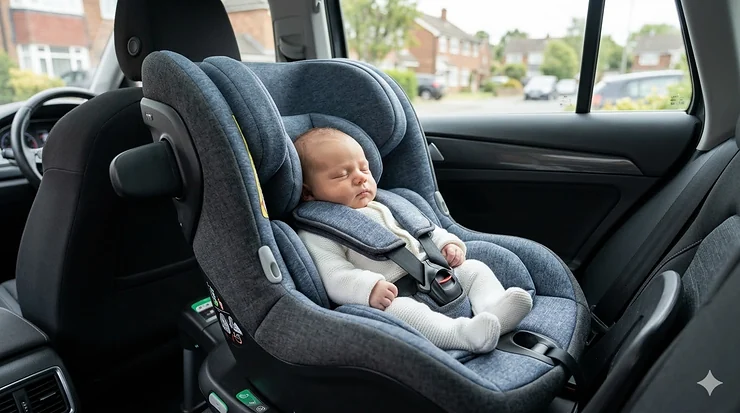
Since September 2024, R129 has fully replaced R44/04 for all new car seats sold in the UK, introducing stricter safety requirements that better protect our most vulnerable passengers. This shift to i-Size regulations means you’re now getting access to car seats with enhanced side-impact protection, improved crash test standards, and clearer guidance on when your baby has outgrown their seat.
I’ve spent countless hours researching, testing, and speaking with fellow parents to compile this definitive guide on newborn car seats available in the UK for 2026. Whether you’re after a budget-friendly option that doesn’t compromise on safety or a premium rotating seat with all the bells and whistles, you’ll find exactly what you need here. From understanding ISOFIX systems to decoding those confusing orange safety labels, we’re covering it all. Your baby’s first journey deserves nothing less than the absolute best protection—let’s find the perfect seat together.
Quick Comparison Table: Top Newborn Car Seats at a Glance
| Car Seat Model | Price Range (£) | i-Size Compliant | Key Feature | Best For |
|---|---|---|---|---|
| Maxi-Cosi Pebble 360 | £140-£260 | ✅ Yes | One-hand 360° rotation | Premium convenience |
| Joie i-Gemm 3 | £110-£150 | ✅ Yes | Tri-Protect headrest | Budget-conscious families |
| Cosatto Dock i-Size | £90-£130 | ✅ Yes | Vibrant patterns | Style & affordability |
| Cybex Cloud Z i-Size | £200-£280 | ✅ Yes | Near lie-flat position | Travel systems |
| Nuna Arra Flex | £220-£250 | ✅ Yes | Reclining positions | Ultimate comfort |
| Britax Baby-Safe Core | £100-£160 | ✅ Yes | Lightweight (3.9kg) | Easy portability |
| My Babiie MBCS02 | £70-£100 | ✅ Yes | Affordable i-Size | Tight budgets |
💬 Just one click – help others make better buying decisions too!***😊
Top 7 Newborn Car Seats: Expert Analysis & UK Reviews
1. Maxi-Cosi Pebble 360 i-Size – Premium Rotating Excellence
The Maxi-Cosi Pebble 360 represents the gold standard in newborn car seat technology, and it’s easy to see why it’s become a firm favourite amongst UK parents. This isn’t just another infant carrier—it’s a meticulously engineered safety system that makes those early months significantly easier.
Key Specifications:
- Suitable from birth to approx. 15 months (40-83 cm)
- Weight capacity: up to 13 kg
- G-CELL Side Impact Protection technology
- One-hand FlexiSpin 360° rotation (with FamilyFix 360 base)
What immediately struck me about the Pebble 360 is its rotation system. When paired with the FamilyFix 360 base (sold separately for approximately £180-£220), you can effortlessly swivel the seat to face the car door with just one hand. This seemingly simple feature transforms the experience of getting your baby in and out of the car, particularly when you’re juggling shopping bags or managing a toddler simultaneously.
The Pebble 360 complies with the latest i-Size safety standard (R129/03) and features G-CELL Side Impact Technology to keep your baby protected from the forces of a side-on collision. The ClimaFlow temperature regulation system prevents overheating during warmer months—something UK parents will genuinely appreciate during those unpredictable summer days.
UK buyers consistently praise the Easy-in harness design, which stays open whilst you’re placing your baby into the seat. No more wrestling with twisted straps whilst your newborn protests! The Baby-hugg inlay provides exceptional support for those first precious weeks, creating a snug cocoon that helps tiny babies feel secure.
Price Range: £140-£260 (seat only); £320-£480 (with FamilyFix 360 base)
✅ Pros:
- Effortless 360° rotation with base
- Exceptional build quality and materials
- Travel system compatible with numerous prams
❌ Cons:
- Base sold separately adds significant cost
- Heavier than some competitors at 4.8 kg
2. Joie i-Gemm 3 – Best Value i-Size Carrier
For families seeking robust i-Size protection without the premium price tag, the Joie i-Gemm 3 delivers exceptional value. This carrier demonstrates that safety needn’t cost the earth—Joie has managed to pack serious protective technology into an affordable package.
Key Specifications:
- i-Size certified (R129/03)
- Birth to approximately 15 months (40-87 cm)
- Maximum weight: 13 kg
- Patented Intelli-Fit memory foam in Tri-Protect headrest
The standout feature here is the Tri-Protect headrest, which incorporates three layers of protection including Joie’s patented Intelli-Fit memory foam. This provides security for your child within a side-on collision or impact, offering peace of mind that rivals far more expensive options.
What UK parents particularly love is the Grow Together multi-height headrest system. You can adjust both the headrest and harness simultaneously with one hand—no rethreading required as your baby grows. It’s these practical touches that make daily use genuinely pleasant rather than frustrating.
The i-Gemm 3 pairs with either the i-Base Advance or i-Base Encore (both sold separately), with the Encore offering a clever 90° spinning function that bridges the gap between budget and premium features. The UPF 50+ canopy with zip-open ventilation panel proves particularly useful during British summers.
UK buyer feedback highlights excellent value for money, with many praising the seat’s compatibility with various pushchair brands using Maxi-Cosi style adapters—ideal if you’re building a travel system on a budget. The seat has achieved strong ratings in independent testing by Which? magazine, confirming its safety credentials match more expensive alternatives.
Price Range: £110-£150 (seat only); £190-£250 (with i-Base)
✅ Pros:
- Outstanding value for i-Size protection
- Lightweight and easy to carry
- Wide pushchair compatibility
❌ Cons:
- Less premium feel than top-tier brands
- Canopy smaller than some competitors
3. Cosatto Dock i-Size – Quirky British Style Meets Safety
The Cosatto Dock i-Size brings a distinctly British flair to newborn car seat design. If you’ve ever felt that baby gear looks too serious or clinical, Cosatto’s bold, playful patterns offer a refreshing alternative whilst maintaining rigorous safety standards.
Key Specifications:
- i-Size compliant with ISOFIX base
- Birth to 15 months approx. (40-80 cm)
- Reinforced protective shell construction
- High-performance energy-absorbing materials
Dock has reinforced construction with a strong protective shell that cocoons your mini passenger, built with high performance energy-absorbing material for maximum protection. Don’t let the whimsical patterns fool you—this seat undergoes extreme testing and comes with Cosatto’s industry-leading 4-year guarantee (when registered).
The Time-Lock Technology safety feature particularly impressed me. If you accidentally press the release button whilst the seat is on your travel system but don’t actually lift it off, the Dock automatically re-locks after a few seconds. It’s these thoughtful safety additions that demonstrate Cosatto’s commitment beyond aesthetics.
UK parents rave about the UPF 100+ canopy—significantly better sun protection than standard UPF 50+ offerings. The plush impact-absorbing foam inlay with snug tummy and chest pads creates what Cosatto calls “a rolling cuddle,” and based on customer reviews, babies seem to agree!
The one-handed headrest adjustment works brilliantly, and pop-off machine washable covers mean those inevitable spills don’t spell disaster. Compatibility with Wow prams makes this an excellent choice if you’re investing in Cosatto’s ecosystem.
Price Range: £90-£130 (seat only); £170-£220 (with ISOFIX base)
✅ Pros:
- Distinctive, engaging designs babies love
- Excellent 4-year guarantee
- Lightweight at approximately 3.5 kg
❌ Cons:
- Bold patterns not to everyone’s taste
- Base compatibility limited to Cosatto systems
4. Cybex Cloud Z i-Size – The Travel System Champion
Premium German engineering meets practical innovation in the Cybex Cloud Z i-Size. This seat stands out for one particular feature that makes it genuinely unique: the near lie-flat recline position when used outside the car.
Key Specifications:
- i-Size certified (R129)
- Birth to approximately 24 months (45-87 cm)
- Maximum weight: 13 kg
- XXL sun canopy with UPF 50+
- Rotating capability with Base Z
Most infant car seats are in a fixed bucket-shape, but you can flatten the Cloud out when it’s fixed to the chassis. This feature proves invaluable for newborns who shouldn’t spend extended periods in a curved position. Whilst it’s not as completely flat as a carrycot, UK parents report feeling significantly more comfortable allowing their newborns to nap in the Cloud Z during longer walks.
The ergonomic lie-flat position adjusts simply by squeezing a button at the back of the hood and raising or lowering it—brilliantly intuitive design. When paired with the Base Z (approximately £185 separately), you get smooth rotation functionality, though not quite the full 360° of some competitors.
What distinguishes Cybex is their attention to premium details. The 11-position height-adjustable headrest, extra-wide Y-shaped harness, and energy-absorbing shell all contribute to exceptional safety credentials. The XXL integrated sun canopy is genuinely impressive—no flimsy add-on here.
The SensorSafe version (approximately £75 more) includes technology that monitors your baby and sends alerts to your smartphone, though UK buyers report mixed feelings about whether this justifies the additional cost.
Price Range: £200-£280 (seat only); £385-£465 (with Base Z)
✅ Pros:
- Unique lie-flat recline for outside car use
- Outstanding sun protection
- Premium build quality and materials
❌ Cons:
- Higher price point
- Heavier carry weight
5. Nuna Arra Flex – Ultimate Newborn Comfort
Dutch brand Nuna has built an enviable reputation for creating products that prioritise both safety and aesthetic appeal. The Arra Flex lives up to this heritage, offering reclining positions that set new standards for newborn comfort.
Key Specifications:
- i-Size (R129) compliant
- Birth to approximately 15 months (40-87 cm)
- Maximum weight: 13 kg
- Multiple recline positions
- Side-impact protection system
A rear-facing infant car seat suitable from birth to around 15 months (40–87cm, max 13kg), i‑Size (R129)‑compliant with side‑impact protection. What makes the Arra Flex special is its reclining mechanism—you can adjust the angle to suit your baby’s age and comfort level, something particularly beneficial for very young newborns.
UK reviewers consistently highlight the premium materials and thoughtful design touches. The magnetic buckle holders stay out of the way when placing your baby in the seat—a small detail that makes a genuine difference during those 3 AM feeds when coordination isn’t at its peak!
The seat works seamlessly with Nuna’s pushchairs and various other brands via adapters. The Biscotti colourway (a soft, neutral tone) has proved particularly popular with UK buyers who appreciate its easy-to-clean properties. Machine-washable fabrics mean dealing with the inevitable newborn mishaps doesn’t require professional cleaning.
Installation via either ISOFIX base or vehicle seat belt is straightforward, with clear visual indicators confirming correct fitting—essential for first-time parents who might question whether they’ve got it right.
Price Range: £220-£250 (seat only); £380-£430 (with base)
✅ Pros:
- Exceptional comfort for newborns
- Premium aesthetic appeal
- Magnetic buckle holders
❌ Cons:
- Premium pricing
- Limited colour options
6. Britax Baby-Safe Core – Featherweight Protection
At just 3.9 kg, the Britax Baby-Safe Core claims the title of one of the lightest infant carriers in its class—yet it doesn’t compromise on safety to achieve this impressive weight saving.
Key Specifications:
- UN R129 (i-Size) approved
- Birth to approximately 15 months (40-83 cm)
- Maximum weight: 13 kg
- Weight: only 3.9 kg
- 10-position adjustable headrest
At just 3.9 kg, it’s one of the lightest infant carriers in its class, making it easy to carry between car, home, and pushchair without strain. This lightweight design proves transformative for parents who frequently move the seat between vehicles or carry it up flights of stairs—common scenarios in UK terraced housing.
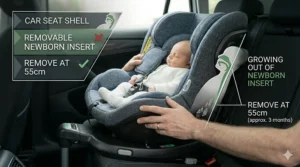
The soft, supportive headrest adjusts across 10 positions with one hand, whilst energy-absorbing foam pads in the removable newborn insert ensure your baby lies in a comfortable, ergonomic position during those first precious weeks. As your baby grows, simply remove the insert.
Soft, padded side wings help absorb force from side impacts, whilst the gentle clip-and-unclip buckle-forward belly pad means you can harness and release your baby without disturbing their sleep. UK parents particularly appreciate this feature—there’s nothing worse than waking a peacefully sleeping infant during a transfer!
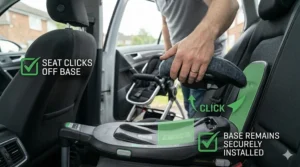
The expandable UPF 50+ sun canopy shields from harmful UV rays and wind, and the machine-washable seat cover removes easily for quick cleaning. The Baby-Safe Core ISOFIX Base (sold separately, approximately £120-£160) provides quick, secure installation with clear indicators confirming correct connection.
Travel system compatibility comes via Click & Go adapters included with all Britax pushchairs, making this an excellent choice if you’re building a Britax-based system.
Price Range: £100-£160 (seat only); £220-£320 (with ISOFIX base)
✅ Pros:
- Exceptionally lightweight
- Easy one-hand adjustments
- Sleep-friendly buckle system
❌ Cons:
- Less premium feel than some competitors
- Smaller canopy than premium options
7. My Babiie MBCS02 i-Size – Budget i-Size Champion
Not everyone has £250+ to spend on a newborn car seat, which is precisely why the My Babiie MBCS02 deserves recognition. This seat proves that i-Size compliance and genuine safety credentials can be accessible to families on tighter budgets.
Key Specifications:
- R129 i-Size certified
- Birth to 15 months approx. (40-87 cm)
- Group 0+ classification
- Lightweight infant carrier design
- Large sun canopy
For under £100, you’re getting genuine i-Size protection—the same regulatory standard that premium seats must meet. The large canopy provides excellent sun protection, whilst the newborn insert ensures proper positioning for the smallest babies.
The lightweight design makes it easy to carry, and the adjustable headrest grows with your baby without requiring harness rethreading. UK buyers report that whilst the materials don’t feel quite as luxurious as premium brands, the seat feels solid and secure.
Installation is straightforward either via vehicle seat belt or with a compatible base (sold separately). The seat clicks easily onto many pushchair frames, offering travel system flexibility without the premium price tag.
Customer reviews consistently praise the value proposition—parents appreciate getting i-Size safety compliance without stretching their budget. Some note that padding could be more generous, but for short journeys and budget-conscious families, this represents excellent value.
Price Range: £70-£100 (seat only)
✅ Pros:
- Genuine i-Size protection at budget price
- Lightweight and easy to handle
- Good pushchair compatibility
❌ Cons:
- Less padding than premium options
- Basic feature set
- Materials feel less luxurious
✨ Don’t Miss These Exclusive Deals!
🔍 Take your newborn’s safety to the next level with these carefully selected products. Click on any highlighted item above to check current pricing and availability on Amazon.co.uk. These car seats will help you create authentic peace of mind your family deserves!
Newborn Car Seats vs Convertible Seats: Which is Right for You?
Understanding the difference between dedicated newborn carriers and convertible seats helps you make the most economical choice for your family’s needs.
| Feature | Newborn/Infant Carrier | Convertible Seat |
|---|---|---|
| Age Range | Birth to 12-15 months | Birth to 4+ years |
| Portability | Removable carrier | Fixed installation only |
| Travel System | Compatible with pushchairs | Cannot use outside car |
| Rear-Facing Duration | 12-15 months maximum | Extended to 4+ years |
| Price Range | £70-£280 | £180-£450 |
| Longevity | 12-18 months usage | 4+ years usage |
When to Choose a Newborn Carrier
Dedicated infant carriers excel for families who value portability and travel system compatibility. The ability to lift a sleeping baby from car to pushchair without disturbance proves invaluable during early months. They’re lighter, easier to carry, and provide optimal positioning for tiny newborns.
However, you’ll need to purchase a second seat around 12-15 months when your baby outgrows the carrier. This two-purchase approach costs more overall but offers maximum convenience during the newborn phase.
When to Consider a Convertible Seat
Convertible seats start in rear-facing mode for newborns then convert to forward-facing for toddlers, potentially lasting until your child is 4-7 years old. This single-purchase approach saves money long-term but sacrifices portability—you can’t remove the seat to use as a carrier or attach it to pushchairs.
For families on tight budgets who primarily drive directly to destinations (rather than using public transport or walking extensively), convertible seats offer better value over time. However, the initial outlay is typically higher (£180-£450 vs £70-£280 for carriers).
Understanding UK Newborn Car Seat Regulations in 2026
Navigating car seat regulations can feel like decoding legal jargon, but it’s actually quite straightforward once you understand the key points. Only approved height-based child car seats can be used in the UK. These have a label showing a capital ‘E’ in a circle and ‘R129’.
What is R129/i-Size?
ECE R129 is the latest EU/UK safety standard for child car seats, first introduced during 2013 running alongside the existing ECE R44 standard. The R129 regulation—commonly known as i-Size—represents a significant upgrade over the older R44 standard, with several critical improvements:
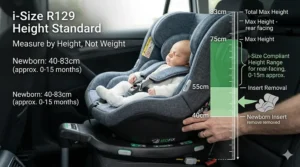
Height-Based Classification: Unlike R44 which used weight groups, R129 classifies seats by your child’s height in centimetres. This makes it significantly easier to determine when your baby has outgrown their seat—you simply measure their height rather than weighing them.
Extended Rear-Facing: Under R129, children must remain in rear-facing seats until they are at least 15 months old, which is longer than under ECE R44, where children could forward-face after 9 kg (about 9 months old). This extended rear-facing requirement is based on solid research showing it provides superior protection for developing necks and heads. Studies from Loughborough University’s Vehicle Safety Research Centre confirm that rear-facing positions reduce injury risk by up to 90% compared to forward-facing arrangements for young children.
Enhanced Side-Impact Testing: R129 seats must undergo more rigorous testing, including side-impact protection, which was not mandatory under R44. This addresses a significant safety gap, as side-impact collisions account for approximately 25% of serious car accidents.
ISOFIX Installation: i-Size seats are designed to work with ISOFIX anchor points in your vehicle, significantly reducing the risk of incorrect installation—one of the most common car seat safety issues.
Are R44 Seats Still Legal?
There’s considerable confusion about this, so let’s clarify: Using an R44 car seat is still legal in the UK in 2026. If you already own an R44/04 seat purchased before September 2024, you can continue using it throughout its intended lifespan (typically 6-10 years from manufacture). However, since September 2024, R129 has fully replaced R44/04 for all new car seats sold in the UK, meaning you’ll only find R129-approved seats in shops now.
Checking Your Car Seat’s Approval
Every legal car seat in the UK displays an orange approval label, typically on the side or back of the seat. This label contains crucial information:
- A circled ‘E’ followed by a number (indicating which country approved the seat)
- The regulation number: either “ECE R44/04” or “ECE R129”
- The height or weight range for which the seat is approved
- The seat’s unique approval number
If your seat lacks this orange label, it’s not legal for use in the UK. It’s that simple.
Installation Requirements
You must only use a child car seat if your car’s seat belt has a diagonal strap, unless the seat is either specifically designed for use with a lap seat belt or you’re using an ISOFIX installation system. Most modern vehicles have ISOFIX anchor points—check your car’s manual to locate them (they’re usually marked with a symbol showing two circles and an anchor).
For more comprehensive guidance on UK car seat legislation, the GOV.UK official guidance provides authoritative information, whilst the Royal Society for the Prevention of Accidents (RoSPA) offers practical safety advice.
How to Choose the Best Newborn Car Seats: Essential Buying Guide
Selecting the right newborn car seat involves balancing multiple factors—safety, practicality, budget, and your specific lifestyle needs. Here’s how to make an informed choice:
1. Verify i-Size Compliance
Start with the basics: ensure any seat you’re considering displays the R129/i-Size approval. This isn’t negotiable—it’s your baseline for legal compliance and modern safety standards. Check the orange label carefully, paying attention to the height range to ensure it covers newborns (typically starting from 40-45 cm).
2. Assess Your Vehicle Compatibility
Before falling in love with a particular seat, verify it fits your car. If your vehicle has ISOFIX anchor points (most cars from 2006 onwards do), prioritise i-Size seats which guarantee compatibility. If you drive an older vehicle without ISOFIX, you’ll need a seat that installs securely with a seat belt—many modern seats offer both options.
Consider your car’s size too. Some infant carriers are bulkier than others, which might pose challenges in smaller vehicles like a Fiat 500 or older Mini Cooper. If possible, try fitting the display model before purchasing.
3. Decide on Base vs Belt Installation
ISOFIX bases (sold separately for £120-£220) offer quicker, easier installation with less room for error—particularly beneficial if you’ll be frequently moving the seat between vehicles. However, they add significant cost and won’t work if you regularly use taxis or older vehicles without ISOFIX points.
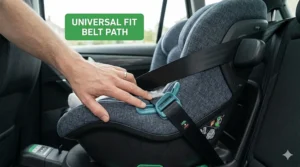
Belt installation is universal and costs nothing extra, but requires more careful attention to ensure correct fitting. If you’re not confident, many fire stations, local authorities, and retailers offer free car seat fitting checks—take advantage of these services.
4. Evaluate Travel System Needs
If you’re planning to use a travel system (clicking the car seat onto a pushchair chassis), verify compatibility before purchasing. Some brands like Cosatto and Britax work seamlessly within their own ecosystem, whilst others like Joie offer wide compatibility via Maxi-Cosi style adapters.
Consider how you’ll actually use this functionality. If you live in a terraced house with narrow pavements and primarily walk short distances, you might use the travel system feature constantly. Conversely, if you drive to most destinations, this feature becomes less critical.
5. Consider Weight and Portability
Newborn car seats function as carriers, and you’ll be lifting them frequently—into cars, onto pushchairs, up stairs, through shops. Weight varies from 3.5 kg (ultra-light options) to 5+ kg (premium rotating seats). This might seem like a minor difference, but when carrying a 4 kg baby plus nappy bag, every kilo counts!
6. Assess Additional Features
360° Rotation: Makes getting baby in and out significantly easier but adds £200+ to the total cost with the required base. Brilliant for anyone with back issues or limited mobility, but not essential for everyone.
Lie-Flat Positions: Particularly beneficial for newborns who shouldn’t spend extended periods in a curved position. The Cybex Cloud Z excels here.
Temperature Regulation: Features like ClimaFlow help prevent overheating—useful during British summers (when they eventually arrive!).
Canopy Size: Larger canopies provide better sun protection, though they can add bulk. UPF 50+ is standard; UPF 100+ (like Cosatto offers) is exceptional.
7. Budget Realistically
Entry-level i-Size protection: £70-£130 (seat only) Mid-range with good features: £130-£200 (seat only) Premium with advanced features: £200-£280 (seat only)
Add £120-£220 for ISOFIX bases if required.
Remember that “premium” doesn’t necessarily mean “safer”—all i-Size seats must meet the same rigorous standards. Premium pricing often reflects additional convenience features, materials quality, and brand prestige rather than superior crash protection.
8. Read Real Reviews from UK Parents
Look specifically for UK buyer reviews, as our roads, vehicles, and usage patterns differ from other markets. Pay attention to comments about:
- Actual ease of installation (not just manufacturer claims)
- How the seat performs in specific vehicle makes
- Durability after months of use
- Customer service experiences with the brand
The Which? car seat reviews provide independent crash testing results beyond regulatory requirements—an excellent resource for comparing safety performance.
ISOFIX vs Seat Belt Installation: Which is Right for You?
Understanding the differences between ISOFIX and seat belt installation helps you make an informed decision about which system suits your circumstances.
What is ISOFIX?
ISOFIX is an international standard system that securely attaches car seats directly to a vehicle’s chassis via dedicated anchor points. Most vehicles manufactured from 2006 onwards feature ISOFIX points (usually marked with a small symbol showing two circles and an anchor, typically found between the seat cushion and backrest).
ISOFIX Advantages
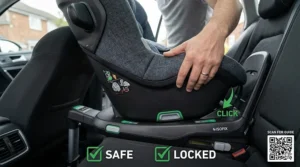
Reduced Installation Errors: When you have the option, always choose an installation with ISOFIX over an installation without ISOFIX, but with the vehicle’s adult belt. ISOFIX connections click into place with an audible confirmation, making incorrect fitting far less likely.
Quicker Installation: Once you’re familiar with the system, clicking a seat onto an ISOFIX base takes seconds—invaluable when dealing with a crying baby or hurrying to an appointment.
More Secure Fitting: ISOFIX creates a rigid connection to the vehicle’s chassis, reducing forward movement during sudden stops and providing more stable protection during impacts.
Universal i-Size Compatibility: i-Size seats guarantee compatibility with i-Size seating positions in vehicles, eliminating guesswork about whether a particular seat will fit your car.
ISOFIX Disadvantages
Additional Cost: ISOFIX bases typically cost £120-£220—a significant addition to the seat price.
Vehicle Limitations: Older vehicles (pre-2006) and some smaller cars lack ISOFIX points. You’ll need to check your vehicle’s manual.
Limited Flexibility: If you regularly use taxis, car clubs, or borrow vehicles, you can’t assume ISOFIX availability, making a universal seat belt-compatible seat more practical.
Single Vehicle Lock-in: Unless you purchase multiple bases (expensive!), the seat becomes tied to one vehicle for quick installation.
Seat Belt Installation Advantages
Universal Compatibility: Every car with a three-point seat belt can accommodate belt-installed seats, offering maximum flexibility.
No Additional Cost: You’re using existing vehicle equipment—no base purchase required.
Multi-Vehicle Freedom: Perfect for families who frequently switch between vehicles, use taxis, or rely on various cars (grandparents, car clubs, rentals).
Lighter Overall Weight: Without a base, you’re carrying less equipment—beneficial when travelling or managing multiple children.
Seat Belt Installation Disadvantages
Higher Error Risk: Studies suggest approximately 70% of car seats installed with seat belts are fitted incorrectly to some degree. Common errors include loose belts, twisted straps, or incorrect routing paths.
More Time-Consuming: Belt installation requires more steps and careful attention to belt tension, taking considerably longer than clicking onto an ISOFIX base.
Vehicle-Specific Challenges: Some vehicles have awkward belt configurations that make achieving tight, secure installation genuinely difficult.
Making Your Choice
Choose ISOFIX if:
- Your vehicle has ISOFIX points
- You primarily use one or two regular vehicles
- You want the quickest, most foolproof installation
- Budget allows for the base investment
- You value peace of mind over flexibility
Choose Belt Installation if:
- Your vehicle lacks ISOFIX points
- You regularly use different vehicles
- Budget is particularly tight
- You’re comfortable taking time to ensure correct fitting
- You frequently use taxis or car-sharing services
Many modern seats offer both options—use ISOFIX at home whilst retaining belt installation capability for occasional use in other vehicles. This hybrid approach offers the best of both worlds, though it requires purchasing the ISOFIX base.
Maintaining Your Newborn Car Seat: Essential Care Guide
Proper maintenance extends your car seat’s lifespan whilst ensuring optimal safety performance. Here’s how to keep your seat in peak condition:
Regular Cleaning Schedule
Weekly: Wipe down hard plastic surfaces with a damp cloth to remove dust and crumbs. Check harness straps for twisting or damage—straighten any twisted sections immediately as these affect restraint performance.
Monthly: Remove fabric covers (following manufacturer instructions) and machine wash on a gentle cycle at 30°C. Air dry completely before reinstalling—never use tumble dryers as heat can damage elastic components. Vacuum the seat shell whilst covers are off to remove accumulated debris from crevices.
Quarterly: Inspect ISOFIX connectors or belt routing paths for wear or damage. Check the seat’s structural integrity—look for cracks, stressed plastic, or bent metal components. Verify all adjustment mechanisms move smoothly without sticking.
Dealing with Accidents and Spills
Sick or Nappies: Remove covers immediately and rinse with cold water before machine washing. Use enzyme-based stain removers for stubborn marks—avoid bleach which degrades fabrics and reduces flame-retardant properties.
Food and Drink: Wipe up spills promptly to prevent staining. For dried-on food, use a soft brush and warm soapy water rather than harsh chemicals that might damage materials.
Odours: Bicarbonate of soda sprinkled on fabric, left for 30 minutes, then vacuumed removes most odours without chemicals. For persistent smells, enzyme cleaners work effectively.
What Never to Do
Never wash harness straps in washing machines or submerge them in water—this compromises their integrity. Spot clean only with damp cloths.
Never use bleach, harsh chemicals, or abrasive cleaners on any part of the seat. These can degrade materials and reduce safety performance.
Never force stuck mechanisms—contact the manufacturer for guidance rather than potentially damaging safety components.
Never leave your seat in direct sunlight when not in use. UV degradation weakens plastic over time. If your car parks in direct sun, use a seat cover or window shades.
Storage Between Uses
If storing a seat between children, keep it in a cool, dry location away from direct sunlight. Cover with a breathable fabric (not plastic bags which trap moisture). Store the manual and any spare parts together. Write the purchase date and expiry date clearly on masking tape attached to the seat shell—this prevents accidental use beyond safe dates.
When to Contact the Manufacturer
Visible damage to any component Stuck or broken adjustment mechanisms
Missing parts from the original package Unusual noises during installation or adjustment Uncertainty about whether the seat is still safe to use
Most manufacturers offer excellent customer service. Maxi-Cosi, Joie, Cybex, and Britax all maintain UK helplines and can arrange replacement parts if needed. Don’t hesitate to contact them—their priority is your baby’s safety, not judging your questions.
Newborn Car Seat Safety: Top Tips for UK Parents
Never Use a Rear-Facing Seat with an Active Airbag
In the Front Seat: It is illegal to place a child in a rear-facing car seat in the front if the passenger-side airbag is active. The airbag must be deactivated. Airbag deployment can cause catastrophic injuries to infants in rear-facing seats. If you must use the front seat (single-cab van, for instance), ensure the airbag is properly deactivated and push the seat as far back as possible.
The 2-Hour Rule for Newborns
Whilst not legally mandated, safety experts advise that newborns shouldn’t remain in car seats for more than 2 hours at a time. Their developing spines and airways benefit from regular position changes. For longer journeys, plan stops every 90-120 minutes to remove your baby from the seat for a break.
Register Your Purchase
Register your car seat with the manufacturer immediately after purchase. This ensures you’ll be notified of any safety recalls. You can also check the Child Car Seats website for recall information and safety notices. The website is run by the Good Egg Safety charity, which provides independent advice on child car seat safety in the UK.
Avoid Second-Hand Unless You Know the History
Second-hand seats can be economical, but only if you’re absolutely certain of their history. Never use a seat that:
- Has been involved in an accident (even minor impacts can compromise structural integrity)
- Has missing parts or instructions
- Shows signs of damage, wear, or sun degradation
- Is more than 6 years old
- Lacks the orange approval label
Winter Coats and Car Seats Don’t Mix
Bulky winter coats create dangerous slack in the harness. Instead, place your baby in the seat without their coat, then tuck the coat over them like a blanket after fastening the harness. Alternatively, use purpose-designed car seat covers that fit over the strapped-in baby.
Master the Pinch Test
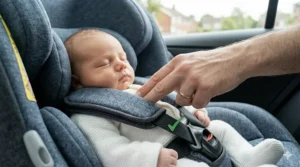
After fastening the harness, you should be unable to pinch any harness webbing at shoulder level. If you can pinch a vertical fold, the harness is too loose. Adjust until the harness sits snugly against your baby’s chest—you should be able to fit just two fingers between the harness and chest.
Position the Chest Clip Correctly
The chest clip should sit at armpit level—not on the tummy or near the neck. This positioning ensures optimal restraint during impacts whilst avoiding pressure points that could cause injury.
Regular Fitting Checks
Car seat fitting isn’t a one-time event. Recheck the installation monthly, especially if the seat is frequently removed. Many UK fire stations, Halfords stores, and local authorities offer free car seat fitting checks—take advantage of these services.
For comprehensive safety guidance, the NHS provides excellent resources on child car seat safety, whilst the Royal Society for the Prevention of Accidents offers detailed fitting guides and safety videos.
Common Newborn Car Seat Mistakes (and How to Avoid Them)
Mistake 1: Installing the Seat Too Loosely
The seat shouldn’t move more than 2.5 cm (about 1 inch) side-to-side or front-to-back when tested at the belt path. If it shifts more than this, tighten the installation. For belt installations, use your knee to compress the seat whilst pulling the belt tight—this removes slack that’s difficult to eliminate by hand.
Mistake 2: Incorrect Recline Angle
Newborn car seats should recline at approximately 45 degrees to keep airways open whilst providing neck support. Most seats have built-in angle indicators or adjustable bases to achieve the correct position. In older vehicles with more upright rear seats, you might need to use a rolled towel beneath the base to achieve proper angle.
Mistake 3: Threading the Harness Incorrectly
Harness straps should emerge from slots at or slightly below your baby’s shoulders for rear-facing seats. As your baby grows, you’ll move the straps to higher positions. Never route straps through slots above shoulder level in a rear-facing seat—this creates dangerous slack during crashes.
Mistake 4: Using Aftermarket Products
Head supports, strap covers, mirrors, and toys not supplied with your seat can interfere with safety performance and may void your warranty. If it didn’t come in the box, don’t add it to your car seat. The only exceptions are products explicitly approved by the manufacturer.
Mistake 5: Overheating Your Baby
UK weather is unpredictable, but car interiors can heat rapidly even on overcast days. Never leave your baby in a parked car, even for “just a minute.” Use sunshades on windows and consider temperature-regulating features like ClimaFlow when choosing your seat. Dress babies in light layers rather than heavy clothing beneath the harness.
Mistake 6: Using the Seat Beyond its Expiry
Car seats have expiry dates (typically 6-10 years from manufacture) due to material degradation, wear, and evolving safety standards. The expiry date is usually stamped on the seat’s shell or listed in the manual. Using an expired seat risks structural failure during crashes.
Mistake 7: Rushing Through Installation
Proper installation takes time, particularly your first attempt. Budget 30-45 minutes to carefully follow the manual, check your work, and make adjustments. Don’t feel pressured to hurry—your baby’s safety deserves this time investment. If you’re uncertain, book a professional fitting check before your baby arrives.
Travel Systems and Newborn Car Seats: What You Need to Know
Travel systems—where your car seat clicks directly onto a pushchair chassis—offer remarkable convenience, but they’re not essential for everyone. Understanding how they work helps you decide whether this feature merits priority in your selection process.
How Travel Systems Work
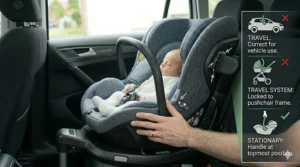
Most newborn car seats can attach to compatible pushchair frames via adapters or built-in connection systems. This allows you to move your sleeping baby from car to pushchair without removing them from the seat—brilliant for preserving precious naps and minimising disturbance.
Universal vs Branded Compatibility
Branded Systems: Manufacturers like Cosatto, Britax, and Nuna create seats and pushchairs designed to work together seamlessly. Cosatto’s Dock, for instance, clicks directly onto Wow prams without adapters. These systems usually offer the most secure fit and easiest installation.
Universal Compatibility: Many seats work with various pushchair brands via Maxi-Cosi style adapters. The Joie i-Gemm 3, for example, fits most Joie pushchairs adapter-free whilst working with other brands via separate adapters. This offers more flexibility if you’re mixing brands.
When Travel Systems Shine
Short Journeys: Popping to shops, school runs, quick errands—situations where baby might sleep in the car then continue napping whilst you complete your task.
Urban Living: Narrow pavements, frequent public transport use, multiple stops—travel systems reduce the juggling act considerably.
Multiple Children: When managing a toddler alongside a newborn, minimising baby handling streamlines logistics significantly.
When Travel Systems Aren’t Crucial
Long Walks: I definitely feel happier letting my newborn son sleep in this when we go out for a short walk compared to a regular seat, but extended use isn’t recommended. For walks exceeding 30-45 minutes, transfer baby to a carrycot or lie-flat pushchair seat.
Rural Living: If you drive to most destinations then carry baby inside, the travel system feature becomes less frequently used.
Budget Constraints: Travel system capability shouldn’t override safety features or stretch your budget uncomfortably. A good car seat plus a budget pushchair outperforms a mediocre travel system package.
The Pram vs Pushchair Debate
For the first 3-6 months, babies benefit from completely flat sleeping positions rather than semi-reclined car seat positions. Traditional prams or pushchairs with lie-flat carrycots provide this. Whilst travel systems offer convenience, they’re best suited for shorter durations. For longer outings, transfer your baby to a flat surface.
Some premium pushchairs like the Nuna and Cybex systems offer both carrycots and car seat compatibility, providing the best of both worlds—though at significantly higher price points.
Budget Breakdown: Newborn Car Seat Investment Guide
Understanding the complete cost of car seat ownership helps you budget accurately. Here’s a realistic breakdown of what you’ll actually spend:
| Budget Level | Seat Cost | Base Cost | Total Investment | Expected Duration |
|---|---|---|---|---|
| Budget | £70-£130 | £100-£150 (optional) | £70-£280 | 12-15 months |
| Mid-Range | £130-£200 | £120-£180 | £250-£380 | 12-18 months |
| Premium | £200-£280 | £180-£220 | £380-£500 | 12-18 months |
Hidden Costs to Consider
Replacement Covers: Machine-washable covers are brilliant, but they wear out. Budget £25-£45 for replacement covers if needed.
Additional Bases: If both parents need independent access to vehicles, a second ISOFIX base costs £120-£220. Some families find this worthwhile; others manage with one base and belt installation.
Adapters for Travel Systems: Universal adapters cost £20-£40 if your chosen seat doesn’t click directly onto your pushchair.
Replacement Parts: Harness pads, buckle covers, and newborn inserts occasionally need replacing—budget £15-£30 for these small items.
Cost-Saving Strategies
Buy Base Later: Start with belt installation to spread costs. If you find it frustrating or inconvenient, add an ISOFIX base later—they’re compatible with seats purchased separately.
Choose Budget with Premium Safety: The My Babiie MBCS02 at £70-£100 offers identical R129 safety standards to seats costing £250+. You’re primarily paying for convenience features and materials quality in premium seats.
Avoid Unnecessary Features: That clever 360° rotation seems brilliant in the showroom but adds £200+ to your total cost. If you’re relatively mobile and don’t have back issues, standard seats work perfectly well.
Shop Sales Strategically: Major retailers like Mothercare, Argos, and Amazon UK typically discount car seats during January sales, Black Friday, and spring clearances. Baby Shower events also offer discounts—but never compromise safety for price reductions.
✨ Ready to Make Your Purchase?
🔍 These carefully researched newborn car seats represent the best options available in the UK for 2026. Click on any highlighted product name to check current prices and read additional customer reviews on Amazon.co.uk. Your baby’s safety is worth the investment!
Frequently Asked Questions About Newborn Car Seats
❓ How long can newborns stay in car seats during journeys?
❓ Do I need to buy an ISOFIX base for my newborn car seat?
❓ Can I use a newborn car seat that's been in an accident?
❓ How do I know when my baby has outgrown their newborn car seat?
❓ Are expensive newborn car seats safer than budget options?
Conclusion: Making the Right Choice for Your Newborn’s First Journeys
Selecting the perfect newborn car seat needn’t be overwhelming once you understand the fundamentals. Every seat sold in the UK for 2026 must meet rigorous R129/i-Size standards, providing you with a solid baseline of modern safety technology regardless of your budget.
The Maxi-Cosi Pebble 360 delivers premium convenience with its effortless rotation system—ideal if you value easy access and have the budget for its advanced features. The Joie i-Gemm 3 offers exceptional value, packing serious safety credentials into an affordable package perfect for budget-conscious families who won’t compromise protection. For those seeking distinctive British style, the Cosatto Dock i-Size brings playful patterns and robust safety together with an industry-leading 4-year guarantee.
Remember that “premium” doesn’t automatically mean “safer”—all i-Size seats protect to the same regulatory standard. Choose features that genuinely suit your lifestyle rather than following marketing hype. If you’ll rarely use a travel system, don’t prioritise pushchair compatibility. If you frequently switch vehicles, ISOFIX might prove less practical than belt installation despite its convenience.
Take time to verify vehicle compatibility before purchasing, register your seat immediately to receive safety notices, and don’t hesitate to seek professional fitting checks—many are completely free. Your baby’s safety on those precious first journeys home and beyond deserves this careful attention.
Whatever seat you choose, you’re already doing brilliantly by researching thoroughly and prioritising safety. Trust your research, select the seat that ticks your particular boxes, and enjoy those first magical journeys with your newborn—safely secured and ready for adventures ahead.
Recommended for You
- 7 Easiest Pushchair for Grandparents in 2026 UK
- 7 Best Pushchair That Lasts Longest UK 2026
- 7 Best Narrow Pushchair for Doorways UK 2026
Disclaimer: This article contains affiliate links. If you purchase products through these links, we may earn a small commission at no additional cost to you. Prices shown are approximate and may vary.
✨ Found this helpful? Share it with your mates! 💬🤗
