
In This Article
Picture this: You’re stood in the baby shop, overwhelmed by the sheer variety of pushchairs, travel systems, and sleeping options for your newborn. The sales assistant mentions carrycots, lie-flat seats, bassinets, and recline options – and suddenly you’re wondering if you’ve accidentally wandered into a engineering lecture rather than a baby store. Trust me, you’re not alone in this confusion.
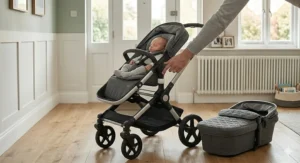
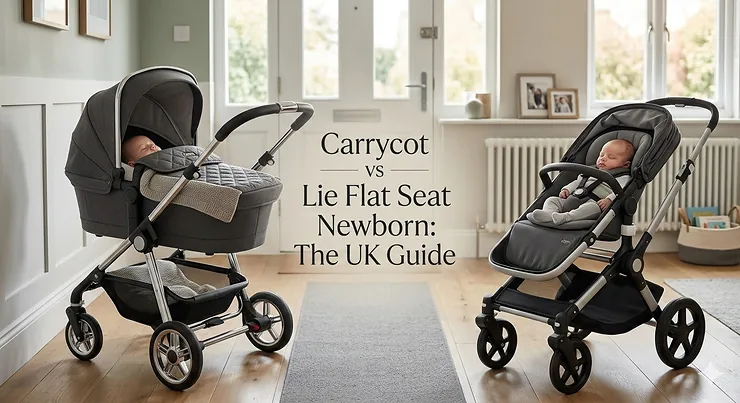
The debate around carrycot vs lie flat seat newborn isn’t just about convenience or aesthetics. It’s fundamentally about your baby’s safety, spine development, and breathing during those crucial first months. According to the NHS, newborns should sleep on their backs on a firm, flat surface to reduce the risk of sudden infant death syndrome (SIDS). But does that mean you need a carrycot, or will a lie-flat pushchair seat do the job?
Here’s what makes this decision particularly tricky: overnight sleep carrycot options offer that completely flat surface many experts recommend, whilst lie-flat seats promise versatility and longevity. The bassinet vs recline seat debate becomes even more complex when you consider storage space, budget constraints, and your lifestyle. Whether you’re asking do I need carrycot or weighing up the newborn sleeping position options, this comprehensive guide will help you navigate these waters with confidence. We’ll explore real products available on Amazon UK, examine safe sleep travel principles, and explain why flat surface importance cannot be overstated for your newborn’s wellbeing.
Quick Comparison: Carrycot vs Lie Flat Seat at a Glance
| Feature | Traditional Carrycot | Lie-Flat Pushchair Seat |
|---|---|---|
| Sleeping Position | 180° completely flat | 170-180° near-flat recline |
| Age Suitability | Birth to 6 months (9kg) | Birth to 4 years (22kg) |
| Overnight Sleep | ✅ Usually approved | ❌ Not approved for overnight |
| UK Price Range | £150-£450 | Included with pushchair |
| Storage Space | Bulkier, foldable options available | Compact, part of pushchair |
| Versatility | Single-purpose for newborns | Multi-stage from birth to toddler |
| Spine Support | ✅ Optimal flat surface | ✅ Good when fully reclined |
| Portability | Detachable, carry handles | Fixed to chassis |
💬 Just one click – help others make better buying decisions too!😊
Top 7 Carrycot & Lie-Flat Solutions: Expert Analysis
1. Silver Cross Dune 2 First Bed Folding Carrycot
If storage space is at a premium in your home (and let’s be honest, whose isn’t?), the Silver Cross Dune 2 First Bed Folding Carrycot is an absolute game-changer. This clever design folds completely flat into its own base, making it perfect for UK flats and terraced houses where every centimetre counts.
Key Specifications:
- Suitable from birth to 9kg (approximately 6 months)
- Folds flat for storage – only 15cm high when folded
- Bamboo lining with hard-shell ventilated base
- Overnight sleeping approved on and off chassis
UK Price: £240-£280
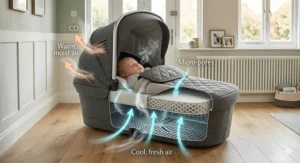
What really sets this carrycot apart is its overnight sleeping certification. Many UK parents have praised how their newborns transition seamlessly from pushchair walks to bedtime without disturbance. The natural bamboo lining is breathable and antibacterial – particularly appreciated during those warmer summer months. The extendable UPF50+ hood with mesh ventilation panel ensures your baby stays comfortable whether you’re strolling through Hyde Park or navigating the high street.
✅ Pros:
- Space-saving folding mechanism perfect for UK homes
- Approved for overnight sleep
- Sustainable materials (made from recycled plastic bottles)
❌ Cons:
- Only compatible with Silver Cross Dune 2 and Reef 2 pushchairs
- Pricier than some alternatives
2. Joolz Aer+ Carrycot
The Joolz Aer+ Carrycot has become something of a cult favourite amongst UK parents who value both style and substance. Weighing just 3.6kg, this is one of the lightest carrycots on the market, making it ideal for parents who rely on public transport or frequently travel by car.
Key Specifications:
- Ultra-lightweight at 3.6kg
- One-hand fold mechanism
- Water-repellent fabric with extended sunshade
- Breathable mattress included
UK Price: £210-£250
UK buyers consistently rave about the one-hand folding feature – absolute gold when you’re juggling shopping bags and a sleeping baby. The water-repellent fabric is particularly practical for British weather, whilst the ventilated design prevents overheating during warmer days. Several London-based parents have noted how easily it fits through narrow doorways and on crowded tubes.
✅ Pros:
- Exceptionally lightweight for easy carrying
- Quick one-hand fold
- Weather-resistant design ideal for UK climate
❌ Cons:
- Not approved for overnight sleeping
- Limited colour options
3. Silver Cross Pop 2 Pushchair with Lie-Flat Seat
For parents wondering do I need carrycot at all, the Silver Cross Pop 2 offers a compelling alternative. This pushchair features a genuine lie-flat seat from birth, eliminating the need for a separate carrycot purchase whilst still providing that crucial flat surface importance.
Key Specifications:
- Suitable from birth with lie-flat drawstring recline
- Adjustable calf support for growing babies
- UPF50+ protection hood
- Use until 22kg (approximately 4 years)
UK Price: £149-£199
This represents exceptional value for UK families on a budget. The lie-flat position is achieved through a drawstring recline system that’s surprisingly easy to operate with one hand. Parents in Edinburgh and Manchester have praised the double wheels and suspension system, which handle cobbled streets beautifully. The machine-washable seat liner is a practical touch that any parent will appreciate after inevitable spills.
✅ Pros:
- Excellent value – no separate carrycot needed
- Suitable from newborn to 4 years
- Compact umbrella fold
❌ Cons:
- Not suitable for overnight sleep
- Less padding than dedicated carrycots
4. Maxi-Cosi Jade i-Size Car Carrycot
The Maxi-Cosi Jade is a revolutionary product that blurs the lines between carrycot and car seat. This R129 i-Size approved carrycot can be used both in the car (positioned laterally) and as a pushchair carrycot – solving multiple problems with one product.
Key Specifications:
- First R129 approved lateral car cot
- Complete 180° flat sleeping position
- Compatible with FamilyFix3 ISOFIX base
- Birth to 9kg (approximately 6 months)
UK Price: £199 (carrycot only), £398 (with base)
This is particularly valuable for parents doing longer car journeys. Traditional upright car seats should only be used for two hours at a time due to concerns about newborn breathing and positioning. The Jade allows extended travel whilst maintaining the safe sleep travel position experts recommend. UK buyers on the M25 corridor and those making frequent long-distance trips have found this invaluable. However, it does require ISOFIX compatibility and takes up two rear seats.
✅ Pros:
- Certified for use in car and on pushchair
- Allows longer journeys without 2-hour rule concerns
- Superior head and neck protection
❌ Cons:
- Expensive when including essential base
- Takes up two rear car seats
- Only usable until 6 months
5. Ickle Bubba Venus Newborn Cocoon (2-in-1 Carrycot & Footmuff)
Budget-conscious parents, this one’s for you. The Ickle Bubba Venus Newborn Cocoon offers a clever 2-in-1 solution that works as both a carrycot and footmuff, extending its usability well beyond the traditional 6-month carrycot timeframe.
Key Specifications:
- Universal fit for most pushchairs
- Converts from carrycot to footmuff
- Quilted liner with removable hood
- Birth to 9kg for carrycot mode
UK Price: £49-£79
What UK parents love most is the universal compatibility – this works with virtually any pushchair brand, making it perfect if you’ve already invested in a travel system. The price point is remarkably accessible, typically under £80. Bristol and Birmingham parents have particularly noted the value proposition, as it continues to serve as a cosy footmuff long after the carrycot stage ends. The shower-resistant fabric holds up well to typical British drizzle.
✅ Pros:
- Exceptional value for money
- Universal compatibility with most pushchairs
- Extends use beyond newborn stage
❌ Cons:
- Not rigid enough for true overnight sleep
- Less structured than traditional carrycots
- May not provide optimal spine support
6. Baby Jogger City Mini 2 Foldable Carrycot
Active parents who don’t want to compromise on their lifestyle should consider the Baby Jogger City Mini 2 Carrycot. Designed specifically for the popular City Mini range, this carrycot handles everything from parkland paths to city pavements with equal ease.
Key Specifications:
- Compatible with City Mini 2, City Mini GT2, and City Elite 2
- Fully ventilated with adjustable airflow
- Weather shield and sun canopy included
- Suitable birth to 9kg
UK Price: £165-£195
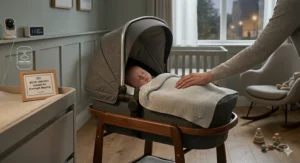
This carrycot really shines when paired with the City Mini’s legendary one-hand fold system. Parents in coastal areas like Brighton and Bournemouth appreciate how well the weather shield protects against sea breezes and sand. The ventilation system is particularly well-designed, preventing the stuffiness that can occur in enclosed carrycots. Several reviewers note it’s slightly narrower than some alternatives, which can be either a pro or con depending on your baby’s size.
✅ Pros:
- Excellent ventilation system
- Integrates seamlessly with popular Baby Jogger pushchairs
- Good weather protection
❌ Cons:
- Brand-specific compatibility
- Slightly narrow for larger babies
- No overnight sleep approval
7. Bebeconfort Sunlite with Lie-Flat Position
Rounding out our selection is the Bebeconfort Sunlite, a lightweight stroller that proves you don’t need to sacrifice functionality for portability. This French brand has become increasingly popular in the UK market, offering continental style at accessible prices.
Key Specifications:
- Weighs just 7.2kg complete
- Automatic compact fold
- Lie-flat position with one-hand recline
- Large 5kg storage basket
UK Price: £130-£170
The automatic fold mechanism is genuinely impressive – press a button and watch it collapse in seconds. Parents navigating London’s public transport or storing pushchairs in compact car boots have sung its praises. The lie-flat position accommodates newborns safely, whilst the generous storage basket (rare at this price point) handles the weekly shop admirably. The mineral graphite colour scheme is refreshingly sophisticated compared to typical baby pastels.
✅ Pros:
- Very lightweight and portable
- Automatic folding mechanism
- Excellent value for features offered
❌ Cons:
- Smaller wheels less suitable for rough terrain
- Not approved for overnight sleeping
- Less padding than premium alternatives
✨ Don’t Miss These Exclusive Deals!
🔍 Take your newborn care to the next level with these carefully selected products. Click on any highlighted item to check current pricing and availability on Amazon.co.uk. These solutions will help you create authentic comfort your family will love!
Why the Flat Surface Importance Cannot Be Overstated
Understanding newborn sleeping position requirements isn’t just about following guidelines – it’s rooted in your baby’s physiology and development. When we examine carrycot vs lie flat seat newborn options, the science behind flat sleeping becomes crucial.
The Science of Newborn Spine Development
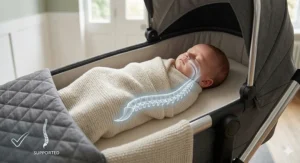
Newborns are born with a C-shaped spine – completely different from an adult’s S-shaped curve. According to research published in academic studies on infant development, a baby’s spine undergoes dramatic changes in the first year of life, effectively doubling in size and developing its characteristic curves.
When babies lie completely flat, their natural C-curve is preserved whilst allowing proper muscle development. Think of it like this: your newborn’s spine is still forming, much like wet clay being shaped. The surfaces they rest on during those early months influence how that shape develops. A truly flat surface allows their spine to maintain its natural position without forcing unnatural curvature.
Breathing Considerations for Newborns
Here’s something that surprises many parents: the angle at which your baby lies directly affects their oxygen intake. In upright positions (like traditional car seats), newborns can experience what medical professionals call “positional asphyxiation.” Their heads may slump forward, potentially restricting their airways.
The Lullaby Trust emphasises that babies should always sleep on their backs on a firm, flat surface. This isn’t merely preference – it’s backed by decades of SIDS research. When comparing bassinet vs recline seat options, completely flat surfaces allow optimal airflow and prevent the head-slumping issue common in semi-reclined positions.
The Two-Hour Rule Explained
You’ve probably heard the recommendation that babies shouldn’t spend more than two hours in car seats or non-flat positions. This guideline exists because prolonged time in semi-upright positions can:
- Restrict oxygen flow to the brain
- Put pressure on developing spines
- Increase risk of flat head syndrome (plagiocephaly)
- Potentially contribute to SIDS risk factors
This is where understanding do I need carrycot becomes crucial. If you’re planning long journeys or your baby will spend significant time in their travel system, a proper carrycot that allows completely flat positioning becomes less of a luxury and more of a necessity.
Understanding Different Newborn Sleep Solutions
Traditional Carrycots: The Gold Standard
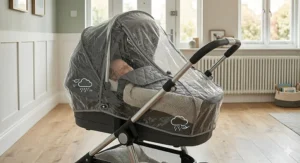
Traditional carrycots remain the gold standard for newborn transport and sleep. These rigid, bassinet-style carriers provide a completely flat, enclosed sleeping environment that mimics a Moses basket or crib. Most quality carrycots feature:
- Hard-shell bases that maintain flatness even on uneven surfaces
- Breathable mattresses specifically designed for newborn use
- Ventilation systems to prevent overheating
- Carrying handles for easy transfer without disturbing baby
- Overnight sleep approval from safety standards organisations
The primary advantage? They’re purpose-built for those crucial first 6 months. The enclosed sides provide a cosy, womb-like environment many newborns find comforting. UK parents often use them not just for walks but as a portable sleep space around the home.
However, they do come with limitations. You’ll typically only use a carrycot for 4-6 months before your baby outgrows it or begins rolling. They require storage space (though folding options like the Silver Cross Dune help here), and they represent an additional purchase on top of your pushchair.
Lie-Flat Pushchair Seats: The Versatile Option
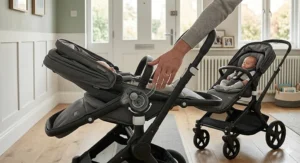
Modern pushchair technology has evolved significantly, and many now offer genuine lie-flat positions suitable from birth. These aren’t the semi-reclined seats of yesteryear – we’re talking 170-180 degree reclines that approach true flatness.
The bassinet vs recline seat debate often centres on these products. Quality lie-flat seats feature:
- Multi-position recline that adjusts as baby grows
- Generous padding for newborn comfort
- Reversible options allowing parent-facing or world-facing
- Extended usability from birth through toddlerhood
- No separate storage needed since they’re part of the pushchair
These offer obvious practical advantages. You’re not buying multiple products, there’s nothing extra to store, and you don’t need to swap between carrycot and seat unit at 6 months. For many UK families working with limited space and budgets, this single-solution approach is enormously appealing.
The trade-off? Even the best lie-flat seats aren’t approved for overnight sleeping. They’re perfect for daytime naps during walks but shouldn’t replace a proper cot or Moses basket at home. Some parents also report their newborns seem less settled in lie-flat seats compared to the more enclosed environment of a carrycot.
Car Seat Carrycots: The Hybrid Innovation
Products like the Maxi-Cosi Jade represent a relatively new category: car seat carrycots that are certified for use both in vehicles and on pushchair chassis. These lateral-facing carrycots address a specific concern – what happens when your journey exceeds that two-hour car seat limit?
These hybrids solve the safe sleep travel puzzle for families who regularly undertake longer journeys. Imagine driving from London to Edinburgh – rather than stopping every two hours to remove baby from their seat, the lateral carrycot allows safe, flat positioning throughout the journey.
However, they’re not without compromises. They’re expensive (often £400+ with necessary bases), take up significant car space, and still only last until 6 months. They’re best suited to families with specific needs: regular long-distance drivers, parents with premature babies requiring extra positioning care, or those who simply want the peace of mind that comes with lateral, flat travel positioning.
Making the Decision: Do You Actually Need a Carrycot?
Let’s address the elephant in the room: do I need carrycot or will a lie-flat seat suffice? The honest answer is: it depends entirely on your circumstances.
When a Carrycot Makes Absolute Sense
You should seriously consider a carrycot if:
🏠 You need a portable sleep solution – If you don’t have a Moses basket or crib downstairs, a carrycot approved for overnight sleep becomes genuinely useful. Many UK parents keep the carrycot on its stand in the living room for daytime naps, eliminating the need to constantly ferry baby upstairs.
🚗 You do regular long journeys – Planning frequent trips to see grandparents across the country? A proper carrycot (especially car-compatible ones like the Maxi-Cosi Jade) removes the anxiety about exceeding the two-hour car seat rule.
🏃♀️ Your lifestyle is extremely active – Keen on woodland walks, beach strolls, or covering serious mileage? A carrycot provides superior protection and comfort for newborns over hours-long adventures.
👶 You’re particularly focused on developmental support – Some parents simply feel more comfortable with the optimal spine support and completely flat positioning a traditional carrycot provides.
📏 Your baby was premature or has specific needs – Premature babies often benefit from the additional support and protected environment carrycots offer.
When a Lie-Flat Seat Is Perfectly Adequate
You can confidently skip the carrycot if:
🏙️ Your walks are typically short – If you’re mainly popping to the shops, the park, or doing the school run, a quality lie-flat seat handles these perfectly well.
💰 Budget is a significant concern – Quality lie-flat pushchairs like the Silver Cross Pop 2 cost less than buying a separate carrycot and seat unit.
🏠 Storage space is at a premium – Many UK homes, especially flats and terraces, simply don’t have room for multiple baby items. One pushchair with a lie-flat seat solves everything.
👶 You have alternative sleeping arrangements – If you already have a Moses basket, crib, and perhaps a travel cot, the carrycot becomes somewhat redundant.
⏰ You’re organised about nap schedules – If you’re comfortable ensuring daytime naps happen at home in proper sleeping equipment, the pushchair only needs to handle awake time and short naps.
Storage, Portability, and Lifestyle Considerations
Let’s talk practicalities – because no amount of safety features matter if the product doesn’t fit in your car boot or navigate your narrow hallway.
The UK Home Challenge
British homes aren’t known for their generous proportions. Whether you’re in a Victorian terrace with a slim hallway, a modern flat with limited storage, or even a spacious suburban house where baby gear competes with family clutter, storage matters.
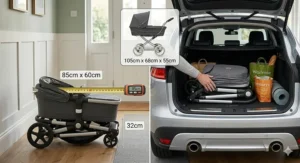
Carrycots typically measure 75-85cm in length and require either floor space or a dedicated stand. Folding carrycots like the Silver Cross Dune 2 partially solve this, collapsing to just 15cm height. But even folded, they need storing somewhere accessible since you’ll be using them daily.
Lie-flat pushchair seats, conversely, remain part of the pushchair. You’re storing one item instead of two. For many UK families, this single-item approach is the deciding factor.
Public Transport Reality
If you’re regularly navigating London’s tube network, boarding buses in Manchester, or taking trains around Edinburgh, portability becomes paramount. Here’s where lightweight options shine:
The Joolz Aer+ at 3.6kg can be carried one-handed alongside your baby. The Bebeconfort Sunlite’s automatic fold lets you collapse it whilst holding your little one. Compare this to juggling a heavier traditional carrycot whilst managing bags and tickets.
However, many parents report that the enclosed, protective environment of a carrycot provides peace of mind on busy public transport. You’re less concerned about strangers touching baby, and the rigid structure offers protection in crowded situations.
Car Boot Considerations
Different vehicles accommodate baby gear differently. Large SUVs and estates can swallow carrycots without issue. But if you’re driving a typical UK hatchback – think Ford Fiesta or VW Polo – space is at a premium.
Measure your boot before committing to any system. Many retailers offer 30-day returns, but it’s frustrating discovering your careful research doesn’t fit your car. As a general rule:
- Traditional carrycots: Require 80cm x 45cm boot space
- Folding carrycots: Can fit in spaces as small as 60cm x 45cm when collapsed
- Lie-flat pushchairs: Vary enormously – check specific fold dimensions
Safety Standards and Certifications in the UK
Understanding safety certifications helps you make informed choices about overnight sleep carrycot options and general product safety.
British and European Safety Standards
Post-Brexit, the UK technically has its own safety marking system (UKCA), though most baby products still carry European CE markings. For carrycots and pushchairs, look for:
BS EN 1888 – The British/European standard for wheeled child conveyances (pushchairs and prams)
R129 (i-Size) – The latest car seat safety regulation
BS EN 16890 – Standard for carry cots
Overnight sleeping certification – A crucial additional approval for carrycots intended for sleep
Not all carrycots are approved for overnight sleeping. This certification means the product has passed additional safety tests regarding ventilation, mattress firmness, and structural integrity. Check product specifications carefully – just because something looks like it should be safe for sleep doesn’t mean it is.
What Makes a Sleep Surface Safe?
According to NHS guidance, a safe sleep surface for newborns must be:
- Firm – Mattresses shouldn’t indent significantly under baby’s weight
- Flat – No more than 10 degrees of incline
- Breathable – Allowing adequate airflow
- Clear – No pillows, bumpers, or soft toys
- Appropriate size – Fitted properly without gaps around edges
Many lie-flat pushchair seats meet these criteria during daytime use but lack the additional testing required for overnight approval. It’s not that they’re unsafe – they’re simply designed for a different purpose.
Budget Breakdown: What Should You Actually Expect to Pay?
Let’s cut through the marketing fluff and talk real UK pricing across different quality tiers.
Budget Options (£50-£150)
At this price point, you’re looking at:
- 2-in-1 cocoon-style products like the Ickle Bubba Venus (£49-£79)
- Basic lie-flat pushchairs such as budget brands from Asda or Argos
- Second-hand quality brands from Facebook Marketplace or Gumtree
These work perfectly well for many families. You’re sacrificing some features (no overnight sleep approval, fewer adjustments, less padding), but for short daily walks and parents who’ve already invested in separate sleeping equipment, they’re completely adequate.
Mid-Range Options (£150-£300)
This sweet spot offers:
- Quality standalone carrycots like the Baby Jogger City Mini 2 (£165-£195)
- Excellent lie-flat pushchairs such as the Silver Cross Pop 2 (£149-£199)
- Lightweight travel carrycots like the Joolz Aer+ (£210-£250)
You’re getting proper safety certifications, better materials, improved padding, and features like water-resistant fabrics and enhanced ventilation. Most UK families find this price range offers the best balance of quality and value.
Premium Options (£300-£500+)
High-end choices include:
- Folding carrycots with overnight approval like the Silver Cross Dune 2 (£240-£280)
- Specialist car carrycots such as the Maxi-Cosi Jade system (£400+ complete)
- Designer collaborations from brands like Bugaboo or Stokke
You’re paying for innovation (folding mechanisms, car compatibility), luxury materials (Italian fabrics, leather details), and enhanced longevity. These make sense if baby gear aesthetics matter to you, you want maximum functionality, or this is your first baby and you can afford to invest.
Common Mistakes Parents Make (And How to Avoid Them)
After reviewing hundreds of UK parent experiences, certain pitfalls appear repeatedly. Learn from others’ missteps:
Mistake 1: Assuming “Lie-Flat” Means Truly Flat
Not all marketed “lie-flat” seats achieve 180 degrees. Some recline to 170 degrees, others to 175 degrees – close, but not quite the completely flat position experts recommend for newborns. Always check the specific recline angle in product specifications.
Solution: Ask retailers to demonstrate the full recline position. If buying online, check whether the brand states overnight sleep approval – this indicates genuine flatness.
Mistake 2: Overlooking Compatibility Issues
That gorgeous carrycot you’ve found might not fit your chosen pushchair chassis. Even within the same brand, different model years may have incompatible adaptors.
Solution: Always verify compatibility before purchasing. Keep receipts and packaging until you’ve confirmed everything works together. Many UK parents have horror stories of discovering incompatibility after disposing of packaging.
Mistake 3: Underestimating Storage Space Requirements
A carrycot seemed small in the shop. At home, you discover it doesn’t fit in your hallway cupboard, can’t navigate your narrow doorframe, or takes up your entire boot space.
Solution: Measure everything before buying. Take a tape measure to the shop and measure the folded dimensions. Check your car boot, hallway width, and available storage space at home.
Mistake 4: Buying Only for the Newborn Stage
Some parents invest heavily in newborn-specific equipment, then need to purchase again at 6 months. This double-purchase can strain budgets.
Solution: Consider the total cost of ownership. A £150 carrycot plus £200 seat unit equals £350 total – sometimes more than a £250 lie-flat pushchair that works from birth to 4 years.
Mistake 5: Ignoring Weight Considerations
That substantial, well-padded carrycot is gorgeous – until you’re carrying it upstairs to the fourth floor of a flat without a lift, or lugging it from car park to destination.
Solution: If you don’t have a car with boot-level access or live in an upper-floor property, prioritise lightweight options. The Joolz Aer+ at 3.6kg feels dramatically different from a 7kg carrycot after a day out.
Frequently Asked Questions
❓ Can a newborn sleep overnight in a lie-flat pushchair seat?
❓ How long can a newborn safely stay in a carrycot vs car seat position?
❓ Will using a lie-flat seat instead of a carrycot affect my baby's spine development?
❓ Are folding carrycots as safe as traditional rigid carrycots?
❓ Do I need to buy adaptors for my carrycot, or are they usually included?
Conclusion: Making Your Choice with Confidence
Here’s the truth that cuts through all the marketing noise: there’s no universally “correct” answer to carrycot vs lie flat seat newborn. What matters is finding the solution that aligns with your family’s specific circumstances, lifestyle, and baby’s needs.
If you’re frequently travelling long distances, have storage space, and appreciate the peace of mind that comes with overnight-approved sleeping equipment, a quality carrycot like the Silver Cross Dune 2 or Joolz Aer+ makes complete sense. Yes, you’re investing in equipment that’s only used for 4-6 months, but those months are arguably the most important for your baby’s development.
Conversely, if you’re working with limited space and budget, doing shorter daily walks, and have alternative sleeping arrangements at home, a quality lie-flat pushchair like the Silver Cross Pop 2 provides everything necessary for safe, comfortable newborn transport. You’re not compromising your baby’s wellbeing – you’re simply choosing a solution better suited to your circumstances.
For families with specific needs – regular long-distance driving, premature babies, or particular concerns about positioning – specialist solutions like the Maxi-Cosi Jade offer targeted benefits worth their premium pricing.
Remember: the “best” choice is the one you’ll actually use consistently and correctly. A £400 carrycot that’s too heavy to carry upstairs is less useful than a £150 lie-flat seat you use daily. A separate carrycot you can’t fit in your car boot serves nobody.
Before making your final decision, consider revisiting this checklist: ✓ Have you measured your storage spaces and car boot? ✓ Do you have alternative sleeping equipment for home use? ✓ What’s your typical daily walking distance and terrain? ✓ Have you verified compatibility between all system components? ✓ Does your chosen option carry appropriate UK safety certifications? ✓ Can you physically manage the weight and size of your chosen solution?
The newborn stage passes remarkably quickly. Choose equipment that genuinely serves your family during these precious months, rather than what social media suggests you “should” have. Your baby doesn’t know whether they’re in a £50 cocoon or a £400 carrycot – they only know whether they’re comfortable, safe, and close to you.
Recommended for You
- Side by Side vs Tandem Double Pram: 7 Best Picks 2026
- Travel System vs Buying Separately: 7 UK Parents Share 2026 Results
- 3 Wheel vs 4 Wheel Pushchair: 7 Key Differences UK 2026
Disclaimer: This article contains affiliate links. If you purchase products through these links, we may earn a small commission at no additional cost to you. Prices shown are approximate and may vary.
✨ Found this helpful? Share it with your mates! 💬🤗
