
In This Article
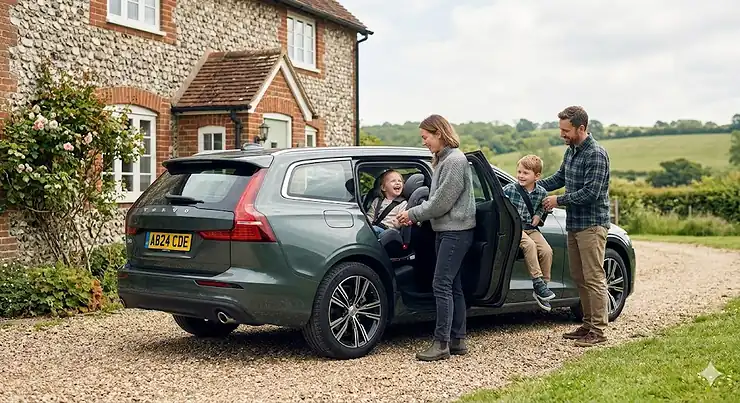
Walk into any car seat section at Mothercare or browse Amazon.co.uk, and you’ll find yourself staring at labels like “Group 1/2/3” and “Group 2/3” wondering which one your four-year-old actually needs. The group 123 vs group 23 car seat decision isn’t just about ticking a legal box—it’s about understanding whether you need that internal 5-point harness for a few more years or whether your child’s ready to graduate straight to a high-back booster. What most UK parents overlook is that these two categories serve fundamentally different developmental stages, and choosing incorrectly means either buying a seat your child has already outgrown or investing in features they’re not yet ready to use safely.
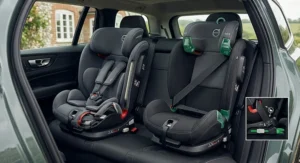
In this guide, I’ll walk you through the practical differences that matter for British families—from navigating wet weather durability to fitting these seats in compact cars on narrow residential streets. We’ll examine seven real products available on Amazon.co.uk, each with expert commentary on who they’re genuinely suited for, and I’ll provide the decision framework you need to confidently choose between group 123 vs group 23 car seat options. According to GOV.UK regulations, children must use appropriate car seats until they’re 135cm tall or 12 years old (whichever comes first), making this choice one you’ll live with for several years of school runs, weekend trips, and rainy holiday journeys across Britain.
Quick Comparison: Group 123 vs Group 23 at a Glance
| Feature | Group 1/2/3 (123) | Group 2/3 (23) |
|---|---|---|
| Weight Range | 9-36 kg | 15-36 kg |
| Age Range | Approx. 9 months–12 years | Approx. 4–12 years |
| Starting Point | Internal 5-point harness | Vehicle seatbelt only |
| Best For | Families wanting one seat from toddler to tween | Children ready to use seatbelt positioning |
| Price Range (UK) | £70–£250 | £30–£150 |
| Installation | ISOFIX + Top Tether (most) or seatbelt | ISOFIX or seatbelt |
| Key Advantage | Longer usability, harness safety for younger children | Lighter, simpler, easier for child independence |
💬 Just one click — help others make better buying decisions too! 😊
Top 7 Car Seats: Expert Analysis for UK Families
1. Britax Römer EVOLVA 123 (Group 1/2/3)
The EVOLVA 123 remains one of the most popular combination seats in Britain, and for good reason—it’s built like a tank and actually made in the UK. This seat covers the full 9-36kg range with a 5-point harness for Group 1 use (9-18kg), then converts to a high-back booster using the vehicle’s 3-point belt for older children. What sets it apart is the Click & Safe audible harness system that gives you an audible click when you’ve tensioned the harness correctly—no more second-guessing whether you’ve tightened it enough during those rushed nursery drop-offs.
The deep, padded side wings offer genuine side-impact protection, and the adjustable headrest moves in tandem with the harness height, so you’re not faffing about with two separate adjustments as your child grows. Worth noting for British conditions: the removable cover is machine-washable, which you’ll appreciate after muddy football practice or a spilt Ribena incident on the M25. UK reviewers consistently praise its robust build quality, though some note it’s heavier (around 8kg) than budget alternatives, making frequent car transfers a bit of a workout.
Pros:
✅ Made in Britain with excellent build quality
✅ Click & Safe audible harness confirmation
✅ Deep side-impact protection wings
Cons:
❌ No ISOFIX (seatbelt installation only)
❌ Heavier than rivals (8kg)
Price & Verdict: Around £80-£120 on Amazon.co.uk. For families wanting British-made reliability without ISOFIX requirements, this is a solid long-term investment that’ll handle everything from toddler tantrums to tween growth spurts.
2. Maxi-Cosi Titan (Group 1/2/3)
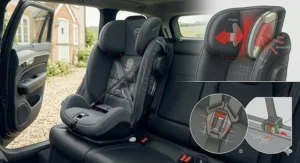
The Maxi-Cosi Titan brings ISOFIX and Top Tether anchoring to the Group 1/2/3 category, addressing the main criticism of the Britax EVOLVA. This seat installs via ISOFIX connectors that click into your car’s anchor points, plus a Top Tether strap that hooks to the tether point (usually behind the rear seat or in the boot), creating a stable triangle of attachment. For UK drivers navigating speed bumps, roundabouts, and the occasional emergency brake on the A-road, this rock-solid installation means the seat barely budges even when unoccupied.
The 5-point harness adjusts simultaneously with the headrest across 11 height positions, and the seat offers five recline positions—crucial for British road trips when your child nods off somewhere between Manchester and the Lake District. The cushioned inlay provides extra comfort for smaller toddlers, and it’s all ECE R44/04 approved. UK parents note it’s wider than some rivals, which can be tight in smaller cars like a Fiat 500 or older Vauxhall Corsa, but in family estates and SUVs, it’s perfectly proportioned.
Pros:
✅ ISOFIX + Top Tether for secure installation
✅ 11 headrest positions and 5 recline settings
✅ Simultaneous harness/headrest adjustment
Cons:
❌ Wider footprint (tight in compact cars)
❌ Some UK reviewers report confusing instructions
Price & Verdict: In the £140-£200 range on Amazon.co.uk. If you’ve got ISOFIX points and value installation security over portability, the Titan justifies its premium with features that make daily use genuinely easier.
3. Cosatto All in All Rotate 360 (Group 0+/1/2/3)
The Cosatto All in All Rotate 360 is the full-spectrum option, covering birth to 12 years (0-36kg) with a 360-degree swivel base that’s an absolute godsend for getting a squirming toddler in and out of the car. British brand Cosatto packs this seat with personality—vibrant patterns like “Beep Beep” and “On the Prowl” that’ll either delight or horrify you depending on your aesthetic preferences. More importantly, it offers extended rear-facing up to 18kg (roughly four years old), which exceeds UK legal requirements and provides enhanced safety.
The anti-escape system prevents Houdini-like toddlers from unbuckling themselves—a feature that parents of spirited two-year-olds genuinely appreciate during motorway journeys. Installation is ISOFIX with support leg or Top Tether depending on mode, and the seat includes an infant insert for newborns. The catch? It’s a chunky piece of kit that dominates the back seat, and at around 15kg, you won’t be transferring this between cars for fun.
Pros:
✅ 360° swivel for easy access
✅ Extended rear-facing to 18kg
✅ Anti-escape harness system
Cons:
❌ Very heavy and bulky (15kg)
❌ Patterns may not suit minimalist tastes
Price & Verdict: Around £250-£350 on Amazon.co.uk. For families wanting absolute longevity and who drive primarily one car, this is the Swiss Army knife of car seats—though you’re paying for features you might not use if your child’s already past the infant stage.
4. Graco Affix (Group 2/3)
Now we shift to Group 2/3 territory with the Graco Affix, a lightweight high-back booster that’s become the go-to for UK families needing simplicity and portability. Weighing just 4.5kg and designed for children 15-36kg (roughly 4-12 years), this seat uses the vehicle’s 3-point seatbelt to secure your child, with isoCatch connectors that keep the seat anchored when unoccupied—perfect for preventing it sliding across the back seat when you brake sharply.
The Safety Surround side-impact protection features energy-absorbing foam in the headrest wings, and the 6-position adjustable headrest accommodates growing children without drama. What British parents particularly appreciate is the integrated cup holder and pull-out storage tray—small luxuries that keep water bottles and crisps from rolling under the seats. The machine-washable cover survives the inevitable juice spills and muddy shoe marks from football training.
Pros:
✅ Lightweight and portable (4.5kg)
✅ Cup holder and storage tray
✅ Machine-washable cover
Cons:
❌ No full ISOFIX installation (just isoCatch)
❌ No recline function
Price & Verdict: Around £50-£90 on Amazon.co.uk. This is the sensible choice for parents of independent four-year-olds who need a seat that’s easy to move between cars, doesn’t cost a fortune, and actually fits in the back of a Ford Focus without dominating the entire row.
5. Joie Traver Shield (Group 1/2/3)
The Joie Traver Shield takes a different approach to Group 1 safety with an impact shield instead of a 5-point harness—a padded cushion that sits in front of the child and attaches to the vehicle’s seatbelt. This design distributes crash forces across the child’s torso rather than concentrating them at harness points, and some European crash tests suggest it performs exceptionally well in frontal impacts.
For UK use, the shield system means your child can’t unbuckle themselves (unlike a 5-point harness which some crafty toddlers master by age two), and there’s no fiddly harness rethreading as they grow. The seat adjusts from 9-36kg, offers ventilated fabrics for British summer heatwaves, and includes a washable cover. Some parents find the shield cumbersome for quick trips, and children occasionally protest against the bulkier feel compared to a traditional harness.
Pros:
✅ Impact shield distributes crash forces
✅ Child can’t unbuckle shield
✅ No harness rethreading required
Cons:
❌ Shield can feel restrictive to some children
❌ Trickier for quick in-and-out trips
Price & Verdict: Around £100-£150 on Amazon.co.uk. If your child tolerates the shield (test in-store if possible), this offers a genuinely different safety approach that’s worth considering—particularly for families who’ve dealt with escape-artist toddlers.
6. Kinderkraft Safety FIX2 (Group 1/2/3)
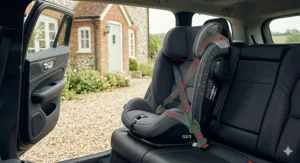
The Kinderkraft Safety FIX2 is the budget-friendly ISOFIX option that punches above its price point. Covering 9-36kg with both ISOFIX and Top Tether installation, this seat delivers secure fitment without the premium price tag. The 5-point harness serves Group 1 users, then removes for Group 2/3 booster mode, and the 7-position headrest adjusts to accommodate growing children.
European brand Kinderkraft has gained traction in the UK market by offering decent build quality at accessible prices. The modular insert provides extra support for younger toddlers, and the seat’s slim profile means you can actually fit three across the back row of a Volkswagen Golf or similar—a genuine consideration for families with multiple children. UK buyers note the padding is thinner than premium brands, so long motorway journeys might require extra cushioning for comfort.
Pros:
✅ ISOFIX + Top Tether at budget price
✅ Slim profile (fits three across)
✅ Good value for money
Cons:
❌ Thinner padding than premium rivals
❌ Less robust build quality
Price & Verdict: Around £70-£110 on Amazon.co.uk. For second cars, grandparent vehicles, or families on a tighter budget who still want ISOFIX security, this represents solid value—just don’t expect Britax-level build quality.
7. Maxi-Cosi RodiFix M i-Size (Group 2/3)
Finally, the Maxi-Cosi RodiFix M i-Size represents the premium end of Group 2/3 boosters, built to the newer i-Size (R129) regulation which many experts consider superior to the older R44/04 standard. Designed for children 100-150cm tall (roughly 3.5-12 years), this high-back booster uses ISOFIX connectors for stability and the vehicle’s 3-point belt to secure your child.
The G-CELL side-impact protection technology absorbs and redirects crash forces, and the adjustable height/width accommodation means it genuinely grows with your child—crucial for the 3.5-to-12-year span when children’s proportions change dramatically. The Easy-Buckle system holds the seatbelt buckle in an accessible position, teaching children to buckle themselves independently. For British conditions, the cover is machine-washable and the entire seat folds relatively flat for storage or transport.
Pros:
✅ i-Size R129 compliant (higher safety standard)
✅ G-CELL side-impact technology
✅ Easy-Buckle system for independence
Cons:
❌ Premium pricing
❌ Some children find width adjustment stiff
Price & Verdict: Around £100-£180 on Amazon.co.uk. If your child’s already 100cm tall and you’re willing to invest in top-tier safety credentials, the RodiFix M offers peace of mind backed by rigorous testing—though Group 2/3 budget options exist at half the price.
Understanding UK Car Seat Regulations: What the Law Actually Says
Before diving deeper into the group 123 vs group 23 car seat decision, it’s essential to understand what UK law actually requires. Children must use an appropriate car seat until they reach 135cm in height or turn 12 years old—whichever milestone comes first. After that point, they can legally use an adult seatbelt. This isn’t just a suggestion; it’s a legal requirement with penalties of up to £500 if referred to court for non-compliance.
What most UK parents don’t realise is that car seats are approved under two different standards: the older ECE R44/04 (weight-based groups) and the newer ECE R129 or i-Size (height-based). Both are perfectly legal to use in Britain, though i-Size seats must meet more stringent side-impact testing requirements and mandate rear-facing travel until at least 15 months. When you’re examining seats on Amazon.co.uk, look for a label showing a capital ‘E’ in a circle with either ‘R44/04’ or ‘R129’—this confirms the seat meets European safety standards that are still recognised in the UK post-Brexit.
The group 123 vs group 23 car seat question becomes particularly relevant around age four, when children typically hit the 15kg threshold that makes them eligible for Group 2/3 boosters. However, just because a child legally can use a booster doesn’t mean they should. According to Which? consumer research, children benefit from extended harness use as long as they fit within the seat’s height and weight limits. A four-year-old who’s tall for their age might physically fit a Group 2/3 booster, but a Group 1/2/3 seat with a harness offers better restraint for their developmental stage—particularly important on British roads where roundabouts, speed bumps, and sudden stops are daily realities.
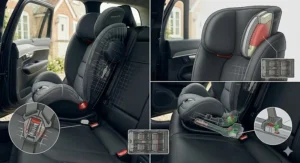
When to Switch From Car Seat to Booster: The Practical Guide
The question of when to switch from car seat to booster isn’t answered by age alone—it’s a combination of weight, height, maturity, and behaviour. If you’ve bought a Group 1/2/3 seat, the transition happens in two stages: first from the internal 5-point harness (Group 1, 9-18kg) to using the vehicle seatbelt with the high-back booster mode (Group 2/3, 15-36kg). This typically occurs somewhere between ages three and five, though every child develops differently.
Here’s what you need to assess before making the switch. Physical readiness: Your child should comfortably weigh at least 15kg and ideally closer to 18kg. If they’re right on the cusp at 15kg, keeping them in the harness longer provides an additional safety margin—harnesses distribute crash forces across stronger parts of the body (hips and shoulders) rather than just the torso. Height considerations: The harness slots in your Group 1/2/3 seat have a maximum height—once the harness exits the seat at or below your child’s shoulders, it’s time to transition. Continuing to use a harness that’s too low can cause neck injuries in a collision.
Behavioural maturity is often overlooked but critical. A Group 2/3 booster relies on the vehicle’s seatbelt, which means your child must keep the belt properly positioned across their shoulder and lap throughout the entire journey. A five-year-old who constantly unbuckles, slouches, or tucks the belt under their arm isn’t ready for this responsibility, regardless of their weight. In British terms, if your child can’t sit reasonably still during the 20-minute school run without constant reminders, they’re likely not ready to self-regulate seatbelt positioning on the hour-long drive to Cornwall.
For families contemplating the group 123 vs group 23 car seat question, this transition timeline matters enormously. If your child is already four and demonstrating the maturity to handle seatbelt positioning, a Group 2/3 booster might suit you perfectly. But if your three-year-old still has Houdini tendencies with buckles, a Group 1/2/3 seat with an extended harness phase could save you significant stress—and potentially prevent dangerous unbuckling mid-journey.
✨ Don’t Miss These Exclusive Deals!
🔍 Take your car seat search to the next level with these carefully selected products. Click on any highlighted item to check current pricing and availability on Amazon.co.uk. These picks will help you find exactly what you need!
Car Seat Stages Explained: From Infant to Independent
Understanding car seat stages explained helps demystify the group 123 vs group 23 car seat decision by showing where each category fits in the broader progression. UK car seat groups break down into six main categories, though manufacturers increasingly combine multiple groups into single “combination” or “all-in-one” seats.
Group 0/0+ (Birth-13kg): These rear-facing infant carriers are your child’s first car seat, used from hospital homecoming through roughly 12-15 months. They’re not relevant to our group 123 vs group 23 car seat comparison, but understanding where your child came from contextualises where they’re heading.
Group 1 (9-18kg, approx. 9 months-4 years): Forward-facing seats with an internal 5-point harness. This is the first stage of Group 1/2/3 seats, offering maximum restraint during the toddler years when children are most likely to unbuckle themselves or squirm out of position.
Group 2 (15-25kg) and Group 3 (22-36kg): Typically combined as “Group 2/3,” these high-back boosters use the vehicle’s seatbelt to secure the child, with the booster positioning the belt correctly across the shoulder and lap. This is where dedicated Group 2/3 seats come in—lighter, simpler, and designed for children who’ve outgrown harness use.
The clever bit about Group 1/2/3 combination seats is they transition through multiple stages using the same shell. You start with the 5-point harness for a toddler, then remove the harness and guide the vehicle seatbelt through designated routing points as your child grows. The high back remains in place throughout, providing side-impact protection and correct seatbelt positioning from age 9 months through to 12 years. It’s essentially three seats in one, which explains why they’re heavier and bulkier than dedicated Group 2/3 boosters—they’re engineered to accommodate a much wider range of body sizes and safety requirements.
For British families navigating space-constrained cars and multi-child logistics, this progression matters practically. A Group 1/2/3 seat might be the better choice for your first child, giving you maximum longevity. When child number two arrives and you need two rear seats simultaneously, a dedicated Group 2/3 booster for your older child frees up more room for the infant carrier—a consideration that’s particularly relevant in popular UK family cars like the Nissan Qashqai or Ford Kuga, where three-across seating is theoretically possible but practically tight.
Weight Height Car Seat Requirements: Getting the Numbers Right
The weight height car seat requirements in Britain centre on matching your child’s specific measurements to the seat’s certification, rather than relying solely on manufacturer age guidelines. Here’s what actually matters when assessing the group 123 vs group 23 car seat question for your child.
Weight thresholds: Group 1/2/3 seats start at 9kg (around 9 months) and extend to 36kg. The critical transition point within these seats is 18kg—that’s when you stop using the 5-point harness and switch to seatbelt mode. Group 2/3 seats begin at 15kg, so there’s a 3kg overlap where a child could technically use either category. However, just because a seat is certified for 15kg doesn’t mean a child at precisely 15kg is ideally suited for it—those certifications represent minimums, not optimal starting points.
Height specifications: This is where UK parents often get confused because weight-based (R44/04) and height-based (R129/i-Size) certifications coexist. R44/04 seats list weight groups, while i-Size seats specify height ranges (e.g., 100-150cm). Both are legal and safe when used correctly. For the group 123 vs group 23 car seat comparison, check whether your child’s height is within the seat’s range. A child who’s exceptionally tall for their weight might outgrow a seat’s height limit before reaching the maximum weight—common with lanky British children who inherit those long legs.
Practical measurement: Weigh your child regularly, and measure their height against a doorframe every few months. The harness slots on your Group 1/2/3 seat should be at or slightly above your child’s shoulders when in harness mode. Once the highest harness position is at or below shoulder level, it’s time to transition to seatbelt mode even if they haven’t reached 18kg yet—continuing with a too-low harness is unsafe. Similarly, the vehicle seatbelt should cross your child’s shoulder midway between the neck and arm, not cutting across the throat or slipping off the shoulder.
Here’s a real-world scenario that plays out in British households: Your child is 16kg and 105cm tall at age four. A Group 2/3 booster is technically suitable by weight, but when you test the vehicle seatbelt positioning, it rides uncomfortably close to their neck. A Group 1/2/3 seat still in harness mode would distribute forces more safely, even though your child has technically entered the Group 2 weight range. Conversely, a mature five-year-old who weighs 19kg and sits correctly might transition smoothly to a Group 2/3 booster’s seatbelt positioning—the numbers qualify them, and their behaviour confirms readiness.
The British climate adds another consideration: bulky winter coats compress in collisions, creating dangerous slack in both harnesses and seatbelts. Whether you choose Group 1/2/3 or Group 2/3, the weight and height your child achieves fully clothed in summer differs from their winter measurements with a thick North Face jacket on. Many UK safety experts recommend using thin fleece layers under the seatbelt or harness, then covering your child with a blanket once secured—this maintains proper restraint without compression risk.
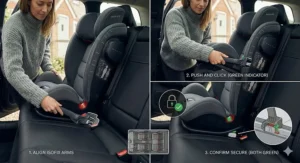
Upgrading Car Seat Checklist: 7 Signs It’s Time to Switch
Knowing when to upgrade isn’t always obvious—children don’t wake up one morning suddenly too big for their current seat. Here’s your upgrading car seat checklist covering the seven clear signals that indicate it’s time to move from your current seat to either a Group 1/2/3 or Group 2/3 option, depending on where your child’s starting point is.
1. Top of head within 2.5cm of shell: This is the hard limit. If your child’s head is within one inch (2.5cm) of the top of their current seat’s shell, they’ve outgrown it regardless of weight. In side impacts, protection comes from the seat’s side wings—once your child’s head extends beyond those, the safety margins evaporate.
2. Harness slots below shoulders: For seats with 5-point harnesses, the shoulder straps should exit the seat at or above your child’s shoulders. If the highest harness position is now below shoulder level, continuing use risks neck and spinal injuries in frontal collisions because the forces pull downward rather than across stronger body areas.
3. Weight limit exceeded: This seems obvious, but some UK parents assume a few kilograms over won’t matter. It absolutely does—seats are crash-tested to their stated limits, and exceeding those limits means the seat’s structural integrity during impact is unknown. If your Group 0+ seat maxes out at 13kg and your child hits 13.5kg, it’s upgrade time, no exceptions.
4. Ears above shell: A quick visual check—if your child’s ears have extended above the seat’s shell when seated normally, they’ve outgrown the protective envelope. This overlaps with the head position check but is easier to spot during daily use.
5. Can’t tighten harness: If you’re pulling the harness adjustment strap and it won’t tighten adequately because there’s no more strap left, your child has outgrown the seat’s capacity. A loose harness is as dangerous as no harness—in crashes, the child becomes a projectile.
6. Knees bent over front edge: This applies particularly when assessing whether to transition from Group 1 harness mode to Group 2/3 booster mode within a combination seat. If your child’s knees are significantly bent when seated with legs extended, they’re getting cramped. That said, slightly bent knees are normal and don’t necessarily mean the seat is outgrown—use this in combination with other signs rather than as a standalone trigger.
7. Behavioural indicators: If your child is constantly complaining about discomfort, requesting to sit elsewhere, or asking “When can I sit like a big kid?” and they meet the weight and height minimums for the next stage, it might be time. Reluctant passengers who feel “babyish” in their current seat may be more compliant with the upgrade—important for maintaining seatbelt discipline during the Group 2/3 phase.
For families weighing the group 123 vs group 23 car seat decision, this checklist helps identify your starting point. If your child displays signs 1-5 in their current infant seat, they’re ready for either a Group 1/2/3 or standalone Group 1 seat. If they’re in a Group 1 seat showing these signs, you’ll transition to Group 2/3 mode if you have a combination seat, or purchase a dedicated Group 2/3 booster if your current seat only covered Group 1.
Common Mistakes When Buying Car Seats in the UK
Even experienced parents make avoidable errors when navigating the group 123 vs group 23 car seat marketplace. Here are the most common mistakes I’ve observed in British families, along with expert commentary on how to sidestep them.
Mistake 1: Buying based on age alone. Manufacturers print “9 months to 12 years” on Group 1/2/3 boxes, and parents assume that means their 11-month-old is automatically ready. Age is the least reliable indicator—weight and height matter far more. A large 9-month-old might safely use a Group 1/2/3 seat, while a smaller child of the same age might still benefit from extended rear-facing in a Group 0+/1 seat. Always check your child’s actual measurements against the seat’s minimum requirements, not just the age bracket.
Mistake 2: Ignoring ISOFIX compatibility. UK parents see “ISOFIX” on a seat and assume it’ll work in their car. Not quite—while ISOFIX anchor points became mandatory in new UK cars from 2012 onwards, older vehicles (pre-2012 registration) may lack them entirely, or have them in inconvenient positions. Check your car’s handbook before purchasing an ISOFIX-dependent seat. Budget seats like the Britax EVOLVA use seatbelt installation only, making them universal—but you miss out on the stability ISOFIX provides.
Mistake 3: Underestimating British weather impact. Car seats live in British cars, which means damp boots, wet wellies, and the occasional downpour with doors left open during bag-juggling. Seats with removable, machine-washable covers aren’t a luxury—they’re essential. Similarly, check whether the seat’s materials resist mildew; cheaper foam padding can develop that musty smell in the perpetually damp British climate, particularly if your car lives on the drive rather than in a garage.
Mistake 4: Prioritising looks over crash test performance. Those adorable Cosatto patterns or Disney character seats appeal to children (and parents), but aesthetic appeal shouldn’t override safety credentials. Check whether the seat has been independently tested by organisations like Which? or ADAC (German automotive club), and look for models that exceeded minimum legal requirements in crash testing. Cute is fine; cute and rigorously tested is better.
Mistake 5: Assuming “one size fits all” for multiple children. The Group 1/2/3 category tempts parents to think one seat will serve siblings sequentially—buy it for Child 1, use it for 11 years, then pass it to Child 2. This only works if the seat hasn’t been in a collision (even minor ones compromise structural integrity) and hasn’t exceeded its expiry date (yes, car seats expire—typically 6-10 years from manufacture). Factor replacement into your budgeting when comparing group 123 vs group 23 car seat options.
Mistake 6: Forgetting boot space for storage. Group 2/3 boosters are lighter and more compact, making them easier to stow when not in use. This matters for British families who occasionally need full boot space—think Ikea runs, garden centre trips with bags of compost, or loading suitcases for a Cornwall holiday. A bulky Group 1/2/3 seat is wonderful for daily use but a nuisance if you need to remove and store it temporarily.
Mistake 7: Skipping the test fit. Amazon.co.uk’s convenience is undeniable, but buying a car seat unseen risks incompatibility with your specific vehicle. If possible, visit a physical retailer like Halfords or a specialist car seat shop to test-fit your shortlisted models in your actual car before purchasing. Some seats simply don’t angle correctly in certain vehicles, leaving gaps where there shouldn’t be, or sitting too upright/reclined despite correct installation.
FAQ: Your Group 123 vs Group 23 Car Seat Questions Answered
❓ Which car seat group for my child who weighs 16kg?
❓ How long in each car seat group before upgrading?
❓ Are Group 123 car seats legal in the UK post-Brexit?
❓ Can a 3-year-old use a Group 23 booster seat?
❓ Do Group 123 seats need ISOFIX in UK cars?
Conclusion: Making Your Group 123 vs Group 23 Car Seat Decision
The group 123 vs group 23 car seat question ultimately comes down to where your child sits developmentally right now and how you value convenience versus longevity. Group 1/2/3 seats shine when you’re starting with a toddler around 9-18kg who needs the security of a 5-point harness—you’re investing in one seat that transitions through multiple stages, potentially saving you £100-£200 over the years compared to buying separate Group 1 and Group 2/3 seats. The internal harness keeps escape artists secured, and you’re not second-guessing seatbelt positioning through the preschool years.
Group 2/3 boosters excel when your child is already 15kg+, demonstrating reliable behaviour, and you want lightweight portability. They’re easier to move between cars (crucial for shared custody, grandparent pickups, or multi-car households), simpler to use (no harness rethreading or adjustment complexity), and teach children seatbelt independence. For British families navigating narrow streets, tight parking spaces, and frequent car swaps, that 4-5kg weight difference between a Group 1/2/3 and a Group 2/3 seat becomes meaningful after the tenth time you’re transferring it.
My expert take after reviewing products available on Amazon.co.uk: If your child is under 15kg, the Britax Römer EVOLVA 123 or Maxi-Cosi Titan offer outstanding British-made reliability and long-term value in the Group 1/2/3 category. If they’re over 15kg and behaviourally ready, the Graco Affix delivers excellent affordability and portability in the Group 2/3 space, while the Maxi-Cosi RodiFix M i-Size provides premium protection under the newer R129 standard for families willing to invest more. Neither choice is “wrong”—they’re simply suited to different starting points in your child’s development and different priorities in how you use your car daily.
Whatever you choose, remember that the safest car seat is the one that fits your child correctly, installs properly in your specific vehicle, and gets used consistently on every journey—school runs, motorway trips, and those two-minute drives to the corner shop included. British roads might not feel as dramatic as American highways, but accidents happen in 30mph zones and country lanes just as readily, making proper car seat use non-negotiable regardless of journey length.
Recommended for You
- Britax Evolva vs Joie Every Stage: 7 Best Group 123 Seats UK 2026
- 7 Best Group 123 Car Seats UK 2026: Ultimate Safety Guide
- 7 Best Group 0+1 Car Seats UK 2026: Birth to 4 Years Guide
Disclaimer: This article contains affiliate links. As an Amazon Associate, I earn from qualifying purchases. If you purchase products through these links, we may earn a small commission at no additional cost to you.
✨ Found this helpful? Share it with your mates! 💬🤗
