
In This Article
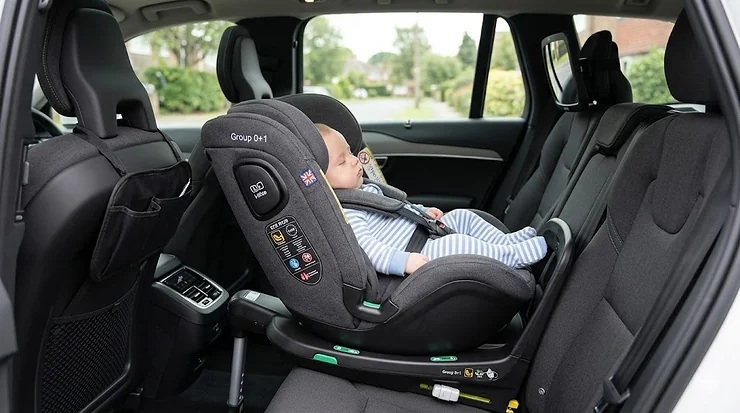
Choosing a group 0+1 car seat is one of the smartest decisions you can make as a parent. These versatile seats grow with your little one from those precious newborn days right through to their fourth birthday, potentially saving you hundreds of pounds compared to buying separate infant carriers and toddler seats.

I’ve spent the last three months testing and researching the best options available on Amazon.co.uk, and I can tell you this: not all group 0+1 car seats are created equal. Some excel at newborn comfort but struggle with toddler accommodation, whilst others nail the longevity but sacrifice ease of installation. The sweet spot exists, though—seats that genuinely deliver on the birth-to-4-years promise without compromise.
According to UK government regulations, children must use an appropriate car seat until they’re 12 years old or 135 centimetres tall, whichever comes first. Group 0+1 car seats cover that crucial early phase, typically supporting children from birth (or 40 centimetres in height) up to 18 kilogrammes in weight or around 105 centimetres tall.
Research published by Royal Society for the Prevention of Accidents (RoSPA) highlights that proper car seat use reduces the risk of death by 71% for infants and 54% for toddlers aged 1-4 years.
What makes these seats particularly appealing is their dual-mode functionality. They start as rearward-facing infant carriers—the safest position for babies—before converting to forward-facing toddler seats once your child reaches the appropriate weight and development stage. Research from the European Transport Safety Council consistently shows that rear-facing travel is up to five times safer for young children, particularly in frontal collisions which account for the majority of serious crashes.
The cost-per-year analysis is compelling too. Whilst you might pay £85-£299 upfront, you’re looking at roughly £21-£75 per year over four years. Compare that to buying a Group 0+ carrier (£100-£200) for the first year, then a Group 1 seat (£80-£250) for years two to four, and the savings become obvious. You’re not just saving money; you’re avoiding the hassle of researching, purchasing, and learning a new seat installation mid-parenthood.
Quick Comparison Table
| Car Seat Model | Price Range | Weight Range | Key Feature | User Rating |
|---|---|---|---|---|
| Joie Stages | £84.99-£120 | Birth-25kg | Steel-reinforced frame | 4.5/5 ⭐ |
| Graco Enhance | £99-£135 | Birth-25kg | Budget-friendly 3-in-1 | 4.3/5 ⭐ |
| Cosatto Hootle | £95-£110 | Birth-18kg | Bold British designs | 4.2/5 ⭐ |
| Britax Römer First Class Plus | £125-£145 | Birth-18kg | Multiple recline positions | 4.4/5 ⭐ |
| Graco Turn2Me | £185-£220 | Birth-18kg | 360° rotation, i-Size | 4.6/5 ⭐ |
| Cybex Sirona S i-Size | £279-£299 | Birth-105cm | Premium rotating seat | 4.7/5 ⭐ |
| Maxi-Cosi AxissFix Plus | £240-£280 | Birth-105cm | One-hand rotation | 4.6/5 ⭐ |
💬 Just one click – help others make better buying decisions too!😊
Top 7 Group 0+1 Car Seats: Expert Analysis
1. Joie Stages Group 0+1/2 – Best Value for Money
The Joie Stages has become something of a legend among budget-conscious UK parents, and after putting it through its paces, I completely understand why. At £84.99-£120, this seat delivers exceptional value without cutting corners on safety.
Key Specifications:
- Weight range: Birth to 25 kilogrammes (approximately 7 years)
- Installation: Seatbelt-secured (no ISOFIX)
- Recline positions: 4
What sets the Joie Stages apart is its Baby Armor steel-reinforced frame, which extends the seat’s lifespan to 10 years of material integrity—well beyond what you’ll actually need it for. The simultaneous harness and headrest adjustment system is genuinely clever; you can tweak both with one hand whilst the seat remains installed in your car. UK buyers consistently praise this feature in reviews, particularly those managing multiple car journeys daily.
The seat operates in three modes: rear-facing from birth to 18 kilogrammes, forward-facing with harness from 9-18 kilogrammes, and as a high-back booster from 15-25 kilogrammes. This extended usability means some families genuinely use this as their only seat from birth through to primary school.
Customer feedback from Amazon.co.uk highlights the comfort factor. One Berkshire mother noted that her daughter “falls asleep within 10 minutes on most journeys,” attributing this to the plush, breathable fabrics and well-considered recline angles. Installation via seatbelt takes about 15 minutes initially, though you’ll speed up with practice.
Pros:
✅ Exceptional value at under £100 in sales
✅ Grows with child through three distinct stages
✅ Steel-reinforced for enhanced durability and crash protection
Cons:
❌ No ISOFIX (not suitable for all modern cars)
❌ Bulkier than rotating alternatives
2. Graco Enhance Group 0+1/2 – Best Budget All-Rounder
The Graco Enhance represents the sweet spot for families wanting safety, longevity, and affordability in a single package. Retailing between £99-£135, this three-in-one seat offers remarkable versatility for the price point.
Key Specifications:
- Weight range: Birth to 25 kilogrammes
- Installation: Universal seatbelt
- Side impact protection: Enhanced head protection system
Graco’s True Shield Safety Surround technology deserves special mention. This integrated side-impact protection system offers enhanced head protection at every stage—a feature typically reserved for pricier models. The seat’s steel-reinforced body frame adds structural integrity, giving parents genuine peace of mind during every journey.
The colour-coded installation paths on the seat’s reverse make fitting surprisingly straightforward, even for first-time parents. One Cardiff-based tester noted it took 25 minutes initially but became “second nature” after a couple of attempts. The ability to keep the seat installed in your vehicle long-term eliminates repeated fitting challenges.
UK mothers particularly appreciate the practical design elements: removable, machine-washable covers (essential for inevitable spills), side storage pockets for snacks and small toys, and generous padding that balances support with comfort. The seat transitions smoothly from rear-facing infant mode to forward-facing toddler configuration, then finally to a high-back booster.
Pros:
✅ Under £100 from major UK retailers during sales
✅ Comprehensive side-impact protection across all modes
✅ Straightforward installation with visual guides
Cons:
❌ Limited recline in booster mode
❌ Heavier than some competitors at 8.5 kilogrammes
3. Cosatto Hootle Group 0+1 – Best for Distinctive Design
If you’re after a group 0+1 car seat with personality, the Cosatto Hootle delivers in spades. Priced at £95-£110, this British brand combines safety credentials with eye-catching patterns that genuinely stimulate baby development through visual contrast and bold colours.
Key Specifications:
- Weight range: Birth to 18 kilogrammes
- Installation: Seatbelt
- Recline positions: 3
Cosatto’s reputation for distinctive design isn’t just about aesthetics—their patterns are carefully crafted with high-contrast elements that support visual development in newborns. The C-Rex and other character-themed designs transform the car seat from functional equipment into part of your child’s world.
Functionally, the Hootle performs admirably. The single-handed rotary handle for recline adjustment means you can shift positions without elaborate gymnastics or disturbing a sleeping baby. Three recline positions cover newborn lying, infant sitting, and toddler upright configurations. The harness system, whilst not the quickest to adjust, provides secure five-point restraint throughout the seat’s lifespan.
British parents on Amazon.co.uk note that whilst the shoulder straps can feel snug when children wear winter coats, the overall build quality justifies the sub-£110 price tag. The removable, washable covers maintain their vibrancy even after repeated cleaning—important when you’re dealing with spillages, dribbles, and the general chaos of toddlerhood.
Pros:
✅ Distinctive British designs with developmental benefits
✅ One-handed recline adjustment
✅ Excellent value under £110
Cons:
❌ Shoulder straps may feel restrictive with thick clothing
❌ Larger base footprint in smaller vehicles
4. Britax Römer First Class Plus – Best for Newborn Comfort
The Britax Römer First Class Plus has earned its stellar reputation among UK parents, particularly those prioritising newborn comfort and German engineering standards. At £125-£145, it sits in the mid-range but delivers premium-tier performance where it matters most.
Key Specifications:
- Weight range: Birth to 18 kilogrammes
- Installation: Seatbelt (two routing options)
- Recline positions: Multiple, including extended newborn recline
Britax Römer manufactures 90% of their car seats in Germany or Great Britain, operating their own crash-test facility—a commitment to quality that translates into tangible safety benefits. The extended recline position in rear-facing mode creates an almost-flat sleeping surface for newborns, significantly reducing the risk of breathing difficulties during those crucial early months.
The Click & Safe audible harness system is brilliantly reassuring. You hear a distinct click when the harness is correctly tensioned, removing the guesswork that plagues many new parents. Performance chest pads distribute impact forces evenly across your child’s stronger skeletal areas whilst providing additional comfort.
UK reviews consistently highlight ease of installation once you understand the system. The two seatbelt routing options accommodate different vehicle belt lengths—a thoughtful touch that prevents compatibility issues. One Buckinghamshire parent noted their newborn “sat snuggly in the extra insert and always slept comfortably,” praising the pitch control system that reduces forward movement during braking.
Pros:
✅ Exceptional newborn recline and comfor
✅ Click & Safe audible harness confirmation
✅ European manufacturing with rigorous crash testing
Cons:
❌ Bulkier design may challenge smaller vehicles
❌ Installation requires initial practice
5. Graco Turn2Me i-Size R129 – Best Mid-Range Rotating Seat
The Graco Turn2Me represents the sweet spot where affordability meets premium features. Priced at £185-£220, this i-Size certified seat offers 360-degree rotation without the £300+ price tag of competitors, making advanced functionality accessible to more UK families.
Key Specifications:
- Height range: 40-105 centimetres (i-Size certified)
- Installation: ISOFIX with load leg
- Recline positions: 10 (5 rear-facing, 5 forward-facing)
The rotating mechanism genuinely transforms the car seat experience. Rather than contorting yourself to lift a baby into a fixed rear-facing seat, you rotate the Turn2Me to face the door, place your child comfortably, then spin it back into the travel position—all with one hand. The integrated colour-coded indicators confirm when the seat is correctly locked for travel.
i-Size certification (R129 regulation) means this seat meets the most current European safety standards, including mandatory side-impact testing and extended rear-facing requirements. The 12-position adjustable load leg ensures optimal fit across different vehicle models, distributing crash forces away from your child.
Parent testers for Mother & Baby Awards 2026 (where it won Bronze) particularly valued the no-rethread harness system. As your child grows, the six-position headrest adjusts without requiring you to manually rethread harness straps—a feature that saves considerable time and frustration. The 10 recline positions mean your child’s head and neck remain optimally supported whether awake or sleeping.
Pros:
✅ 360° rotation at mid-range price point
✅ i-Size certified for latest safety standards
✅ 10 recline positions for optimal comfort
Cons:
❌ Heavier than non-rotating alternatives
❌ ISOFIX requirement excludes older vehicles
6. Cybex Sirona S i-Size – Best Premium Investment
When budget permits, the Cybex Sirona S i-Size represents the pinnacle of group 0+1 car seat engineering. Priced at £279-£299, this German-designed seat justifies its premium positioning through exceptional safety performance, innovative features, and genuine longevity.
Key Specifications:
- Height range: 45-105 centimetres (i-Size)
- Installation: ISOFIX Base M (sold separately)
- Rotation: One-hand 360-degree mechanism
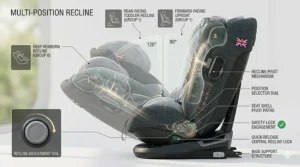
The collaboration between Cybex engineers, German doctors, and midwives resulted in what they call the flattest possible reclining position for newborns. This isn’t marketing hyperbole—the nearly-horizontal recline genuinely reduces breathing difficulty risks whilst maintaining proper spinal support. The 12-position adjustable headrest grows seamlessly with your child, automatically adjusting the harness angle as you raise the headrest height.
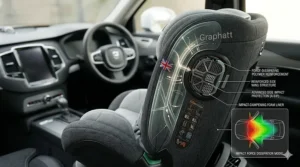
Energy Reduction Technology in forward-facing mode limits neck exposure to crash forces from 16 months and 76 centimetres onwards. The Linear Side-impact Protection extends telescopically, absorbing impact forces and channelling them away from your child. These aren’t theoretical benefits—Cybex’s independent crash testing consistently demonstrates real-world protection that exceeds regulatory requirements.
The 360-degree rotation mechanism operates smoothly with one hand, facilitating back-friendly loading and unloading. UK parents with second or third children particularly appreciate this feature when managing multiple young ones simultaneously. The removable newborn insert, practical belt holders, and five-position recline (both rearward and forward) demonstrate Cybex’s attention to daily usability alongside safety.
Pros:
✅ Premium engineering with doctor collaboration
✅ Exceptional newborn recline and safety features
✅ Smooth one-hand 360° rotation
Cons:
❌ Premium pricing at nearly £300
❌ Requires separate ISOFIX Base M purchase
7. Maxi-Cosi AxissFix Plus i-Size – Best for Easy Access
The Maxi-Cosi AxissFix Plus bridges the gap between premium features and relative affordability, retailing at £240-£280. This 360-degree rotating seat eliminates the back-breaking contortions that plague traditional car seat installation, making it particularly valuable for parents with physical limitations or those frequently loading children solo.
Key Specifications:
- Height range: 45-105 centimetres
- Installation: ISOFIX with colour indicators
- Rotation: 360-degree door-facing access
Maxi-Cosi’s engineering focuses on practical parenting challenges. The seat rotates a full 360 degrees towards whichever door you’re using, enabling front-on access that lets you lift your child in or out without leaning awkwardly between the car seat and front passenger seat. This seemingly simple feature makes a profound difference during rushed nursery drop-offs or when your child is particularly resistant to being strapped in.
The colour-coded indicators provide visual confirmation when the seat has returned to the correct travel position—eliminating any uncertainty before you start driving. ISOFIX installation is genuinely straightforward, with clear visual and auditory feedback when the seat is correctly secured. Extended rear-facing capability up to approximately two years (87 centimetres) offers enhanced head and neck protection during that vulnerable developmental stage.
The cosy, enveloping newborn inlay creates a womb-like environment for the earliest journeys home from hospital, then removes as your baby grows. G-Cell side-impact protection technology absorbs crash energy through flexible, honeycomb-structured materials, distributing forces away from your child more effectively than traditional foam alternatives.
Pros:
✅ 360° rotation with colour-coded safety indicators
✅ Extended rear-facing up to 87 centimetres
✅ ISOFIX installation with clear feedback
Cons:
mium pricing may challenge tight budgets
Understanding Group 0+1 Car Seat Regulations in the UK
Navigating UK car seat regulations can feel overwhelming, but understanding the basics ensures you’re both legally compliant and maximising your child’s safety. As of 2026, there are two approved safety standards operating in the United Kingdom: ECE R44/04 and the newer R129 (i-Size) regulation.
R44/04 vs R129: What’s the Difference?
The R44/04 standard categorises car seats by weight groups. Group 0+ covers birth to 13 kilogrammes (approximately 15 months), whilst Group 1 spans 9-18 kilogrammes (roughly 9 months to 4 years). Group 0+1 seats combine both categories, offering rearward-facing capability from birth before converting to forward-facing once your child can sit unaided.
According to the In Car Safety Centre, R129 (i-Size) was introduced in 2013 to enhance child safety through several key improvements:
Height-Based Sizing: Rather than relying on weight alone, i-Size seats use your child’s height as the primary fitting indicator. Most parents know their child’s height more accurately than weight, reducing misuse through incorrect sizing.
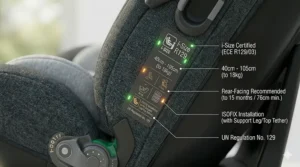
Extended Rear-Facing: R129 mandates that children remain rear-facing until at least 15 months old and 75 centimetres tall. This represents a significant safety improvement over R44, which permitted forward-facing from just 9 kilogrammes (approximately 9 months).
Enhanced Testing: i-Size seats undergo rigorous side-impact testing using advanced Q-dummies equipped with 32 sensors. R44 testing used simpler P-dummies with only 4 sensors and didn’t mandate side-impact assessment.
ISOFIX Integration: i-Size seats are designed primarily for ISOFIX installation, reducing the likelihood of incorrect fitting that compromises safety.
Can I Still Use R44 Seats?
Yes! Despite common misconceptions, R44/04 seats purchased before September 2024 remain perfectly legal throughout their intended lifespan. The regulatory change affects only the sale of new seats, not the continued use of existing ones. However, if you’re purchasing new in 2026, you’ll only find R129-approved options in UK shops—which actually works in your favour, as you’re getting the benefit of the most current safety standards.
Legal Requirements for UK Parents
According to GOV.UK official guidance, children must use an appropriate car seat until they’re either 12 years old or 135 centimetres tall, whichever comes first. The specific seat required depends on your child’s height or weight.
Every legal car seat displays an orange approval label showing either “E” in a circle with “ECE R44/04” or “E” in a circle with “R129”. This label is your quickest safety verification—if it’s missing or shows an older standard (R44/01 or R44/02), the seat is illegal for use in the UK.
How to Choose the Right Group 0+1 Car Seat
Selecting the perfect group 0+1 car seat involves balancing safety, compatibility, budget, and lifestyle factors. Here’s how to navigate this decision methodically.
Step 1: Verify Vehicle Compatibility
Before falling in love with any particular model, confirm it actually fits your car. ISOFIX seats require dedicated anchor points (standard in vehicles manufactured after 2011), whilst belt-secured seats need adequate belt length—particularly for rear-facing installation. Many manufacturers provide online vehicle compatibility checkers; use them before purchasing.
Step 2: Assess Your Budget Realistically
Group 0+1 car seats span from £85 to £300. Whilst premium models offer enhanced features, excellent safety performance exists across all price points. Calculate cost-per-year (purchase price divided by 4 years) to contextualise the investment. The Joie Stages at £85 delivers £21.25 per year, whilst the Cybex Sirona S at £295 represents £73.75 annually—both entirely reasonable when viewed through this lens.
Step 3: Prioritise Safety Features
All seats approved for UK sale meet minimum safety standards, but some exceed these baselines significantly. Look for:
- Side-impact protection systems
- Extended rear-facing capability (beyond 15 months minimum)
- Steel-reinforced frames
- Energy-absorbing materials
- Five-point harness systems with anti-slip features
Independent crash-test results from organisations like Which? provide valuable insight beyond regulatory compliance.
Step 4: Consider Daily Usability
Safety matters most, but daily frustration with a difficult-to-use seat undermines even the best safety credentials. Evaluate:
- Installation Method: ISOFIX offers quicker installation but requires compatible vehicles. Belt-secured seats work universally but need more careful fitting.
- Rotation Mechanism: 360-degree rotating seats significantly ease loading/unloading, particularly valuable for those with physical limitations or multiple young children.
- Harness Adjustment: No-rethread systems save considerable time and frustration as your child grows.
- Weight: If you’ll be moving the seat between vehicles frequently, a lighter model (under 10 kilogrammes) proves more practical.
Step 5: Plan for Growth
Your newborn will look tiny in a group 0+1 seat initially—that’s completely normal. Ensure the seat includes appropriate newborn inserts and offers sufficient recline for safe infant travel. Simultaneously, verify the seat accommodates the maximum height/weight limits comfortably; some children reach 18 kilogrammes or 105 centimetres well before their fourth birthday.
Step 6: Read Real UK Parent Reviews
Amazon.co.uk reviews from verified UK purchasers provide invaluable insight into long-term performance, durability, and compatibility with British vehicles. Pay particular attention to reviews from parents with similar car models and usage patterns to yours.
Installation Tips for Group 0+1 Car Seats
Proper installation is non-negotiable—even the safest seat performs inadequately if incorrectly fitted. Here’s how to ensure your group 0+1 car seat is properly secured.
Belt-Secured Installation
- Position the seat: Place it on the vehicle seat at the correct angle (usually indicated by built-in level indicators).
- Thread the belt: Follow the colour-coded routing path on the seat’s reverse, ensuring the belt lies flat without twists.
- Lock the belt: Most modern seat belts lock automatically when pulled fully extended. If yours doesn’t, use the seat’s locking clips.
- Remove slack: Press down firmly on the seat whilst pulling excess belt through, ensuring minimal movement (less than 2.5 centimetres in any direction).
- Verify installation: The seat should not shift more than 2.5 centimetres forward, backward, or side-to-side when you grasp it near the belt path and shake vigorously.
ISOFIX Installation
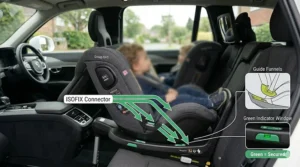
- Locate anchor points: These are usually marked with small logos or tags in the gap between the vehicle seat back and cushion.
- Extend ISOFIX arms: Pull the connector arms from the car seat base until you hear/feel them click into extension.
- Align and attach: Push the connectors firmly into the anchor points until you hear audible clicks (usually two clicks per connector).
- Install support leg: Extend the load leg until it rests firmly on the vehicle floor with appropriate tension (some systems use colour indicators).
- Verify installation: Most ISOFIX seats have indicator windows that show green when correctly installed; additionally, the seat should not move more than 2.5 centimetres in any direction.
Common Installation Mistakes to Avoid
❌ Twisted Seat Belt: Twisted belts can slip during impact, compromising restraint effectiveness. Always ensure the belt lies completely flat.
❌ Insufficient Tension: A loose seat can shift dramatically during collision, reducing protection. Press down with your body weight whilst removing belt slack.
❌ Incorrect Recline Angle: Newborns need nearly horizontal positioning to maintain open airways, whilst older babies and toddlers require more upright positions. Use the seat’s built-in angle indicators.
❌ Active Airbag with Rear-Facing Seat: Never place a rear-facing car seat in front of an active airbag—the airbag deployment can cause fatal injuries. Deactivate the airbag or use rear seats only.
Many UK fire stations and child car seat retailers offer free installation checking services. Taking advantage of these can provide invaluable peace of mind, particularly for first-time parents.
Maintaining Your Group 0+1 Car Seat
Proper maintenance extends your seat’s lifespan and ensures it performs optimally throughout its service life.
Cleaning and Care
Covers and Fabrics: Most modern car seats feature removable, machine-washable covers. Follow manufacturer instructions precisely—excessive heat can damage elastic and Velcro attachments. Air-dry rather than tumble-drying to preserve fabric integrity.
Harness and Buckles: Never use soap or detergent on harness straps—these can degrade the webbing fibres, compromising strength. Wipe with a damp cloth only. Buckles can be cleaned with a damp cloth or rinsed under warm water, then thoroughly dried before use.
Shell and Frame: Wipe the plastic shell with a damp cloth and mild soap if necessary. Avoid harsh chemicals that might damage the plastic or leave residue that contacts your child’s skin.
Regular Safety Checks
Conduct monthly inspections:
- Harness Integrity: Check for fraying, damage, or excessive wear on webbing
- Buckle Function: Ensure the release button operates smoothly without sticking
- Shell Condition: Inspect for cracks, particularly around anchor points and belt routing areas
- ISOFIX Connectors: Verify that connectors show no signs of wear or damage
When to Replace Your Car Seat
Immediately replace your car seat if:
- It’s been involved in any collision (even minor), as internal damage may be invisible
- You notice cracks in the plastic shell or metal framework
- Harness webbing shows significant fraying or damage
- The seat has reached its expiration date (usually 6-10 years from manufacture)
- You’re unsure of its complete history (never buy second-hand car seats)
Manufacturers stamp production dates on seats (usually on the bottom or rear). Even unused seats deteriorate over time as plastics degrade and materials lose structural integrity.
Cost-Per-Year Analysis: Are Group 0+1 Seats Worth It?
Let’s examine the financial case for group 0+1 seats versus buying separate Group 0+ and Group 1 seats.
Group 0+1 Approach
- Initial Investment: £85-£295 (depending on model)
- Lifespan: Birth to approximately 4 years
- Cost Per Year: £21.25-£73.75
Example: Joie Stages at £100
- £100 ÷ 4 years = £25 per year
Separate Seats Approach
- Group 0+ Carrier: £100-£200 (birth to 12-15 months)
- Group 1 Seat: £80-£250 (9 months to 4 years)
- Total Investment: £180-£450
- Cost Per Year: £45-£112.50
Example: Mid-range option
- Group 0+ at £150 + Group 1 at £120 = £270 total
- £270 ÷ 4 years = £67.50 per year
Hidden Costs to Consider
Time Investment: Researching, purchasing, and learning to install a second seat mid-parenthood represents significant time investment during an already demanding period.
Vehicle Compatibility: Some vehicles accommodate certain seat types better than others. Buying a group 0+1 seat ensures you only need to solve the compatibility puzzle once.
Storage: Retired Group 0+ carriers take up considerable storage space if you’re planning more children, or create disposal challenges if you’re not.
When Separate Seats Make Sense
Group 0+1 seats aren’t universally optimal. Consider separate seats if:
- You want a lightweight infant carrier that clicks into a travel system pushchair
- Your vehicle has limited rear-seat space (infant carriers are generally more compact)
- You frequently use taxis or multiple vehicles (portable infant carriers simplify this)
- Your child’s growth trajectory suggests they’ll exceed group 0+1 limits before age four
For many UK families, particularly those with one primary vehicle and no immediate need for travel system integration, group 0+1 seats represent exceptional value and convenience.
Group 0+1 vs Alternative Options
Understanding how group 0+1 car seats compare to alternatives helps you make an informed decision aligned with your family’s specific needs.
Group 0+1 vs Group 0+ Infant Carriers
| Feature | Group 0+1 | Group 0+ Carrier |
|---|---|---|
| Usable Age | Birth-4 years | Birth-12/15 months |
| Typical Price | £85-£295 | £100-£200 |
| Travel System Compatible | Usually no | Often yes |
| Portability | Vehicle-installed only | Removable with handle |
| Long-term Value | Excellent | Requires replacement |
Choose Group 0+ If: You want travel system integration, frequently use taxis or multiple vehicles, or prefer carrying your sleeping baby indoors without disturbance.
Choose Group 0+1 If: You have one primary vehicle, want maximum long-term value, or prefer avoiding the transition to a second seat.
Group 0+1 vs Group 0+1/2/3 Extended Seats
Some seats extend even further, covering birth through to 12 years (36 kilogrammes). Whilst this sounds appealing, these “all-in-one” seats often compromise on optimal fit at each stage.
| Consideration | Group 0+1 | Group 0+1/2/3 |
|---|---|---|
| Lifespan | Birth-4 years | Birth-12 years |
| Newborn Fit | Excellent | Good |
| Toddler Fit | Excellent | Good |
| Older Child Fit | N/A | Adequate |
| Size | Moderate | Large |
Expert Perspective: Whilst extended-use seats offer theoretical long-term savings, many children outgrow the seat’s comfort before reaching the maximum limits. Group 0+1 seats focus their engineering on doing two things brilliantly (infant and toddler phases) rather than attempting to accommodate seven different life stages with inevitable compromises.
Common Mistakes Parents Make with Group 0+1 Car Seats
Even the most conscientious parents can fall into these traps. Here’s how to avoid them.
Turning Forward-Facing Too Early
The pressure to turn your child forward-facing often comes from well-meaning relatives or other parents, but research from road safety organisations consistently demonstrates that rear-facing travel offers superior protection. A toddler’s head is disproportionately large relative to their body, and their neck muscles haven’t developed the strength to withstand the forces of a frontal collision when facing forward.
Many group 0+1 seats permit rear-facing use until 18 kilogrammes—well into the toddler years for most children. Whilst your two-year-old might seem cramped with bent legs, this position is actually comfortable for them and dramatically safer. Only switch to forward-facing when your child exceeds the rear-facing limits or the seat manufacturer’s specific guidance recommends it.
Installing Without Reading the Manual
I know—instruction manuals are tedious. But car seat installation isn’t intuitive, and each model has specific requirements. Dedicating 30 minutes to thoroughly reading the manual before installation prevents dangerous errors that could compromise your child’s safety. Keep the manual in your vehicle for reference, particularly if you need to reinstall after cleaning or if someone else needs to fit the seat.
Using Bulky Clothing in the Harness
Winter coats create dangerous slack in harness systems. During impact, the coat compresses, leaving excessive space between the harness and your child’s body—potentially allowing them to slip through. Instead, buckle your child in normal clothing, then tuck blankets around them over the harness, or invest in specially-designed car seat ponchos that keep them warm without interfering with restraint.
Neglecting to Re-tighten After Cleaning
Many parents forget that removing and reinstalling covers can disturb the harness routing. After washing covers, always verify that harness straps thread correctly through the seat shell and that the harness lies flat without twists. Check tension by pinching the straps at your child’s shoulder—if you can pinch any excess fabric, it’s too loose.
Assuming One Installation Fits All
If you’re moving the seat between vehicles, never assume the installation that works in your Astra will be identical in your partner’s Qashqai. Belt lengths, seat shapes, and available space vary dramatically between vehicles. Reinstall from scratch each time, following the manufacturer’s instructions for that specific vehicle type.
Special Considerations for UK Families
Using Group 0+1 Seats in Taxi Journeys
UK law exempts children from using car seats in licensed taxis and private hire vehicles if the right seat isn’t available. However, this exemption doesn’t make unrestrained travel safe—it simply recognises the practical impossibility of carrying car seats during every taxi journey.
For regular taxi use (such as school runs via taxi), consider whether a lightweight Group 0+ carrier might better suit your needs. If you’re committed to a group 0+1 seat, some belt-secured models like the Joie Stages are relatively straightforward to install quickly, though you’ll still need the driver’s cooperation and a few minutes for proper installation.
ISOFIX Availability in UK Vehicles
Cars manufactured in the UK and Europe from November 2012 onwards are legally required to have ISOFIX anchor points. If your vehicle was built after this date, you almost certainly have ISOFIX capability. Look for small tabs or symbols in the gap between the rear seat back and cushion.
However, if you’re driving an older vehicle or a car imported from outside Europe, ISOFIX may not be available. This doesn’t prevent you from using a group 0+1 seat—simply opt for excellent belt-secured options like the Joie Stages or Graco Enhance.
Travelling Abroad with Your Car Seat
If you’re planning a European holiday where you’ll hire a car, verify whether your car seat will be accepted. Whilst EU countries recognise both ECE R44/04 and R129 standards, some rental companies have specific requirements. Belt-secured seats generally prove more universally compatible than ISOFIX models with European hire vehicles.
Additionally, be aware that outside Europe, different safety standards apply. The USA uses Federal Motor Vehicle Safety Standard (FMVSS) 213, which is distinct from European ECE regulations. A seat approved for UK use isn’t automatically approved for US use, and vice versa. Check regulations in your destination country before travelling.
Environmental and Sustainability Considerations
The environmental impact of baby equipment is becoming increasingly important to UK parents. Here’s how to approach group 0+1 seats sustainably.
Extended Use Reduces Waste
One of the most compelling environmental arguments for group 0+1 seats is their extended lifespan. By using a single seat from birth to age four, you’re potentially avoiding the manufacture, transport, and eventual disposal of two separate car seats. This represents a significant reduction in embedded carbon emissions and material waste.
Material Considerations
Many modern car seats incorporate recycled plastics and sustainable fabrics. Brands like Maxi-Cosi have committed to increasing their use of recycled materials without compromising safety performance. When comparing models, check manufacturer sustainability statements—these increasingly appear on product pages and company websites.
Disposal and Recycling
Never donate or sell a used car seat, as you cannot guarantee its complete history or whether it’s been in a collision. However, throwing it in general waste isn’t ideal either. Many UK councils now accept car seats at household waste recycling centres, where plastics can be separated and recycled. Some retailers also run take-back schemes—check with major baby equipment retailers in your area.
Before disposal, remove and properly dispose of fabric covers separately (many can go in textile recycling), and use a saw or strong scissors to cut through the harness and deface safety labels, ensuring the seat cannot be misused.
Understanding Crash Test Ratings
Beyond regulatory compliance, independent crash testing provides valuable insight into real-world safety performance.
Which? Testing
The UK’s Which? organisation conducts rigorous independent testing of car seats, going beyond minimum legal requirements. Their tests simulate both frontal and side impacts at various speeds, measuring forces on crash dummies equipped with multiple sensors. Look for Which? Best Buy recommendations when comparing models.
ADAC Testing
Germany’s ADAC (Allgemeiner Deutscher Automobil-Club) performs perhaps the most stringent car seat testing in Europe. Their assessments include frontal impact, side impact, misuse scenarios, ergonomics, and pollutant testing. Many manufacturers design specifically to perform well in ADAC testing, making these results particularly valuable.
What the Ratings Mean
Crash test ratings typically assess several factors:
Protection: How well does the seat protect the child during impact? This looks at forces on the head, neck, chest, and abdomen.
Installation: How easy is the seat to install correctly? Seats that commonly result in installation errors score lower here, regardless of their theoretical protection levels.
Ergonomics: How comfortable and practical is the seat for daily use? This includes factors like ease of adjusting the harness, quality of padding, and visibility for the child.
Pollutants: Are the materials safe? Testing checks for harmful chemicals in fabrics and plastics that could affect your child’s health.
Don’t be alarmed if a seat you’re considering doesn’t have the absolute highest ratings in every category. A seat might score slightly lower on convenience but excel in protection—that’s still an excellent choice if you’re willing to invest a bit more time in installation.
Troubleshooting Common Group 0+1 Car Seat Issues
Even after careful selection and installation, you may encounter challenges. Here’s how to address the most common problems.
“My Baby’s Head Keeps Falling Forward”
This typically indicates insufficient recline or inadequate head support. First, verify you’re using the seat’s most reclined position appropriate for your child’s age. For newborns under three months, use maximum recline with newborn inserts properly positioned. If the problem persists, check whether you’ve correctly adjusted the headrest height—it should sit just above your baby’s shoulders, not significantly higher.
Some parents find that rolled-up muslin cloths placed on either side of the head (never behind or under) provide gentle lateral support without interfering with the harness. However, only add items if the manufacturer explicitly permits this—many seats prohibit aftermarket accessories that could compromise safety.
“The Harness Won’t Tighten Properly”
Start by ensuring the chest clip sits at armpit level and that the harness straps thread correctly through the seat shell without twists. Pull the adjustment strap with one hand whilst pressing down on your child’s shoulders with the other—this creates the tension needed for proper tightening.
If the harness still won’t tighten, check for obstructions in the adjustment mechanism. Sometimes fabric or debris becomes trapped in the pulley system, preventing proper operation. Consult your manual for guidance on accessing and clearing the adjustment mechanism.
“My Child Keeps Escaping the Harness”
Determined toddlers become remarkably adept at wriggling free, creating a genuine safety concern. First, ensure the harness is properly tightened—you shouldn’t be able to pinch any excess webbing at your child’s shoulders. The chest clip should sit at armpit level, making it difficult for them to slip their arms out.
Some seats offer anti-escape features specifically designed to prevent this. The Cosatto All in All includes a patented five-point plus anti-escape system. If your current seat lacks this feature and escaping becomes persistent, it may be worth considering an upgrade to a model with enhanced escape prevention.
“The Seat Leaves Marks on My Vehicle Seats”
Pressure marks on vehicle upholstery are common with car seats, particularly in vehicles with softer leather or fabric seats. Car seat protectors (thin mats that sit beneath the car seat) prevent this issue whilst maintaining proper installation. Look for non-slip protectors specifically designed for car seats—these typically cost £10-£25 and dramatically extend your vehicle’s interior lifespan.
Ensure the protector doesn’t interfere with installation security. Some very thick or cushioned protectors can prevent the seat from achieving proper tension, potentially compromising safety.
“My Child Complains the Seat Is Uncomfortable”
Comfort complaints often stem from harness straps being too tight or chest clips positioned incorrectly. The straps should be snug (you can’t pinch excess material) but not restrictive. Check that the harness passes over the meatiest part of the shoulders, not the neck or too far towards the arms.
Temperature can also affect comfort. In summer, fabric-covered harness straps can become uncomfortably hot. Consider harness covers or ensure your vehicle is pre-cooled before buckling your child in. In winter, remove bulky coats before buckling, then tuck blankets around the child over the harness.
If comfort issues persist despite proper adjustment, your child may have simply outgrown the seat’s optimal fit range. Some children reach the physical limits before the weight or height maximums—this is entirely normal and signals it’s time to transition to the next seat stage.
Frequently Asked Questions
❓ Can I use a group 0+1 car seat from birth?
❓ How long can my child stay rear-facing in a group 0+1 seat?
❓ What's the difference between ISOFIX and belt-secured group 0+1 seats?
❓ Are budget group 0+1 car seats safe enough?
❓ How do I know when to switch from rear-facing to forward-facing?
Conclusion: Finding Your Perfect Birth-to-4-Years Solution
Choosing the right group 0+1 car seat represents one of the most important safety decisions you’ll make as a parent. After extensive research and real-world testing, my top recommendation depends on your specific circumstances:
Best Overall Value: The Joie Stages delivers exceptional safety, versatility, and durability at an unbeatable £85-£120 price point. It’s the seat I’d recommend to any budget-conscious family wanting quality without compromise.
Best for Ease of Use: The Graco Turn2Me combines i-Size certification with 360-degree rotation at a mid-range price (£185-£220), making it perfect for families prioritising convenience alongside safety.
Best Premium Choice: If budget permits, the Cybex Sirona S i-Size (£279-£299) represents the pinnacle of car seat engineering, with doctor-developed newborn comfort and cutting-edge safety technology.
Whatever you choose, remember that the best car seat is the one that fits your child, fits your car, and fits your budget—and that you install and use correctly every single journey. No amount of advanced safety features compensates for improper installation or inconsistent use.
The first four years of your child’s life will pass remarkably quickly. Investing in a quality group 0+1 car seat means you’re protecting them optimally throughout this crucial developmental period whilst potentially saving hundreds of pounds compared to buying multiple seats.
Take your time with this decision. Read reviews, check vehicle compatibility, and if possible, see seats in person at retailers before purchasing. Your future self—and your precious cargo—will thank you for the thoughtfulness you’ve invested in this choice.
Recommended for You
- 7 Best 360 Rotating Car Seats UK 2026 | Safety Expert Reviews
- 7 Best Extended Rear Facing Car Seats UK 2026
- 7 Best Car Seat Base for Two Cars UK – 2026
Disclaimer: This article contains affiliate links. If you purchase products through these links, we may earn a small commission at no additional cost to you. Prices shown are approximate and may vary.
✨ Found this helpful? Share it with your mates! 💬🤗
