

In This Article
A waterproof changing mat is a padded, non-porous surface designed to catch nappy leaks, wee and mess during a nappy change without letting liquid soak through to the padding underneath. Unlike fabric-covered mats, a genuinely waterproof changing mat wipes clean in seconds, resists staining, and keeps bacteria from breeding inside the foam. For any household changing nappies multiple times a day, it’s one of those unglamorous bits of kit that quietly saves you an enormous amount of laundry.

If you’ve ever been mid-change when a “poonami” strikes, you already know why this matters. A proper waterproof changing mat isn’t a luxury — it’s the difference between a thirty-second wipe-down and stripping the changing table, washing a cover, and hoping it dries before the next nappy change rolls around (which, let’s be honest, is usually about twenty minutes later).
This guide walks through seven real, currently available options on amazon.co.uk, from budget-friendly PVC mats to premium foam designs, along with genuine comparative analysis, practical usage advice, and answers to the questions British parents actually search for. We’ve dug into real specifications and aggregated review sentiment rather than simply repeating manufacturer copy — so you can make a properly informed choice rather than gambling on the first mat that pops up in your search results.
Quick Comparison: Waterproof Changing Mats at a Glance
| Product | Best For | Surface Type | Price Range |
|---|---|---|---|
| Shnuggle Squishy Changing Mat | Overall comfort and reflux-friendly angle | One-piece foam, seamless | £30-£40 |
| My Babiie Changing Mat | Style-conscious budget buyers | PVC with padded raised edges | £15-£25 |
| Skip Hop Pronto Changing Station | On-the-go changes and travel | Cushioned fold-out PVC/nylon | £20-£35 |
| Mama Shack Anti-Roll Changing Mat | Newborns who wriggle | Wedge-shaped PVC | £20-£30 |
| Polar Gear Portable Changing Mat | Nappy bag essentials | Wipe-clean PVC with pockets | £10-£20 |
| COMOMY Vegan Leather Changing Mat | Anti-slip safety on dressers | PU vegan leather | £15-£25 |
| Babycurls Deluxe Anti-Roll Mat | Budget-conscious first-time parents | PVC wedge with raised edges | £15-£25 |
Looking at the spread above, there’s a genuine gulf between the seamless one-piece foam of the Shnuggle Squishy Changing Mat and the fold-flat travel mats like the Skip Hop Pronto Changing Station — and that gulf is exactly what should guide your decision. If your priority is a permanent nursery or bedroom station, the nook-free foam designs win on hygiene; if you’re regularly changing nappies away from home, the fold-and-clip options earn their keep by living in your nappy bag rather than taking up dresser space.
💬 Just one click — help others make better buying decisions too!😊
Top 7 Waterproof Changing Mats: Expert Analysis
1. Shnuggle Squishy Changing Mat — seamless foam with a reflux-friendly incline
The Shnuggle Squishy Changing Mat stands out immediately for what it doesn’t have: seams, ridges, or fabric covers where bacteria and moisture can hide. It’s moulded from a single piece of soft-touch foam, which is precisely why parents researching a genuinely wipeable option keep circling back to it.
Specification-wise, it measures roughly 70 x 45cm, with raised sides around 8-10cm high and a gentle incline built into the base. That incline isn’t a gimmick — angling baby slightly head-up during a change is a design choice several nursery product makers use specifically to ease discomfort for babies prone to reflux or colic, and it also means liquid runs downward and away rather than pooling under baby’s head. The foam surface stays warm to the touch, so you can skip laying a towel down first, which matters more than it sounds on a cold January morning.
Based on the spec comparison with rival mats in this bracket, this one earns its premium positioning through material choice rather than marketing flourish — the raised sides and one-piece build genuinely reduce cleaning time versus mats with fabric inserts or stitched seams. It suits parents setting up a permanent changing station in the nursery, and particularly those managing a baby who struggles to settle on colder or harder surfaces.
Reviewers consistently report that the surface wipes completely clean with a damp cloth and mild disinfectant, with no lingering odour even after repeated use — a common complaint about cheaper PVC mats that this design appears to sidestep. Some reviewers do note that, being foam rather than a hard-wipe surface, very acidic staining agents (bright orange purée, for instance) can leave a faint mark over time, though this doesn’t compromise the waterproofing itself.
Pros:
- ✅ Seamless foam surface with nowhere for bacteria to hide
- ✅ Built-in incline may help settle babies with reflux
- ✅ Warm-to-touch material needs no towel underneath
Cons:
- ❌ Sits at the higher end of the price bracket for a mat
- ❌ Bulkier than fold-flat mats, less ideal for travel
Priced in the £30-£40 range at the time of research, the Shnuggle Squishy Changing Mat represents strong value if you’re setting up a single, permanent changing station and want to minimise ongoing cleaning hassle — check current price before buying, as nursery product pricing does fluctuate seasonally.
2. My Babiie Changing Mat — stylish padded design at a budget-friendly price
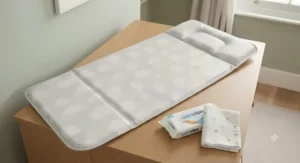
The My Babiie Changing Mat (available in Herringbone and Safari prints, among others) targets parents who want their nursery kit to look considered rather than purely functional, without stretching to premium pricing. It’s built from PVC with raised padded edges, roughly 74 x 48cm, giving a comfortable, cushioned base for daily changes.
The PVC surface is fully wipe-clean, and the padded raised edges — around 5-6cm — offer a basic physical barrier against rolling, though they’re not as pronounced as the wedge-style edges found on dedicated anti-roll mats. What you’re paying for here is largely aesthetic: the Herringbone and Safari prints are noticeably more design-conscious than the plain grey or white mats common at this price point.
What most buyers overlook about budget PVC mats in general is that build quality varies enormously between brands even at similar price points, and the stitching (or lack of it) around the edge seam is usually the tell. The My Babiie Changing Mat uses a fully sealed PVC edge rather than a fabric-bound seam, which matters enormously for genuine waterproofing — a fabric-bound edge will absorb moisture over time even if the top surface itself is waterproof.
Aggregated review sentiment points to consistent praise for the print quality and colour retention after repeated wiping, with a recurring theme that the mat feels notably softer underfoot (or under-baby) than some competitors at a similar price. A smaller number of reviewers mention the raised edges compressing over months of daily use, which is a fairly typical wear pattern for foam-and-PVC combination mats generally.
Pros:
- ✅ Sealed PVC edges avoid the fabric-seam moisture trap
- ✅ Genuinely stylish prints for a budget-tier mat
- ✅ Comfortable padding that stays soft under regular use
Cons:
- ❌ Raised edges offer only modest anti-roll protection
- ❌ Padding can compress with several months of daily use
At around £15-£25, the My Babiie Changing Mat offers strong value for parents prioritising nursery aesthetics without sacrificing the core waterproof, wipe-clean function — always check current price and colourway availability, as popular prints do sell through quickly.
3. Skip Hop Pronto Changing Station — the best fold-and-go option for changes away from home
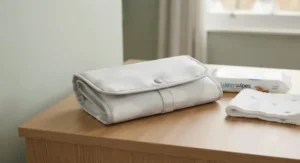
If your changing routine happens as often in the car boot or at grandma’s house as it does in the nursery, the Skip Hop Pronto Changing Station is built around exactly that reality. It’s a padded, cushioned mat that folds into a compact clutch with an integrated strap, designed to unfold into a full-size changing surface in seconds.
The cushioned centre panel uses a wipe-clean nylon-and-foam construction, while the folding design means it packs down to roughly the size of a large paperback — genuinely pocket-sized inside a changing bag, not “portable” in the loose sense some brands use. Several versions include a small pocket for a spare nappy or pack of wipes, which sounds minor until you’re one-handed and mid-change in a supermarket toilet with nowhere to put anything down.
Here’s what the spec sheet won’t tell you, but reviewers note repeatedly: the fold lines, while convenient, are also the first place wear shows up after heavy use, since repeated folding stresses the same crease every time. That’s a reasonable trade-off for portability, but it does mean this isn’t the mat to buy if you want one item to last from newborn through to potty training as your sole changing surface.
Reviewers frequently mention that the padded surface feels noticeably comfier for baby than flatter, thinner travel mats, and that the fold-out design genuinely does open and close one-handed once you’ve done it a few times. A recurring critique in aggregated feedback is that the clutch-style closure can feel slightly flimsy compared with the main changing surface itself.
Pros:
- ✅ Compact fold-down design that fits in a nappy bag pocket
- ✅ Padded surface more comfortable than flat travel mats
- ✅ Genuinely quick to unfold and refold one-handed
Cons:
- ❌ Fold creases show wear faster with heavy daily use
- ❌ Clutch closure feels less robust than the mat itself
Typically priced in the £20-£35 range, the Skip Hop Pronto Changing Station is best viewed as a dedicated travel companion alongside a sturdier home mat, rather than a single all-purpose solution — prices vary by print, so it’s worth checking current listings.
4. Mama Shack Anti-Roll Changing Mat — a wedge-shaped design built for wriggly newborns
The Mama Shack Anti-Roll Changing Mat takes a different structural approach entirely: rather than flat padding with raised edges, it uses a wedge shape with a slight incline and genuinely deep contoured sides, made from phthalate-free PVC. It’s specifically aimed at the newborn-to-early-months stage, when babies are more likely to arch and wriggle unexpectedly.
The angled design means, practically speaking, that an unexpected wee tends to run downward and off the surface rather than pooling — a small but genuinely useful bit of engineering that flat mats simply can’t replicate. Because it’s a single moulded PVC piece rather than a padded fabric-and-foam combination, it also wipes completely clean without any risk of moisture working its way into stitched seams.
Based on the spec comparison with flatter mats in this guide, the trade-off here is firmness: the PVC wedge is noticeably less plush than foam-padded alternatives like the Shnuggle Squishy Changing Mat, so some parents choose to lay a thin, easily-washed cotton liner over the top for extra comfort during longer changes (while keeping the waterproof surface as the primary line of defence underneath).
Reviewers consistently highlight how well the contoured shape keeps a moving newborn contained, with several noting it as noticeably more reassuring than flat mats during the “can’t yet hold their own head steady” stage. A common complaint in user reviews is that the firmer PVC surface feels cold to a bare-skinned baby without a liner, particularly during colder months.
Pros:
- ✅ Contoured wedge shape genuinely helps contain wriggly newborns
- ✅ Phthalate-free PVC, fully wipeable with no fabric seams
- ✅ Angled design channels liquid away from baby
Cons:
- ❌ Firmer surface than foam-padded alternatives
- ❌ Can feel cold without an added liner in winter
At around £20-£30, the Mama Shack Anti-Roll Changing Mat earns its place for parents navigating the earliest, most unpredictable months, when a physically contained changing surface matters more than plush comfort — check current price as newborn-focused nursery ranges are frequently updated.
5. Polar Gear Portable Baby Changing Mat — a genuinely pocket-friendly nappy bag staple
The Polar Gear Portable Baby Changing Mat is built around simplicity and low bulk. It’s a wipe-clean PVC mat with winged storage pockets for wipes and a nappy, designed to roll or fold flat and clip directly onto a pram or changing bag using an integrated handle loop.
At roughly 50 x 70cm unfolded, it’s on the larger side for a travel mat despite folding down small, which means baby actually has room to move rather than being confined to a narrow strip. The wing pockets are a genuinely practical touch — being able to grab a wipe or spare nappy without rummaging through an entire changing bag is one of those small conveniences that makes a real difference at 2am.
What most buyers overlook about mats in this bracket is that “machine washable” and “waterproof” aren’t automatically the same claim — a mat can be washable without being genuinely leak-proof underneath the surface layer. The Polar Gear design uses a fully coated PVC surface rather than a laminated fabric, which is the detail that actually determines whether liquid soaks through during a real leak, not just a light wipe-down.
Aggregated review sentiment is broadly positive on the storage pockets and the clip-on handle, with several reviewers specifically praising it for outings and holidays. A recurring theme in feedback is that, being a lighter-weight PVC than some dedicated home mats, the surface can show scuff marks and light scratching over extended use, even if the waterproofing itself holds up.
Pros:
- ✅ Winged pockets keep wipes and nappies within reach
- ✅ Clips directly onto prams and changing bags
- ✅ Larger unfolded size than most travel mats
Cons:
- ❌ Lighter PVC shows surface scuffing over time
- ❌ Less padded than dedicated home changing mats
Sitting in the £10-£20 range, the Polar Gear Portable Baby Changing Mat is one of the more affordable ways to keep a genuinely waterproof surface in your nappy bag at all times — as always, check current price, since this bracket sees frequent promotional movement.
6. COMOMY Vegan Leather Nappy Changing Mat — anti-slip stability for dresser-top changes
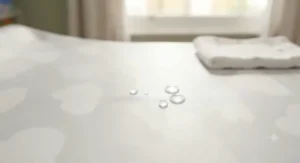
The COMOMY Vegan Leather Nappy Changing Mat takes a slightly different material route, using a PU vegan leather cover rather than standard PVC or foam. The appeal here is twofold: a genuinely non-porous, wipe-clean surface, and an anti-slip backing designed to keep the mat firmly in place on a dresser or changing table top, alongside safety straps for extra security.
Measuring around 76 x 45cm with raised anti-roll padding on either side, it’s built with the safety strap as a standard inclusion rather than an optional extra — worth noting, because the equivalent European safety standard for domestic changing units, EN 12221, specifically addresses restraint and stability requirements for products used with babies under 15kg, and a mat that pairs anti-slip backing with a proper strap is doing more than the bare minimum on that front.
Here’s what the spec sheet won’t spell out plainly: PU vegan leather, while fully waterproof and easy to wipe, has a different feel underfoot than either foam or standard PVC — closer to a slightly firmer, slightly cooler surface, similar to a faux-leather sofa. Reviewers consistently note this isn’t a downside so much as a texture preference, and most report it wipes cleaner and resists staining better than fabric-covered alternatives over the long run.
A common complaint in user reviews concerns the anti-slip backing losing some grip on very smooth, polished dresser surfaces after extended use, though most reviewers report it performs well on standard wooden or laminate changing tables. Reviewers also frequently highlight the safety straps as a standout feature relative to competitors at a similar price.
Pros:
- ✅ Genuine anti-slip backing plus dedicated safety straps
- ✅ Non-porous PU leather resists staining well
- ✅ Raised padded sides add rolling protection
Cons:
- ❌ Grip can fade on very smooth, polished surfaces
- ❌ Firmer, cooler texture than foam-based mats
At around £15-£25, the COMOMY Vegan Leather Nappy Changing Mat is a sound pick for anyone changing nappies on a raised dresser or table where stability genuinely matters — check current price, and always test the anti-slip grip on your specific surface before relying on it fully.
7. Babycurls Deluxe Anti-Roll PVC Wedge Changing Mat — the lightest-weight budget wedge option
Rounding out the list, the Babycurls Deluxe Anti-Roll PVC Wedge Changing Mat is a curved-side, raised-edge wedge design in wipe-clean PVC, aimed squarely at parents who want anti-roll protection without paying premium prices. It measures roughly 69 x 45 x 8cm, with the wedge shape and curved sides doing the bulk of the safety work.
Structurally, it sits somewhere between the flatter padded mats and the fully-angled Mama Shack design — curved rather than steeply wedged, which some parents find strikes a better balance between containment and comfort for babies who are already starting to push up or roll during changes. The PVC surface is fully sealed, so wiping down after a mess is quick and doesn’t require any special cleaning products beyond a damp cloth.
On paper, this means you’re getting anti-roll geometry, a fully waterproof PVC shell, and raised edges for a price point that typically undercuts most of the other wedge-style mats in this guide — the trade-off is a lighter foam fill than premium alternatives, which some reviewers note compresses somewhat faster with heavy daily use than thicker foam mats.
Reviewers consistently describe it as good value for the price, with the curved sides praised specifically for feeling gentler and less restrictive than steeper wedge designs. A recurring, honest critique in aggregated feedback is that the print designs (Safari Sketches being a common option) can fade slightly faster under repeated wiping with stronger disinfectant sprays than milder cleaning solutions.
Pros:
- ✅ Curved wedge design balances containment and comfort
- ✅ Fully sealed PVC wipes clean in seconds
- ✅ Genuinely budget-friendly for a wedge-style mat
Cons:
- ❌ Lighter foam fill compresses faster under heavy use
- ❌ Printed designs fade quicker with strong disinfectants
Priced at around £15-£25, the Babycurls Deluxe Anti-Roll PVC Wedge Changing Mat is a genuinely sensible entry point for first-time parents building a nursery on a budget — check current price and print availability before ordering.
Top 7 Waterproof Changing Mats: Full Specification Comparison
| Product | Size (approx.) | Material | Anti-Roll Feature | Best For | Price Range |
|---|---|---|---|---|---|
| Shnuggle Squishy Changing Mat | 70 x 45cm | One-piece foam | Raised sides + incline | Permanent nursery station | £30-£40 |
| My Babiie Changing Mat | 74 x 48cm | PVC, padded | Raised padded edges | Style-conscious budget buyers | £15-£25 |
| Skip Hop Pronto Changing Station | Folds to clutch size | Nylon/foam | Padded edges | Travel and outings | £20-£35 |
| Mama Shack Anti-Roll Changing Mat | 69 x 45cm | Phthalate-free PVC | Contoured wedge | Newborns | £20-£30 |
| Polar Gear Portable Changing Mat | 50 x 70cm unfolded | Coated PVC | Winged edges | Nappy bag essential | £10-£20 |
| COMOMY Vegan Leather Changing Mat | 76 x 45cm | PU vegan leather | Raised padding + straps | Dresser/table changes | £15-£25 |
| Babycurls Deluxe Anti-Roll Mat | 69 x 45 x 8cm | PVC wedge | Curved raised sides | Budget-conscious first-timers | £15-£25 |
Stacking all seven side by side like this makes the real pattern obvious: the wedge and contoured designs (Mama Shack, Babycurls) prioritise physical containment for wriggly babies, while the flatter padded mats (Shnuggle, My Babiie, COMOMY) prioritise comfort and surface hygiene instead. Neither approach is objectively better — it depends entirely on your baby’s stage and how much they move during a change, which is exactly the kind of nuance a plain spec sheet never communicates on its own.
Practical Usage Guide: Setting Up and Maintaining Your Changing Mat
Getting the most out of any waterproof changing mat comes down to a handful of habits most new parents pick up the hard way. First, position matters more than people expect — placing the mat on a stable, flat surface at a comfortable working height (whether that’s a proper changing table or a secured spot on a bed) reduces both back strain for you and roll risk for baby. Second, always keep one hand on baby, even with raised sides or a harness strap; anti-roll features reduce risk, they don’t eliminate it.
For first-30-days cleaning, a simple routine works best: wipe down with a damp cloth after every change that involves any mess, and do a full clean with a mild, baby-safe disinfectant once daily regardless of visible mess, since urine residue isn’t always obvious on patterned surfaces. Avoid bleach-based products on PVC and PU surfaces specifically, as repeated strong-chemical exposure is the single biggest cause of premature cracking and colour fade reported across nearly every mat in this guide.
A common early mistake is leaving a mat damp after cleaning — moisture trapped against any surface, even a genuinely waterproof one, encourages mould at the edges over time if the mat is then folded or stacked while still wet. Air-dry mats fully, ideally standing on edge, before folding or storing. For mats with fabric-bound seams specifically, check the seam area periodically; that’s where hidden moisture problems tend to start even on an otherwise excellent mat.
Real-World Scenarios: Which Mat Suits Your Situation
Consider three fairly typical UK households. First, a first-time parent in a two-bed flat with a single nursery changing station, budget around £150 for all nursery basics combined, doing eight to ten changes a day at home: the Shnuggle Squishy Changing Mat or My Babiie Changing Mat both make sense here, since neither needs to travel and the priority is hygiene and daily comfort over portability.
Second, a family with a six-month-old who’s started rolling during changes, splitting time between a ground-floor nursery and frequent visits to grandparents across town: the Mama Shack Anti-Roll Changing Mat at home, paired with the Skip Hop Pronto Changing Station for the commute, covers both the containment need and the travel requirement without compromising on either.
Third, working parents managing nursery drop-off, days out, and a home changing station on a tighter combined nursery budget under £100: the Babycurls Deluxe Anti-Roll PVC Wedge Changing Mat at home alongside the Polar Gear Portable Baby Changing Mat in the changing bag gets genuine anti-roll protection and portability without stretching to premium pricing on either item.
How to Choose a Waterproof Changing Mat
- Check the seam construction, not just the surface material. A mat can advertise a waterproof top layer while still having a fabric-bound or stitched edge that absorbs moisture over time — run your finger along the edge in product photos or reviews before buying.
- Match the shape to your baby’s stage. Flatter padded mats suit newborns who lie relatively still; wedge and contoured designs suit babies who’ve started wriggling, arching or rolling during changes.
- Decide whether you need one mat or two. A single home-only mat can prioritise plushness and hygiene; if you’re regularly out and about, a dedicated fold-flat travel mat will genuinely get more use than trying to lug a full-size home mat around.
- Factor in your cleaning habits realistically. If you know you’ll reach for stronger disinfectant sprays regularly, a fully sealed PVC or foam surface will outlast a printed fabric-topped mat by some margin.
- Consider anti-slip backing if you’re using a raised surface. A dresser or changing table without a fitted lip benefits enormously from a mat with genuine grip underneath, not just padding on top.
- Don’t ignore size versus available space. Larger mats (70cm-plus) give baby more room but need more storage space and a bigger flat surface to sit on securely.
- Weigh price against expected lifespan. A £15 mat replaced every six months can cost more over two years than a £35 mat that holds up for the full period — this is where total cost of ownership actually beats sticker price.
Waterproof vs Wipeable: What’s the Real Difference?
This is one of the most genuinely confusing bits of terminology in the whole category, and it’s worth untangling properly. “Wipeable” simply means the top surface can be cleaned with a damp cloth — it says nothing about what happens if liquid sits on the surface for longer than a quick wipe, or what happens at the seams and edges. “Waterproof,” properly used, means liquid cannot pass through the material at all, even under sustained contact or pressure.
In practice, a lot of budget nursery products blur this line by using the terms almost interchangeably in marketing copy, when the underlying construction genuinely differs. A laminated fabric surface might wipe clean perfectly well for light marks, yet still allow moisture through if a nappy leaks and liquid pools against the mat for several minutes during a longer change — which happens more often than any parent would like, particularly during growth spurts or teething, when nappy output tends to spike unpredictably.
The practical takeaway: if leak-proofing against a genuine, pooling accident is your priority (as it should be for anyone changing a young baby regularly), look specifically for mats described as having a sealed, seamless, or fully-coated surface — the language used in this guide’s product sections above — rather than simply “wipe clean,” which is a lower bar entirely. All seven mats featured here do meet the fuller waterproof standard, but it’s worth applying this distinction whenever you’re comparing options beyond this list too.
Common Mistakes When Buying a Waterproof Changing Mat
One frequent misstep is buying based purely on print or colour without checking the underlying surface construction — a gorgeous mat that turns out to have a fabric-bound seam will let you down within weeks of regular leaks. Another is assuming bigger is automatically better; an oversized mat on a narrow dresser or changing table actually increases fall risk if it overhangs the edge.
Parents also commonly underestimate how quickly babies outgrow the “lies still” stage, buying a flat unpadded mat for a newborn without anticipating that within a few months, active rolling will make a contained or wedge-style design considerably safer. On the flip side, some buyers over-invest in a heavily padded premium mat for travel use, when a lighter fold-flat design would genuinely serve that specific purpose better.
Finally, a mistake worth flagging explicitly: skipping the safety strap or restraint feature because “I’ll always have a hand on them.” Distraction happens to every parent eventually — a doorbell, another child, a dropped phone — and a mat with genuine restraint options, like the COMOMY Vegan Leather Nappy Changing Mat, adds a layer of protection that costs nothing extra to use once it’s there.
Problem → Solution: Fixing Common Nappy Leak Accidents
Problem: Liquid pools under baby’s back during a change. Solution: switch to a mat with a built-in incline or wedge shape, such as the Shnuggle Squishy Changing Mat or Mama Shack Anti-Roll Changing Mat, both of which channel liquid downward and away from baby’s torso by design rather than relying on you catching it fast enough.
Problem: Mat smells despite regular wiping. Solution: this is almost always a seam or edge issue rather than a surface one — check for stitched or fabric-bound edges where moisture has worked its way in, and consider switching to a fully sealed PVC or one-piece foam design for your next mat.
Problem: Baby keeps rolling or wriggling off the edge mid-change. Solution: move to a contoured or wedge-style mat with raised sides of at least 6-8cm, and use the safety strap every single time, even for “quick” changes.
Problem: Mat surface has started cracking or peeling after a few months. Solution: this is a common outcome of repeated bleach or strong-alcohol disinfectant use on PVC; switch to a milder baby-safe disinfectant for daily cleaning and reserve stronger products for occasional deep cleans only.
Problem: Travel mat takes up too much bag space. Solution: swap to a genuinely fold-flat design like the Skip Hop Pronto Changing Station or Polar Gear Portable Baby Changing Mat, both built specifically to collapse down small rather than simply being a smaller version of a home mat.
Buyer’s Decision Framework
If your baby is under three months and mostly lies still during changes, choose a flatter padded mat like the My Babiie Changing Mat, because comfort and hygiene matter more than containment at this stage. If your baby is actively rolling or arching, choose a wedge or contoured design like the Mama Shack Anti-Roll Changing Mat or Babycurls Deluxe Anti-Roll PVC Wedge Changing Mat, because physical containment now outweighs other factors. If you’re changing nappies away from home regularly, choose a dedicated fold-flat travel mat like the Skip Hop Pronto Changing Station or Polar Gear Portable Baby Changing Mat, because bulk and pack-down size matter more on the move than at home. If your changing surface is a raised dresser without a fitted lip, choose a mat with genuine anti-slip backing and straps, such as the COMOMY Vegan Leather Nappy Changing Mat, because stability becomes the dominant safety factor. And if budget is the primary constraint, choose the Babycurls Deluxe Anti-Roll PVC Wedge Changing Mat or Polar Gear Portable Baby Changing Mat, because both deliver genuine waterproofing without the premium pricing of foam-based alternatives.
Long-Term Cost & Maintenance
Thinking about a waterproof changing mat purely on sticker price misses a meaningful part of the picture. A budget PVC mat at £15 that needs replacing every seven or eight months due to seam wear or surface cracking will, over a typical eighteen-month to two-year nappy-changing window, cost roughly the same as — or more than — a single £35 premium foam mat that lasts the full period without replacement. That’s before factoring in the time cost of researching and reordering a replacement mid-parenting-chaos, which is not nothing.
Maintenance costs are modest across the board but not zero: a bottle of mild baby-safe disinfectant spray typically lasts several months at daily-use rates and costs a few pounds, which is a negligible add-on regardless of which mat you choose. The bigger long-term cost driver is genuinely the mat’s edge and seam construction, since that’s what determines whether you’re looking at a two-year lifespan or a six-month one. On this measure specifically, the one-piece foam and fully sealed PVC designs featured earlier in this guide tend to outperform mats with stitched fabric borders by a wide margin, which is worth weighing against the higher upfront price for anyone planning to use a single mat for the full nappy-changing period.
Features That Actually Matter (And Those That Don’t)
Genuinely important: seam and edge sealing, surface material (foam versus PVC versus laminated fabric), raised side height for anti-roll protection, and anti-slip backing if used on a raised surface. These directly affect hygiene, safety and lifespan, and they’re the features referenced throughout every product breakdown above.
Largely marketing noise: elaborate print designs beyond basic preference (they don’t affect function at all), claims of “hospital grade” cleanliness without any specific standard cited, and vague “premium material” language that doesn’t specify foam density, PVC thickness, or coating type. None of these tell you anything concrete about how the mat will actually perform after three months of daily use — they’re worth noticing, but not worth paying a premium for on their own.
Safety, Regulations and Compliance Guide
Changing mats and changing units sold for domestic use in the UK and EU fall under safety standard EN 12221, which sets requirements around stability, restraint systems and maximum recommended weight (typically 15kg) for domestic changing units. Products sold in Great Britain also need to comply with UK product safety rules — you can check the current requirements around UKCA and CE marking on GOV.UK, which explains which conformity marking currently applies to nursery and childcare products sold in Great Britain.
On general nappy-changing hygiene and skin health, the medical consensus is consistent: regular nappy changes, gentle cleaning, and keeping the nappy area dry are the core defences against irritant nappy rash, alongside choosing well-fitted, absorbent nappies. If you want a deeper clinical overview of what irritant diaper (nappy) dermatitis actually is and what causes it, Wikipedia’s summary of irritant diaper dermatitis draws together the dermatological consensus in accessible terms.
Beyond the mat itself, always follow basic safe-changing practice: never leave a baby unattended on a raised changing surface, even briefly and even with a strap fastened; keep one hand on baby at all times when using a table or dresser; and always check weight limits, since most domestic changing mats and units are rated only up to around 15kg or roughly age two to two-and-a-half, depending on the individual child’s growth.
Waterproof Changing Mats for Different Nursery Setups
Open-plan living households changing nappies in a shared lounge space tend to do best with a mat that looks presentable enough to leave visible between uses, which points toward the styled options like the My Babiie Changing Mat or COMOMY Vegan Leather Nappy Changing Mat, both of which read as considered nursery decor rather than purely clinical kit. Dedicated nursery rooms with a proper changing table can lean harder into function over form, making the Shnuggle Squishy Changing Mat‘s foam construction and incline the stronger pick regardless of aesthetics. And households genuinely short on storage space benefit most from mats that fold flat and store vertically, like the Skip Hop Pronto Changing Station, which won’t monopolise a shelf or drawer the way a rigid foam mat inevitably will.
Frequently Asked Questions
❓ Are waterproof changing mats safe for newborns?
❓ How often should I clean a waterproof changing mat?
❓ Can I put a waterproof changing mat in the washing machine?
❓ What size changing mat do I need?
❓ Do waterproof changing mats prevent nappy rash?
Nursery Hygiene Routine: Keeping the Whole Changing Area Clean
A waterproof changing mat is only one part of a genuinely hygienic changing routine, and treating it as an isolated purchase misses the bigger picture. The surrounding area matters just as much: keep a small, hands-free lidded bin specifically for nappy disposal within arm’s reach, since walking a soiled nappy across the room mid-change is both impractical and a genuine hygiene risk. Store wipes, barrier cream and spare nappies within reach but off the mat itself, so nothing gets knocked or contaminated during a change.
Building a simple daily rhythm helps enormously: wipe the mat after every messy change, do one thorough clean each evening regardless of visible mess, and wash hands before and after every single change, for both you and, once they’re old enough to participate, your child. This layered approach — mat, bin, cleaning routine, handwashing — matters more collectively than any single premium product feature, however good the mat itself might be. A brilliant waterproof changing mat paired with a sporadic cleaning routine will still under-perform a modest mat maintained consistently well.
Conclusion
Choosing the right waterproof changing mat really comes down to matching construction and shape to your actual routine rather than chasing the single “best” option in the abstract. The Shnuggle Squishy Changing Mat and COMOMY Vegan Leather Nappy Changing Mat suit permanent, hygiene-first setups; the Mama Shack Anti-Roll Changing Mat and Babycurls Deluxe Anti-Roll PVC Wedge Changing Mat earn their keep with genuinely wriggly babies; and the Skip Hop Pronto Changing Station and Polar Gear Portable Baby Changing Mat solve the specific, recurring headache of changes away from home.
None of these are flashy purchases, and none of them will feature in anyone’s nursery Pinterest board captions. But a genuinely waterproof, well-sealed mat, cleaned consistently and matched properly to your baby’s stage, is one of the quieter ways to make the next couple of years of nappy changes measurably less stressful — and considerably less laundry-heavy — than they’d otherwise be.
Recommended for You
- Changing Mat Under £20: 7 Best Budget Picks for 2026
- Top Rated Changing Dresser Reviews: 7 Best Picks (2026)
- Long-Lasting Changing Dresser for Toddler Use: 7 Picks (2026)
Disclaimer: This article contains affiliate links. As an Amazon Associate, I earn from qualifying purchases. If you purchase products through these links, we may earn a small commission at no additional cost to you.
✨ Found this helpful? Share it with your friends! 💬🤗
