
In This Article
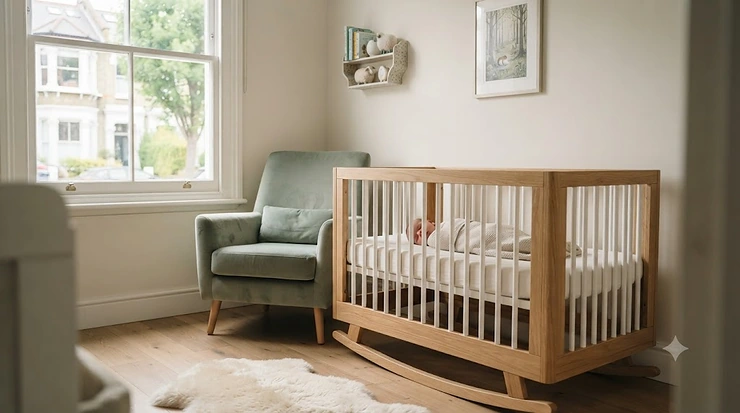
Somewhere around week three of parenthood, you learn a truth nobody puts on the baby shower invite: an unsettled newborn does not care about your bedtime. What they care about is motion. That gentle, womb-like sway that says everything is fine, you are safe, go back to sleep. This is precisely why so many exhausted parents go hunting for the best rocking cribs rather than a plain static cot, and why this guide exists — to walk you through genuinely useful options rather than a rehashed spec sheet.
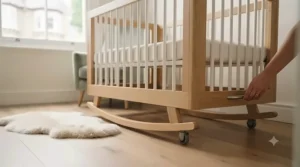
A rocking crib is simply a baby bed, either free-standing or bedside, that can be gently swayed from side to side (or occasionally back to front) to mimic the movement babies experienced in the womb, usually with a lockable mechanism so it can be fixed still once baby is asleep. That’s the 40-second definition, but the real question is which model earns a spot beside your bed for the next six months without becoming a wobbly, creaky liability.
We’ve spent time digging through manufacturer specifications, safety documentation, and aggregated customer feedback from UK retailers to pull together seven genuinely different options — smart, wooden, budget, premium, and heirloom styles — so whatever your priorities, there’s a sensible pick here. Throughout, we’ve leaned on guidance from The Lullaby Trust on what actually makes a sleep product safe, because no amount of soothing motion matters if the crib itself isn’t built to current standards.
One quick note before we dive in: we haven’t personally tested every unit in this list, and we say so honestly throughout. Where we’re drawing on aggregated reviewer sentiment rather than lab-verified specs, we flag it. Where prices are mentioned, we use ranges only, since retailer pricing shifts constantly — always check the current price before buying.
Quick Comparison Table
| Rocking Crib | Best For | Price Range | Rocking Mechanism |
|---|---|---|---|
| SNOO Smart Sleeper Baby Cot | Sleep-deprived parents wanting automated response | Premium, over £1,000 | Motorised, app-controlled |
| Tutti Bambini CoZee Air Bedside Crib | Bedside co-sleeping with storage | £200-£250 range | Manual, lockable rocking bars |
| Chicco Next2Me Magic Evo | All-round reliability and adjustability | £130-£240 range | Manual rocking mechanism |
| Obaby Sophie Swinging Crib | Budget-friendly traditional nursery look | Under £150 | Manual swing, lockable static mode |
| Tutti Bambini ZiZee Breathable Rocking Crib | Lightweight travel and airflow | £90-£160 range | Manual, lockable rocking bars |
| Ickle Bubba Mini Rocker Crib | Small spaces and quick setup | Under £120 | Manual twist-leg rocker |
| Clair de Lune Wicker Moses Basket & Rocking Stand | Traditional heirloom-style cradle | £80-£150 range | Manual side-to-side stand |
Looking across this table, the split is really between automated soothing (the SNOO) and manual rocking, which every other crib here relies on. If you want hands-off, middle-of-the-night intervention, only the SNOO delivers that; everyone else asks you to give the crib a gentle push. Budget-conscious buyers will find the Ickle Bubba and Obaby options land comfortably under £150, while the Tutti Bambini range sits in a sensible mid-market bracket that adds airflow, storage, or portability depending on the model chosen.
💬 Just one click — help others make better buying decisions too!😊
Top 7 Rocking Cribs: Expert Analysis
1. SNOO Smart Sleeper Baby Cot — the only crib that rocks itself automatically
The standout here is that the SNOO doesn’t wait for you to nudge it. Created by paediatrician Dr Harvey Karp, it uses built-in sensors to detect fussing and automatically escalates white noise and rocking motion in response, rather than requiring a parent to intervene.
Specification-wise, it offers five graduated levels of sound and motion, a clip-in swaddle sack designed to keep babies safely on their back, and app connectivity for tracking sleep patterns and adjusting settings remotely. What that means in practice: instead of getting up at 2am to manually rock a crib, the SNOO often calms a stirring baby within about a minute, before it escalates into full crying. Based on the spec comparison with every other product on this list, it’s the only one engineering an actual feedback loop rather than static rocking.
This is squarely aimed at parents who can justify the outlay — new families dealing with reflux, colic, or simply brutal sleep deprivation, and who want a device that intervenes automatically overnight rather than one more thing to manage. Reviewers consistently report that the automated response genuinely buys back 1-2 hours of sleep per night, though several also note the ongoing app subscription cost after the included introductory period is a factor worth budgeting for.
Pros:
- ✅ Automatically detects and responds to fussing without parent input
- ✅ Clip-in swaddle keeps baby safely positioned on their back
- ✅ App-based sleep tracking and adjustable soothing levels
Cons:
- ❌ Premium price point, plus an ongoing subscription after the free period
- ❌ Large footprint compared with most bedside cribs on this list
Priced well over £1,000, the SNOO sits at the very top of this market — but for parents who value their sleep above almost anything else, reviewers generally feel the automation genuinely justifies the spend.
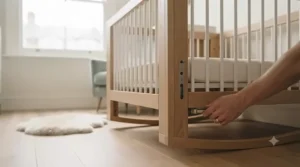
2. Tutti Bambini CoZee Air Bedside Crib — best storage and airflow combination
What stands out immediately is the deluxe airflow mattress paired with mesh ventilation panels on both sides, a genuine upgrade over the single-mesh-panel design common on cheaper bedside cribs.
The crib offers six height positions, so you can match it to almost any adult bed, and — usefully — you can set one side higher than the other, which reviewers note helps ease reflux or nasal congestion. At roughly 10-11kg it isn’t the lightest bedside crib around, but the lockable castors mean you’re rolling it rather than lifting it between rooms. Here’s what most buyers overlook about this model: the storage shelf underneath isn’t just a nice extra — it genuinely changes how manageable 3am nappy changes feel when everything is already within arm’s reach.
This is a strong pick for parents planning to co-sleep safely by attaching the crib to their bed, then later switching to rocking bars and castors for use as a standalone nursery crib. Reviewers consistently praise the sturdy frame and stylish finish, though a recurring theme in aggregated feedback is that the frame isn’t real wood despite the wood-effect look, which occasionally surprises buyers expecting solid timber at this price point.
Pros:
- ✅ Six height positions plus independent side-tilt for reflux relief
- ✅ Dual mesh ventilation panels for genuinely improved airflow
- ✅ Under-crib storage shelf for night-time essentials
Cons:
- ❌ Heavier than several rivals, though castors offset this
- ❌ Frame is wood-effect rather than solid timber
In the £200-£250 range, this sits toward the pricier end of bedside cribs, but the airflow and storage additions make a reasonable case for the premium over the standard CoZee.
3. Chicco Next2Me Magic Evo — best all-rounder with proven longevity
The Magic Evo’s standout feature is its rocking mechanism combined with four tilt positions and 11 height settings — a genuinely wide adjustment range that most rivals don’t match.
In practical terms, the drop-side can be lowered with one hand, which matters enormously if you’re recovering from a c-section or breastfeeding and can’t easily get out of bed. The rocking function itself is a proper mechanism rather than incidental wobble, letting you settle a stirring baby without leaving your own bed. Based on the spec comparison, this model has stayed in continuous production with minimal design changes since 2019 — a rare thing in baby gear — which is a reasonable proxy for how well the core engineering has held up over time.
This suits parents who want a “does everything reasonably well” crib rather than a specialist choice: side-sleeping, standalone use, and travel are all catered for, and the crib doubles as a suitable travel cot thanks to its included travel bag. Reviewers repeatedly highlight ease of assembly (typically 30-35 minutes solo, no tools) and describe it as sturdy and confidence-inspiring for new parents nervous about safety.
Pros:
- ✅ Four tilt positions plus 11 height settings for genuine adjustability
- ✅ One-handed drop-side, useful for post-birth recovery
- ✅ Long production run suggests dependable, well-tested design
Cons:
- ❌ At around 13kg, one of the heavier cribs to carry upstairs
- ❌ Fitted sheets are sold separately at extra cost
Typically found in the £130-£240 range depending on retailer promotions, the Magic Evo represents one of the more dependable value propositions in this list.
4. Obaby Sophie Swinging Crib — best budget traditional wooden rocking crib
The immediate standout is the price-to-style ratio: a genuinely classic, slatted wooden-framed crib with a gentle swinging motion, for meaningfully less than most bedside alternatives here.
Specification-wise, it’s a birth-to-approximately-six-months crib requiring an Obaby 85 x 43cm mattress (sold separately or bundled), with open slatted ends and sides for full visibility, and a locking mechanism that converts it from swinging to a fixed static position once baby is settled. On paper this means you get a proper nursery-furniture look, not just a functional co-sleeper — a meaningful difference if you’re decorating the room around it rather than squeezing it beside the bed. What the spec sheet won’t tell you, but reviewer feedback suggests, is that assembly experiences vary noticeably: some parents find it straightforward, others report it fiddly, so budgeting extra time for setup is sensible.
This is the pick for parents who want a standalone nursery crib rather than a bedside co-sleeper, and who value classic wooden styling over mesh-and-fabric modern designs. Reviewers consistently praise the build quality and the crib’s traditional aesthetic, though a genuine complaint that surfaces repeatedly is that the included 3.5cm foam mattress feels thinner than some parents would like, prompting several to buy a thicker aftermarket mattress.
Pros:
- ✅ Genuine wooden-framed traditional crib styling at a low price
- ✅ Simple lock into static mode once baby is asleep
- ✅ Slatted design gives excellent visibility of baby
Cons:
- ❌ Included mattress is thinner than some parents prefer
- ❌ Assembly experience is inconsistent across reviewers
Sitting comfortably under £150, this is one of the most accessible wooden rocking crib options carrying a recognisable, trusted UK nursery brand name.
5. Tutti Bambini ZiZee Breathable Rocking Crib — best lightweight option for travel and airflow
What sets the ZiZee apart is its all-around mesh construction, giving a genuinely unobstructed view of your baby from any angle, rather than the single viewing panel found on many rivals.
At roughly 6.5-9.3kg depending on the bundle, and with a 30-second fold mechanism plus an included travel bag, this is comfortably one of the more portable rocking cribs on the market. The lockable rocking bars let you switch between gentle motion and a fixed static base, and detachable wheels handle room-to-room moves. Here’s what most buyers overlook: the mesh design isn’t just about visibility — reviewers consistently link it to noticeably better temperature regulation on warm nights compared with fully upholstered cribs. It complies with the current BS EN 1130:2019 bedside crib standard, alongside several international equivalents, which is worth checking for on the label regardless of which crib you eventually choose.
This suits parents prioritising portability — regular travel, staying at grandparents’, or simply a small nursery where a lightweight fold-flat design matters more than storage shelves. Genuine reviewer complaints do exist: a recurring theme in aggregated feedback is that the mattress support bar can cause a noticeable tilt if a baby settles to one side, so it’s worth monitoring positioning closely in the early weeks.
Pros:
- ✅ All-around mesh for visibility and improved airflow
- ✅ Genuinely lightweight with a 30-second fold and travel bag
- ✅ Complies with the current BS EN 1130:2019 crib safety standard
Cons:
- ❌ Some reviewers report the central mattress bar causes tilting
- ❌ Detachable wheels have been reported to pop off unexpectedly by some buyers
In the £90-£160 range depending on colourway and bundle, this is a sensible mid-range pick if breathability and travel convenience top your list.

6. Ickle Bubba Mini Rocker Crib — best compact crib for small spaces
The standout advantage is sheer footprint: at just 60cm high and roughly 6.5-6.6kg, this is noticeably smaller and lighter than every bedside crib in this guide.
Each leg has a simple twist mechanism that switches the crib between static and rocking modes in seconds, and reviewers describe the rocking action as smooth once engaged. What that means in practice: for parents in a small bedroom or a flat without space for a full-size bedside crib, this gives genuine rocking-crib functionality without eating into limited floor space. Based on the spec comparison, its 60cm height is lower and non-adjustable compared with rivals like the Magic Evo’s 11 settings, so it’s worth measuring your own bed height before assuming it’ll sit flush alongside it.
This is best suited to parents using it as a secondary napping crib, a travel companion, or a first bed in a compact nursery rather than as a long-term primary bedside sleeper. Reviewers consistently note the mattress is thin and quite firm — one described it as feeling “like a changing mat” — so while babies have napped in it happily for a couple of hours, some parents supplement with a compliant mattress topper for overnight use.
Pros:
- ✅ Compact 60cm footprint ideal for small bedrooms
- ✅ Assembles or folds down in around five seconds
- ✅ Twist-leg mechanism switches rocking mode on or off instantly
Cons:
- ❌ Fixed, non-adjustable height may not suit every bed
- ❌ Mattress is notably thin and firm compared with rivals
Typically priced under £120, it’s one of the most affordable genuinely portable rocking cribs currently available, and a sensible secondary purchase even if you already own a larger crib.
7. Clair de Lune Wicker Moses Basket & Rocking Stand — best traditional heirloom-style cradle
The obvious standout is craftsmanship: a genuinely handwoven wicker or palm-leaf basket paired with a solid pine rocking stand, giving a look that simply isn’t achievable with moulded plastic or fabric-and-mesh designs.
The rocking stand is built from solid pine with adjustable straps to fit most standard wicker or palm Moses baskets, and rocks smoothly side to side with a gentle push; retaining bars keep the basket securely seated. On paper this means you get two genuinely separable pieces — a soft-sided basket for the earliest weeks, and a stand that lifts it to a comfortable bedside height and adds the rocking motion. What most buyers overlook is that the basket itself, not just the stand, needs to meet a British Safety Standard — specifically BS EN 1466 — so it’s worth confirming both components carry current certification rather than assuming an inherited or secondhand basket automatically qualifies.
This is the natural pick for parents who want the classic, almost storybook cradle aesthetic, or who are drawn to the idea of a traditional baby cradle heirloom piece that could realistically be reused for a second child or passed down, provided it’s inspected and recertified each time. Reviewers consistently describe the rocking motion as genuinely soothing and the craftsmanship as a cut above synthetic alternatives, though several also note that, being intended for the first few months only, babies outgrow it faster than a full-size crib.
Pros:
- ✅ Genuine handwoven wicker or palm-leaf construction
- ✅ Solid pine rocking stand with adjustable straps for a secure fit
- ✅ Classic, heirloom-style aesthetic unmatched by synthetic cribs
Cons:
- ❌ Shorter usable lifespan than a full crib, typically birth to around 4-6 months
- ❌ Basket and stand should be checked for standards compliance separately
In the £80-£150 range depending on basket and stand combination, this remains one of the most charming and genuinely traditional options in this guide, provided safety checks are taken seriously each time it’s reused.
Top 7 Rocking Cribs at a Glance: Specification Comparison
| Model | Approx. Weight | Age Suitability | Standout Feature |
|---|---|---|---|
| SNOO Smart Sleeper | Not specified by manufacturer for bassinet unit | Birth to 6 months | Automatic motion + sound response |
| Tutti Bambini CoZee Air | 10-11kg | Birth to approx. 6 months | Dual mesh airflow panels |
| Chicco Next2Me Magic Evo | 13kg | Birth until baby sits/rolls unaided | 11 height settings, 4 tilt positions |
| Obaby Sophie Swinging Crib | Not specified by manufacturer | Birth to approx. 6 months | Traditional wooden slatted frame |
| Tutti Bambini ZiZee | 6.5-9.3kg | Birth to approx. 6 months | All-around mesh, 30-second fold |
| Ickle Bubba Mini Rocker | 6.5-6.6kg | Birth to 9kg (approx. 9 months) | 60cm compact footprint |
| Clair de Lune Wicker Stand | Basket and stand sold separately | Birth to approx. 4-6 months | Handwoven wicker with pine stand |
The clearest divide in this table is between cribs built for co-sleeping longevity (Chicco, Tutti Bambini) and those built for either automation (SNOO) or a specific niche like space-saving or heirloom charm (Ickle Bubba, Clair de Lune). If you’re only planning to buy one crib for the full newborn period, the adjustability of the Magic Evo or CoZee Air offers more headroom than the compact or wicker options, which tend to be outgrown sooner.
✨Ready to Narrow It Down?
🔍Take a moment to match your bed height, room size and budget against the table above before clicking through to check current pricing and availability on any of these seven picks.
Practical Usage Guide: Setting Up Your Rocking Crib Correctly
Getting a rocking crib right in the first 30 days matters more than most parents expect. Start by positioning it: place the crib flat against or immediately beside your bed at a height where you can reach in without leaning awkwardly, and always lock the rocking mechanism before leaving the room or when baby is unsupervised — this is standard practice regardless of brand.
During assembly, resist the temptation to skip reading the full instructions “because it looks obvious.” Several models in our comparison have inconsistent reviewer feedback specifically because assembly steps were rushed. Once built, test the rocking motion empty first, checking it moves smoothly without catching or excessive wobble, and confirm the locking mechanism genuinely holds the crib rigid rather than just slowing the motion.
A common early mistake is over-tilting or over-rocking a fussy baby, assuming more motion equals more soothing. In practice, a gentle, slow, rhythmic sway tends to work better than vigorous rocking, and most manufacturers explicitly recommend against rocking with excessive force. Finally, build a simple maintenance habit: check the rocking mechanism’s bolts and locking pins weekly for the first month, since most loosening tends to happen early as components settle in with use.

Real-World Scenarios: Which Rocking Crib Suits Your Situation?
If you’re a first-time parent in a one-bedroom flat with limited floor space, the Ickle Bubba Mini Rocker Crib’s 60cm footprint and five-second fold make far more sense than a bulkier bedside crib you’ll be tripping over. Compact living rooms benefit from a crib that can be folded and stashed during the day.
If you’re recovering from a caesarean and need one-handed access to your baby overnight without getting out of bed, the Chicco Next2Me Magic Evo’s one-handed drop-side and rocking function specifically address that pain point, and its 11 height settings mean it can be matched almost exactly to your recovery-friendly bed height.
If you’re a parent who travels frequently to visit family or splits time between two homes, the Tutti Bambini ZiZee’s 30-second fold and travel bag turn what would otherwise be a logistical headache into a genuinely portable setup, while still giving a real rocking mechanism rather than a basic travel cot with no motion option at all.
Problem → Solution: Common Rocking Crib Issues Sorted
Problem: My baby settles in the rocking crib but wakes the moment I stop rocking. This is extremely common and not a fault of the crib. Try extending the rocking gradually over several nights rather than stopping abruptly, and consider whether a model with a locking static mode (like the Obaby Sophie or Tutti Bambini ZiZee) allows you to ease from motion into stillness rather than an abrupt switch-off.
Problem: The crib wobbles more than expected when rocking. Several models in this guide, including the Chicco Next2Me Armonia and Magic Evo, are specifically engineered to move at a light touch — this is intended rocking behaviour, not a defect, though it can feel alarming initially. If wobble persists on a locked static setting, however, that does indicate a fitting issue worth checking against the manual.
Problem: The included mattress feels too thin or firm. This surfaces repeatedly in reviewer feedback for budget wooden cribs, including the Obaby Sophie. Rather than assuming the crib itself is at fault, check whether a compliant replacement mattress sized correctly for that specific model is available, since an ill-fitting mattress is itself a safety concern under BS EN standards.
Problem: I’m not sure whether to buy a bedside crib or a standalone rocking cot. This depends heavily on your sleeping arrangement and room layout — covered in detail in the comparison section below.
How to Choose the Best Rocking Cribs
- Confirm the current safety standard first. Any bedside crib should meet BS EN 1130:2019, while Moses baskets, cots and carrycots should meet BS EN 716-1:2017 or BS EN 1466:2014/2023 — check the label rather than assuming.
- Measure your bed height before choosing height-adjustable models. A crib with limited height range may simply not sit flush beside your particular bed frame.
- Decide bedside versus standalone early. Bedside cribs need secure attachment straps and a compatible bed type; standalone cribs offer more placement flexibility but lose the arm’s-reach co-sleeping benefit.
- Weigh manual against automated rocking. Manual rocking (the vast majority of models here) costs less and requires no charging, while automated rocking, as in the SNOO, intervenes without you waking up.
- Check the mattress separately from the frame. A crib’s overall safety rating depends on the mattress fitting snugly, so verify sizing and firmness rather than assuming “included” means “ideal.”
- Think about the whole six-month window, not just week one. A crib your baby will outgrow at 4 months might be a false economy compared with one rated to around 9kg.
- Factor in your own physical recovery. One-handed drop-sides and lightweight frames genuinely matter if you’re recovering from birth or managing solo night duty.
Rocking Crib vs Static Cot: Which Is Right for Your Baby?
The core difference between a rocking crib and a static cot isn’t just the motion — it’s what each is trying to solve. A rocking crib, whether bedside or standalone, is designed around the soothing effect of gentle sway; a static cot is designed purely around stable, unmoving sleep from day one, often for longer-term use well beyond six months.
In practice, most rocking cribs in this guide are only rated from birth to around six months or roughly 9kg, since they’re built to be lighter and more portable than a full cot. A static cot, by contrast, is typically rated from birth right through to toddlerhood, with a dropside or fixed panel and no moving parts to maintain. This matters because if you’re choosing one piece of furniture to last the full first two to three years, a static cot may genuinely be the more sensible single purchase — while a rocking crib works best as a first-months solution, later handed down, sold on, or swapped for a full cot.
| Factor | Rocking Crib | Static Cot |
|---|---|---|
| Typical age range | Birth to approx. 6-9 months | Birth to toddlerhood (cot bed) |
| Soothing motion | Yes, manual or automated | No |
| Portability | Generally lightweight, often foldable | Generally larger, fixed |
| Best For | Newborn soothing, bedside co-sleeping | Long-term single-purchase bed |
Reading the table, the honest takeaway is that these aren’t really competing products — many families end up owning both, using a rocking crib for the newborn stage before transitioning to a static cot once baby sits up unaided. If budget only stretches to one item, a cot with a rocking or gliding base function (several static cots offer this as an add-on) can be a reasonable middle ground.

Wooden Rocking Crib vs Modern Mesh-and-Fabric Designs
A traditional wooden rocking crib, like the Obaby Sophie, trades some of the ventilation benefits of mesh-sided modern cribs for a classic aesthetic and, generally, a lower price point. The slatted wooden design still allows visibility and airflow, but not to the same degree as an all-around mesh crib like the Tutti Bambini ZiZee.
What most buyers overlook is that wood doesn’t inherently mean sturdier — both material types, when compliant with current British Safety Standards, are rigorously tested for stability and impact resistance regardless of whether the frame is timber, steel tube, or moulded composite. The real trade-off is less about safety and more about lifestyle: wooden cribs tend to be heavier and less packable for travel, while mesh-and-fabric designs fold flatter and pack lighter, at the cost of a less traditional nursery look. Reviewers consistently note that solid wood ages better cosmetically over multiple children than fabric coverings, which tend to show wear sooner.
Rocking Crib Safety and Locking Mechanisms Explained
Every rocking crib in this guide includes some form of locking mechanism to switch from rocking to a fixed, static position — and using it correctly matters as much as choosing the right crib. The safe-sleep principle behind this is simple: babies should be placed to sleep on a firm, still surface, and rocking is a soothing tool for settling rather than an ongoing sleep-time feature, in line with wider safer sleep guidance from the Department for Education and The Lullaby Trust.
Mechanically, locking systems vary: some, like the Ickle Bubba Mini Rocker, use a twist-leg design that mechanically fixes the rocker’s curve in place; others, like the Tutti Bambini and Chicco models, use lockable bars or castors that click into a static position. What most buyers overlook is that a locking mechanism should be checked, not just assumed, every single time before leaving a baby unattended — manufacturers are consistent in stating this across every model reviewed here. Since 2020, UK bedside cribs specifically have been required to meet the updated BS EN 1130:2019 standard, which removed the older full-drop-side design in favour of safer, more limited access panels, so if you’re buying secondhand or inheriting an older crib, checking the standard on the label is essential rather than optional.
Gentle Rocking Motion and Newborn Sleep: What the Science Suggests
The theory behind gentle rocking motion for newborn sleep is straightforward: babies spend nine months experiencing constant, rhythmic movement in the womb, and the sudden absence of that motion after birth is thought to contribute to some settling difficulties. Rocking, whether from a parent’s arms, a chair, or a crib mechanism, aims to recreate a version of that sensation.
It’s worth being precise here rather than overselling it: rocking is a soothing aid, not a scientifically proven sleep-training method, and it doesn’t reduce the risk of sudden infant death syndrome — the factors that genuinely reduce that risk are back-sleeping, a firm flat mattress, a smoke-free environment, and the correct room temperature, as set out in NHS guidance on reducing the risk of SIDS. What rocking cribs add is a practical, hands-off way to deliver that soothing motion consistently, particularly valuable at 2am when parental patience for manual rocking is running thin. Reviewers across nearly every product in this guide describe a similar pattern: rocking helps babies settle faster initially, but the crib should always be locked static for the actual sleep period once baby has drifted off, rather than left rocking through the night.
Traditional Baby Cradles and Heirloom Cribs: Are They Still Worth It?
There’s a genuine emotional pull toward a traditional baby cradle heirloom piece — something with history, perhaps used by a grandparent, that feels more meaningful than a plastic-and-mesh modern crib. The Clair de Lune wicker basket and stand combination captures that aesthetic new, while genuinely inherited pieces raise a separate consideration entirely.
Here’s the honest analysis: an heirloom cradle can absolutely be safe to use, provided it’s checked thoroughly against current standards before each use — this means verifying the mattress fits with no gaps exceeding roughly 30mm, confirming there’s no structural damage to slats, joints or the rocking mechanism, and ideally replacing the mattress entirely with a new, correctly sized one rather than reusing decades-old foam. What most buyers overlook is that safety standards themselves have evolved significantly; a cradle safe by 1990s standards may not meet current BS EN requirements, particularly around drop-sides and gap tolerances. For families who value the heirloom sentiment but want current-standard construction, buying a newly-made traditional-style wicker cradle, like the Clair de Lune range, offers a reasonable middle ground between sentiment and certainty.
What Real Baby Rocking Crib Reviews Reveal (Common Buying Mistakes)
Trawling through genuine baby rocking crib reviews across UK retailers and parenting communities reveals a handful of mistakes that come up again and again, regardless of which specific model parents bought.
The most common: buying based purely on aesthetics rather than checking the maximum weight or age rating, then being caught out needing to buy a second crib within a few months. A close second is skipping the mattress-fit check — several reviewers across multiple brands in this guide specifically mention gaps or tilting caused by an ill-fitting or unsupported mattress, which is both uncomfortable for baby and a genuine safety consideration. A third recurring theme, drawn from detailed parent reviews on sites like Mumsnet’s crib and co-sleeper reviews, is underestimating assembly time — several parents report attempting first-time assembly while heavily pregnant or freshly postpartum, then wishing they’d practised beforehand. The consistent advice across aggregated reviews is simple: assemble and test the crib fully before your due date, not after.
Long-Term Cost & Maintenance
Thinking beyond the initial purchase price matters, because a rocking crib’s total cost of ownership includes replacement mattresses, fitted sheets (often sold separately), and, for the SNOO specifically, an ongoing app subscription after the introductory period.
| Model | Typical Additional Costs | Expected Usable Lifespan |
|---|---|---|
| SNOO Smart Sleeper | Monthly app subscription after intro period | Birth to approx. 6 months |
| Chicco Next2Me Magic Evo | Fitted sheets sold separately | Birth until baby sits/rolls unaided |
| Obaby Sophie Swinging Crib | Aftermarket thicker mattress commonly bought | Birth to approx. 6 months |
| Clair de Lune Wicker & Stand | Basket often needs periodic mattress replacement | Birth to approx. 4-6 months |
Looking at value over the full six-month window, the mid-range Tutti Bambini and Chicco models arguably offer the best cost-per-month ratio, since their wider height and tilt adjustability means fewer families need to buy a second product partway through. The SNOO’s higher upfront and ongoing cost only makes long-term sense if the sleep gains genuinely offset the spend for your household — a calculation that will look different for every family’s budget and sleep-deprivation tolerance.
💛 Still Deciding Between Models?
✨ Check today’s availability and current pricing on any of the seven cribs above — details and current stock can change quickly on popular models.

FAQ
❓ What is the difference between a rocking crib and a Moses basket?
❓ Is it safe to leave a baby rocking in a crib overnight?
❓ How long can a baby use a rocking crib for?
❓ Do rocking cribs meet UK safety standards?
❓ Can a rocking crib help with reflux or colic?
Conclusion
Choosing between the best rocking cribs on the market ultimately comes down to matching the crib to your specific situation rather than chasing the flashiest option. If budget and automation matter most, the SNOO earns its premium price through genuine hands-off soothing. If you want dependable, well-adjusted co-sleeping, the Chicco Next2Me Magic Evo and Tutti Bambini CoZee Air both offer years of proven design. For tight spaces or travel, the Ickle Bubba and Tutti Bambini ZiZee punch well above their compact size, while the Obaby Sophie and Clair de Lune wicker stand cover the traditional, budget-conscious, and heirloom-minded end of the market respectively.
Whichever you choose, the details matter more than the price tag: check the safety standard on the label, measure your own bed and room, and always lock the rocking mechanism before walking away. A good rocking crib doesn’t replace safe sleep practice — it simply makes those first exhausting months a little gentler, for both of you.
Recommended for You
- Next to Me Cribs: 7 Best Bedside Picks Parents Swear By 2026
- Safest Co Sleeping Crib 2026: 7 Bedside Cribs Parents Trust
- Chicco Next2Me Magic Review 2026: Worth the Money?
Disclaimer: This article contains affiliate links. As an Amazon Associate, I earn from qualifying purchases. If you purchase products through these links, we may earn a small commission at no additional cost to you.
✨ Found this helpful? Share it with your friends! 💬🤗
