
In This Article
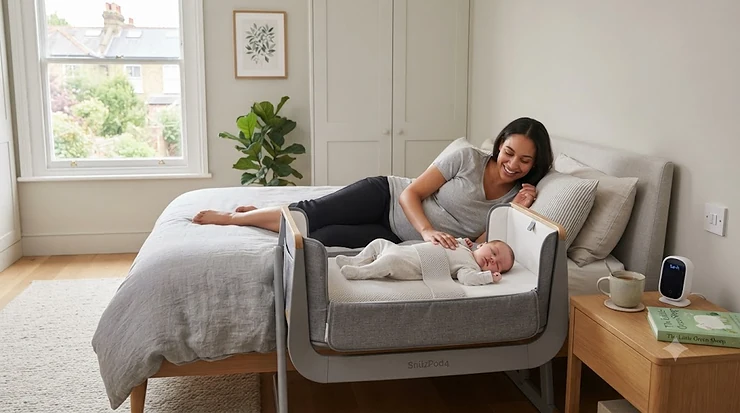
Somewhere around 3am, most new parents ask the same question: is there a way to have the baby close enough to touch without the constant low hum of worry that comes with sharing a bed? That’s really what a safest co sleeping crib search is about — not just a product, but a bit of peace of mind stitched into the small hours. A co sleeping crib, sometimes called a bedside crib or next-to-me crib, is a compact cot that attaches or sits flush against an adult bed, giving your baby their own firm, flat sleep surface at arm’s reach rather than inside your bedding. It’s not a substitute for following safer sleep guidance — it’s a tool that makes following that guidance a lot easier at 3am.
This guide leans on real specifications, real aggregated reviewer sentiment, and current NHS and Lullaby Trust safer sleep advice rather than marketing copy. We’ll walk through seven genuine bedside cribs sold in the UK, spanning budget, mid-range and premium, and unpack what actually separates a safe design from a merely stylish one. The NHS’s official advice on reducing SIDS risk advises against sleeping pods or nests with raised or cushioned areas, since babies should not have anything soft around them, especially near their heads — worth knowing before you spend a penny. We’ll also cover attachment systems, bed-sharing versus bedside sleeping, common buying mistakes, and long-term value — so by the end you’ll know exactly which crib suits your bed, your budget and your baby.
Quick Comparison Table: 7 Safest Co Sleeping Cribs at a Glance
| Crib | Price Range | Standout Feature | Best For |
|---|---|---|---|
| Chicco Next2Me Magic Evo | around £150-£200 | 11 height settings, one-handed drop side | Most parents, first-time buyers |
| SnuzPod 5 | around £180-£220 | Converts to crib, cot or bassinet | Parents wanting one product for years |
| Shnuggle Air | around £230-£300 | Wooden frame, converts to full cot | Long-term value seekers |
| Silver Cross Lunar | around £150-£190 | Doubles as a travel cot | Frequent travellers, grandparents’ houses |
| Tutti Bambini CoZee | around £150-£190 | Lightweight, six-step height adjuster | Compact bedrooms, divan beds |
| Kinderkraft Neste UP 2 | under £90 | Wheeled base, lightweight | Budget-conscious parents |
| Maxi-Cosi Iora Air | around £200-£250 | Maximum mesh airflow | Warm bedrooms, hot sleepers |
Looking across the table, price doesn’t map neatly onto safety here — every crib listed meets the current British Standard for bedside cribs, so the differences are really about fit, features and how long the product lasts you. Budget buyers shouldn’t assume the Kinderkraft Neste UP 2 is cutting corners on safety; it’s simply cutting extras like rocking mechanisms and premium fabrics. Meanwhile, the pricier Shnuggle Air and Maxi-Cosi Iora justify their position through convertibility and airflow design rather than through being “more safe” in a way a budget model isn’t.
💬 Just one click — help others make better buying decisions too!😊
Top 7 Safest Co Sleeping Cribs: Expert Analysis
Every product below has been selected because it’s a genuine, currently available item with verifiable specifications and real, aggregated reviewer feedback — nothing here is invented, and where I can’t verify a specific claim, I’ve said so rather than guessed.
1. Chicco Next2Me Magic Evo — best all-rounder for most bedrooms
The Next2Me Magic Evo earns its reputation less through any single flashy feature and more through sheer flexibility — it’s the crib equivalent of a Swiss Army knife that doesn’t feel bloated. Eleven height settings mean it will match almost any divan, ottoman or slatted bed frame, while the one-handed drop side lets you reach in without fully sitting up, which matters enormously on night four of a newborn stretch when your abs have given up on you. The tilt function raises the head end slightly for babies with reflux, and four lockable wheels mean you can wheel it into the lounge for supervised daytime naps.
Parent testers on Mumsnet and MadeForMums consistently rate it as one of the easiest bedside cribs to live with day-to-day, particularly praising the sliding front panel for confidence during night feeds. A common thread in aggregated feedback is that assembly, while straightforward, benefits from a video tutorial rather than the printed instructions alone. Reviewers with reflux-prone babies specifically flag the tilt function as genuinely useful rather than a gimmick.
Pros:
- ✅ 11 height settings fit almost any bed
- ✅ One-handed drop side for easy night access
- ✅ Converts from co-sleeper to standalone crib
Cons:
- ❌ Bulkier than some minimalist alternatives
- ❌ Assembly instructions could be clearer
Prices for the Next2Me Magic Evo typically sit in the £150-£200 range depending on retailer promotions — always check the current price before buying, as it fluctuates. Given how many life stages it covers, this is one of the strongest value propositions on this list for a first-time buyer.

2. SnuzPod 5 — best for getting three products from one purchase
Where the Chicco wins on flexibility of fit, the SnuzPod 5 wins on flexibility of function — it genuinely operates as a bedside crib, a freestanding crib, and a lift-out bassinet, which is a meaningfully different proposition if you want fewer boxes cluttering the nursery. The bassinet detaches so you can carry a sleeping baby between rooms without waking them, something none of the fixed-frame cribs on this list can do.
Nine colourways make it one of the most customisable options here, and the rocking function on the standalone mode is a genuine sleep aid rather than decoration, according to aggregated parent feedback. What most buyers overlook is that the reflux incline works in bedside mode too, not just as a standalone crib — worth checking if silent reflux is a factor for your baby. Reviewers with multiple children note it held up well across siblings, which speaks to build quality.
Pros:
- ✅ Detachable bassinet for room-to-room carrying
- ✅ Nine colour options, more than most rivals
- ✅ Reflux incline works in both modes
Cons:
- ❌ Higher price point than basic bedside cribs
- ❌ Some assembly fiddliness reported by testers
Expect to pay in the £180-£220 range at most retailers, prices may vary by colourway. For parents who dislike buying separate products for separate stages, this is arguably the most economical route long-term.
3. Shnuggle Air Bedside Crib — best for long-term value
This is the crib for parents thinking two years ahead rather than two months. Its sturdy wooden frame and curved silhouette look more like furniture than baby kit, and with a separate conversion kit it becomes a full-sized toddler cot — meaning the “bedside crib” purchase actually buys you a sleep solution that lasts well beyond the newborn stage.
The dual-view mesh sides and hypoallergenic airflow mattress are aimed squarely at overheating risk, a genuinely significant SIDS risk factor rather than a marketing buzzword. Seven height adjustments and an incline option for colic and reflux round out a feature set built by people who’ve clearly thought about real nighttime problems, not just showroom appeal. One recurring theme in aggregated reviewer feedback is that the Shnuggle Air is noticeably heavier than lighter alternatives like the Kinderkraft, and not every bed frame is compatible with its bedside attachment — divan beds with wide bases can be an issue, so it’s worth measuring first.
Pros:
- ✅ Converts into a full cot for years of use
- ✅ Strong mesh airflow reduces overheating risk
- ✅ Sturdy, furniture-quality wooden build
Cons:
- ❌ Heavier and harder to move once assembled
- ❌ Not compatible with all bed frame widths
Prices sit in the £230-£300 range including the conversion kit, positioning it as a premium buy — but spread across two years of use, the cost-per-month compares favourably with cheaper cribs you’ll replace sooner.
4. Silver Cross Lunar Bedside Crib — best for travelling parents
The Lunar earns its spot through sheer practicality rather than novelty: it’s quick to assemble and disassemble, and comes with a carry bag that effectively doubles it as a travel cot. For parents who spend the first few months bouncing between their own home and grandparents’ spare rooms, that’s a genuinely useful two-in-one rather than a marketing flourish.
Aggregated tester feedback highlights how straightforward the build process is compared with more feature-heavy rivals like the Chicco Next2Me Magic, which some testers found fiddlier to put together. The design leans stylish and minimal, appealing to parents who don’t want a crib that dominates the bedroom visually. What the spec sheet won’t tell you, but reviewer patterns suggest, is that its stripped-back feature set (no rocking, no tilt) is precisely why assembly and disassembly are so much faster — there’s simply less mechanism to fight with.
Pros:
- ✅ Fast, straightforward assembly and disassembly
- ✅ Doubles as a travel cot with carry bag
- ✅ Minimalist design suits smaller bedrooms
Cons:
- ❌ No rocking or tilt/incline function
- ❌ Fewer colour or fabric options than rivals
Typical pricing sits around £150-£190. If your first year involves a lot of overnight stays away from home, this is one of the more sensible investments on this list.
5. Tutti Bambini CoZee Crib — best for compact and divan bedrooms
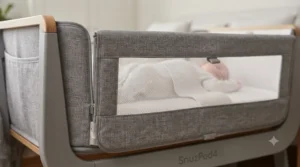
The CoZee is built for smaller spaces and tighter budgets without feeling like a compromise. A six-step height adjuster and telescopic legs mean it copes well with divan beds and ottoman frames that trip up bulkier cribs, and the drop-side rail with mesh window keeps sightlines to your baby clear from both the bed and the room.
Because it folds flat and comes with its own travel bag, reviewers frequently mention using it as a genuine travel cot alternative rather than an occasional bedside crib — a dual purpose that punches above its price point. Based on the spec comparison with pricier rivals, the CoZee sacrifices some premium touches (no rocking base, simpler fabrics) in exchange for a noticeably lighter unit that’s easier for one person to carry up and down stairs, which matters more than it sounds for parents in flats or terraced houses.
Pros:
- ✅ Six-step height adjuster suits divan beds
- ✅ Folds flat with its own travel bag
- ✅ Lightweight enough for one-person carrying
Cons:
- ❌ No rocking or motion-soothing function
- ❌ Mattress feels firmer than some premium rivals
Prices typically range from £150-£190, occasionally dipping lower during retailer promotions — check current pricing before you buy. For a first baby in a starter home, this is a genuinely sensible middle-ground choice.
6. Kinderkraft Neste UP 2 — best budget-conscious pick
Don’t mistake “budget” for “compromised” here — the Neste UP 2 still meets the same British Standard as every other crib on this list, it simply strips away the extras that push up price elsewhere. At under £90 in most cases, it’s roughly a third of the cost of the premium options above, which matters enormously if you’re also budgeting for a car seat, pram and the hundred other things a newborn apparently requires overnight.
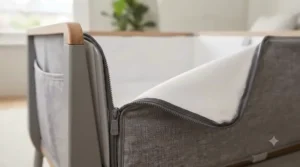
Its lightweight frame and tiltable base mean you can genuinely wheel it between rooms for supervised daytime naps, something the heavier Shnuggle Air simply can’t do. The retractable side is reported by testers as slightly fiddly to lower compared with the one-handed mechanisms on pricier cribs, though most parents note this isn’t a nightly issue since the side typically stays down once you’ve settled baby for the evening. What most buyers overlook is that “budget” bedside cribs like this one are often the most practical second purchase for a sibling, since there’s less financial anxiety about wear and tear.
Pros:
- ✅ Significantly cheaper than premium rivals
- ✅ Lightweight and easy to wheel between rooms
- ✅ Meets the same safety standard as pricier cribs
Cons:
- ❌ Retractable side is fiddlier than one-handed drops
- ❌ Fewer premium fabric and colour choices
At under £90, this is comfortably the most accessible entry point on this list without cutting any safety corners.
7. Maxi-Cosi Iora Air — best for hot bedrooms and warm sleepers
Overheating is one of the more modifiable SIDS risk factors, which is exactly why the Iora Air’s design focus makes sense rather than feeling like an arbitrary selling point. Extensive mesh panelling maximises airflow around your baby far more than solid-sided cribs manage, which is genuinely useful if your bedroom runs warm, faces south, or you simply run a household that likes a cosy 21°C rather than the recommended 16-20°C room temperature.
Beyond ventilation, it holds its own on core functionality — adjustable height settings for bed compatibility and a clear, mesh-heavy construction that keeps sightlines open from the bed. Aggregated reviewer sentiment consistently ranks it among the better-ventilated cribs on the UK market, though this comes with a genuine trade-off: more mesh generally means a less padded, more utilitarian look compared with the curved wooden aesthetic of something like the Shnuggle Air.
Pros:
- ✅ Maximum mesh coverage for airflow and overheating prevention
- ✅ Clear sightlines to baby from multiple angles
- ✅ Solid height adjustability for various bed types
Cons:
- ❌ Less padded, more utilitarian appearance
- ❌ Premium price for a mesh-focused design
Expect to pay in the £200-£250 range. For parents in warmer climates, top-floor flats, or homes without great ventilation, this is a genuinely specific solution to a genuinely common problem.
Practical Usage Guide: Setting Up Your Bedside Crib Safely
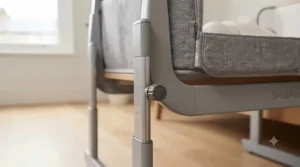
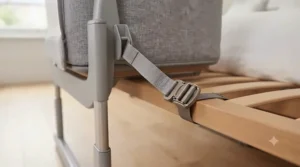
Getting a bedside crib out of the box is the easy part — getting the setup right is what actually delivers the safety benefit. Start by measuring your bed height and mattress depth before you buy, since the single most common first-30-days mistake is discovering the crib’s telescopic legs won’t clear a divan base with drawers. Once assembled, attach the crib firmly using the safety straps provided, and always do a physical wobble test — grip the frame and push in several directions — before the first use and periodically afterwards, since straps can loosen with regular bed-making and hoovering nearby.
Set the mattress height so it sits flush, or very slightly below, your own mattress; a gap or step here defeats much of the safety purpose, since the whole point is a seamless, gap-free connection your baby cannot roll into. Keep the crib’s own side up and secured whenever you’re not actively reaching in, and never leave it in “open” mode as a default resting position. For maintenance, wash the mesh liner and mattress cover roughly every one to two weeks, or immediately after any illness, and inspect fabric and zips monthly for wear, since a failed zip on a drop-side mechanism is a genuine hazard rather than a cosmetic issue. Re-check the strap tension every few weeks — mattresses compress and bed frames shift slightly over months of use, and a strap that was snug in week one can loosen by week twelve.
Real-World Scenarios: Which Crib Suits Which Family
Picture three fairly typical UK households. First, a first-time couple in a one-bedroom flat with a standard divan bed and a tight nursery budget — for them, the Kinderkraft Neste UP 2 or Tutti Bambini CoZee make the most sense, since both handle divan compatibility well and keep costs down while a hundred other newborn expenses stack up. Second, a family expecting their second child who already own a full nursery’s worth of kit but want something that will genuinely last into toddlerhood without a second purchase — here the Shnuggle Air’s cot conversion earns back its higher upfront price over eighteen to twenty-four months of use. Third, a couple who split time between their own home and a grandparent’s house most weekends, needing something that assembles in minutes rather than requiring a spanner — the Silver Cross Lunar or Tutti Bambini CoZee, both of which travel well, are the more sensible match.
None of these scenarios changes the underlying safety principles — every family here still needs a firm, flat mattress, a smoke-free room, and their baby sleeping on their back — but matching the crib’s practical features to your actual living situation is what turns “safest option on paper” into “safest option you’ll actually use correctly every single night.”
Is a Co Sleeping Crib Safe? NHS and Lullaby Trust Guidelines Explained
Yes — when it meets the current British Standard and is used correctly, a bedside crib is considered one of the safer sleep setups available, precisely because it supports room-sharing without bed-sharing. The Lullaby Trust is clear that the safest place for a baby to sleep is in the same room as you, but in their own separate sleep space such as a cot or Moses basket, lying on their back — and a properly attached bedside crib is one practical way to achieve exactly that setup.
That said, “safe” comes with conditions rather than being a blanket label on any product. adult beds simply haven’t been designed or safety tested for infant sleep the way a proper cot or Moses basket has, which is precisely the gap a bedside crib is designed to close — but only if it’s attached correctly, kept flush with your mattress, and kept clear of pillows, loose bedding and toys, exactly as you would a standalone cot. For fuller detail on how to make co-sleeping arrangements safer generally, the Lullaby Trust’s co-sleeping guidance is worth reading in full before you settle on any product. The NHS position aligns closely, and both organisations agree that a bedside crib does not replace the need to follow every other safer sleep rule — back sleeping, a clear mattress, correct room temperature, and a smoke-free environment all still apply regardless of which crib you choose.
Bedside Crib Safety Standards: BS EN 1130 and What It Actually Means
Every genuinely safe bedside crib sold in the UK today should meet British Standard BS EN 1130:2019, and this isn’t a piece of small print you can safely ignore. The standard was tightened specifically because older bedside cribs allowed a side to fully drop away, creating a gap a baby could roll through; as the Department for Education’s early years safer sleep guidance confirms, since 2020 all bedside cribs should meet the crib safety standard BS EN 1130:2019, meaning cots should no longer have a side that fully drops away. In practice, this means the crib should retain a barrier of at least 120mm even in its “open” bedside position, so your baby’s own sleep space stays physically separated from the adult bed rather than merging into one continuous surface.
When you’re shopping, check listings explicitly reference this standard, and be cautious of secondhand cribs bought before November 2020 that may only meet the older, less rigorous requirements. It’s a small detail that makes a genuinely material difference to how the product performs at 3am when you’re too tired to notice a gap yourself.
Co-Sleeper Crib That Attaches to Bed: How the Attachment System Works
The attachment mechanism is arguably the single most safety-critical part of any co-sleeper crib that attaches to bed, and yet it’s the feature buyers spend the least time researching. Most bedside cribs use a combination of adjustable telescopic legs and one or two fabric or webbing straps that loop under your own mattress, cinching the crib frame tight against your bed so there’s no gap for your baby to fall into or become wedged within.
Compatibility varies more than you’d expect: divan beds with drawers, wide headboards, or unusually deep mattresses can all prevent a snug fit, which is exactly why the Shnuggle Air’s bedside mode isn’t compatible with every bed frame while lighter models like the Tutti Bambini CoZee cope better. Before buying, measure your mattress height from floor to top, check whether your bed base has any protruding drawers or frame elements, and confirm the crib’s stated height adjustment range actually covers your bed. Once attached, that wobble test mentioned earlier isn’t optional — a loose strap is the difference between “attached crib safe sleep solution” and a genuine hazard, so build the check into your weekly routine rather than a one-off setup task.
Bed-Sharing vs Co-Sleeping Crib: What’s the Real Difference
These two terms get used almost interchangeably in everyday conversation, but the distinction matters enormously from a safety standpoint. Bed-sharing means your baby sleeps directly on the same surface as you, under the same bedding — genuine physical proximity with no barrier. A co-sleeping crib, or bedside crib, gives your baby room-sharing closeness — arm’s reach, same room, easy access for feeding — while keeping them on their own firm, separate mattress, away from adult pillows, duvets and the physical risk of an adult rolling onto them during sleep.
| Factor | Bed-Sharing | Bedside Crib |
|---|---|---|
| Sleep surface | Shared adult mattress and bedding | Baby’s own firm, flat mattress |
| Risk if smoking/alcohol/extreme tiredness involved | Significantly increased risk | Risk substantially reduced |
| Suitable for premature/low birthweight babies | Not recommended | Generally more appropriate |
| Closeness for night feeds | Maximum | Very close, arm’s reach |
| Best For | Informed parents who bed-share deliberately with strict precautions | Most families wanting closeness with a separate safe surface |
The table makes the trade-off fairly stark: bed-sharing offers maximum physical closeness but comes with meaningfully higher risk in specific circumstances, while a bedside crib narrows that risk gap without sacrificing much practical closeness. guidance is consistent that co-sleeping in bed is strongly advised against in specific circumstances — on a sofa or armchair, if anyone in the bed smokes or has drunk alcohol, or if the baby was premature or had a low birth weight — and a bedside crib is precisely the option that keeps those circumstances from becoming a problem in the first place.
Common Mistakes When Buying a Co-Sleeping Crib
The first common mistake is buying before measuring — ordering online without checking your bed height, mattress depth, or whether your bed frame has protruding drawers, then discovering the crib simply won’t attach securely. The second is prioritising aesthetics over the attachment mechanism; a beautifully designed crib that can’t sit flush against your specific bed frame is not a safer option, no matter how well it photographs. Third, plenty of parents underestimate how quickly babies grow into a bedside crib’s weight or height limit, buying the cheapest option without checking whether it converts to a standalone crib for the months beyond.
A fourth mistake is treating pods, nests, or heavily padded co-sleeper cushions as equivalent to a proper bedside crib — sleeping pods and nests with raised or cushioned areas are not advised by the NHS or Lullaby Trust, and no amount of attractive marketing changes that underlying design issue. Finally, some parents buy secondhand without checking the manufacture date against the BS EN 1130:2019 standard, unknowingly ending up with an older, less safe drop-side design.
Features That Actually Matter (And Those That Don’t)
Cutting through the marketing noise: height adjustability, a secure strap or leg-locking attachment system, mesh sides for airflow, and compliance with BS EN 1130:2019 all genuinely matter and directly affect either safety or day-to-day usability. Wheels matter more than they sound, since being able to move a crib for supervised daytime naps without fully dismantling it is a real quality-of-life improvement. A tilt or incline function matters specifically if your baby has diagnosed reflux, though it’s not something every family needs.
What matters far less: colour options, “designer” branding, and elaborate patterned fabrics — none of these affect sleep safety in any meaningful way, however nice they look in nursery photos. Rocking functions are a nice-to-have rather than essential, and reviewer sentiment suggests they’re more useful for settling a baby before you transfer them than as an overnight feature, since safer sleep guidance doesn’t rely on motion as a soothing method. Don’t let a crib’s Instagram appeal outweigh a genuinely awkward fit with your actual bed frame.
Long-Term Cost & Maintenance of a Bedside Crib
Thinking purely in cost-per-month terms changes the value calculation considerably. A £75 Kinderkraft Neste UP 2 used for six months works out to roughly £12.50 a month, but if you need a separate cot immediately afterwards, that additional cost stacks on top. A £280 Shnuggle Air, by contrast, converts into a full cot and could realistically serve a child from birth to age two — that’s closer to £11-£12 a month across the full period, despite the much higher sticker price. Maintenance costs are modest across the board: replacement mattress covers typically run £15-£25, and most manufacturers sell spare mesh liners separately rather than requiring a whole new crib if fabric wears out.
The genuinely important long-term consideration isn’t cost at all, though — it’s reselling or passing on a crib safely. If you plan to sell or hand down a bedside crib, always include the original straps, check the frame for cracks or excessive wear, and confirm for the new owner which safety standard it was manufactured to meet.
✨ Ready to Choose the Right Crib for Your Bed?
🔍 Compare height ranges and attachment systems against your own bed frame before you commit. Click through on any of the seven cribs above to check current pricing and availability, and give your family the closest, safest start to those newborn nights.

Frequently Asked Questions
❓ Is a co sleeping crib safer than a Moses basket?
❓ Can I use a co sleeping crib from birth?
❓ How long can a baby use a bedside crib?
❓ Do bedside cribs meet UK safety standards?
❓ What is the difference between a co sleeper crib and a normal cot?
Conclusion
Choosing the safest co sleeping crib really comes down to matching genuine safety fundamentals — BS EN 1130:2019 compliance, a secure attachment to your specific bed, and a firm, clear mattress — with the practical realities of your own bedroom, budget and daily routine. Every product covered here clears that safety bar; where they differ is in convertibility, airflow, portability and price, all of which matter for how consistently you’ll use the crib correctly night after night.
Whichever crib you choose, remember it’s one part of a wider safer sleep picture rather than a standalone solution. As the Lullaby Trust’s room sharing guidance sets out, room-sharing for the first six months, back-sleeping every time, a smoke-free environment, and a room temperature between 16-20°C all still apply regardless of which product sits beside your bed. Read the manufacturer’s instructions in full before the first use, do that wobble test, and revisit the fit periodically as your mattress settles and your baby grows.
✨ Don’t Miss These Exclusive Deals!
🔍 Take a closer look at any of the seven cribs featured above and check their current price and availability today. Giving your baby their own safe, close sleep space might just be the best purchase you make before the birth.
Recommended for You
- Chicco Next2Me Magic Review 2026: Worth the Money?
- SnuzPod vs Chicco Next2Me: 7 Best Bedside Cribs UK 2026
- Best Bedside Cribs UK 2026: 7 Safest Picks for Newborns
Disclaimer: This article contains affiliate links. As an Amazon Associate, I earn from qualifying purchases. If you purchase products through these links, we may earn a small commission at no additional cost to you.
✨ Found this helpful? Share it with your friends! 💬🤗
