
In This Article
Choosing a car seat isn’t simply ticking a box on your baby prep list—it’s arguably the most consequential safety decision you’ll make as a parent. When you’re navigating Britain’s narrow country lanes, creeping through London traffic, or bombing down the M1, the right car seat becomes your child’s personal fortress.
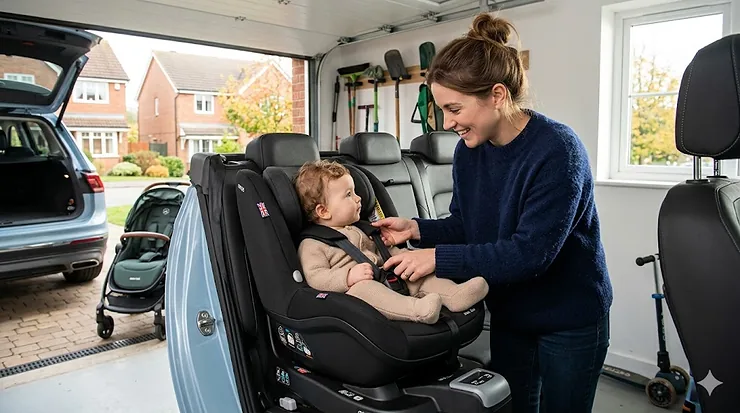
Maxi-Cosi has been protecting British children for over three decades, and in my experience researching child safety products, few brands command the same respect from both safety testers and sleep-deprived parents. Their seats consistently earn top marks in Which? crash tests and German ADAC evaluations—the gold standard for European car seat safety. What sets them apart isn’t just the impressive test scores; it’s how they’ve engineered genuinely clever solutions to everyday frustrations. The 360-degree rotating bases that save your back, the SlideTech mechanism that brings the seat to you, the ClimaFlow fabrics that prevent sweaty backs during the few weeks of actual British summer—these aren’t marketing gimmicks. They’re thoughtful responses to real problems.
The maxi cosi car seat range for 2026 has expanded considerably, which creates both opportunity and paralysis. Do you invest in the revolutionary Emerald 360 Pro that lasts twelve years, or build a system around the FamilyFix 360 base with interchangeable seats? Should you prioritise the ADAC test winner Titan Pro, or opt for the budget-friendly RodiFix booster? I’ve spent the past fortnight researching current UK availability, studying safety data, and speaking with retailers about what British families actually buy. What follows is a practical framework for navigating these choices, grounded in both safety evidence and the messy reality of British family life.
Quick Comparison Table: Top Maxi-Cosi Car Seats at a Glance
| Model | Age Range | Key Feature | Safety Rating | UK Price Range |
|---|---|---|---|---|
| Emerald 360 Pro | Birth–12 years | SlideTech all-in-one | i-Size R129 | £350–£450 |
| Pebble 360 Pro | Birth–15 months | SlideTech infant carrier | i-Size R129 | £200–£280 |
| Pearl 360 Pro | 3 months–4 years | Rotating toddler seat | i-Size R129 | £200–£280 |
| Titan Pro i-Size | 15 months–12 years | 4-star ADAC winner | ADAC 4-star | £280–£380 |
| RodiFix S i-Size | 3.5–12 years | Reclining booster | ADAC “Good” | £130–£200 |
| CabrioFix i-Size | Birth–12 months | Ultra-lightweight (3.2kg) | i-Size R129 | £120–£180 |
| Nomad Plus | 15 months–4 years | Foldable travel seat | Side impact tested | £130–£190 |
What this table reveals: The Emerald 360 Pro commands a premium but eliminates future purchases. The 360 Family system (Pebble + Pearl + Base) totals around £500-£650, whilst the Titan Pro offers excellent value for toddlers onwards. Booster seats like the RodiFix deliver strong safety at under £200. For UK families, the question isn’t which is safest—all meet rigorous standards—but which configuration suits your budget, vehicle type, and whether you’re planning more children who’ll inherit the system.
💬 Just one click — help others make better buying decisions too! 😊
Top 7 Maxi-Cosi Car Seats: Expert Analysis for UK Families
1. Maxi-Cosi Emerald 360 Pro – The Birth-to-School Revolutionary
The Maxi-Cosi Emerald 360 Pro represents Maxi-Cosi’s most ambitious engineering feat: a single car seat that serves from your newborn’s first journey home through their final year of primary school. The standout SlideTech mechanism slides the seat 17cm towards you before rotating, which genuinely transforms the contortionist act of buckling a squirming toddler into a one-handed operation. Having watched demonstration videos and read UK parent reviews, this matters more than the spec sheet suggests—particularly for anyone with a bad back or a low-roofed car like a Fiat 500.
The technical specifications tell part of the story: i-Size R129 compliance, G-CELL side impact protection integrated into both side panels and headrest, AirProtect safety cushions, and the ability to keep children rear-facing until 4 years (105cm). But what distinguishes this from competitors is the colour-coded misuse prevention system. Over 90% of parents incorrectly install car seats at some stage, according to road safety charities, and Maxi-Cosi’s visual indicators adapt to each growth phase, reducing that risk considerably.
For British buyers specifically, this seat addresses storage anxiety. In a typical terraced house or flat where every square metre counts, owning just one seat from birth to 12 years eliminates the loft full of outgrown baby equipment. The ClimaFlow ventilation proves particularly valuable during those unpredictable British heatwaves when temperatures spike but you’re still navigating humid traffic jams.
UK customer feedback highlights the learning curve—switching between rear-facing harness mode (birth to 4 years), forward-facing harness mode (15 months to 4 years), and booster mode (4 to 12 years) requires careful attention to the manual. Several John Lewis reviewers noted the seat feels bulky in smaller vehicles, though the flip side is exceptional crash protection.
Pros:
✅ Genuine 12-year lifespan eliminates future purchases
✅ SlideTech reduces back strain and makes installation in small cars manageable
✅ Comprehensive safety features including G-CELL and AirProtect earn parental confidence
Cons:
❌ Premium pricing (around £400) requires upfront investment
❌ Substantial footprint may overwhelm compact city cars
Value verdict: At around £400, you’re paying roughly £33 per year of use—considerably less than buying three separate seats. For UK families committed to one child or planning to pass it to younger siblings, the maths works brilliantly.
2. Maxi-Cosi Pebble 360 Pro – Premium Infant Carrier with SlideTech
The Maxi-Cosi Pebble 360 Pro brings SlideTech innovation to the infant carrier category, compatible exclusively with the FamilyFix 360 Pro base. From birth to approximately 15 months (40-83cm), this seat rotates 360 degrees and slides outward, transforming awkward car park wrestling matches into civilised affairs. The Easy-in harness stays open automatically, which sounds trivial until you’re juggling a crying newborn, shopping bags, and persistent British drizzle.
i-Size R129 compliance means rigorous side-impact testing, and the G-CELL side impact protection technology distributes collision forces away from your baby’s vulnerable head and neck. The Baby-hugg inlay provides proper positioning for newborns, whilst the ergonomic carry handle makes the frequent car-to-pram transitions less exhausting. At just 4.7kg (considerably lighter than many competitors), this proves manageable even when your 15-month-old approaches 12kg.
ClimaFlow temperature regulation addresses a specifically British concern: our weather oscillates wildly. One week you’re dealing with August humidity, the next you’re back to jumpers in September. The mesh panels and breathable foam help maintain reasonable comfort across this spectrum, though obviously nothing eliminates a sweaty baby entirely during genuine heatwaves.
UK availability is excellent—Amazon, John Lewis, and specialist retailers like In Car Safety Centre all stock this model with Prime delivery available. Reviews from British parents emphasise two points: the quality feels premium (the fabrics, the mechanisms, the overall build), and when paired with compatible Maxi-Cosi or Quinny prams, the Click & Go system genuinely delivers on the promise of seamless transitions.
Pros:
✅ SlideTech drastically reduces physical strain when accessing baby
✅ Premium materials and build quality justify the investment
✅ Lightweight design (4.7kg) makes carrying achievable even with a heavier baby
Cons:
❌ Requires FamilyFix 360 Pro base (£250-£300) for rotating functionality
❌ 15-month maximum means relatively short useable period
Price range: Around £220-£280. Combined with the base, you’re investing £470-£580 upfront, but this system then accepts the Pearl 360 Pro toddler seat, spreading the cost.
3. Maxi-Cosi Pearl 360 Pro – The Toddler Years Perfected
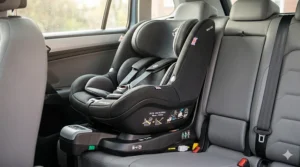
Following seamlessly from the Pebble, the Maxi-Cosi Pearl 360 Pro covers approximately 3 months to 4 years (61-105cm) on the same FamilyFix 360 Pro base. The continuity proves valuable: you’re not learning a new system, and the base remains installed in your vehicle, reducing opportunities for installation errors.
This seat excels at the toddler challenge—managing the phase when children become simultaneously heavier and more opinionated about getting in their seat. The 360-degree rotation combined with SlideTech means you can spin the seat to face the door, slide it towards you, pop your toddler in whilst they’re still standing on the pavement (rather than wrestling them across the seat), then slide back and rotate forward. For parents navigating tight parking spaces in Tesco car parks or cramped urban streets, this seemingly small convenience accumulates into genuine quality-of-life improvement.
Safety credentials include i-Size R129 approval with the option to remain rear-facing until 4 years—strongly recommended by UK road safety experts as the safest configuration. The G-CELL side impact protection and multiple recline positions mean comfortable naps without the head-flopping-forward issue that plagues many forward-facing seats.
ClimaFlow ventilation becomes increasingly relevant as children generate more body heat, and the Easy-in harness with magnetic shoulder pads genuinely speeds up the process. Several Which? reviewers noted their toddlers actually cooperated better with this seat compared to previous models, attributing it to the reduced fumbling and faster process.
The seat’s width (approximately 44cm) allows two seats side-by-side in most vehicles, though check your specific car dimensions if planning a tight three-across configuration.
Pros:
✅ Extended rear-facing to 4 years provides optimal safety for developing bodies
✅ Five recline positions accommodate sleeping comfortably
✅ SlideTech and rotation genuinely transform daily use
Cons:
❌ Requires the Pro base—cannot be used standalone
❌ Premium pricing for the system (seat + base together)
UK price range: Around £220-£280 for the seat alone. The complete 360 Pro Family system (base + Pebble + Pearl) totals £650-£800, but serves birth to 4 years with exceptional convenience.
4. Maxi-Cosi Titan Pro i-Size – The ADAC Test Winner
When independent German testing organisation ADAC awarded the Maxi-Cosi Titan Pro i-Size a rare 4-star safety rating and crowned it “the safest ever i-Size harness multi-age car seat” in their autumn 2022 tests, British parents took notice. From 15 months to 12 years (76-150cm), this single seat eliminates multiple transitions whilst delivering safety credentials that satisfy even the most anxious parent.
The engineering centres on G-CELL side impact protection—an integrated system that distributes collision forces away from the child’s head, neck, and shoulders. Combined with AirProtect safety cushions in the headrest (reducing head injury risk by up to 20%), you’re looking at genuinely comprehensive crash protection. The i-Size R129 standard requires more rigorous testing than older ECR44 regulations, particularly for side impacts—the most dangerous collision type for children.
Practical features address the realities of British family life. ISOFIX installation with top tether provides rock-solid anchoring, whilst the Easy-in harness uses magnetic shoulder pads that stick to the headrest, keeping the harness open and accessible. This transforms the daily school run from a wrestling match into a 15-second operation. Four recline positions mean comfortable motorway journeys without the head-lolling that disturbs naps.
The premium fabrics—distinguished by characteristic stitching on the backrest—include ClimaFlow panels for temperature regulation. Several UK reviewers specifically mentioned this matters during summer holiday drives to Cornwall or Scotland when you’re stuck in traffic and the air conditioning struggles.
At around 11kg, it’s substantial but appropriately stable. The seat grows via 11 adjustable headrest positions and converts from 5-point harness (toddler phase) to high-back booster (older child phase) without removing components.
Pros:
✅ 4-star ADAC rating provides exceptional peace of mind
✅ 15 months to 12 years eliminates multiple seat purchases
✅ Premium materials and build quality feel investment-worthy
Cons:
❌ Premium pricing (around £320-£380) versus mid-range alternatives
❌ Cannot be used from birth—requires infant carrier first
Value assessment: Around £30 per year over its 10.5-year lifespan. For safety-conscious UK parents, the ADAC validation justifies the premium.
5. Maxi-Cosi RodiFix S i-Size – The Booster Category Winner
Once your child reaches 3.5 years and 100cm, the Maxi-Cosi RodiFix S i-Size delivers booster seat safety without the premium price tag. This seat earned a “Good” (2.1) rating from ADAC testing—impressive for the booster category where many competitors struggle to achieve even acceptable scores.
The key innovation is three recline positions, addressing the primary complaint about booster seats: uncomfortable sleep positions. When your child dozes off during the Sunday drive to visit grandparents in the Cotswolds, their head doesn’t flop forward uncomfortably. The AirProtect safety cushions provide both protection and comfortable head support.
G-CELL side impact protection remains integrated despite the lower price point, and the adjustable design grows in both height (10 headrest positions) and width (intuitive side wings). This adaptability means genuinely fitting children from 3.5 to 12 years—a span during which they’ll grow dramatically.
ISOFIX installation provides stability even when the seat is empty, preventing it from becoming a projectile during sudden braking. The design eliminates bulky armrests, making the child’s seatbelt buckle-up process genuinely quick. Several Amazon UK reviewers mentioned their 5-year-olds can independently buckle themselves—a game-changer for busy morning school runs.
The 100% recycled EcoCare fabrics (machine washable at 30°C) speak to Maxi-Cosi’s sustainability efforts, whilst the breathable mesh backrest in the Comfort version addresses British weather variability. At just 44cm width, two seats fit side-by-side in most vehicles, with three-across possible in larger estate cars or MPVs.
Pros:
✅ Exceptional value at £140-£190 for 8+ years of use
✅ Three recline positions solve the sleeping discomfort problem
✅ High safety ratings despite mid-range pricing
Cons:
❌ Basic version lacks some premium features (ClimaFlow, extra padding)
❌ Cannot be used before 100cm height milestone
UK pricing context: At around £160, you’re paying roughly £20 per year of use. The Comfort version (around £180-£200) adds breathable mesh fabrics worth considering for warmer climates or children who run hot.
6. Maxi-Cosi CabrioFix i-Size – The Ultra-Lightweight Champion
For minimalist parents or those prioritising portability, the Maxi-Cosi CabrioFix i-Size delivers i-Size safety standards at just 3.2kg—astonishingly light for a car seat with proper crash protection. From birth to approximately 12 months (40-75cm), this infant carrier focuses on doing one thing brilliantly: keeping tiny humans safe whilst remaining manageable to carry.
The weight difference matters enormously. When you’re hauling a sleeping 10kg baby in their carrier from the car to your flat’s third-floor walkup (no lift, obviously—this is Britain), saving 2kg compared to heavier carriers genuinely affects whether you wake the baby or preserve your sanity. The ergonomic handle design distributes weight more comfortably across your forearm.
i-Size R129 compliance ensures rigorous crash testing, and the included ISOFIX base provides Click & Go installation with visual and audible feedback confirming correct fitting. The large sun canopy proves particularly valuable during British summer when sun angle means bright light streaming through side windows during evening drives.
Compatibility with Maxi-Cosi strollers plus a huge range of other brands (including Bugaboo, Mamas & Papas, and Uppababy) via adaptors makes this a versatile travel system foundation. The one-hand release mechanism from prams genuinely works, unlike some competitors where you’re fumbling with awkward buttons whilst balancing shopping.
The removable newborn inlay with separate head cushion ensures proper positioning for tiny newborns, whilst the 3-point harness provides secure restraint. UK reviewers consistently mention the cover is genuinely machine washable and survives multiple cycles without deteriorating—relevant when dealing with inevitable milk spills and nappy explosions.
Pros:
✅ Ultra-lightweight (3.2kg) makes carrying genuinely manageable
✅ Extensive pram compatibility provides travel system flexibility
✅ Excellent value at £120-£180 including ISOFIX base
Cons:
❌ Shorter useable period (birth to approximately 12 months)
❌ Less feature-rich than premium alternatives (no rotating, no SlideTech)
Best for: Second or third children where you already own a toddler seat, families prioritising easy carrying, or budget-conscious parents wanting solid safety without premium features.
7. Maxi-Cosi Nomad Plus – The Foldable Travel Genius
The Maxi-Cosi Nomad Plus answers a specifically modern parenting challenge: how do you maintain car seat safety when using taxis, rental cars, or grandparents’ vehicles? At just 4.26kg and folding into an included water-repellent travel bag, this seat from 15 months to 4 years (76-105cm) transforms from afterthought to essential for UK families who don’t own cars but occasionally need wheels.
The engineering challenge was substantial: delivering legitimate side impact protection whilst maintaining packability. Maxi-Cosi achieved this through clever structural design—the seat unfolds and fits into any car in approximately 30 seconds, no tools required, using the vehicle’s existing 3-point seatbelt. For London families relying on Ubers or occasional Zipcar rentals, this solves the “carrying a full-sized car seat on the Tube” problem.
The fabrics are machine washable at 30°C, addressing the reality that travel seats encounter more diverse environments (sandy beach cars, muddy festival shuttles, airport taxis) than standard seats. The side impact protection, whilst not as comprehensive as ISOFIX-mounted seats, meets safety standards and provides vastly better protection than the dangerous practice of holding a child on your lap or using an adult seatbelt alone.
UK parents using this for holidays, grandparent visits, or city living where car ownership isn’t practical consistently mention the quality feels reassuringly solid despite the lightweight design. The integrated carry bag means you can throw it over your shoulder whilst managing luggage and children—genuinely liberating compared to wrestling with traditional car seats.
Pros:
✅ Folds flat and fits in travel bag for genuine portability
✅ 30-second installation in any vehicle solves occasional-use scenarios
✅ Lightweight (4.26kg) doesn’t exhaust you carrying it
Cons:
❌ Not suitable for daily use in your primary vehicle
❌ Seatbelt installation less secure than ISOFIX alternatives
UK price range: Around £130-£190. For urban families or those needing a travel/grandparent car solution, this fills a crucial gap.
Understanding i-Size vs ECE R44: What British Parents Must Know
Britain’s adoption of i-Size regulations (officially UN R129) in 2013 represented a fundamental shift in car seat safety standards, yet many UK parents remain confused about what this means practically. When browsing Maxi-Cosi’s range, you’ll encounter both i-Size and older ECE R44/04 certified seats—understanding the distinction matters.
The i-Size Advantage for UK Families
i-Size seats are classified by the child’s height (in centimetres) rather than weight groups. This proves more intuitive—you measure your child against the doorframe markings rather than guessing their weight. More crucially, i-Size mandates rear-facing travel until minimum 15 months (versus 9kg/roughly 9 months under R44), and includes compulsory side-impact testing. Given that side collisions account for approximately 45% of serious child injuries in UK road accidents, this represents meaningful additional protection.
The ISOFIX requirement for i-Size seats eliminates installation errors—roughly 70% of car seats under the old system were incorrectly fitted according to road safety charity surveys. With ISOFIX, the seat clicks into metal anchor points in your vehicle, accompanied by visual and often audible confirmation of correct installation. This proves particularly valuable for British families swapping seats between vehicles or installing seats infrequently.
Practical Implications for Your Purchasing Decision
All new Maxi-Cosi seats prioritise i-Size compliance, which aligns with UK government recommendations. The older ECE R44/04 standard remains legal and safe, but when investing in a car seat for 2026, choosing i-Size futureproofs your purchase as regulations tighten. Moreover, i-Size seats work across all EU vehicles (including UK cars post-Brexit), ensuring compatibility if you’re buying a European car or planning continental holidays.
For British buyers specifically, UKCA marking (UK Conformity Assessed) replaced CE marking post-Brexit for products sold in Great Britain. However, car seats approved to UN R129 (i-Size) standards carry recognition across UK and EU markets. Maxi-Cosi seats sold through UK retailers like Amazon, John Lewis, or Boots comply with all necessary markings—just verify when purchasing from unknown sellers or importing directly.
The height-based sizing also accommodates Britain’s increasingly diverse population—children develop at different rates, and height proves more reliable than weight for determining appropriate restraint systems.
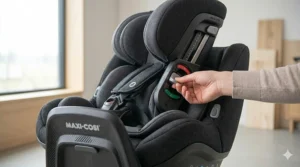
How to Choose the Right Maxi-Cosi Car Seat for Your UK Family
Navigating Maxi-Cosi’s extensive 2026 range requires matching specific seats to your family’s circumstances rather than defaulting to “best” as a universal category. Here’s a practical framework British parents can apply:
1. Assess Your Vehicle Type and Parking Situation
Small city cars like Fiat 500s, Minis, or Volkswagen Ups demand different solutions than Volvo estates or Ford Galaxys. The Emerald 360 Pro’s bulk may overwhelm a tiny urban runabout, whilst a spacious SUV wastes its capacity if you choose the compact CabrioFix. Measure your back seat depth before committing to larger rotating seats—SlideTech requires approximately 17cm of slide clearance.
UK-specific consideration: If you parallel park on narrow terraced streets (common in cities like Manchester, Bristol, or Edinburgh), rotating seats transform accessibility. Rather than contorting yourself through a barely-opened door, the seat rotates to face you within the limited gap available.
2. Calculate Your True Lifespan Economics
The Emerald 360 Pro’s £400 price tag causes initial shock until you realise it eliminates purchasing an infant carrier (£150-£250), toddler seat (£200-£350), and booster (£130-£200). Across 12 years, you’re saving £80-£400 versus buying three separate seats—plus avoiding the storage headache.
Conversely, if you’re planning multiple children spaced 2-3 years apart, the 360 Family system (Pebble + Pearl + FamilyFix base) allows seat swapping between children whilst sharing the expensive base. Two children would use the base for roughly 7-8 years total, spreading that £300 investment.
3. Evaluate Your British Weather Tolerance
This sounds frivolous but genuinely matters. ClimaFlow ventilation proves most valuable for children who overheat easily or if you lack climate-controlled air conditioning (still common in older UK vehicles). Conversely, if you’re mainly doing short urban journeys and your child runs cold, premium ventilation becomes a “nice-to-have” rather than essential.
The breathable mesh fabrics on models like RodiFix S Comfort specifically address Britain’s humid summers when temperatures spike but rarely reach genuine heat. Our 25°C feels more oppressive than continental 30°C due to moisture levels.
4. Consider Extended Rear-Facing Capability
UK road safety experts increasingly advocate rear-facing travel until 4 years when possible. The Pearl 360 Pro and Emerald 360 Pro both support this, providing superior head and neck protection during the critical developmental phase. If you’re committed to extended rear-facing (and your child tolerates it—some fight the restriction), prioritise seats explicitly designed for this.
Models like the Titan Pro, which begin at 15 months, assume forward-facing from the start. Neither approach is wrong, but align your choice with your safety philosophy.
5. Account for Multiple Car Scenarios
If grandparents frequently transport your child, or you use taxis/Ubers regularly, the Nomad Plus’s foldability becomes genuinely valuable. Alternatively, purchasing two mid-range seats (one for your car, one for grandparents’) may prove more practical than constantly transferring a single premium seat.
British families navigating post-Brexit travel should verify that Maxi-Cosi seats meet both UK and EU standards if you’re driving to France, Spain, or other continental destinations. The i-Size certification provides this cross-border compatibility.
Common Mistakes When Buying Maxi-Cosi Car Seats (And How UK Parents Can Avoid Them)
Mistake 1: Ignoring Your Actual Vehicle Compatibility
Assuming “i-Size means it fits any car” overlooks crucial nuances. Whilst i-Size mandates ISOFIX points in compliant vehicles, some older UK cars (pre-2013) lack them entirely, and placement varies between manufacturers. The FamilyFix 360 base requires specific spacing between ISOFIX points plus adequate floor space for the support leg—some vehicles with under-seat storage compartments physically can’t accommodate this.
UK-specific concern: Right-hand drive configuration means the driver’s-side rear seat offers more legroom for installing car seats than the passenger side in most vehicles. If you’re installing a single seat, consider which position works better for accessing shopping, pushchairs, or multiple children.
Solution: Use Maxi-Cosi’s online vehicle compatibility checker before purchasing, or visit retailers like Halfords or In Car Safety Centre where staff can verify fitment in your specific car model. Amazon’s return policy provides some safety net, but avoiding the hassle entirely proves preferable.
Mistake 2: Underestimating British Weather’s Impact on Fabrics
Those gorgeous cream or light grey Maxi-Cosi seats displayed in John Lewis look pristine until three months of British rain, muddy boots, and inevitable spillages turn them into a patchwork of stains. Dark colours (Authentic Black, Graphite, Tonal Black) hide this wear considerably better.
Machine-washable covers sound convenient until you realise some models require near-complete disassembly to remove the fabric, and air-drying in a British winter when it’s perpetually damp outside means waiting days for reassembly. Check reviews specifically mentioning UK climate experiences.
Mistake 3: Buying Based on Growth Projections Rather Than Current Needs
The temptation to “buy big” and have your 9-month-old rattle around in a Titan Pro sized for a 12-year-old creates legitimate safety concerns. Car seats protect optimally when children fit the current sizing—too much space reduces crash protection effectiveness.
Better approach: Accept you’ll likely need 2-3 seats across childhood (infant carrier, toddler/child seat, booster) unless choosing the Emerald 360 Pro specifically designed for birth-to-12. This staged approach ensures proper fit at each developmental phase.
Mistake 4: Overlooking Installation Complexity for Occasional Users
If grandparents, childminders, or au pairs will frequently install and remove the seat, complicated systems create opportunities for dangerous errors. The CabrioFix with included ISOFIX base proves far more foolproof than manually threading seatbelts through complex routing guides.
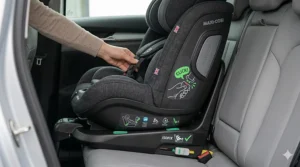
For British families where multiple caregivers share transport duties, prioritise seats with visual installation indicators (green = correct, red = incorrect) and simple Click & Go mechanisms over feature-rich but complex alternatives.
Mistake 5: Assuming “Latest Model” Automatically Means “Best for You”
Maxi-Cosi’s 2026 flagship Emerald 360 Pro represents extraordinary engineering, but a family with a 3-year-old who’ll age out of the harness phase within 18 months gains little from its birth-onwards capability. The RodiFix S booster would serve them better at a third of the cost.
Marketing gravitates towards newest and most expensive, but the “best” maxi cosi car seat for your specific situation depends on your child’s current age, your budget, vehicle type, and whether you’re planning siblings. The most technologically advanced option isn’t always the optimal choice.
Mistake 6: Neglecting to Research UK-Specific Safety Testing
Parents frequently cite manufacturer safety claims without investigating independent UK testing. Which? magazine conducts rigorous crash testing on car seats sold in Britain, publishing results that sometimes contradict manufacturer marketing. A seat that scores brilliantly in German ADAC tests might perform differently in Which?’s testing protocols.
British buyers’ advantage: Access to Which? reviews (subscription required but frequently worth it), UK government safety recommendations via Gov.uk, and active forums like Mumsnet where UK parents share real-world experiences including installation in specific British car models.
Maxi-Cosi vs Leading Competitors: How They Stack Up for British Families
The maxi cosi car seat range faces stiff competition in the UK market from established brands like Britax Römer, Cybex, Joie, and newer challengers such as Silver Cross. Understanding where Maxi-Cosi excels and where competitors offer advantages helps British parents make informed choices.
Maxi-Cosi vs Cybex
Cybex seats, particularly the Solution range, often undercut Maxi-Cosi on price whilst delivering comparable safety ratings. The trade-off typically appears in features rather than core protection—Cybex may omit rotating mechanisms or premium ventilation fabrics that Maxi-Cosi includes.
For UK families prioritising absolute value, Cybex merits consideration. However, Maxi-Cosi’s wider UK retail presence (John Lewis, Boots, Mothercare successors) means easier access to customer service, spare parts, and installation assistance. When your seat needs a replacement cover or develops an issue, Maxi-Cosi’s established British supply chains prove advantageous.
Maxi-Cosi vs Britax Römer
Britax Römer manufactures seats in Britain (Andover factory), which resonates with buy-local sentiment and potentially eases warranty claims. Their Swingfix i-Size rotating seat competes directly with Maxi-Cosi’s 360 Family, often at slightly lower prices.
Safety credentials typically match closely—both brands consistently achieve top tier results in Which? testing. The choice often reduces to specific features (Maxi-Cosi’s SlideTech vs Britax’s Pivot Link) and personal preference. British parents should compare both brands’ offerings in their specific category before committing.
Maxi-Cosi vs Joie
Joie delivers aggressive value pricing, sometimes offering i-Size compliant seats at nearly half Maxi-Cosi’s cost. The quality gap isn’t proportional to the price difference—many Joie seats score respectably in safety testing.
However, Maxi-Cosi’s premium materials, advanced features (rotating, sliding, superior ventilation), and typically longer warranties justify higher prices for families prioritising longevity and convenience features. Joie suits budget-conscious British families or those needing temporary solutions (car for grandparents); Maxi-Cosi appeals to those viewing car seats as long-term safety investments.
The British Market Reality
UK parents benefit from unusually strong consumer protections (Consumer Rights Act 2015, 14-day cooling-off period for online purchases) and accessible testing from Which? magazine. This means you can purchase a Maxi-Cosi seat from Amazon, test-fit it in your actual vehicle with your actual child, and return it within two weeks if it doesn’t work—without providing justification.
This eliminates much purchase risk and allows practical comparison between brands. Buy a Maxi-Cosi and a competitor simultaneously, install both, use for a week, keep the winner. The flexibility makes choosing confidently considerably easier than relying solely on online reviews.
Installation Mastery: Getting Your Maxi-Cosi Seat Properly Fitted in British Vehicles
Even premium car seats fail to protect adequately when incorrectly installed, and approximately 70% of car seats in UK vehicles suffer some degree of installation error. Maxi-Cosi’s engineering reduces this through ISOFIX systems and visual indicators, but understanding British-vehicle-specific quirks helps ensure optimal fitting.
The Right-Hand Drive Difference
British cars position the driver’s seat on the right, affecting rear seat access and ISOFIX point placement. When installing a single car seat, the driver’s-side rear position (behind the driver) typically offers more legroom due to dashboard offset. This makes accessing the seat easier when parked curbside on British roads where you’re stepping directly from the pavement.
However, the passenger-side rear position provides the driver better visibility via the rear-view mirror and easier conversation with the child. Weigh these factors based on whether you prioritise accessibility or interaction.
ISOFIX Point Peculiarities in UK Vehicles
ISOFIX points should be clearly marked with labels between the seat cushion and backrest, but some UK vehicles (particularly older models or budget brands) bury them beneath tight fabric or plastic caps requiring considerable force to access. Before installation, physically locate both ISOFIX points and remove any covers or clips.
Maxi-Cosi seats with support legs (like FamilyFix 360 base) require solid floor contact. Some British cars feature under-seat storage compartments, hinged floor panels, or electrical wiring that prevent safe support leg placement. Consult your vehicle manual’s car seat installation section—it should explicitly identify if your specific seating position accommodates support leg bases.
The Tether Anchor Challenge
Models like the Titan Pro i-Size require top tether attachment to a dedicated anchor point, usually located behind the rear seat headrest or in the boot. British vehicles vary wildly in tether point placement:
- Saloon cars: Often behind the rear seat backrest, requiring removal of the rear parcel shelf to access
- Estate cars: Typically in the boot area, requiring longer tether straps
- MPVs/SUVs: May have multiple tether points for seven-seater configurations
Check your vehicle manual for the universal anchor symbol (looks like an anchor or child in a seat with a hook) indicating approved tether locations. Using improvised anchor points—like load hooks or cargo rails—creates dangerous failure points.
Testing Installation Tightness
After connecting ISOFIX or threading the seatbelt, test movement by grasping the seat at the belt path and attempting to shift it side-to-side and forward-backward. Properly installed seats should move less than 2.5cm (about an inch) in any direction. Excessive movement indicates loose installation requiring adjustment.
For seatbelt installations (seats like Nomad Plus), UK vehicles with older-style seatbelts may lack automatic locking mechanisms. Thread the belt as directed in the manual, then pull sharply at the shoulder belt to engage the lock before buckling.
Seasonal Adjustment for British Weather
Winter coats create dangerous gaps in harness systems—in a collision, the coat compresses and the child can slip through. Rather than over-tightening the harness (which proves uncomfortable and still leaves coat compression risk), dress children in thin layers, then place coats backward over the secured harness for warmth.
British winters rarely hit the extremes requiring serious winter gear, but even moderate padding from autumn jackets creates this issue. The “pinch test” works: if you can pinch any harness webbing between thumb and forefinger, it’s too loose.
Professional Installation Checking in the UK
Many British police forces, fire stations, and road safety partnerships offer free car seat installation checks. Halfords provides installation services when purchasing car seats from them, whilst specialists like In Car Safety Centre deliver expert fitting as standard. Taking advantage of these resources—particularly for first-time parents or when switching to an unfamiliar seat type—dramatically reduces installation errors.
Long-Term Ownership: Maintenance, Cleaning, and Maximising Your Maxi-Cosi’s Lifespan
British car seats endure uniquely challenging conditions: the perpetual damp that breeds mould, the mud transferred from wellies and football boots, the inevitable spillages from beakers and snacks during school runs. Proper maintenance extends your investment’s useful life and ensures safety features continue functioning correctly.
Fabric Care for British Climate Realities
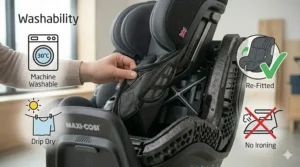
Maxi-Cosi covers are largely machine washable at 30°C, but the British climate creates a drying challenge. Air-drying in winter means hanging damp fabrics in centrally heated homes (increasing humidity and risking mildew) or hoping for rare dry spells outdoors.
Practical solution: Purchase a spare cover set (around £50-£80 depending on model). This allows immediate reinstallation whilst the soiled cover dries properly, avoiding the temptation to rush drying with radiators or tumble dryers that can damage elastic or waterproof treatments.
For routine maintenance between full washes, keep baby wipes in the car for immediate spot-cleaning of spills. British weather means children track in more dirt, grass stains, and mud than in drier climates—weekly wipe-downs prevent buildup requiring deep cleaning.
Protecting Against British Damp and Mould
The ISOFIX connectors and metal adjustment mechanisms on Maxi-Cosi seats can develop surface rust when exposed to prolonged damp conditions (garages, outbuildings where you store seats seasonally, or simply British humidity). Every few months, inspect metal components and lightly spray with silicone lubricant if movement becomes sticky.
The harness system’s webbing can develop musty odours if stored damp. If your child had an accident or spilled milk, fully extend the harness and allow proper drying before retracting and storing. This proves particularly relevant for seats like the Nomad Plus that fold for storage—ensure complete dryness before packing away.
Expiration Dates and British Safety Standards
Maxi-Cosi car seats carry a maximum lifespan (usually 6-10 years depending on model) printed on labels underneath the seat. UV exposure, temperature fluctuations, and material degradation eventually compromise structural integrity. British climate is relatively gentle on plastics compared to Australian heat or Scandinavian freeze-thaw cycles, but the expiration date remains crucial.
Never purchase second-hand car seats unless you can verify their complete history—even seats that appear pristine may have experienced collisions that compromised internal structures. UK trading standards laws prohibit selling car seats that have been in accidents, but private sales lack enforcement.
Harness System Maintenance
The adjustment mechanisms and straps require regular inspection. Check that the harness tightens and loosens smoothly without catches or jumps. If adjustment becomes difficult, there may be twisting in the straps or debris in the mechanism.
For British families dealing with potty training accidents or car sickness (more common during school runs on winding country lanes), the harness may need soaking to remove odours. Most Maxi-Cosi harnesses can be hand-washed in lukewarm water with mild detergent—never use bleach or harsh chemicals that can weaken fibres.
Warranty and UK Consumer Rights
Maxi-Cosi offers a 2-year manufacturer warranty covering manufacturing defects, but British Consumer Rights Act 2015 extends these protections considerably. If a car seat develops faults within six years that were present at purchase (even if not immediately apparent), you may have recourse against the retailer.
Keep purchase receipts and register your seat with Maxi-Cosi UK for warranty tracking and safety recall notifications. Car seat recalls do occur—Maxi-Cosi’s record is solid, but registration ensures you receive any safety notices promptly.
Frequently Asked Questions About Maxi-Cosi Car Seats in the UK
❓ Can I use a Maxi-Cosi car seat bought in the EU in my UK vehicle after Brexit?
❓ Do rotating Maxi-Cosi seats like the 360 Family work in smaller British cars?
❓ Which Maxi-Cosi car seat is best for extended rear-facing until age 4 in the UK?
❓ Are Maxi-Cosi car seats compatible with UK ISOFIX points?
❓ How do I know when my child has outgrown their Maxi-Cosi car seat?
Conclusion: Making Your Maxi-Cosi Choice with British Confidence
The maxi cosi car seat decision ultimately rests on matching proven safety credentials to your family’s specific circumstances. Whether you’re investing in the revolutionary Emerald 360 Pro for its birth-to-12-years convenience, building the flexible 360 Family system for multiple children, or choosing the ADAC-winning Titan Pro for its exceptional crash test performance, you’re selecting from a range that consistently delivers premium protection.
For British families navigating 2026’s car seat market, several principles guide smart purchasing: prioritise i-Size compliance for futureproofing and superior testing standards; consider your actual vehicle type and the British climate’s impact on daily use; calculate true lifespan costs rather than sticker prices; and take advantage of UK consumer protections including Which? testing and generous return policies.
The safety engineering embedded in even Maxi-Cosi’s more affordable models—G-CELL side impact protection, AirProtect cushions, ISOFIX stability—represents genuine innovation that translates to measurably better outcomes during collisions. The premium you pay for Maxi-Cosi versus budget alternatives buys more than just features; it purchases peace of mind backed by rigorous independent testing and three decades of European safety leadership.
Your child will spend thousands of hours in their car seat across infancy, toddlerhood, and childhood. The seat that keeps them safest whilst accommodating British weather, fitting your vehicle, and surviving the inevitable chaos of family life deserves careful selection. Whether that’s the rotating convenience of the 360 Family, the all-in-one simplicity of the Emerald 360 Pro, or the proven reliability of the RodiFix booster series, choosing from Maxi-Cosi’s UK-available range means choosing devices engineered specifically for protecting small humans through the unpredictable realities of British roads.
Take your time with this decision. Use retailers’ expertise. Test-fit in your actual vehicle. Trust the testing data. And recognise that the “best” maxi cosi car seat isn’t a universal constant—it’s the one that fits your child perfectly, installs correctly in your car, suits your budget, and gives you the confidence that every journey prioritises your most precious cargo.
Recommended for You
- Inflatable Booster Seat UK Legal: 7 Best Travel Options 2026
- Best Travel Booster Seats UK 2026: 7 Expert Picks That Actually Fit
- When Can Child Use Backless Booster Seat? 7 UK Rules 2026
Disclaimer: This article contains affiliate links. As an Amazon Associate, I earn from qualifying purchases. If you purchase products through these links, we may earn a small commission at no additional cost to you.
✨ Found this helpful? Share it with your mates! 💬🤗
