
In This Article
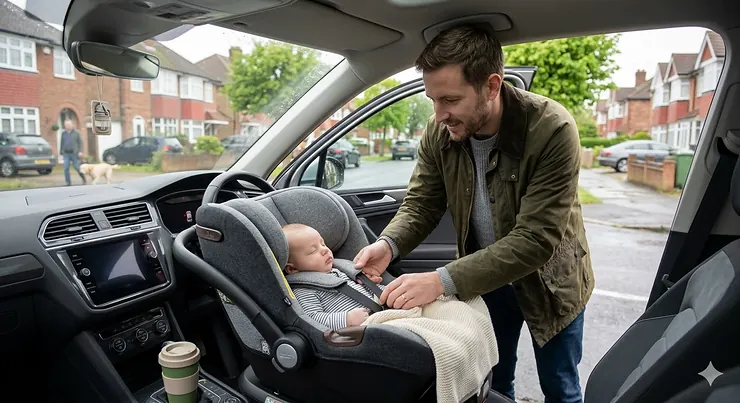
Bringing your newborn home from hospital is one of life’s most precious moments – but it’s also when reality hits. You absolutely cannot leave without a properly fitted car seat. I still remember standing in the baby shop, utterly overwhelmed by rows of seemingly identical seats, all claiming to be the “safest” option. Should I choose i-Size or Group 0+? Is the £300 seat really that much better than the £100 version?
Here’s what I wish someone had told me then: choosing a newborn car seat buying guide doesn’t have to be complicated. Yes, safety is paramount, but you also need something that fits your car, your budget, and your lifestyle. After researching current UK regulations, testing products, and speaking with real parents using these seats in 2026, I’ve put together this comprehensive guide to help you make the right choice.
UK law requires all children under 135cm or 12 years old to use an appropriate car seat. For newborns specifically, you’ll need a rearward-facing seat that supports their delicate head and neck. The latest R129 (i-Size) regulations mandate rear-facing travel until at least 15 months, though many experts recommend extending this to four years for optimal protection.
Whether you’re expecting your first baby or upgrading from an older seat, this guide covers everything from budget-friendly options starting at £99 to premium rotating seats with advanced safety features. Let’s find the perfect seat to keep your little one safe from day one.
Quick Comparison Table
| Car Seat | Price Range | Installation | Height Range | Key Feature | Rating |
|---|---|---|---|---|---|
| Maxi-Cosi Pebble 360 | £99-£130 | ISOFIX/Belt | 40-83cm | 360° rotation | ⭐⭐⭐⭐⭐ |
| Joie i-Spin 360 | £133-£190 | ISOFIX | 40-105cm | Extended rear-facing | ⭐⭐⭐⭐⭐ |
| Cybex Cloud Z i-Size | £250-£350 | ISOFIX/Belt | 40-87cm | Lie-flat position | ⭐⭐⭐⭐½ |
| BeSafe iZi Go Modular X1 | £180-£220 | ISOFIX/Belt | 40-75cm | Lightweight 4.2kg | ⭐⭐⭐⭐½ |
| Cosatto Acorn 2 i-Size | £120-£160 | ISOFIX | 40-87cm | Bold designs | ⭐⭐⭐⭐ |
| Silver Cross Dream i-Size | £200-£280 | ISOFIX | 40-85cm | Premium comfort | ⭐⭐⭐⭐ |
| Graco SnugEssentials i-Size | £85-£110 | ISOFIX/Belt | 40-75cm | Budget-friendly | ⭐⭐⭐⭐ |
💬 Just one click – help others make better buying decisions too!😊
Top 7 Newborn Car Seats: Expert Analysis
1. Maxi-Cosi Pebble 360 i-Size – Best Overall Value
The Maxi-Cosi Pebble 360 i-Size dominates the UK market in 2026 for good reason. This intelligent design combines premium safety features with everyday practicality that busy parents genuinely appreciate. Priced at £99.99-£129.99 on Amazon.co.uk, it strikes that sweet spot between affordability and quality.
Key Specifications:
- Height range: 40-83cm (birth to approximately 15 months)
- Weight: Approximately 4.3kg
- Installation: ISOFIX via FamilyFix 360 base (sold separately) or seatbelt
What makes this seat special? The one-hand 360° rotation transforms the daily struggle of getting a wriggling baby into their seat. Simply rotate the seat towards you, secure your little one, then spin it back to the rearward-facing position – all whilst juggling a changing bag and your morning coffee. The ClimaFlow temperature regulation panels prevent your baby from overheating, particularly important during those sweltering British “summers” we occasionally experience.
Safety credentials are impressive. The seat complies with R129/03 i-Size standards and features G-Cell Side Impact Technology – Maxi-Cosi’s patented system that absorbs collision forces like a protective cocoon. The Easy-in harness system keeps straps out of the way when placing your baby in the seat, whilst the Baby-hugg inlay provides crucial head and neck support for newborns.
UK parents on Amazon consistently praise its compatibility with popular pushchairs, creating a seamless travel system. One London mum notes: “The click-and-go feature saved my sanity during those early weeks. I could transfer my sleeping baby from car to pram without waking her – absolute game-changer.”
✅ Pros:
- Excellent value for money with premium features
- Smooth 360° rotation for easy access
- Wide compatibility with pushchairs and travel systems
❌ Cons:
- Base sold separately (approximately £180 additional cost)
- Slightly heavier than ultra-lightweight competitors
2. Joie i-Spin 360 – Best Extended Rear-Facing
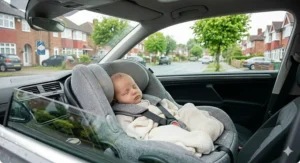
For parents committed to maximum safety through extended rear-facing, the Joie i-Spin 360 delivers exceptional value. Currently available at £133-£190 across UK retailers (with Halfords often offering the best deals), this seat extends from birth right through to approximately four years.
Key Specifications:
- Height range: 40-105cm (birth to 4 years)
- Maximum weight: 19kg
- Installation: ISOFIX with 19-position adjustable support leg
The Smart Ride lock-off mechanism ensures your child stays safely rear-facing until at least 15 months (76-105cm), even if grandparents or childminders are doing pick-ups. You physically cannot rotate it to forward-facing until your child reaches the minimum height – brilliantly foolproof design. The Guard Surround Safety panels automatically deploy when you tighten the harness, providing enhanced head and neck protection during side impacts.
With six recline positions available in both rear and forward-facing modes, this seat accommodates everything from alert sightseeing to deep nap-time slumbers. The Tri-Protect headrest features three layers of foam plus Intelli-Fit memory foam, offering superior impact absorption where it matters most. Parents particularly love the Grow Together system – headrest and harness adjust simultaneously without any fiddly rethreading.
According to reviews from UK buyers, the seat performs brilliantly in smaller cars despite its extended height range. A Bristol dad shares: “Fits perfectly in our Fiesta with plenty of legroom remaining for the front passenger. The rotation makes nursery drop-offs so much quicker.”
✅ Pros:
- Extended use from birth to 4 years (excellent value over time)
- Foolproof Smart Ride lock-off prevents premature forward-facing
- Competitive pricing compared to similar extended rear-facing seats
❌ Cons:
- Bulkier footprint than infant-only carriers
- Heavier at 15kg (not designed for frequent removal from car)
3. Cybex Cloud Z i-Size – Best Premium Features
If budget allows, the Cybex Cloud Z i-Size represents the pinnacle of newborn car seat engineering. Priced £250-£350, this German-engineered seat delivers innovations you won’t find elsewhere, particularly the near-lie-flat recline position outside the vehicle.
Key Specifications:
- Height range: 40-87cm (birth to approximately 15 months)
- Weight: Approximately 4.8kg
- Installation: ISOFIX via Base Z (sold separately £185) or seatbelt
The standout feature? That ergonomic lie-flat position for use on your pushchair or when carrying your baby. Research shows traditional car seat angles can restrict newborn breathing and increase cranial pressure – Cybex addresses this brilliantly. The seat is even TÜV-approved for aircraft use, making it perfect for families planning overseas trips.
When installed with the optional Base Z (which works with both Cloud Z and the next-stage Sirona Z), you gain 180° swivel capability plus the innovative Linear Side-Impact Protection (LSP) system. The 11-position adjustable headrest and integrated sun canopy with UPF 50+ protection demonstrate Cybex’s attention to detail. Some models feature SensorSafe technology – a smart clip that alerts your smartphone if your baby unbuckles themselves, if the car becomes too hot or cold, or if you accidentally leave them unattended.
Parents investing in Cybex appreciate the modular system longevity. The Base Z supports both infant and toddler seats, potentially serving your child from birth to four years on a single base purchase. According to product reviews, the build quality feels noticeably more substantial than budget alternatives, with premium fabrics and a reassuring heft.
✅ Pros:
- Near-lie-flat recline reduces pressure on newborn organs
- Premium materials and German engineering
- Modular Z-line system (base compatible with toddler seat)
❌ Cons:
- Significantly higher price point than mainstream alternatives
- Base sold separately adds substantial cost
- Some features (like SensorSafe) may feel like overkill for practical parents
4. BeSafe iZi Go Modular X1 i-Size – Best Lightweight Option
Norwegian brand BeSafe has built its reputation on Scandinavian safety engineering, and the iZi Go Modular X1 i-Size showcases this perfectly. At just 4.2kg and priced £180-£220, it’s amongst the lightest i-Size-approved seats available, making it ideal for parents frequently carrying their baby in and out of vehicles.
Key Specifications:
- Height range: 40-75cm (birth to approximately 12 months)
- Weight: 4.2kg
- Installation: ISOFIX via iZi Modular base or 3-point seatbelt
The revolutionary Dynamic Force Absorber technology represents BeSafe’s latest innovation – special materials in the headrest area absorb and redirect impact forces away from your baby’s fragile head and neck. Combined with SIP+ (Side Impact Protection Plus) that absorbs an additional 20% of side-impact forces, this seat punches well above its weight class for safety credentials.
UK parents particularly appreciate the Newborn Hugger insert – a thoughtfully designed cushion with a precisely-placed wedge that maintains optimal recline angle for tiny newborns whilst preventing head flop. The Magnetic Belt Assistants keep straps out of the way during the frantic morning rush, whilst the flexible UPF 50+ sun canopy operates independently from the carry handle.
The ergonomically-shaped carry handle prevents the seat from banging against your hip when carried – a small detail that makes a huge difference during those exhausting early months. One Edinburgh mother notes: “After lugging my first baby around in a 6kg seat, the BeSafe feels like carrying a handbag by comparison. My shoulders thank me daily.”
The modular system means the iZi Modular base works with BeSafe’s toddler seat range too, providing excellent long-term value despite the higher entry price.
✅ Pros:
- Exceptionally lightweight at 4.2kg (easiest for regular carrying)
- Advanced Dynamic Force Absorber technology
- Modular base compatible with toddler seats
❌ Cons:
- Shorter height range means outgrowing by 12 months typically
- Less widely stocked than Maxi-Cosi or Joie in UK retailers
- Premium pricing for relatively short usage period
5. Cosatto Acorn 2 i-Size – Best for Style-Conscious Parents
British brand Cosatto proves safety needn’t sacrifice personality with the Acorn 2 i-Size, priced £120-£160. If you’re tired of boring beige baby equipment, Cosatto’s signature bold prints – from jungle animals to geometric patterns – bring genuine joy to nursery runs.
Key Specifications:
- Height range: 40-87cm (birth to approximately 15 months)
- Weight: 4kg
- Installation: ISOFIX via rotating base or seatbelt
Beyond the eye-catching aesthetics, this seat delivers solid safety credentials with an impressive ADAC rating of 1.9 (the German automobile association’s rigorous independent testing). The energy-absorbing shell combines with side-impact protection pods and a three-point safety harness for comprehensive protection. The cushioned newborn nest insert cocoons tiny babies with crucial head, neck, and hip support.
The one-hand simultaneous headrest and harness adjustment (no rethreading required!) makes adapting to your growing baby refreshingly simple. The UPF 100+ adjustable canopy provides exceptional sun protection – particularly valuable given the seat’s lightweight 4kg design makes it perfect for regular pushchair attachment.
Cosatto’s compatibility with their WOW 3 travel system bundle makes it a popular choice for parents wanting coordinated equipment. UK buyers consistently praise the machine-washable covers – essential when dealing with explosive nappies and projectile milk. A Manchester mum shares: “The Fika Forest design makes me smile every time I see it. The seat washes brilliantly and still looks brand new after 9 months of daily use.”
Note the rotating ISOFIX base costs approximately £200 separately, and unlike modular systems, it won’t work with toddler seats. However, for the infant stage specifically, the Acorn 2 offers brilliant value with bags of personality.
✅ Pros:
- Distinctive designs that stand out from generic black/grey options
- Strong ADAC safety rating (1.9)
- Lightweight and easy to transfer between car and pushchair
❌ Cons:
- Rotating base not compatible with toddler seats (must purchase new base later)
- No recline positions (fixed angle only)
- Some parents find the bold prints overwhelming in photographs
6. Silver Cross Dream i-Size – Best Premium British Brand
For parents seeking British heritage combined with modern safety engineering, Silver Cross Dream i-Size (£200-£280) delivers the premium experience this 147-year-old brand is renowned for. It’s the newborn seat component of Silver Cross’s modular rotating system.
Key Specifications:
- Height range: 40-85cm (birth to approximately 15 months)
- Weight: Approximately 4.5kg
- Installation: ISOFIX via rotating base
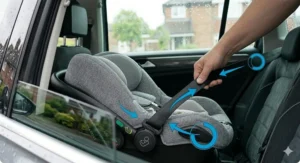
The Luxury Infant Insert showcases Silver Cross’s attention to comfort – memory foam padding cradles your newborn whilst the ventilated back panel prevents overheating during British summer heatwaves. The integrated UPF 50+ canopy features a zip-extend function for adjustable coverage, whilst 360° rotation (when used with the base) simplifies daily transitions.
Silver Cross positions this within their modular ecosystem – the base works with the Dream infant seat and later with the Motion i-Size toddler seat, potentially serving from birth to four years. The build quality feels noticeably superior, with premium fabrics, substantial handles, and that indefinable sense of craftsmanship that justifies the higher price point.
UK parents particularly appreciate Silver Cross’s customer service reputation and the reassurance of dealing with a British brand that’s been protecting babies since 1877. According to reviews, the neutral colourways (Cloud, Flint, Quartz) photograph beautifully and coordinate seamlessly with modern nursery aesthetics.
One Hertfordshire parent notes: “Yes, it’s expensive, but the quality is exceptional. It feels like an investment piece rather than disposable baby equipment. Passed our first son’s Dream seat to our daughter and it still looks immaculate.”
✅ Pros:
- Premium British brand with 147-year heritage
- Exceptional build quality and materials
- Modular system offers long-term value
❌ Cons:
- Premium pricing without revolutionary features
- Less widely available than mainstream brands (specialist stockists)
- Base adds significant additional cost
7. Graco SnugEssentials i-Size – Best Budget Option
Proving effective safety needn’t cost a fortune, the Graco SnugEssentials i-Size delivers i-Size compliance for £85-£110 – outstanding value for money. This straightforward, no-frills seat focuses on the fundamentals without unnecessary bells and whistles.
Key Specifications:
- Height range: 40-75cm (birth to approximately 12 months)
- Weight: Approximately 4kg
- Installation: ISOFIX via base or seatbelt
Don’t let the budget price fool you – this seat meets every current UK safety regulation and features Graco’s ProtectPlus Engineering (tested for frontal, side, rear, and rollover crashes). The soft newborn insert provides adequate head and body support, whilst the easy-adjust harness system allows one-handed height adjustment.
The lightweight 4kg design makes it easy to move between vehicles or attach to compatible Graco pushchairs. The rotating canopy provides decent sun protection, and the machine-washable covers simplify inevitable clean-ups. It’s remarkably straightforward to install correctly – crucial since installation errors compromise even the safest seats.
UK parents on tight budgets consistently choose Graco for reliability without financial stress. A Birmingham dad shares: “We spent the savings on other essentials like a better pram. The seat does exactly what it needs to – keeps our baby safe. No regrets whatsoever.”
The trade-off? You sacrifice premium features like 360° rotation, advanced materials, and modular compatibility. The shorter height range means most babies outgrow it by 12 months, requiring a toddler seat purchase. However, if your priority is meeting safety standards whilst preserving funds for other baby expenses, the SnugEssentials delivers admirably.
✅ Pros:
- Exceptional value at under £110
- Meets all i-Size safety requirements
- Lightweight and simple to use
❌ Cons:
- Shorter usage period (typically to 12 months only)
- Basic features compared to mid-range alternatives
- Limited colour/design options
Understanding UK Car Seat Regulations in 2026
Navigating UK car seat law needn’t be complicated once you understand the basics. As of 2026, all new car seats sold must comply with R129 (i-Size) regulations – the most rigorous safety standard yet developed. The older R44/04 regulation was phased out for new sales in September 2024, though existing R44 seats purchased before this date remain perfectly legal to use throughout their lifespan.
What is i-Size (R129)?
The i-Size regulation fundamentally changed how we categorise car seats. Instead of confusing weight-based groups (remember Group 0+, Group 1?), i-Size uses your child’s height in centimetres as the primary measure. This makes perfect sense – parents know their child’s height far better than their exact weight, and height provides more accurate guidance on when to upgrade seats.
Key i-Size Requirements:
🚗 Rear-facing until 15 months minimum – Children must travel rearward-facing until at least 15 months old (approximately 76cm height). Many safety experts, including the NHS, recommend extending this to four years for optimal protection.
🔒 ISOFIX installation – All i-Size infant and toddler seats use ISOFIX anchor points, drastically reducing installation errors that compromise safety. Seatbelt installation is permitted for some seats but ISOFIX is strongly preferred.
💥 Side-impact testing – Unlike older R44 seats, i-Size mandates rigorous side-impact testing using advanced Q-Series crash test dummies that better simulate real children’s bodies.
📏 Height-based classification – Seats specify suitable height ranges (e.g., 40-75cm for newborn carriers, 61-105cm for toddler seats), making it crystal clear when your child has outgrown a seat.
Can I Still Use My R44 Seat?
Absolutely. If you purchased an R44/04-approved seat before September 2024, it remains completely legal to use. There are no fines or penalties for using existing R44 seats – the sales ban only affects new purchases. Every legal car seat displays an orange approval label showing either R44/04 or R129 compliance.
However, when buying a new seat in 2026, you’ll only find R129-approved options available – and that’s genuinely good news. You’re benefiting from the most up-to-date safety testing and engineering.
Installation: ISOFIX vs Seatbelt
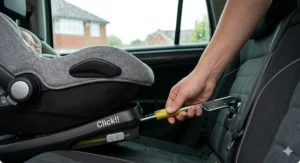
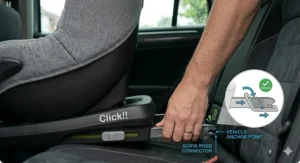
ISOFIX connectors click directly into metal anchor points built into your car’s chassis, creating a rock-solid attachment. Studies show ISOFIX dramatically reduces installation errors – crucial when research indicates up to 70% of seats installed with seatbelts are fitted incorrectly. If your car has ISOFIX points (standard in vehicles manufactured since 2006), this is always the safer choice.
Seatbelt installation remains legal and can be perfectly safe when done correctly. Some newborn carriers offer seatbelt installation as an alternative to purchasing expensive ISOFIX bases. Always follow manufacturer instructions meticulously and consider professional fitting checks – many UK retailers like Halfords offer free fitting demonstrations.
How to Choose the Right Newborn Car Seat
Consider Your Car Type
Your vehicle significantly influences the best seat choice. Measure your back seat dimensions before purchasing – some extended rear-facing seats require substantial front-to-back space. If you drive a smaller car (Fiat 500, Mini Cooper, etc.), prioritise compact designs like the BeSafe iZi Go Modular X1 or infant-only carriers rather than birth-to-four-year rotating seats.
Check your car’s ISOFIX point locations too. Not all vehicles have ISOFIX in all rear positions – some only include them in the outer seats. Ideally, install your newborn seat in the centre rear position for maximum side-impact protection, but this requires centre ISOFIX or excellent seatbelt installation.
Budget Realistically
Newborn car seats range from £85 to £350+ in the UK market, and price doesn’t always correlate directly with safety – even budget seats meet identical safety standards. However, premium options typically offer superior materials, advanced features (rotation, extended recline), and modular compatibility with toddler seats.
Budget breakdown:
- Under £120: Basic i-Size compliance, straightforward features (Graco SnugEssentials, Cosatto Acorn 2)
- £120-£200: Mid-range with rotation, better materials, extended use (Maxi-Cosi Pebble 360, Joie i-Spin 360)
- £200+: Premium brands, advanced safety features, modular systems (Cybex Cloud Z, Silver Cross Dream)
Remember to budget for the base if purchasing a seat requiring separate ISOFIX base (typically £150-£200 additional). Alternatively, choose seats offering seatbelt installation to avoid this initial expense.
Lifestyle Considerations
Do you regularly use taxis or multiple vehicles? Lightweight carriers with seatbelt installation offer maximum flexibility. Planning to create a travel system with your pushchair? Check compatibility carefully – not all car seats fit all prams, despite claims of “universal adaptors.”
If you have two cars, consider either a lightweight seat that transfers easily or purchasing two bases (one for each vehicle). Many parents find the convenience of two permanent bases worth the investment, eliminating daily installation hassles.
Safety Ratings Beyond Legal Compliance
Whilst all new seats meet R129 requirements, independent testing organisations like ADAC (Germany’s automobile association) and Which? conduct more rigorous assessments. They test at higher speeds, evaluate ease of use (reducing user error), and examine additional factors like harmful chemicals in fabrics.
Seek out seats with strong ADAC ratings (scores below 2.0 are excellent) or Which? Best Buy awards. These independent tests provide reassurance beyond minimum legal standards.
Installation Methods Explained
ISOFIX Installation: The Gold Standard
ISOFIX (International Standards Organisation Fix) provides foolproof installation by clicking directly into metal anchor points embedded in your car’s structure. Modern UK vehicles manufactured since 2006 include ISOFIX as standard, typically in both outer rear seats.
How to install ISOFIX bases:
- Locate your vehicle’s ISOFIX anchor points (usually indicated by small tags or symbols between seat cushions)
- Extend the ISOFIX connectors from the base
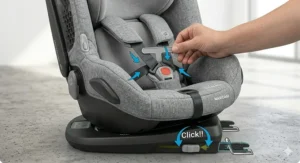
- Push firmly until you hear/feel a distinct click
- Visual indicators should turn green (red indicates improper connection)
- Extend the support leg to the car floor or connect top tether strap (depending on base design)
- Test stability by pulling firmly – the base shouldn’t move more than 2-3cm
ISOFIX installation takes 60 seconds once you’ve practiced. The confidence of knowing it’s fitted correctly is invaluable, particularly for anxious first-time parents.
Seatbelt Installation: Still Perfectly Safe
If your car lacks ISOFIX or you’re using taxis regularly, seatbelt installation remains completely safe when done correctly. The challenge? It’s easier to make mistakes.
Seatbelt installation tips:
- Thread the seatbelt through the clearly-marked path on the seat (consult manual if uncertain)
- Ensure the belt lies flat without twists
- Pull the belt very tight – genuinely tight, not “feels snug” tight
- Lock the belt mechanism (pull it all the way out, then let it retract to engage the lock)
- Check the level indicator shows correct recline angle
- Test by pulling firmly at the belt path – minimal movement indicates correct tension
Many parents underestimate how tight seatbelts need to be. One NHS guidance suggests: “If you can move the seat more than 2.5cm at the belt path, it’s not tight enough.” Don’t hesitate to use your body weight to compress the seat whilst pulling the belt tight.
Professional Fitting Checks
Even experienced parents benefit from professional fitting verification. Most UK retailers offering car seats provide free fitting demonstrations:
🔧 Halfords – Free child seat fitting demonstrations with seat purchase
🔧 John Lewis – Trained Partners offer fitting advice and checks
🔧 Local Fire Stations – Some still offer free fitting checks (call ahead)
Consider professional checks essential for first-time parents or when using new seat types. The peace of mind is worth the minimal time investment.
Travel System Compatibility
Creating a travel system – where your car seat clicks directly onto your pushchair chassis – offers brilliant convenience during those chaotic early months. However, compatibility varies significantly between brands.
Universal Compatibility: Maxi-Cosi
Maxi-Cosi seats (including the Pebble 360) work with more pushchair brands than any competitor. Most mid-to-high-end pushchairs either include Maxi-Cosi adaptors or offer them as affordable accessories. This makes Maxi-Cosi the safest choice if you haven’t yet selected your pushchair.
Brand-Specific Systems
Brands like Cybex, Silver Cross, and Cosatto design their seats to work seamlessly with their own pushchair ranges. The Cybex Cloud Z works beautifully with Cybex Priam and Mios pushchairs. Silver Cross Dream integrates perfectly into Silver Cross travel systems. If you’ve already committed to a pushchair brand, choosing their matching car seat ensures guaranteed compatibility.
Independent Brands
Joie, BeSafe, and Graco offer varying compatibility. Joie works with their own extensive pushchair range plus some third-party brands. BeSafe focuses primarily on Stokke pushchairs but offers adaptors for select others. Always verify specific compatibility before purchasing.
The Two-Hour Rule
Important reminder: Babies should spend maximum two hours in car seats per 24-hour period, even when attached to pushchairs. Extended time in semi-reclined positions can restrict breathing and blood oxygen levels. For longer outings, transfer your baby to a flat carrycot or pram bassinet.
Common Mistakes to Avoid
Mistake #1: Buying Before Checking Car Compatibility
That stunning seat might not physically fit your car. Always verify:
- Will it fit with your driving position (some extend far into footwells)?
- Can you still fit passengers/other car seats alongside it?
- Is your car listed on the manufacturer’s compatibility chart?
Most retailers allow returns if seats don’t fit, but checking beforehand saves hassle. Consider booking a fitting appointment where you can test display models in your actual vehicle.
Mistake #2: Buying Second-Hand Without Full History
Whilst tempting for budget savings, second-hand car seats carry risks. Any seat involved in even minor collisions may have invisible structural damage compromising safety. You’ll likely lack the instruction manual, making correct installation uncertain. Missing parts (harness, newborn insert, base) eliminate cost savings.
Only purchase second-hand from people you trust completely who can guarantee the seat’s complete history. Otherwise, budget options like the Graco SnugEssentials at £85 provide peace of mind for minimal additional outlay.
Mistake #3: Incorrect Harness Tightness
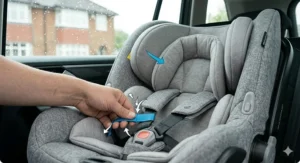
The harness should be snug enough that you cannot pinch any excess fabric between your fingers at your baby’s chest. Too loose, and your baby could be ejected during collision. The chest clip should sit at armpit level, not on their stomach.
Check harness tightness before every journey. Bulky coats compress during impacts, creating dangerous slack. Remove thick coats and use car seat-safe blankets over the harness instead.
Mistake #4: Premature Forward-Facing
i-Size mandates rear-facing until 15 months minimum, but many safety experts recommend rear-facing to four years. Rearward-facing provides five times better protection for head and neck in frontal collisions (the most common accident type).
Resist pressure from well-meaning relatives suggesting “he’s too big to face backwards” or “she wants to see where we’re going.” Safety trumps convenience every time.
Mistake #5: Forgetting to Register Your Seat
Register your seat with the manufacturer immediately. This ensures you receive critical safety recall notifications. Approximately 1-2% of car seats have manufacturing defects discovered post-sale – registration could literally save your child’s life.
Frequently Asked Questions
❓ Can I use a newborn car seat from birth without the infant insert?
❓ How do I know when my baby has outgrown their infant car seat?
❓ Is the i-Size regulation mandatory for all car seats in the UK?
❓ Can I install a newborn car seat in the front passenger seat?
❓ What's the difference between i-Size and Group 0+ car seats?
Final Thoughts: Making Your Decision
Choosing your newborn’s first car seat represents one of your most crucial parenting purchases. Unlike adorable nursery decorations or designer babygrows, this is genuinely life-or-death equipment. Yet it needn’t be overwhelming.
Start with your non-negotiables: Does it fit your car? Does it meet current i-Size regulations? Can you install it correctly consistently? Everything else – rotation, premium fabrics, modular compatibility – represents bonus features rather than essentials.
For most UK parents, the Maxi-Cosi Pebble 360 hits that sweet spot of safety, practicality, and value at under £130. Budget-conscious families will find the Graco SnugEssentials delivers i-Size compliance for under £110 without compromising core safety. Those planning extended rear-facing appreciate the Joie i-Spin 360’s birth-to-four-year longevity. Premium seekers discover the Cybex Cloud Z offers innovations genuinely worth the investment.
Whichever seat you choose, remember: the safest car seat is the one that fits your car correctly, that you can install properly every single time, and that you’ll actually use consistently. A £300 seat installed incorrectly offers less protection than an £85 seat fitted perfectly.
Register your seat immediately, read the manual thoroughly (yes, actually read it), and don’t hesitate to seek professional fitting verification. Your baby’s safety is worth the small time investment.
Safe travels with your precious cargo!
Recommended for You
- 7 Best Newborn Car Seats UK 2026 | Expert Safety Reviews
- 7 Easiest Pushchair for Grandparents in 2026 UK
- 7 Best Pushchair That Lasts Longest UK 2026
Disclaimer: This article contains affiliate links. If you purchase products through these links, we may earn a small commission at no additional cost to you. Prices shown are approximate and may vary.
✨ Found this helpful? Share it with your mates! 💬🤗
