
In This Article
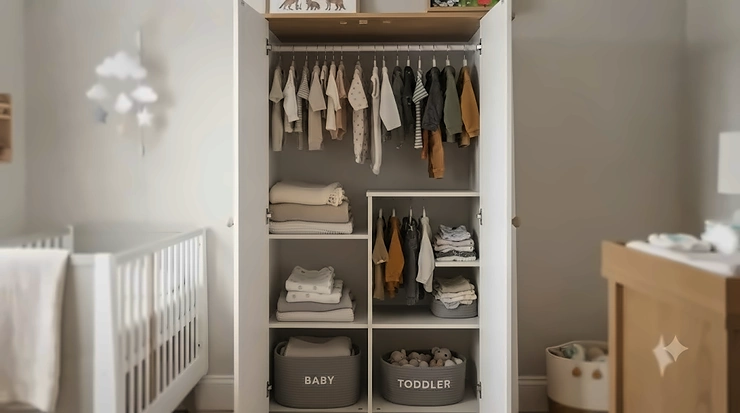
Two babies, one room, and roughly the same square footage you had when it was just a spare bedroom for guests nobody visited. That’s the reality facing a growing number of UK parents, and it’s exactly why the double baby wardrobe for shared nursery search has exploded over the past couple of years. A double, or double door, wardrobe isn’t simply a bigger box for tiny clothes — it’s a decision about how two children’s entire wardrobes, bedding, and nursery clutter will coexist without turning the room into an obstacle course.
What is a double baby wardrobe for shared nursery use? In short, it’s a two-door nursery wardrobe — typically fitted with two hanging rails, one or two adjustable shelves, and sometimes a drawer — designed to store clothing and essentials for two children sharing one bedroom, without doubling the furniture footprint a pair of single wardrobes would need. That distinction matters more than it sounds: in a typical British box room, the difference between one wardrobe and two can be the difference between a nursery that breathes and one that doesn’t. The concept of a dedicated children’s nursery as a purpose-built room is a relatively modern one, and modern nurseries increasingly have to work twice as hard for the same space.
This guide has done the legwork: real products currently listed on Amazon UK, genuine specifications pulled from manufacturer and retailer data, and honest analysis of who each wardrobe actually suits — not just a rehash of the product page. We’ve deliberately covered budget, mid-range, and premium options, because “best” depends enormously on your room size, your babies’ ages, and how much you want to spend on furniture that’s arguably going to be covered in stickers within eighteen months anyway.
Quick Comparison Table
| Wardrobe | Type | Storage Features | Best For |
|---|---|---|---|
| Panana 2 Door Wardrobe | Budget double | 1 rail, 1 shelf, hanging rail | Tight budgets, small twin rooms |
| Vida Designs Riano 2 Door Wardrobe | Budget double | Rail plus shelving | First-time flat-pack buyers |
| Obaby Maya Double Wardrobe | Mid-range double | 2 rails, 1 full-width shelf | Scandi-style nurseries on a budget |
| Tutti Bambini Modena Wardrobe | Mid-range double | 2 adjustable shelves, 1 rail, soft-close | Light sleepers, longer-term use |
| Freya Double Wardrobe | Mid-premium double | 2 rails, adjustable shelves | Coastal/neutral nursery themes |
| Ickle Bubba Snowdon Wardrobe | Premium double | 2 rails, drawer, soft-close | Classic sleigh-style nurseries |
| CuddleCo Luna Double Wardrobe | Premium double | 2 removable rails, shelf, deep drawer | Growing-with-child, long-term families |
Looking across the table, the split is fairly clean: the two budget options get you into a working double wardrobe for well under £200, the middle tier (roughly £270–£350) buys genuine baby-brand engineering like soft-close hinges, and the premium tier (£380 and up) adds drawers, removable rails that convert the piece into an adult-sized wardrobe later, and longer warranties. None of that means the budget picks are a false economy — for a nursery you might redecorate in three years, a Panana or Vida Designs wardrobe can be entirely sensible.
💬 Just one click — help other make better buying decisions too!😊
Top 7 Double Baby Wardrobes for a Shared Nursery: Expert Analysis
1. Panana 2 Door Wardrobe — best budget double for a tight twin room
The standout here is simply the price-to-footprint ratio: at roughly 72 x 47 x 169cm, the Panana 2 Door Wardrobe slots into box rooms where a full-size nursery wardrobe simply won’t fit. Inside you get a single hanging rail plus a shelf above it, which sounds sparse until you remember that newborn and early-toddler clothing is small — you’re storing volume, not width.
In practice, that shallow 47cm depth is the trade-off: standard coat hangers sit at a slight angle rather than square-on, which is common at this end of the market and rarely causes real problems with baby-sized clothing. Reviewers of similarly specced Panana wardrobes consistently note that assembly is the main sticking point, with instructions that assume more DIY confidence than many first-time flat-pack builders have; budget an extra hour beyond the stated time.
The Panana 2 Door Wardrobe is best suited to parents furnishing a starter nursery on a genuinely tight budget, or anyone who suspects they’ll swap it out once the twins move to a bigger room. It isn’t trying to be a forever piece, and that’s fine — not every wardrobe needs to be.
Pros:
- ✅ Compact footprint fits small box-room nurseries
- ✅ Genuinely affordable entry point into double storage
- ✅ Simple internal layout is easy to keep tidy
Cons:
- ❌ Shallow depth angles hangers rather than sitting square
- ❌ Assembly instructions are light on detail for beginners
Expect this wardrobe to sit in the under-£150 range, occasionally dipping lower during sales; at that price it represents solid value provided you don’t need it to last beyond the toddler years.
2. Vida Designs Riano 2 Door Wardrobe — best for first-time flat-pack buyers
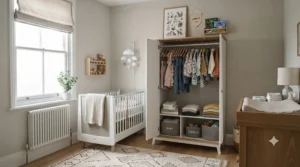
What sets the Vida Designs Riano 2 Door Wardrobe apart is how forgiving the build process is compared with rivals at a similar price — reviewers repeatedly single out clearer labelling on panels and a shorter parts list, which matters enormously when you’re assembling nursery furniture solo at 9pm before a delivery deadline.
Specification-wise, this is a straightforward hanging-and-shelf configuration rather than a baby-specific design, which is precisely why it undercuts dedicated nursery brands on price. What that means in practice: no soft-close doors, no baby-branded certification paperwork, just a competent general-purpose double wardrobe finished in white. For twins who are still in babygrows and 0-24 month sizing, that’s rarely a meaningful gap.
Aggregated review sentiment for the Riano range is strong on value and construction stability once built, with a recurring complaint about door alignment needing a small adjustment after the first few weeks of use — a five-minute fix with the supplied hinges, not a structural flaw.
Pros:
- ✅ Straightforward assembly praised in aggregated reviews
- ✅ Sturdy build quality relative to its price point
- ✅ Neutral white finish suits any shared nursery theme
Cons:
- ❌ No soft-close doors or baby-specific safety branding
- ❌ Door hinges sometimes need minor adjustment post-build
Typically priced in the low £100s, with occasional RRP discounts pushing it lower — check current price before assuming that’s fixed, as retailer promotions shift week to week.
3. Obaby Maya Double Wardrobe — best Scandi styling for a budget-conscious nursery
The Obaby Maya Double Wardrobe leans hard into the two-tone Scandinavian look — white cabinetry against natural wood-effect legs and trim — and at 178.5cm tall by 79.5cm wide, it offers proper full-height hanging space rather than the compressed proportions you sometimes see at the budget end.
Inside, two internal hanging rails sit above a single full-width shelf, and the doors close on a soft-close mechanism, which genuinely matters more than it sounds once you’re trying to dress two babies without slamming a door and waking either of them. At 65.7kg, this is a substantial, floor-anchored piece rather than something that feels flimsy once loaded — Obaby backs it with a two-year guarantee, a reasonable middle ground between budget throwaway furniture and premium long-term investment.
Based on the spec comparison with cheaper double wardrobes, the soft-close doors and heavier overall build are what justify the jump in price here. Aggregated buyer sentiment on the Maya range consistently praises the finish quality and ease of matching it to other Obaby nursery pieces, with occasional notes that the flat-pack assembly is a genuine two-person job given the weight of the panels.
Pros:
- ✅ Soft-close doors protect little fingers and sleep
- ✅ Scandinavian two-tone finish suits neutral nurseries
- ✅ Backed by a two-year manufacturer guarantee
Cons:
- ❌ Heavy panels make solo assembly impractical
- ❌ Single shelf offers less folded storage than rivals
Prices generally sit in the £270-£300 range at the time of research, with the wardrobe occasionally discounted as part of Obaby room-set bundles — worth checking if you’re also buying a cot bed or dresser.
4. Tutti Bambini Modena Wardrobe — best soft-close doors for light-sleeping twins
If door noise is your nemesis — and with two babies napping on staggered schedules, it usually is — the Tutti Bambini Modena Wardrobe earns its spot through soft-close hinges specifically engineered to eliminate the clunk of a closing door. At W85 x D50 x H170cm and 75kg, it’s also one of the more substantial units on this list, built from durable MDF with an oak-and-white or all-white finish depending on which variant you choose.
Two adjustable shelves sit above a full-length hanging rail, which is a genuinely useful layout for twins: you can dedicate one shelf to each child’s folded items and use the single rail for shared or seasonal hanging pieces, rather than fighting over shelf space the way you might with a single fixed shelf. Tutti Bambini backs the piece with a three-year guarantee, longer than most competitors in this price bracket.
What most buyers overlook about this model is that the shelves are properly adjustable rather than fixed at set heights, meaning the internal layout can evolve as your twins grow from tiny hanging outfits into bulkier toddler clothing that needs different proportions of hanging-to-folded storage.
Pros:
- ✅ Soft-close doors minimise noise during naptime
- ✅ Two adjustable shelves adapt as children grow
- ✅ Three-year guarantee beats most direct rivals
Cons:
- ❌ At 75kg, assembly and positioning need two adults
- ❌ Single hanging rail limits simultaneous hanging capacity
Expect a price in the region of £300, sometimes bundled into Tutti Bambini’s three-piece Modena room sets alongside a cot bed and dresser at a modest combined saving.
5. Freya Double Wardrobe for Nursery — best adjustable shelving for growing twins
The Freya Double Wardrobe for Nursery takes a coastal, white-washed finish with brushed silver handles, aiming squarely at parents who want a nursery that photographs well without tipping into twee. Underneath the styling, it’s genuinely practical: two hanging rails and two large adjustable shelves give you real flexibility over how much hanging versus folded storage you need at any given stage.
Here’s what the spec sheet won’t tell you outright: those two hanging rails are removable, meaning the Freya Double Wardrobe for Nursery is explicitly designed to convert from a baby wardrobe into a standard adult-height wardrobe later — a detail that matters if you’re planning for this piece to outlast the nursery years and follow your children into a shared kids’ bedroom.
The trade-off for that flexibility is price; this sits closer to the premium end of the mid-range bracket. Reviewers who’ve bought the Freya for twin nurseries specifically mention appreciating the dual-rail setup for keeping each child’s hanging clothes visually separated, which is a small thing that makes a real difference when you’re grabbing an outfit half-asleep at 6am.
Pros:
- ✅ Two hanging rails plus two adjustable shelves
- ✅ Removable rails let the wardrobe grow with your child
- ✅ Calming coastal white finish suits shared nurseries
Cons:
- ❌ Priced above most mid-range double wardrobes
- ❌ Larger footprint needs a genuinely spacious room
At the time of research, pricing sits in the £400-£450 range — a meaningful step up, so weigh the grow-with-child conversion against whether you’ll actually keep the piece that long.
6. Ickle Bubba Snowdon Wardrobe — best sleigh-style storage-and-drawer combo
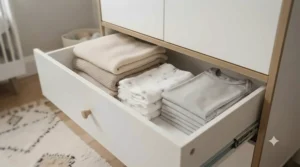
Classic sleigh styling — gently curved top edges and a traditional silhouette — makes the Ickle Bubba Snowdon Wardrobe the pick for parents who want their double wardrobe to look like heirloom furniture rather than flat-pack storage. It pairs soft-close doors with double hanging rails and adds something several rivals skip entirely: a genuinely spacious lower drawer for bulky items like spare bedding, sleep sacks, or out-of-season clothing.
That drawer is the real differentiator here. Reviewers aggregated across the Ickle Bubba Snowdon nursery range consistently flag the drawer’s depth and smooth runners as a standout, particularly for twin parents who need somewhere to stash duplicate sets of bedding without raiding the hanging space above.
On paper, this means you’re getting three distinct storage zones — two rails and a drawer — in a single footprint, which is a genuinely efficient use of floor space in a shared room where every extra piece of furniture eats into playmat territory. The classic sleigh design does mean it reads more traditional than the Scandi or coastal options on this list, so it suits period-property nurseries better than ultra-modern ones.
Pros:
- ✅ Spacious lower drawer for bedding and seasonal items
- ✅ Double hanging rails plus soft-close doors
- ✅ Classic sleigh styling suits traditional nurseries
Cons:
- ❌ Traditional design may clash with modern nursery themes
- ❌ Drawer runners need periodic dust-clearing to stay smooth
Pricing typically sits in the £340-£360 range at the time of research, positioning it as a genuine mid-premium option rather than an entry-level buy.
7. CuddleCo Luna Double Wardrobe — best long-term, grow-with-child design
The CuddleCo Luna Double Wardrobe is the most deliberately future-proofed piece on this list. At 90 x 50 x 185cm, it’s taller than most rivals, and its two hanging rails are fully removable — CuddleCo explicitly markets the conversion path from twin baby wardrobe into a full-height adult wardrobe once the rails come out, alongside a deep base drawer for bulk storage.
Safety-wise, this is also the most thoroughly documented model here: it’s certified to FIRA FRQG C001 and C004 testing standards, comes with a wall-fixing strap as standard, and carries a five-year warranty against manufacturing defects — noticeably longer than most competitors. Reviewers consistently highlight the oak-effect trim against the white cabinetry as a design win, and several mention buying it as part of CuddleCo’s coordinated three-piece Luna nursery set alongside a matching cot bed and dresser changer.
What most buyers overlook about this model is the maximum weight guidance: CuddleCo recommends a 10kg limit on the hanging rails and 6kg per drawer, which is worth bearing in mind if you’re the sort of parent who likes to over-stuff storage — spreading the load across both children’s sections rather than piling everything onto one rail keeps the unit within its intended limits.
Pros:
- ✅ Removable rails convert it into a full adult wardrobe
- ✅ FIRA-certified and supplied with a wall safety strap
- ✅ Five-year warranty, longest on this list
Cons:
- ❌ Premium pricing puts it out of reach for tighter budgets
- ❌ Tallest unit here needs generous ceiling clearance
Expect pricing in the £440-£460 range, making it the most expensive pick here — but also the one most explicitly designed to earn its keep over a decade rather than a nursery phase.
✨ Don’t Miss These Exclusive Deals!
🔍 Take your shared nursery storage to the next level with these carefully selected wardrobes. Click on any highlighted item to check current pricing and availability. These picks will help you create the calm, organised twin nursery your family actually needs!
Practical Usage Guide: Setting Up and Maintaining Your Twin Nursery Wardrobe
Getting a double wardrobe into a shared nursery is only half the job; setting it up so it actually works for two children is the part most product listings skip entirely. Start with positioning: place the wardrobe against an internal wall wherever possible, away from radiators (heat warps MDF panels over time) and never directly opposite a window, where condensation can encourage damp inside the cabinet during winter months.
Before you load a single babygrow, secure the unit to the wall using the anti-tip strap supplied — or a separately purchased one if your chosen wardrobe doesn’t include it. This isn’t optional extra caution; it’s the single most important safety step in the entire setup process, covered in more depth in the safety section below.
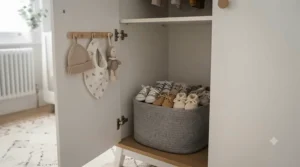
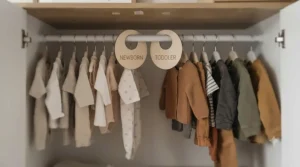
For the first 30 days, resist the urge to fully organise the space in one go. Twins’ clothing sizes and needs shift fast, so a loose split — left side for one child, right for the other, or top shelf newborn-size and lower shelf next-size-up — works better than an elaborate system you’ll abandon by week three. A common mistake is hanging everything: fold what doesn’t need to hang (vests, sleepsuits, muslins) to roughly double your usable storage without adding a single extra shelf.
Maintenance is minimal but matters. Wipe doors and handles monthly with a damp cloth and mild detergent — avoid abrasive cleaners, which dull soft-close mechanisms and painted finishes over time. Check drawer runners and hinges every few months for dust build-up, particularly in units like the Ickle Bubba Snowdon Wardrobe where a deep drawer sees frequent use. Re-tighten cam-lock fittings roughly twice a year; flat-pack furniture naturally loosens with door use, and a five-minute tightening session prevents doors from sagging.
Real-World Scenarios: Matching Wardrobes to Family Situations
The city-flat twin parents. Living in a two-bedroom conversion with a nursery barely wider than a hallway, budget and footprint dominate every decision. A compact option like the Panana 2 Door Wardrobe or Vida Designs Riano 2 Door Wardrobe makes sense here — neither eats significant floor space, and neither represents a heartbreaking loss if the family outgrows the flat within two years and the wardrobe doesn’t make the move.
The forever-home family. Parents who’ve bought their house with no plans to move again think differently about furniture. Here, the grow-with-child conversion offered by the CuddleCo Luna Double Wardrobe or Freya Double Wardrobe for Nursery earns its higher price tag — removable rails mean the piece transitions from nursery to primary-school bedroom without a second purchase, which genuinely changes the total cost of ownership over a decade.
The budget-stretched but detail-conscious parent. Not every family wants to compromise on finish quality just because funds are tight. The Obaby Maya Double Wardrobe and Tutti Bambini Modena Wardrobe sit in a sweet spot: proper soft-close doors, adjustable internal layouts, and manufacturer guarantees, without stretching to premium pricing. For parents furnishing on a set budget who still want the wardrobe to feel considered rather than purely functional, this middle tier does the most work per pound spent.
Shared Nursery Layout: Where a Double Wardrobe Actually Fits
Planning a shared nursery layout starts with measuring the room properly — not estimating, actually measuring — because a double wardrobe’s footprint interacts with everything else competing for wall space: two cots or a cot and a cot bed, a changing station, and ideally some floor clearance for play once your twins start rolling and crawling.
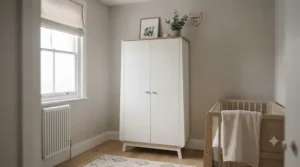
A workable starting point for most box-room-sized shared nurseries (roughly 2.4 x 3m) is placing the wardrobe along the shortest wall, cots along the two longer walls in an L-shape rather than side-by-side, and the changing unit tucked into whichever corner remains. This keeps the centre of the room open, which matters enormously once your twins are mobile and the floor becomes their primary playground.
If your shared nursery layout genuinely can’t accommodate a full-size double wardrobe, consider whether a taller, narrower model — several on this list run closer to 50cm deep than 60cm — solves the problem better than a wider unit. Depth is usually the more forgiving dimension to compromise on than width, since most cot-adjacent walkways need at least 60-70cm of clearance for safe access during night feeds.
How to Choose a Double Baby Wardrobe for a Shared Nursery
- Measure the space first, shop second. Note width, depth, and — often forgotten — ceiling height, since some premium models exceed 180cm tall.
- Decide hanging versus folded storage priorities. Newborns need minimal hanging space; toddlers need considerably more, so weigh how long you expect to use the wardrobe as-is.
- Check for soft-close doors if light sleep is a concern. With two babies on different schedules, a slamming door is a genuine household hazard, not a minor annoyance.
- Confirm the safety certification. Look for FIRA testing or equivalent, and check whether a wall-anchoring strap is included or needs buying separately.
- Factor in assembly difficulty and weight. Heavier premium units, often 65-75kg, generally need two adults to build and position safely.
- Consider whether removable rails matter to you. If you want the wardrobe to outlast the nursery years, prioritise models explicitly designed to convert.
- Set a realistic budget band before browsing. Knowing whether you’re shopping the sub-£200, £270-£350, or £380+ tier narrows the field fast and avoids decision fatigue.
Double Door Nursery Wardrobe vs Two Single Wardrobes: Which Wins for Twins
The instinctive option for many twin parents is simply buying two single wardrobes, one per child. It’s an understandable impulse — it feels fair, and it mirrors having two of everything else. In practice, a double door nursery wardrobe usually wins on space efficiency, cost, and even fairness, for reasons that aren’t obvious until you compare them directly.
| Factor | Double Door Nursery Wardrobe | Two Single Wardrobes |
|---|---|---|
| Floor footprint | One unit, typically 80-90cm wide | Two units, often 120-150cm combined |
| Cost | One purchase, £100-£460 range | Two purchases, frequently £200-£700+ combined |
| Storage division | Split internally by shelf/rail | Naturally split, one wardrobe each |
| Best for | Most shared nurseries under 3.5m wide | Larger rooms, or twins with very different clothing volumes |
The table makes the space and cost case fairly plainly: a single double wardrobe almost always beats two singles on combined footprint and total spend, which matters most in the compact rooms typical of UK nurseries. The one scenario where two singles genuinely make sense is when twins have markedly uneven clothing volumes — say, one child in hand-me-downs and one in an entirely new wardrobe — where separate units avoid one side feeling cramped. For the vast majority of families, though, a well-organised double wardrobe with a clear internal split (one shelf and rail per child) achieves the same fairness without the extra furniture.
Common Mistakes When Buying a Twin Nursery Wardrobe
Buying blind on dimensions is the single most common error — a wardrobe that looks appropriately sized in a product photo can be dramatically too deep or too tall for the actual room once it arrives, and returns on flat-pack furniture are expensive and disruptive to arrange.
A second frequent mistake is prioritising aesthetics over internal layout. A beautifully finished wardrobe with a single fixed shelf and no way to divide space between two children will frustrate you within weeks, regardless of how well it matches the nursery colour scheme. Look past the door finish to what’s actually happening on the inside.
Skipping the wall-anchoring step is a mistake with genuinely serious consequences rather than a minor oversight — more on this in the safety section below. Equally, underestimating assembly time is a smaller but very real frustration; several of the heavier premium models on this list explicitly recommend two adults and can take upwards of ninety minutes to build, which is worth scheduling around rather than attempting the night before a hospital discharge.
Finally, many parents buy for newborn-sized needs only, forgetting that clothing volume roughly triples by eighteen months. A wardrobe that looks generously spacious for two sets of 0-3 month babygrows can feel cramped disturbingly fast.
Safety, Regulations & Compliance for Shared Bedroom Baby Wardrobes
UK nursery furniture sits within a genuinely evolving regulatory picture. The long-standing Furniture and Furnishings (Fire)(Safety) Regulations 1988 set fire-resistance standards for domestic furniture, and nursery furniture has historically fallen within that scope. It’s worth knowing that recent amendments have begun excluding certain baby and children’s products from parts of this regime specifically to reduce chemical flame-retardant exposure in young children, so checking a manufacturer’s current compliance statement — rather than assuming blanket rules — is genuinely worthwhile when you’re comparing shared bedroom baby wardrobe options.
Beyond fire regulations, look for wardrobes tested to recognised furniture safety standards covering structural stability, and check whether a wall-fixing strap is included, as it is with the CuddleCo Luna Double Wardrobe. This single step addresses the most serious real-world hazard associated with tall nursery furniture: tip-over risk. RoSPA’s home safety guidance is unambiguous that furniture tip-overs remain a genuine and preventable cause of serious injury to young children, and that risk only increases once toddlers start climbing and pulling up on furniture — which happens faster with twins egging each other on than most parents expect.
Practically, that means: fix every double wardrobe to the wall using the strap provided (or a compatible one purchased separately), keep heavier folded items on lower shelves rather than up high, and avoid overloading a single hanging rail beyond the manufacturer’s stated weight limit — typically 10kg on the models covered here.
Long-Term Cost & Maintenance: Is a Double Wardrobe Worth It?
Total cost of ownership is where the budget-versus-premium debate actually gets interesting. A £120 double wardrobe that needs replacing once your twins outgrow the nursery in three years works out cheaper upfront but may cost more over a decade than a £450 wardrobe with removable, grow-with-child rails that transitions straight into a shared kids’ bedroom without a second purchase.
Run the maths for your own situation: if you’re likely to move house, downsize, or completely redecorate within three to four years regardless of the wardrobe’s condition, the budget tier genuinely represents better value — you’re not paying a premium for longevity you won’t use. If you’re in a forever home and want one purchase to see your children through to their early school years, models like the CuddleCo Luna Double Wardrobe or Freya Double Wardrobe for Nursery, both built around a conversion path, spread their higher upfront cost over considerably more years of service.
Maintenance costs are minimal across the board — none of these wardrobes require anything beyond occasional cleaning and hardware tightening — so the real long-term cost variable is durability under two children’s worth of daily door-opening rather than ongoing upkeep spend.
Twin Baby Essentials: What Else Your Shared Nursery Needs
A double wardrobe solves clothing storage, but twin baby essentials extend well beyond hanging space. Two cots or a cot bed with clear separation, a single well-positioned changing station (rarely worth duplicating, since you’re changing one baby at a time regardless), and a laundry solution sized for double the volume of a single-baby household all deserve early planning alongside your wardrobe purchase.
Bedding is worth buying in higher quantity than instinct suggests — with two babies, you’ll cycle through spare sheets and sleep sacks faster than expected, and having genuinely enough spares stored in that deep drawer on models like the Ickle Bubba Snowdon Wardrobe prevents 2am laundry emergencies. A dedicated spot for feeding essentials, whether that’s bottles and formula or breastfeeding pillows, close to but not inside the wardrobe, keeps night feeds efficient without cluttering clothing storage.
Finally, consider labelling or colour-coding early. Twin baby essentials — dummies, comfort items, even clothing in early weeks before personality differences emerge — blur together fast, and a simple system (left shelf, right shelf; blue label, green label) established from day one saves genuine confusion during sleep-deprived months.
Sibling Bedroom Storage Solutions Beyond the Wardrobe
Once the wardrobe is sorted, most shared nurseries still need supplementary storage to avoid clutter creeping onto the floor. Open cube shelving units are a popular pairing with a double wardrobe — they handle toys, books, and nappy-changing supplies without competing for the wardrobe’s clothing-specific layout, and they’re genuinely flexible as your twins move from babies into toddlers with entirely different storage needs.
Under-cot storage boxes make efficient use of otherwise dead space, particularly useful for seasonal clothing or outgrown sizes you’re not ready to pass on yet. Over-the-door organisers, meanwhile, solve the perennial problem of where muslins, bibs, and small accessories live without adding another piece of freestanding furniture to an already tight room — a trick genuinely worth borrowing from small-space living more broadly, and one that UK home and interiors publications like Ideal Home regularly cover in more general small-room contexts.
The broader sibling bedroom storage solutions principle worth internalising: vertical space is nearly always underused in nurseries. Wall-mounted shelving above cot height, door-back organisers, and under-furniture boxes collectively add meaningful capacity without eating into the floor space your twins will eventually need for play.
Frequently Asked Questions
❓ Is a double wardrobe better than two single wardrobes for twins?
❓ What size double wardrobe do I need for a twin nursery?
❓ Do I need to anchor a nursery wardrobe to the wall?
❓ How much does a good double baby wardrobe cost in the UK?
❓ Can a double nursery wardrobe be converted into an adult wardrobe later?
Conclusion
Furnishing a shared nursery for twins is one of those tasks that looks simple on paper and turns out to be genuinely fiddly in practice, largely because you’re solving two children’s storage needs within one room’s worth of space. The good news is that the double wardrobe market has matured enough that there’s a legitimately good option at every budget — from the space-saving Panana 2 Door Wardrobe for a genuinely tight room, through soft-close mid-range picks like the Tutti Bambini Modena Wardrobe and Obaby Maya Double Wardrobe, up to grow-with-child premium buys like the CuddleCo Luna Double Wardrobe.
The right choice ultimately comes down to three honest questions: how much room do you actually have, how long do you realistically expect to keep this piece of furniture, and how much are you comfortable spending upfront versus over time. Answer those three honestly and the rest of this guide should narrow things down fast. Whichever wardrobe you land on, don’t skip the wall-anchoring step — it’s the one part of this whole process that genuinely isn’t optional.
Recommended for You
- Single Wardrobe vs Double Wardrobe for Nursery: 7 Picks (2026)
- Single Baby Wardrobe: 7 Best Picks for UK Nurseries (2026)
- Baby Wardrobe Under £100: 7 Best Nursery Picks (2026)
Disclaimer: This article contains affiliate links. As an Amazon Associate, I earn from qualifying purchases. If you purchase products through these links, we may earn a small commission at no additional cost to you.
✨ Found this helpful? Share it with your friends! 💬🤗
