
In This Article
It’s 3.07 a.m. The house is silent, the baby is not, and you are standing in the nursery doing the “newborn shuffle”: swaying, bouncing, whispering things you’d be embarrassed to repeat in daylight. This is the moment the glider chair vs rocking chair for nursing debate stops being theoretical.

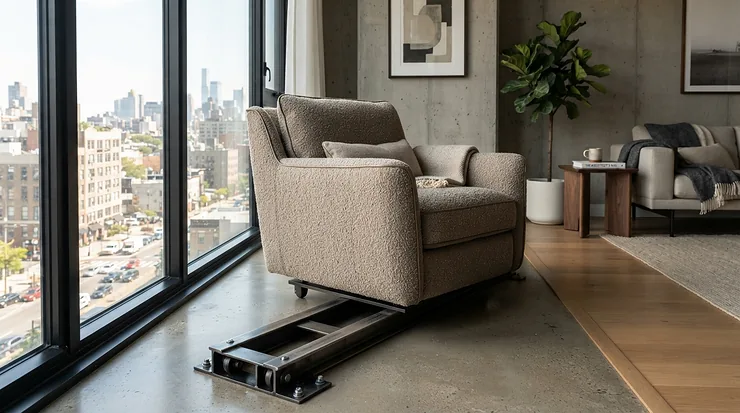
What is a glider chair vs rocking chair for nursing? A rocking chair sits on curved runners and tips forwards and backwards in an arc, so your body’s angle changes as you move. A glider chair sits on a fixed base with a linkage or bearing mechanism, so the seat slides back and forth while staying level. For nursing, the choice comes down to how smooth, quiet, space-hungry and ergonomic that motion is. That’s the short answer.
The long answer is more interesting, and it’s where most buying guides stop too early. Mumsnet’s Swears By nursing chair roundup shows UK parents are still split on whether a specialist chair is essential, but those who invested tend to be glad they did. The real question isn’t “which is better?” It’s “which suits your body, your room and your baby?”
Here’s what you’ll get: a clear breakdown of rocking motion vs gliding motion nursing, an honest look at what the research does and doesn’t say, seven real UK-available chairs analysed against their published features, and decision tools you can use tonight. No invented test diaries, just reasoning you can check. Availability and prices on amazon.co.uk shift constantly, so treat every price band below as indicative and check the live listing.
Quick Comparison: Glider vs Rocking Chair at a Glance
Before the deep dive, here’s the scannable version. Think of it as the cheat sheet you’d want at 3 a.m., if you had the energy to read.
| Feature | Glider chair | Rocking chair | Best For |
|---|---|---|---|
| Motion path | Flat, linear slide | Curved arc, tilts you back | Gliders: smooth, level feeds. Rockers: traditional, deeper sway |
| Floor space needed | Compact, fixed footprint | Needs clearance behind the runners | Gliders: small nurseries. Rockers: roomier spaces |
| Noise | Often quiet if well made, but bearings can wear | Wooden runners can creak on hard floors | Gliders: light sleepers. Rockers: carpeted rooms |
| Feel for the feeder | Seat stays level, which many find kinder on the back | Your angle shifts constantly | Gliders: long cluster feeds. Rockers: short settling sessions |
| Style and longevity | Often upholstered, modern | Classic, heirloom look | Gliders: modern nurseries. Rockers: period or traditional homes |
The headline is that gliders usually win on tidy, predictable movement, while rockers win on character and the longer, deeper sway many babies seem to like. Neither is automatically better for nursing itself. As iL Tutto points out, many chairs sold as “rocking” chairs are in fact gliders, so check the mechanism, not just the product title. If you’re a small-space household who feeds in long stretches, gliders deserve first look; if you have floor to spare and love timber, the rocker deserves a seat at the table.
💬 Just one click — help others make better buying decisions too!😊
Top 7 Nursing Chairs: Expert Analysis
I haven’t sat in any of these, and I won’t pretend otherwise. What follows is analysis built from each chair’s published features and from how UK reviewers and parent communities describe them. Where a detail can’t be verified, I’ll say so. Always confirm dimensions and weight limits on the live amazon.co.uk listing, because a chair that looks lovely and won’t fit through your nursery door is a very expensive coat hanger.
1. icklebubba Dursley — best rocker under £250
The icklebubba Dursley earned its place in Expert Reviews’ tested nursing chair guide as the pick for buyers keeping spend under £200. That matters: it’s a proper rocking chair at a price where most rivals are footstools with ambitions.
On paper, a budget rocker like this means you get the classic arc without the engineering premium of a smooth glider mechanism. In practice, this suggests you should think carefully about your floor: a wooden-runner rocker on hard flooring can creak and travel, while a rug underneath tames both. What the spec sheet won’t tell you is that padding thickness and arm height at this price vary hugely, so check the listing’s measurements against your own torso.
This is the chair for first-time parents who aren’t sure how long they’ll breastfeed or bottle-feed, or who simply need a reliable perch without blowing the nursery budget. It’s less suited to anyone with a bad back or long, marathon feeds.
Reviewer sentiment, as framed by Expert Reviews, leans positive on value, though I couldn’t verify a robust pool of individual buyer reviews on amazon.co.uk, so check the star distribution yourself.
Pros:
- ✅ Genuinely affordable for a real rocking chair
- ✅ Classic, familiar rocking arc
- ✅ Good entry point for first-time parents
Cons:
- ❌ Padding and support may be basic for long feeds
- ❌ Can creak or shift on hard floors
Price band: broadly under £250 at the time of research; check current price. Verdict: excellent value if you accept the trade-offs.

2. Obaby Savannah — best glider-recliner for flexible positions
Expert Reviews crowned the Obaby Savannah swivel glider recliner as its best glider chair, and the combination in its name tells you why. Glide, swivel and recline in one chair is a lot of movement options for one footprint.
Here’s what that means in real life: the swivel lets you turn towards a cot or door without standing up, and the recline helps with those awkward half-asleep bottle feeds. The gliding mechanism keeps the seat level, which is the quiet advantage over a rocker for many people. Based on the spec comparison, reclining gliders do take up more room when fully extended, so measure the clearance.
It suits parents who want one chair that survives beyond the nursing phase, since a recliner doubles as a reading chair once the baby is walking. A recliner can also tempt you to doze, so see the safety section below before you get too comfortable.
Review sentiment from the Expert Reviews guide is favourable, but I couldn’t confirm aggregated amazon.co.uk ratings, so I won’t quote any.
Pros:
- ✅ Glide, swivel and recline in one chair
- ✅ Level seat suits long feeds
- ✅ Useful long after the nursing phase
Cons:
- ❌ Bulkier when fully reclined
- ❌ Moving parts may wear over years
Price band: mid-range for the category; check current price. Verdict: strong all-rounder for flexible households.
3. Kub Askern — best rocker for back support
Expert Reviews named the Kub Askern the best nursing rocking chair for back support. For a feeding chair, that’s the feature to chase, because a chair that lets you slump is a chair that sends you to the physio.
The practical meaning is simple: a supportive backrest and sensible arm position help keep your shoulders from rolling forwards as you bring the baby up to you rather than lowering yourself down to the baby. Based on the review framing, this is a rocker for people who’ve been warned about their posture, or who know a long feed ends in a sore neck.
It suits breastfeeding parents especially, as nursing pillows and arm rests do most of the heavy lifting here. It’s less ideal if your nursery is tiny, because rockers need clearance behind them.
Expert Reviews’ assessment is positive on support, and the reviewer noted a price near the mid-£300s at the time of that guide. Verified buyer-review totals for amazon.co.uk couldn’t be confirmed, so I’m not quoting any.
Pros:
- ✅ Praised by reviewers for back support
- ✅ Rocking arc with proper nursing ergonomics
- ✅ Kub’s nursing-chair focus shows in design
Cons:
- ❌ Needs space behind for the rocking arc
- ❌ Price sits above entry-level rockers
Price band: roughly mid-£300s to £400 range; check current price. Verdict: worth it if posture is your top concern.
4. Tutti Bambini Oscar — best for ergonomic rocking support
RealHomes picked the Tutti Bambini Oscar as its best nursing chair for ergonomic support, noting it has several ergonomic features. UK retailer listings at the time of research put it in roughly the £300-£350 range.
What ergonomic features mean here: shaped armrests, a supportive back and a seat height that lets your feet sit flat. That combination reduces how hard your lower back has to work when you’re holding something warm, wriggly and heavier by the week. It rocks rather than glides, so you get the classic arc with a modern upholstered body.
It’s aimed at parents who like the look of a contemporary accent chair but want proper nursing mechanics underneath. If your partner is a different height to you, check that the seat works for both of you, since one fixed seat height has to compromise somewhere.
Tutti Bambini lists a three-year manufacturer’s guarantee through UK retailers, which adds reassurance. I couldn’t verify aggregated amazon.co.uk review sentiment for this model.
Pros:
- ✅ Ergonomics are the headline feature
- ✅ Modern upholstered look
- ✅ Manufacturer guarantee through UK retailers
Cons:
- ❌ Rocker needs floor clearance
- ❌ One fixed seat height for every user
Price band: around £300-£350. Verdict: a sensible mid-range rocker for posture-minded parents.
5. Gaia Baby Serena — best for build quality
Expert Reviews’ pick for quality was the Gaia Baby Serena rocking and nursing chair, priced around £450 in that guide. It’s the “buy once” option for people who’d rather spend now than replace later.
Quality, in practice, means a frame that doesn’t flex, upholstery that survives milk, and a mechanism that doesn’t develop a groan after six months. That’s why cost-per-use matters: if this chair covers a first and second baby, the per-feed cost dips well below that of a cheaper chair that wobbles by year two.
It suits families planning more than one child, or anyone who wants a chair that looks at home in a living room afterwards. If you’re not sure you’ll feed at home much, this is a lot of chair to commit to.
Reviewers describe the Serena favourably on construction. I couldn’t verify aggregated amazon.co.uk ratings, so check the review spread before buying.
Pros:
- ✅ Praised for quality construction
- ✅ Long-term value across multiple children
- ✅ Good looks for after the nursery years
Cons:
- ❌ Highest outlay among the rockers here
- ❌ Overkill for short-term use
Price band: mid-£400s to £500 range; check current price. Verdict: premium, but justified by longevity.
6. Kub Chatsworth — best glider with footstool
Mumsnet’s Swears By guide named the Kub Chatsworth glider nursing chair and footstool its best glider nursing chair, with enthusiastic comments about comfort. The footstool is not an extra; it’s half the point.
Raising your feet changes your lap angle, which tilts the baby towards you and eases the strain on your shoulders. A glider mechanism keeps that angle steady, so you aren’t constantly readjusting. Based on the spec comparison, a footstool plus glider is the combination most aligned with long, still, quiet feeds.
It suits parents who want a polished, grown-up nursery piece and feed often through the night. It’s less suited to those who love a big, swooping rock, because gliding is a gentler, shorter movement.
Mumsnet’s pick is the key community signal here; I couldn’t verify amazon.co.uk aggregated ratings. Reviewers’ priorities, as reflected in roundups, are comfort and a calm mechanism.
Pros:
- ✅ Glider plus footstool supports good posture
- ✅ Highlighted by Mumsnet as best glider
- ✅ Looks refined enough for a living room
Cons:
- ❌ Gentler motion than a full rocker
- ❌ Premium pricing for the category
Price band: upper mid-range; check current price. Verdict: a first-rate choice for gliding devotees.
7. Mamas & Papas Bowdon — best high-back, nursing-first design
Mumsnet’s guide highlights the Mamas & Papas Bowdon as the best ergonomic nursing chair, and RealHomes calls it a best high-back option with a gentle rocking motion. When two UK sources agree on a different angle of the same chair, that’s worth noting.
A high back supports your shoulders and head, which helps in the 2 a.m. feeds where you’re half-asleep and unconsciously leaning. That support is the practical meaning of “high back”, and the gentle motion is designed for settling rather than vigorous rocking.
It suits parents who want a chair designed with nursing at the forefront rather than a repurposed armchair, and who accept paying a premium for it. If you have a small nursery, check the footprint, since high-backed chairs with footstools are not compact.
I couldn’t verify aggregated amazon.co.uk review sentiment, but the Mumsnet and RealHomes endorsements suggest consistent satisfaction among reviewers who’ve tried it.
Pros:
- ✅ High back supports shoulders and head
- ✅ Designed with nursing in mind
- ✅ Gentle motion for settling
Cons:
- ❌ Takes up significant floor space
- ❌ Premium price tier
Price band: upper range; check current price. Verdict: best if ergonomics outrank budget.
Top 7 Compared
| Product | Motion | Indicative price band | Standout | Best For |
|---|---|---|---|---|
| icklebubba Dursley | Rocker | Under £250 | Budget value | First-time parents on a budget |
| Obaby Savannah | Glider-recliner | Mid-range | Swivel and recline | Flexible, multi-use households |
| Kub Askern | Rocker | Mid-£300s to £400 | Back support | Posture-conscious feeders |
| Tutti Bambini Oscar | Rocker | £300-£350 | Ergonomic features | Modern nurseries |
| Gaia Baby Serena | Rocker | £400-£500 | Build quality | Families planning more children |
| Kub Chatsworth | Glider | Upper mid-range | Glider plus footstool | Long, still feeds |
| Mamas & Papas Bowdon | Gentle rocking | Upper range | High back, nursing-first | Ergonomics-first buyers |
Looking at the table above, the icklebubba Dursley delivers the clearest value, but if back support is your priority, the Kub Askern‘s reviewed support justifies the extra spend. Gliders like the Kub Chatsworth and Obaby Savannah trade the classic arc for a level, predictable seat, which long feeders tend to appreciate. Buyers at the top end, such as those eyeing the Gaia Baby Serena or Mamas & Papas Bowdon, are paying for longevity and ergonomics rather than a feature you’ll notice on day one.
✨ Ready to Find Your Perfect Feeding Spot?
🔍 Take your nursery to the next level with these carefully selected chairs. Click on any highlighted product to check current pricing and availability. A comfortable chair makes the long nights easier on your whole family!
Rocking Motion vs Gliding Motion Nursing: What Actually Differs
Strip away the marketing and the real distinction in rocking motion vs gliding motion nursing is geometry. A rocker sweeps you through an arc: your head dips back as the runners tip, then comes forward again. A glider keeps your seat roughly level and slides it along a track. Same rhythm, different feel.
Why does it matter for a feed? A level glide keeps the baby’s position relative to you steadier. When a baby is latched or taking a bottle, a constantly changing angle can mean small adjustments to your arm, which you feel by the third feed of the night. A rocker’s arc, on the other hand, gives a stronger “sway” feeling that many parents find instinctively natural.
Then there’s range. A rocker can swing wide if you push off with your feet, while many gliders have limited travel, which suits settling a sleepy baby but frustrates people who want vigorous movement for a fretful one.
Here’s what to weigh:
- Control: Gliders let you adjust the speed with tiny foot pressure; rockers can overshoot.
- Noise: A well-made glider is often quieter than runners on a wooden floor, though bearing wear changes that over the years.
- Safety around small hands and feet: Rockers sweep the floor behind them, so pets and toddlers need watching. Gliders have enclosed mechanisms but can have pinch points, so check the design.
On balance, if you value predictable, quiet movement, gliders have the edge. If you love a deeper sway and a classic look, rockers still hold their own. Neither automatically makes feeding easier; the fit to your body does.

Baby Soothing Motion Research: What the Science Does (and Doesn’t) Say
Here’s an honest bit most chair retailers skip: there’s no study I found that tests gliders against rockers for nursing. What exists is broader research on how movement calms babies, and it’s genuinely fascinating.
The RIKEN Brain Science Institute in Japan found that human babies calm sharply when carried while a parent walks, with heart rate dropping, whereas simply holding them while sitting had a much smaller effect. A later paper in Current Biology, summarised by Scimex, compared 21 infants across four conditions: held by a walking parent, held by a sitting parent, lying in a still cot and lying in a rocking cot. Walking while holding the baby was the standout, and the effect was clearer after about five minutes.
So what does that mean for your chair? Reasoning from the evidence, it suggests that movement itself matters and that being held matters less on its own. A chair can’t replicate walking, but it’s the nearest sit-down approximation. It also hints that you shouldn’t expect miracles from a chair alone: if your baby is overtired and furious, standing and walking may genuinely work better.
It would be a stretch to claim from this research that one motion type outperforms the other. The honest conclusion is that gentle, rhythmic movement helps many babies settle, and that choice of mechanism should come down to your comfort, because a relaxed parent is part of the system.
Chair Motion for Settling Baby: A Practical Guide
This is the first of our transformation sections: the practical bit that product listings don’t give you. Chair motion for settling baby is a skill, not a switch, and a few tweaks transform how well your chair works.
Start gently. Begin with a slow, steady rhythm rather than speeding up. A baby already wound up won’t be soothed by fast movement; many parents find that matching a calm heartbeat-like tempo works better.
Use five minutes as a benchmark. The research mentioned above found that calming effects were clearer after sustained movement of around five minutes, so resist the urge to stop after thirty seconds when the crying hasn’t stopped.
Add a second signal. Pair motion with a low hum, white noise or a dimmed lamp. Movement plus a consistent sensory cue builds a bedtime routine your baby recognises.
Check your first-month mistakes:
- Rocking too vigorously, which can unsettle rather than soothe.
- Forgetting the footstool, so your lap angle makes your back work harder.
- Keeping the chair in the wrong place: away from draughts and bright windows is better.
- Letting the chair’s squeak become the soundtrack. Rub a little wax or check the screws; creaks are usually fixable.
Finish safely. When baby falls asleep in your arms, the chair is a feeding spot, not a bed. We’ll come back to that in the safety section, because it’s the single most important rule in this entire article.
Feeding Chair Ergonomics: Protecting Your Back, Neck and Wrists
Feeding chair ergonomics is the quiet hero of this whole debate. You can have the most beautiful motion in the world and still end each night with a throbbing neck.
Here’s what to look for, with reasons:
- Seat height. Your feet should reach the floor or a footstool, with knees roughly level with hips. Too high and your legs dangle; too low and you struggle to stand.
- Seat depth. You need to sit back fully without the front edge cutting into the backs of your knees.
- Arm height. Armrests should let your elbows rest so your shoulders can drop. Too low and you hunch.
- Back height and angle. A high back supports your head during drowsy feeds, which is the main reason chairs like the Mamas & Papas Bowdon are praised.
- A footstool. It’s what tilts the baby towards you rather than forcing you down towards them. The Kub Chatsworth and several other chairs include one for this reason.
What most buyers overlook is that gliders and rockers behave differently under ergonomic stress. A glider’s level seat tends to keep your spine more stable, while a rocker’s tilt changes your back angle each time, which can be pleasant or tiring depending on your posture.
If you have a sore back, a supportive rocker like the Kub Askern or a high-back glider may be worth the extra spend. A nursing pillow also closes the gap between you and the baby, reducing strain whichever chair you pick.
Rocking Chair Heritage: Why Tradition Still Matters
There’s a reason people reach for a wooden rocker when they picture the perfect nursery. Rocking chair heritage runs deep. Wikipedia’s overview of the rocking chair places its emergence in early 18th-century North America, with the story of how it began attributed, a little uncertainly, to a handful of makers. The key point is that this is a design with centuries of refinement behind it.
What does heritage actually buy you? Three practical things:
- Simplicity. A wooden rocker has few moving parts. Fewer parts means fewer things to wear out, squeak or break.
- Repairability. A good timber frame can be refinished, re-upholstered or re-padded decades later.
- Emotional weight. A chair that feels like it could be passed down has meaning that a plastic-and-bearing mechanism never will.
The glider is the modern, engineered cousin. It’s smoother, quieter and tidier, but its linkage and bearings can wear out in ways a simple runner doesn’t. Several UK brands produce handmade heritage-style rockers, as The Baby Cot Shop’s guide shows, and gliders increasingly come in beautiful upholstered forms.
If you love the idea of buying once and keeping forever, heritage rockers deserve serious thought. If you want a quiet, compact chair that blends into a modern room, a glider will serve you well. Neither choice is wrong; they simply answer different questions.
Nursing Chair Movement Comparison: Gliders, Rockers and Plain Armchairs
A fair nursing chair movement comparison has to include the option nobody sells you: a normal armchair. Mumsnet’s guide notes that you don’t need a specialist chair, and it’s true. The question is what you’d gain or lose.
| Aspect | Glider | Rocking chair | Stationary armchair |
|---|---|---|---|
| Movement for settling baby | Smooth, level glide | Deeper arc, more sway | None, you move your body |
| Ergonomic fit | Often designed for nursing | Varies widely | Usually not designed for feeding |
| Floor space | Compact | Needs clearance | Compact |
| Cost | Mid to high | Low to high | Often cheapest, if you own one |
| Life after nursing | Reading chair | Heritage piece | Already part of the room |
| Best For | Long, still feeds | Traditional homes | Tight budgets |
Looking at the comparison above, a stationary armchair wins on cost but loses on the movement that many parents find helpful when settling a baby. Gliders deliver the most predictable movement, and rockers offer the most character. If you already own a comfortable armchair with good arms and a footstool, you can test whether you miss the motion before spending anything.
The best nursing chair movement comparison is the one you do in your own body: if possible, sit in a showroom for ten minutes, lean back, and pretend you’re holding something heavy.
How to Choose Between a Glider Chair vs Rocking Chair for Nursing
The glider chair vs rocking chair for nursing decision gets easier when you break it into steps. Work through these in order.
- Measure your room first. Rockers need space behind them to swing; gliders have a fixed footprint. A chair that bumps the wall every rock will drive you mad within a week.
- Check your flooring. Hard floors can make wooden runners creak and creep. Carpet or a rug quietens a rocker; a glider is less floor-dependent.
- Decide your feeding pattern. Frequent, long feeds favour gliders with ergonomic support; short settling sessions suit a rocker.
- Think about who else will sit in it. Different heights mean seat height and depth compromises. Pick a chair that works for both carers.
- Prioritise ergonomics over looks. A high back, good arms and a footstool beat a gorgeous silhouette if you’re feeding eight times a day.
- Plan for the second life. Consider whether the chair will serve as a reading chair or sit in a spare room afterwards. That decides how much you’re willing to spend.
- Read recent reviews on the live listing. Look for complaints about noise, mechanism wear and delivery damage, because those problems show up over time.
Real-World Scenarios: Matching the Chair to Your Life
This is the second transformation section: three user profiles, each matched to a chair with reasoning.
Scenario 1: The tight-budget first-timer in a rented flat. Budget under £250, a small nursery, hard floors. The icklebubba Dursley fits the budget, and a rug under the runners tackles the creaking. Measure carefully, because rockers need space behind them. If space is truly tight, consider a stationary armchair and a footstool you already own.
Scenario 2: The parent with a bad back and long night feeds. Budget around £350-£500, feeding eight or more times a day. The Kub Askern or Kub Chatsworth make sense: supportive backs, a footstool in the glider’s case and a steady motion. Here ergonomics outrank everything else.
Scenario 3: The family planning two children and wanting a keeper. Budget upwards of £400, lots of floor space. The Gaia Baby Serena or Mamas & Papas Bowdon are built for longevity and spread the cost across years. Divide the price by the feeds, and the cost-per-use drops quickly.
In each case, frequency of use is the deciding factor. A chair used six or eight times a day for months earns its cost far more quickly than one used occasionally.
Problem → Solution: Fixing Common Nursing Chair Headaches
The third transformation section tackles the headaches parents actually meet.
Problem: The chair squeaks and wakes the baby. Check that every screw is tight, wipe and lightly lubricate the contact points as the manufacturer advises, and put a rug beneath a rocker. Gliders can squeak if bearings dry out, so check the care instructions.
Problem: Your back aches after feeds. Add a nursing pillow, raise your feet with a footstool and sit all the way back. If the aches persist, the seat height or depth may be wrong for you; that’s a buying lesson, not a technique failure.
Problem: The baby won’t settle in the chair. Try a slower rhythm for a full five minutes, add white noise and dim the light. If nothing works, standing and walking may calm them better, a finding that aligns with the research above.
Problem: The chair doesn’t fit the room. Measure the rocking arc or the glider’s full travel and add a hand’s width of clearance on every side. Returns on bulky furniture are a headache, so check amazon.co.uk’s policy before ordering.
Problem: You keep dozing off mid-feed. This is the serious one. Set an alarm, share night duties and read the safety section, because armchairs and sleeping babies are a dangerous mix.
Common Mistakes When Buying a Nursing Chair
Even careful buyers trip over the same pitfalls. Here’s what to avoid.
- Choosing on looks alone. A beautiful chair with the wrong seat height is a monument to regret. Test comfort first, colour second.
- Ignoring the footstool. Without one, your lap angle suffers. If a chair doesn’t include one, budget for it.
- Buying a rocker for a tiny nursery. The arc needs clearance, and walls ruin the motion.
- Assuming “rocking” means rocking. As iL Tutto notes, many chairs sold as rocking chairs are actually gliders, so read the mechanism description.
- Skimping on weight limits. Check the maximum load and your own needs, including a baby and a pillow.
- Forgetting the second life. If the chair can’t earn its place after nursing, the real cost per use rises.
- Overlooking fabric. Milk, spit-up and nappy leaks happen. Wipe-clean or removable covers are worth the premium.
The common thread is that people shop for the nursery photo, not for the 3 a.m. reality. Buy for the latter.
Long-Term Cost and Maintenance: What You Really Pay Per Feed
The sticker price isn’t the real cost. Here’s the reasoning: a newborn may feed roughly eight times a day. Over six months that’s around 1,450 feeds. A chair in the £400 range works out at roughly 27p per feed, before counting any life as a reading chair or second-child use. A £200 chair is about half that, but only if it lasts and keeps you comfortable.
| Tier | Example | Indicative band | Cost-per-use logic | Best For |
|---|---|---|---|---|
| Budget | icklebubba Dursley | Under £250 | Low outlay, may need replacing sooner | Short-term or tight budgets |
| Mid-range | Tutti Bambini Oscar, Obaby Savannah | £300-£450 | Balanced comfort and cost | Most families |
| Premium | Gaia Baby Serena, Mamas & Papas Bowdon | £400-£600+ | Highest outlay, best longevity | Multi-child families |
The table shows that budget chairs win on immediate cost but may lose on comfort and durability. Mid-range chairs hit the sweet spot for most buyers, and premium chairs earn their keep only if you’ll use them across several years. Prices are indicative and change often, so check current prices.
For maintenance, tighten fixings every few months, vacuum under and around the base, follow the fabric-care instructions and wipe spills quickly. A chair that’s looked after can outlast the feeding years by a decade, which is the best argument for treating it as furniture rather than a gadget.
Safety: Nursing Chairs and Safer Sleep
This is the section to read twice. The Lullaby Trust, the UK’s safer-sleep charity, is unambiguous: never sleep on a sofa or in an armchair with your baby. Their materials cite an increased SIDS risk of up to 50 times when an adult and baby sleep together on a sofa or armchair, and babies can become trapped between the adult and the back of the chair.
A glider or rocker is, functionally, an armchair. A recliner such as the Obaby Savannah is even more tempting to doze in. That doesn’t make these chairs unsafe; it means you should treat them as feeding spots only.
Practical rules, drawn from the charity’s guidance:
- If your baby falls asleep sitting up in a chair, move them to a clear, firm, flat surface such as a cot or Moses basket.
- Keep the baby’s face clear of cushions, pillows and blankets.
- If you’re exhausted, share the night shift or set an alarm so you can’t drift off.
- Use the chair for awake, supervised feeding and settling only.
Also check the chair itself: stable base, no sharp edges, nothing that can trap fingers or toes, and compliance with UK safety markings where relevant. Reading the manufacturer’s instructions isn’t glamorous, but it’s the cheapest safety upgrade you’ll make.

FAQ
❓ Is a glider better than a rocking chair for breastfeeding?
❓ How much space does a nursing glider need?
❓ Can I use a normal armchair instead of a nursing chair?
❓ Is it safe to fall asleep in a rocking chair with my baby?
❓ Do nursing chairs hold their value for second-hand sale?
Conclusion
So, which wins the glider chair vs rocking chair for nursing contest? Neither, outright. Gliders are the tidy, quiet, space-savvy option, and they tend to suit long, still feeds. Rockers bring heritage, character and a deeper sway, and they suit roomier, traditional homes. The research on baby soothing motion tells us that movement helps, but it doesn’t crown either mechanism, so let your body and your room decide.
If you’re on a budget, the icklebubba Dursley is a sensible start. If your back is the priority, the Kub Askern, Kub Chatsworth and Mamas & Papas Bowdon are built with support in mind. If you want flexibility, the Obaby Savannah covers glide, swivel and recline, while the Tutti Bambini Oscar and Gaia Baby Serena offer ergonomic and long-term value in rocker form. Whichever you choose, keep it a feeding chair, not a sleeping place, and move a dozing baby to a cot.
✨ Don’t Miss These Top Picks!
🔍 Take your nursery to the next level with these carefully selected chairs. Click on any highlighted product to check current pricing and availability on amazon.co.uk. The right chair turns exhausting nights into calmer, more comfortable moments for your whole family!
Recommended for You
- Nursing Glider Chair: 7 Best Picks For Calmer Feeds (2026)
- Nursing Chair Under £150: 7 Smart Picks Parents Love (2026)
- Top Rated Nursery Storage Reviews: 7 Essential Picks (2026)
Disclaimer: This article contains affiliate links. As an Amazon Associate, I earn from qualifying purchases. If you purchase products through these links, we may earn a small commission at no additional cost to you.
✨ Found this helpful? Share it with your friends! 💬🤗
